
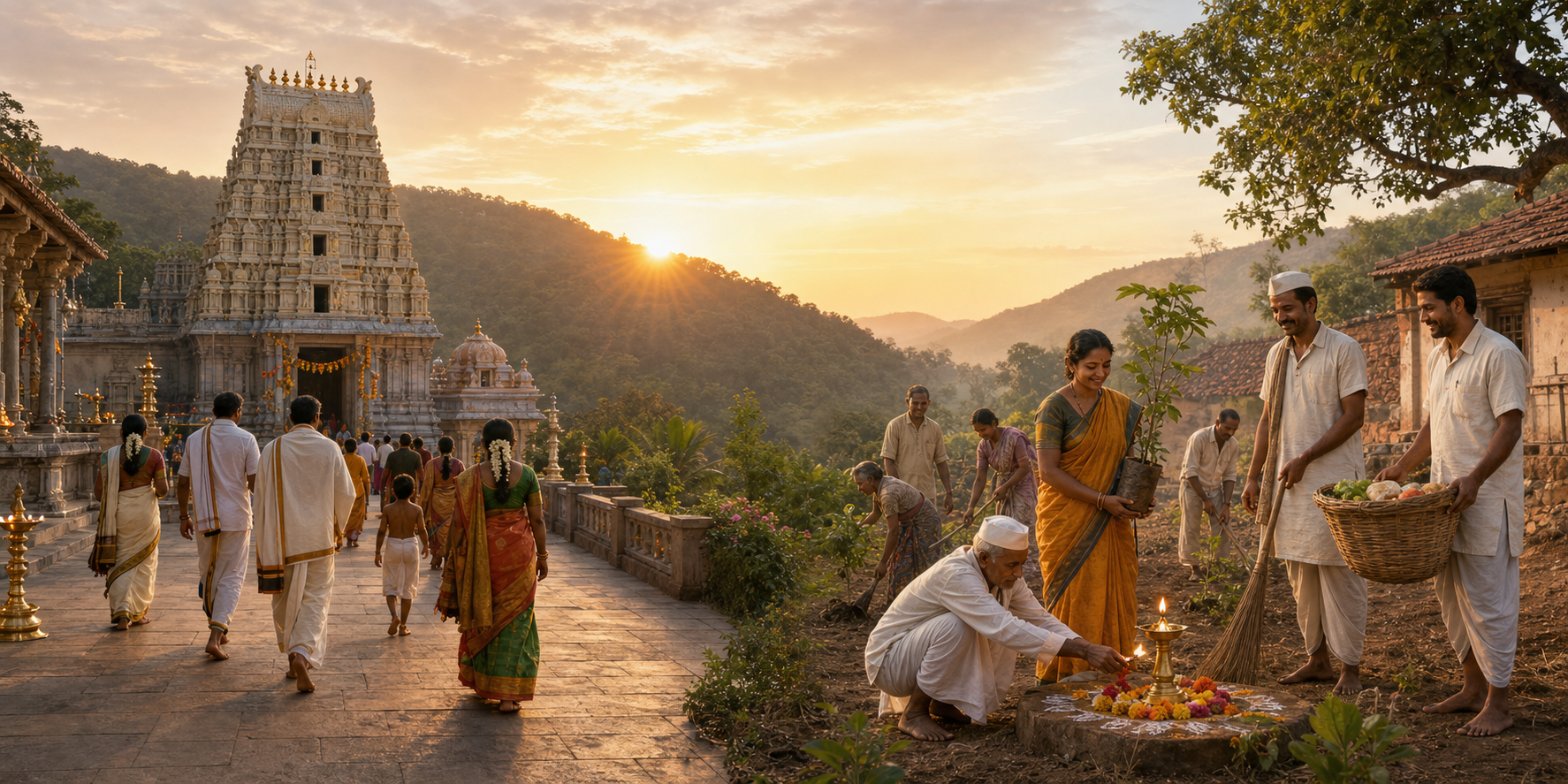
If 30 April 2026 is marked on your calendar but you are unsure what it calls you to observe, begin with place and tradition. The date brings together a Vaishnava confluence at Tirumala and the birth anniversary of Sant Tukdoji Maharaj, whose remembrance joins bhakti to practical service.
You do not need to compress these observances into one generic ceremony. You need to identify the calendar you are following, verify the local program, and decide whether your day will center on temple worship, remembrance, community action, or a deliberate sequence of all three.
Know which observance your calendar is naming
The most important distinction is calendar logic. Tukdoji Maharaj Jayanti is associated with the civil date of his birth, 30 April 1909. Tirumala’s Sri Narasimha Jayanthi observance follows temple tradition within Vaishakha and the advent of Swathi Nakshatram; in 2026, that observance falls on 30 April alongside Matrusri Tarigonda Vengamamba Jayanthi.
| Observance | What 30 April 2026 represents | What you should verify |
|---|---|---|
| Sri Narasimha Jayanthi | A Tirumala observance associated with Swathi Nakshatram during Vaishakha | The current TTD or local temple program, including venue and timing |
| Matrusri Tarigonda Vengamamba Jayanthi | A distinct commemoration held in the sacred precincts of Tirumala’s Srivari temple on the same date | Whether your chosen venue is observing it as well as Narasimha Jayanthi |
| Tukdoji Maharaj Jayanti | The widely observed civil-date anniversary of Sant Tukdoji Maharaj’s birth | Whether the local reading, kirtan, or service program remains on 30 April or moves to a nearby weekend |
A date listing confirms the day, not the complete ritual schedule. Do not infer a temple’s starting time from the date alone, and do not assume that a program announced for Tirumala will be reproduced unchanged by every local temple. The safest approach is to check the venue’s own notice before arranging travel, fasting, volunteering, or a group gathering.
Choose whether you are following a place, deity, or teacher
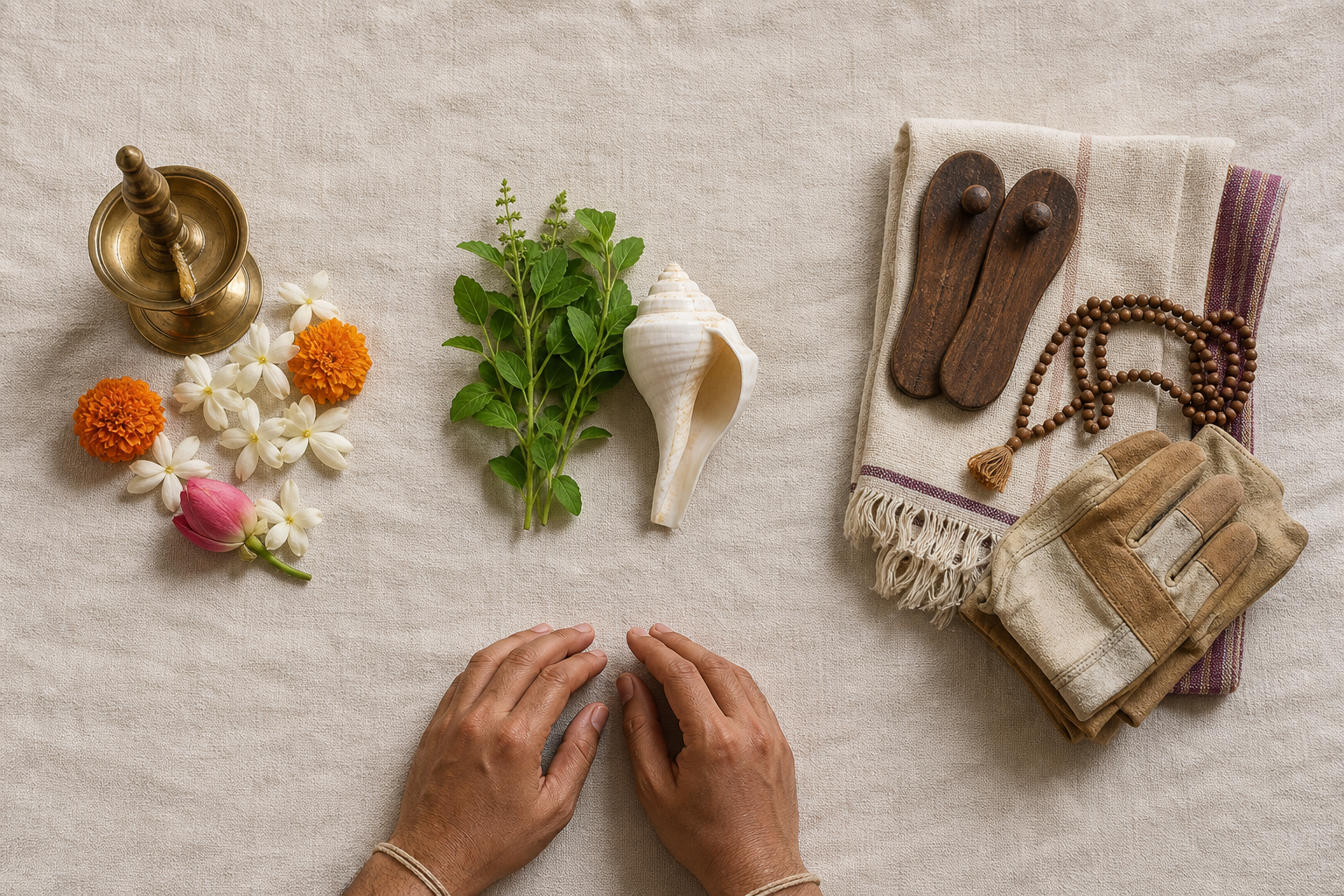
Your reason for observing the date should determine your plan. This prevents a common mistake: collecting several sacred names on a poster without giving any of them a coherent form of remembrance.
- If you are going to Tirumala, follow the place first. Let the announced Srivari temple program determine the sequence.
- If your primary commitment is to Narasimha worship, ask your local temple whether and how it is marking Narasimha Jayanthi on 30 April.
- If you belong to a school, village organization, seva mandal, or civic group, Tukdoji Maharaj Jayanti offers the clearest basis for a reading-and-service program.
- If your family has connections to more than one observance, give each a named segment. Sequence preserves meaning better than an improvised composite ritual.
Once you know your center, build the day in three movements:
- Worship or remembrance: attend the relevant temple program, hold a family prayer, sing bhajans, or organize a kirtan appropriate to the observance.
- Learning: explain why the date matters. For Tukdoji Maharaj Jayanti, read a selected passage from Gramgeeta and connect it to one local concern rather than attempting a ceremonial reading with no discussion.
- Action: complete one useful task or assign a clearly owned follow-up. A small action with continuity is closer to seva than a large declaration with no next step.
If the main Tukdoji Maharaj community event has been moved to a weekend, you can still keep 30 April itself with a short reading, prayer, or household act of service. Attend the larger program when scheduled, but label the two occasions accurately so that convenience does not quietly replace the actual Jayanti date.
Make Tukdoji Maharaj Jayanti leave useful work behind
Sant Tukdoji Maharaj was born in Yavali, in present-day Amravati district, and became widely honored as Rashtrasant. He used bhajans and kirtans to carry ethical teaching beyond scholarly circles. His public life also included participation in the 1942 Quit India Movement and imprisonment, followed by sustained work for rural reconstruction after independence.
That history explains why a purely ceremonial Jayanti feels incomplete. Gramgeeta turns personal discipline and collective responsibility toward sanitation, water stewardship, livelihoods, cooperative institutions, village assemblies, transparent administration, and conflict resolution. Its ovi form made serious civic instruction accessible through the cultural language of Marathi devotional life.
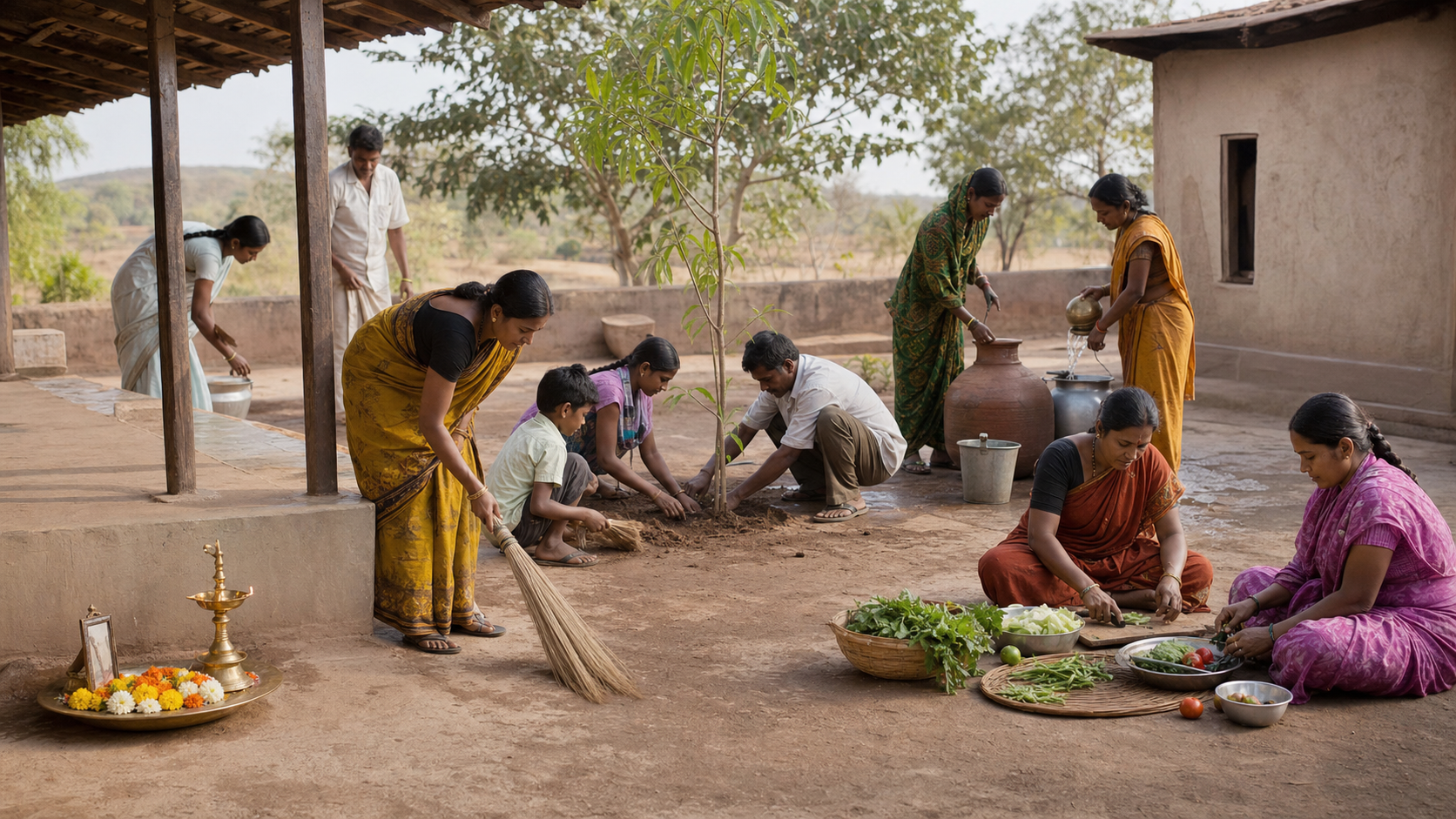
Choose one action lane that matches a problem your community can actually address:
- Cleanliness: select one shared location, identify who will handle collection and disposal, and avoid leaving gathered waste in another public place.
- Water stewardship: inspect a shared water point, document a visible maintenance problem, and send it to the person or institution responsible for resolving it.
- Addiction awareness: host an informational session with appropriate community or health support. Keep the event focused on awareness and access to qualified help; a Jayanti program should not pretend to provide treatment.
- Village accountability: convene a practical discussion on gram sabha participation, records, procurement, common resources, or grievance handling. End by naming the record, decision, or follow-up that participants will review.
- Family discipline: begin waste segregation, reduce avoidable water use, practice kindness toward animals, or agree on more respectful speech at home. These modest habits translate commemoration into daily conduct.
Close the activity with three questions: What exactly changed today? Who owns the next step? When will the group examine it again? These questions keep shramdaan from becoming a photograph of voluntary labor with no durable result.
Urban and diaspora groups can apply the same method without imitating village conditions. Pair a Gramgeeta reading, Marathi ovi recital, or intergenerational discussion with a neighborhood action that genuinely belongs to your setting. The underlying values of seva, ahimsa, satya, and welfare for all can welcome Hindu, Buddhist, Jain, and Sikh participants while the event remains clearly anchored in Tukdoji Maharaj’s life and teaching.
Keep the Tirumala confluence precise and locally grounded
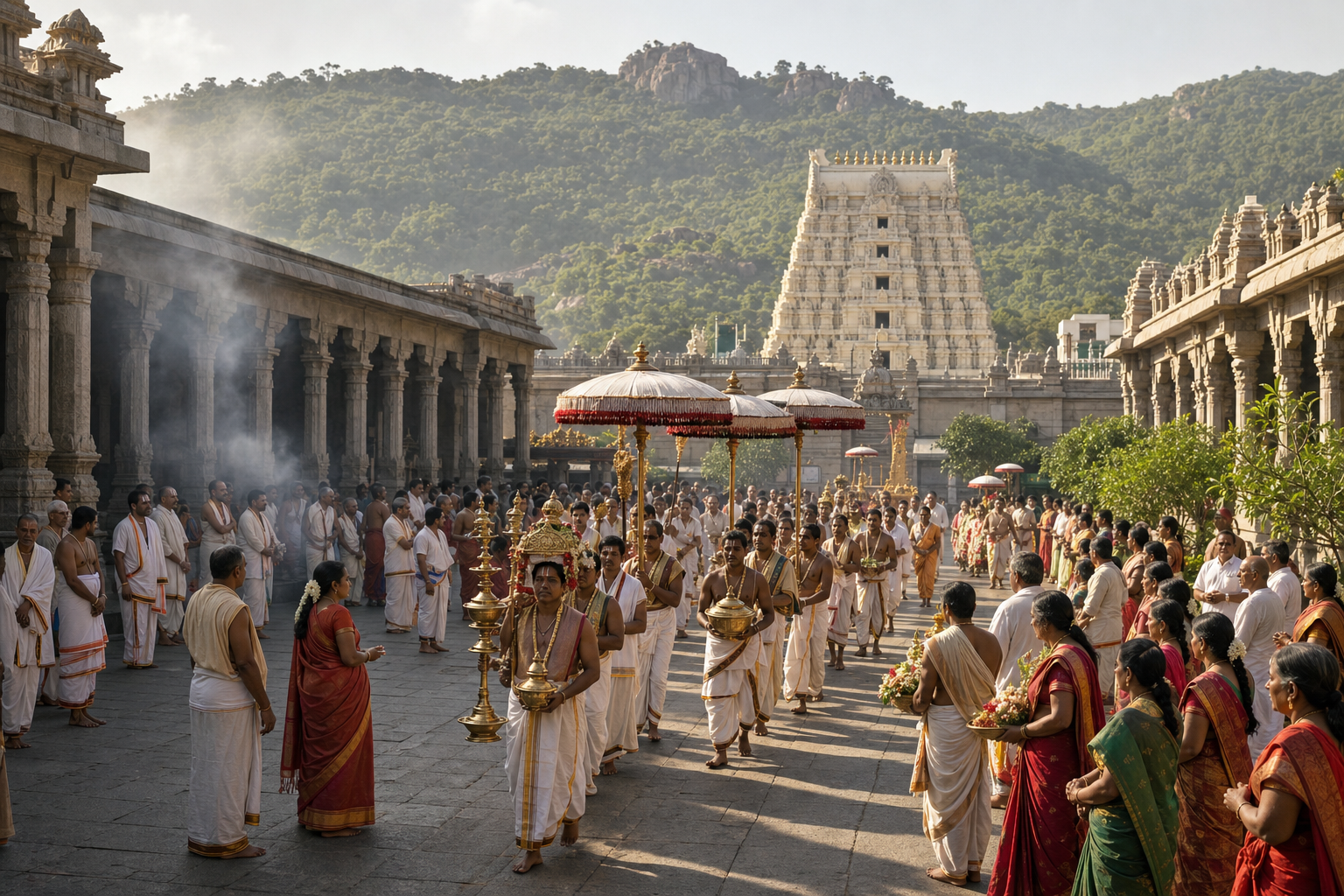
At Tirumala, Sri Narasimha Jayanthi and Matrusri Tarigonda Vengamamba Jayanthi share 30 April 2026 in the Srivari temple precincts. Sharing a date does not erase the identity of either observance. A good program names both clearly and allows each remembrance its own devotional focus.
If you are planning a visit, community notice, or home observance, use these accuracy checks:
- Confirm the current venue notice before publishing a time. The date alone does not establish the hour or full sequence.
- State that the Vaishakha and Swathi Nakshatram basis belongs to Tirumala’s Narasimha Jayanthi scheduling tradition; do not turn one temple-calendar statement into a universal timetable.
- Ask whether the local program marks both Jayantis or only Narasimha Jayanthi. Do not add Vengamamba Jayanthi to a venue’s schedule without confirmation.
- If you are observing at home, describe it as a family devotional observance. Do not present a self-designed sequence as the official Tirumala rite.
- When teaching children, explain the distinctions plainly: Narasimha Jayanthi is the Vaishnava devotional observance named here, Vengamamba Jayanthi is a separate remembrance within Tirumala’s heritage, and Tukdoji Maharaj Jayanti directs remembrance toward bhakti expressed through social duty.
This precision is itself a form of respect. Dharmic unity does not require every tradition to become interchangeable. It allows several forms of devotion, memory, and service to stand together without losing their names or contexts.
Key takeaways for 30 April 2026
- Tirumala will observe Sri Narasimha Jayanthi and Matrusri Tarigonda Vengamamba Jayanthi on 30 April 2026 in the Srivari temple precincts.
- Tukdoji Maharaj Jayanti falls on the same civil date and is best honored through a combination of bhakti, Gramgeeta study, and practical seva.
- Confirm local venue and timing details; a date-level calendar entry is not a complete program.
- Do not merge distinct observances into an unnamed generic ceremony. Give each one a clear devotional or commemorative segment.
- For a Tukdoji Maharaj program, choose one local task, assign its follow-up, and make the result visible to participants.
Before 30 April arrives, make one call to the temple or organizing institution and choose one action that can outlive the day. You will then approach the date with fewer assumptions and a clearer offering: worship where worship is called for, remembrance where memory is being honored, and service where dharma asks to become public conduct.
References
- DharmaRenaissance Blog – Tukdoji Maharaj Jayanti 2026: Date, Gramgeeta’s Vision, and Inspiring Village Action Guide
- DharmaRenaissance Blog – Tirumala’s Grand Observance: Narasimha Jayanthi and Vengamamba Jayanthi on 30 April 2026