
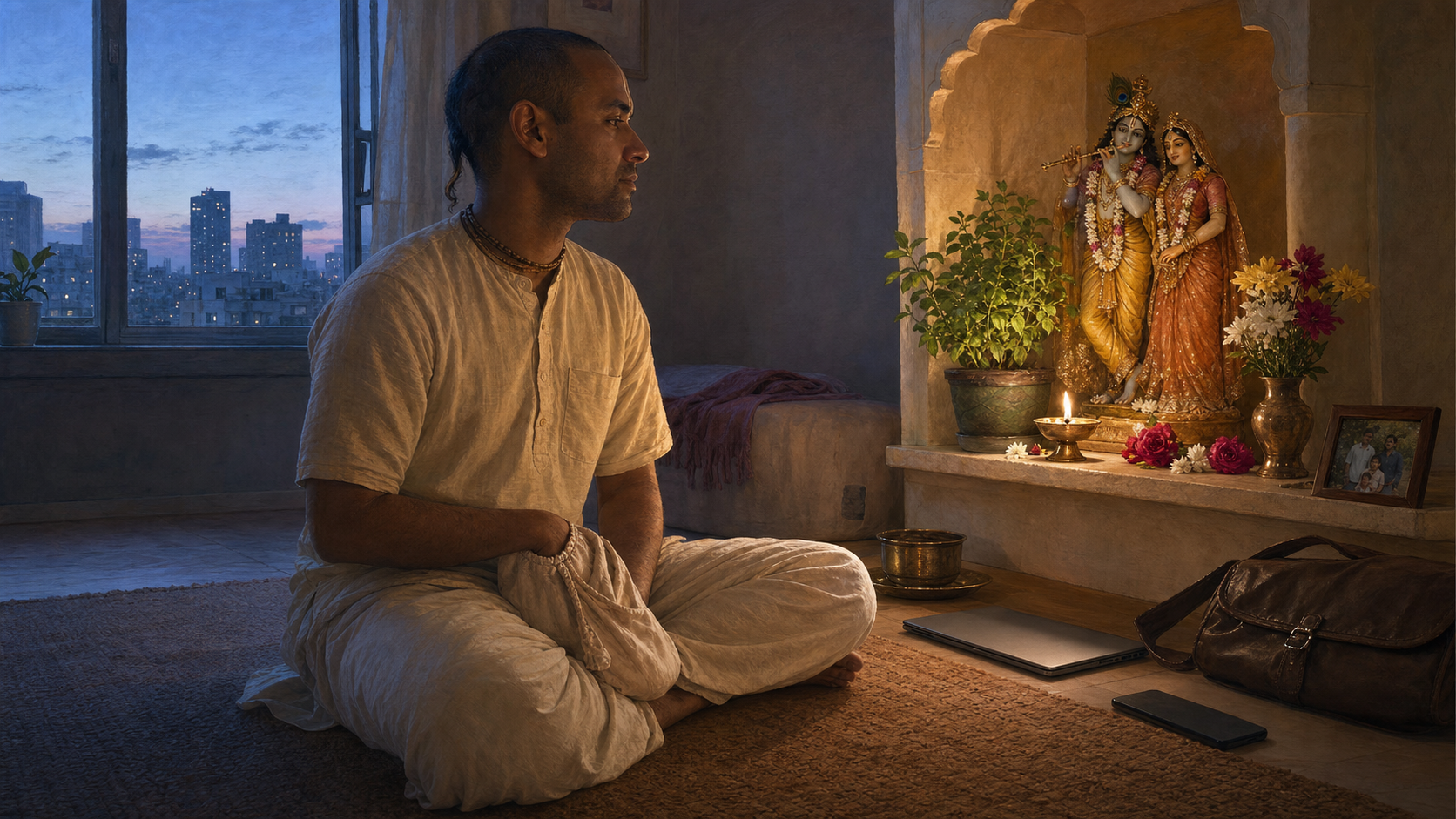
When your Gaudiya Vaishnava identity feels strongest at a festival but thins out on an ordinary weekday, the problem is usually not sincerity. The identity has been left as a label while work, notifications, family expectations, fatigue, and habit continue to organize the day.
You do not have to choose between spiritual depth and contemporary life. You need a rule of life that repeatedly turns attention, speech, work, and relationships toward Krishna. The practical sequence is to understand whom you are, protect a daily practice, test choices through sharanagati, serve through sangha, and cultivate remembrance long before life’s final threshold.
Let your identity answer, “Whom do I serve?”
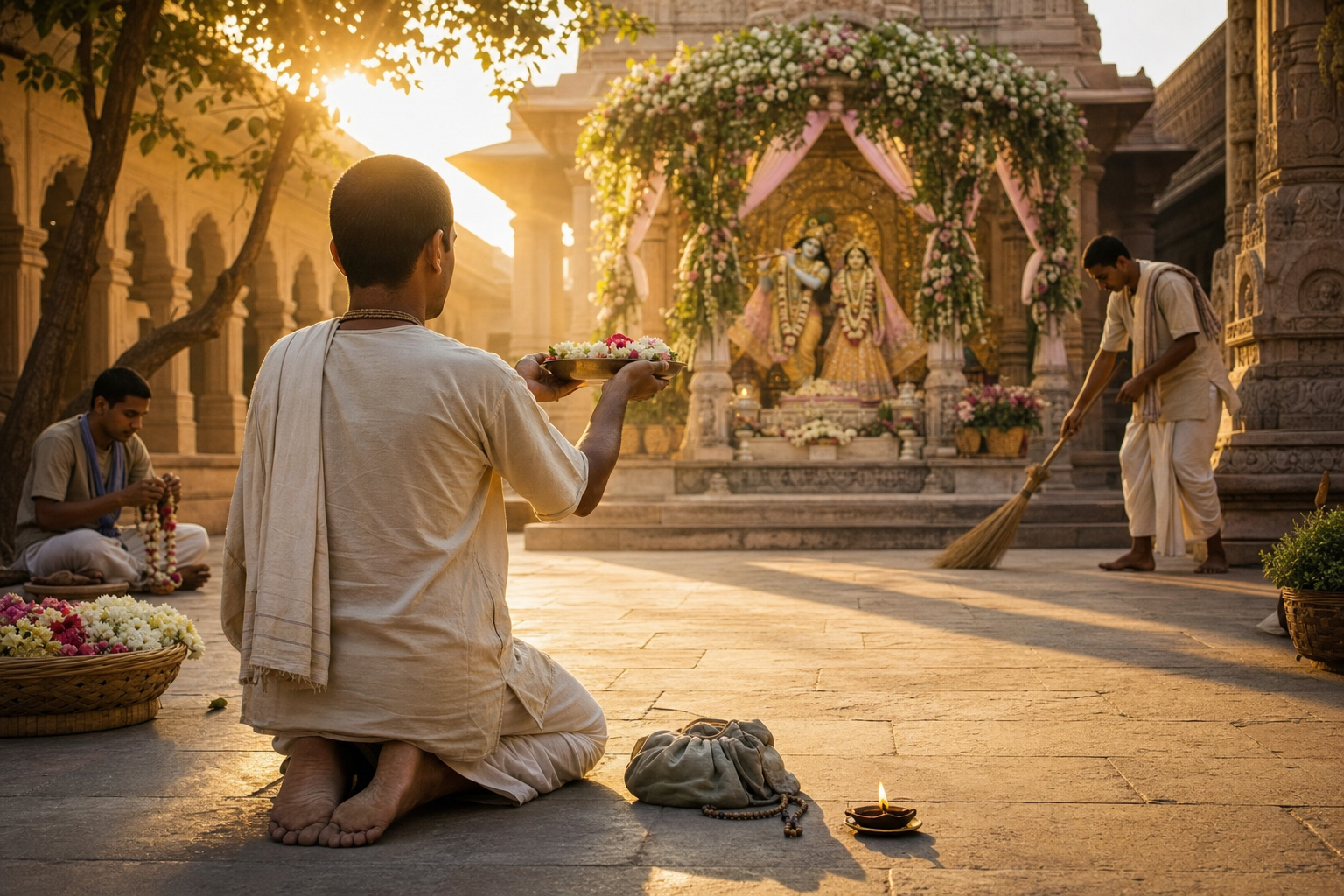
Gaudiya identity begins deeper than ancestry, nationality, profession, politics, or institutional membership. Vedanta distinguishes the atman, the conscious self, from the changing body and mind. This distinction does not make your worldly roles unreal or disposable. It stops them from carrying a burden they cannot bear: providing a permanent answer to who you are.
Gaudiya Vaishnavism makes that answer relational. The principle of jīvera svarūpa identifies the self through eternal loving service to Sri Krishna. Identity is therefore neither a private invention nor merely a cultural badge. It is participation in a relationship that should become visible in your choices, habits, duties, and treatment of others. This atman-grounded and service-oriented understanding can hold Indian, American, professional, familial, and civic roles together without allowing any one of them to become absolute.
Service here does not mean servility, social passivity, or the erasure of personality. The Gaudiya teaching of achintya-bheda-abheda, inconceivable simultaneous oneness and difference, preserves relationship without collapsing the self into the Divine or declaring the self completely independent. You remain a distinct person, but not a self-sufficient one.
Three classical categories help you locate where your spiritual life is getting stuck:
- Sambandha: Who are Krishna, the jiva, the material energies, the spiritual teacher, and the Vaishnavas, and how are they related? Return here when belonging, worth, or purpose becomes confused.
- Abhidheya: What practices express and awaken that relationship? Return here when you understand the philosophy but cannot make it shape an ordinary day.
- Prayojana: What is the goal? Return here when discipline becomes scorekeeping, community standing, or the pursuit of religious prestige rather than prema.
Write a four-line personal dharma charter so this understanding can govern decisions rather than remain inspirational language:
<!– wp:list {