

You have found a framed deity print beside a shoe rack, a mūrti near a washroom, or an old devotional image that nobody knows how to retire. Moving it immediately may feel like the respectful response. Pause just long enough to identify what you are handling, prepare a dignified temporary place, and find the person responsible for its care.
The practical rule is simple: correct the disrespect without creating another one. Cleanliness, stable placement, separation from sanitation and refuse, and tradition-appropriate handling matter more than ceremony improvised in haste.
Ask three questions before you move anything
A household print and a consecrated mūrti may depict the same deity, but they do not necessarily require the same removal process. Sacred scripture, calligraphy, and emblems also have their own forms of maryādā. Begin with identification rather than assumption.
- What exactly is the object? Determine whether it is a consecrated mūrti, a non-consecrated statue, a framed devotional image, a calendar print, a thangka, a Tirthankara depiction, scriptural text, or another sacred symbol. If you cannot tell, treat it with the greater degree of care until a knowledgeable custodian can identify it.
- Is the present location actively inappropriate or unsafe? Placement beside a toilet, urinal, rubbish bin, footwear area, or directly on the floor calls for prompt correction. An unstable shelf, water exposure, ongoing construction, or a busy passage may also place the object at risk.
- Who has authority to decide its destination? At home, that may be the person who maintains the shrine. At a temple, contact its priest or managing trust. In a shop, hotel, office, or public facility, notify the responsible manager. Do not carry someone else’s property away from the premises without clear permission.
Intent is not the first question when the placement itself can be corrected. A manager may have made an uninformed decorating decision rather than a deliberate insult. The image still deserves to be moved, but the difference matters when you decide whether education, a formal complaint, or legal escalation is proportionate.
Build a respect zone, not merely an empty patch of wall
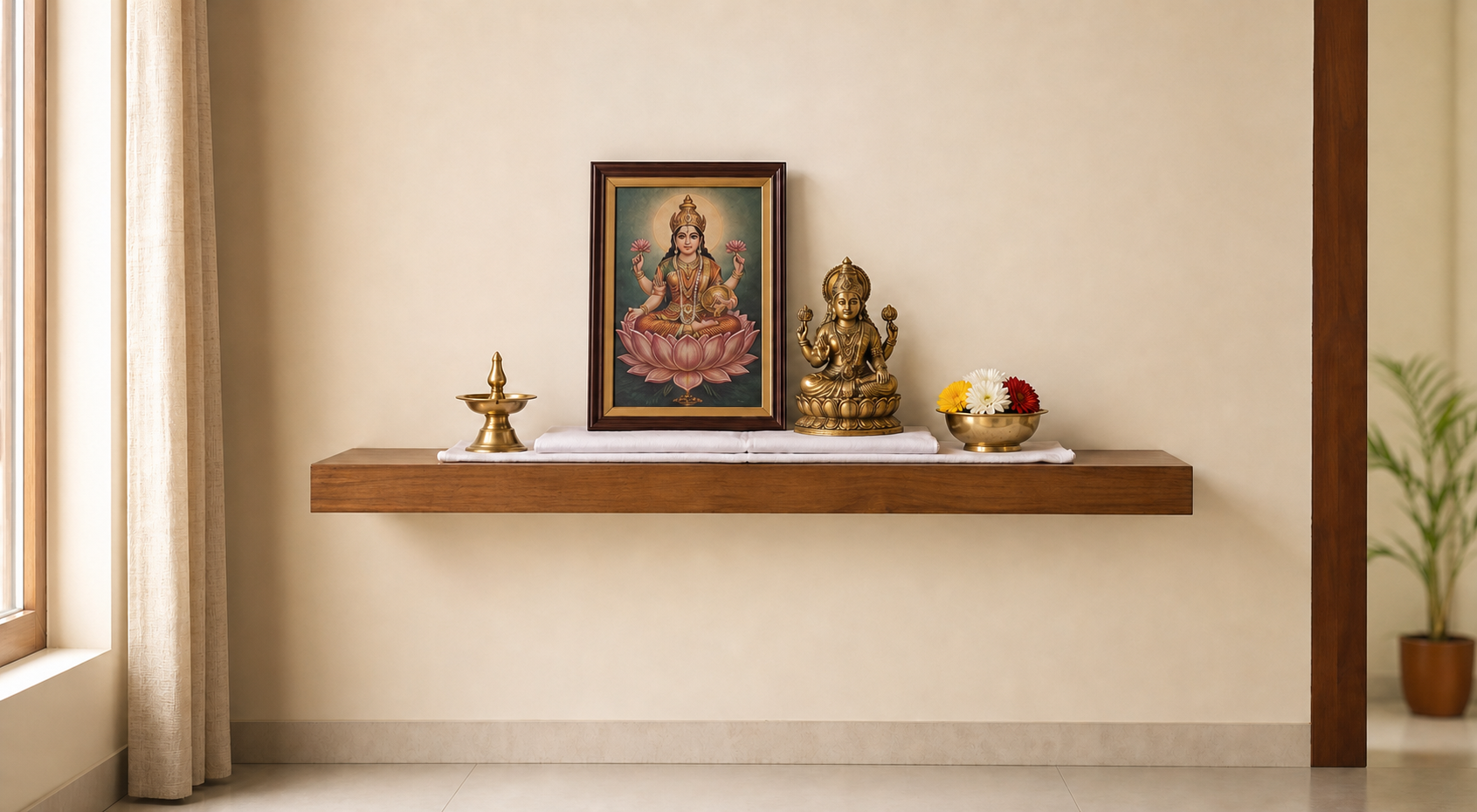
A suitable location does not need expensive ornamentation. It needs to be clean, stable, visibly intentional, and separated from activities that diminish the sacred character of the object. A wall immediately outside a washroom does not become appropriate merely because it lies beyond the door.
- Place sacred images at eye level where practical, on a secure surface that will not be used for unrelated storage.
- Keep them away from toilets, urinals, washroom entrances, rubbish and recycling points, cleaning supplies, drains, and footwear areas.
- Do not reproduce deities, mantras, or sacred symbols on doormats, floor graphics, steps, or signs where people will walk over them.
- Avoid loading bays, stock rooms, cluttered service corridors, and display areas exposed to spills or careless handling.
- Do not use a sacred image merely to fill visual space. If the premises cannot maintain a dignified location, choosing not to display it is more respectful.
- Tell staff and contractors that the object is sacred. A respect zone fails when the next cleaner, merchandiser, or sign installer has not been told why the space must remain clear.
The same baseline can protect Hindu, Buddhist, Jain, and Sikh sacred material without pretending that their practices are identical. A Hindu mūrti, Buddhist thangka, Jain Tirthankara image, and Sikh scriptural quotation are not interchangeable decorative motifs. When the proper treatment is uncertain, ask someone formed in the relevant tradition rather than inventing a single generic ritual for all of them.
Let the object’s sacred status determine the removal path
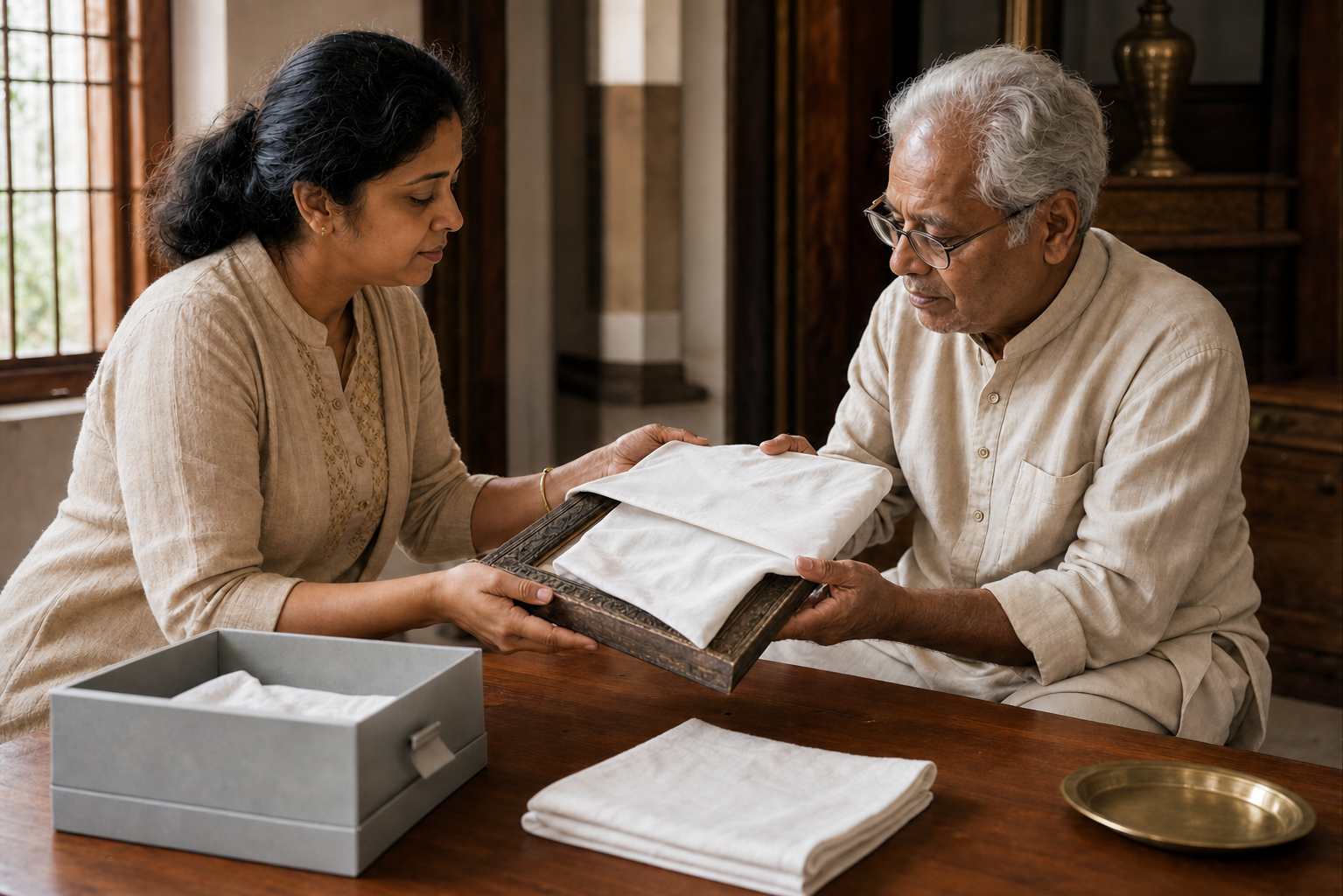
Temporary removal and permanent retirement are different decisions. You can end an inappropriate display immediately while taking more time to determine the correct final destination.
- Prepare the destination first. Clear a clean, elevated shelf or table before lifting the object. Do not move it only to leave it on the floor, beside a bin, or under a pile of supplies.
- Obtain permission where necessary. In a public or commercial setting, ask the manager to authorize or perform the move. If the object belongs to a shrine or institution, involve its custodian.
- Handle it deliberately. Use clean hands and, when appropriate, a clean cloth. Keep the image upright and separate from footwear, rubbish, and unrelated stock.
- Cover it during temporary storage. A clean cloth protects both the object and its devotional character while guidance is being sought. Store it above waist height in a clean, stable place.
- Confirm the final destination. Do not assume that temporary storage has solved permanent retirement. Record who will contact the family priest, temple, gurdwara, monastery, Jain institution, or community trust, as appropriate.
If the mūrti has undergone prāṇa-pratiṣṭhā
Prāṇa-pratiṣṭhā is ritual consecration, not a label for every statue sold or displayed. When a mūrti is known to have been consecrated, do not treat it as ordinary decor that can simply be boxed, discarded, or permanently relocated. Ask a priest familiar with the relevant sampradāya or temple practice whether uddvāsa, visarjana, or another prescribed act is needed before relocation or retirement.
If you do not know whether consecration occurred, preserve the object respectfully and investigate. Uncertainty is a reason to postpone irreversible disposal, not a reason to leave the mūrti in an offensive location.
If it is a non-consecrated print or decorative object
Non-consecrated does not mean spiritually meaningless. A calendar image, framed print, or commercially made statue may still be an object of daily devotion. Wrap or cover it with a clean cloth, keep it off the floor, and contact a local temple or community trust for advice about placement or permanent retirement.
Call before taking an unwanted or damaged object to an institution. Confirm that it accepts such items and ask how it wants them delivered. Leaving a box anonymously at a temple gate merely transfers the problem to another custodian. Do not improvise an irreversible disposal method from hearsay when informed guidance is available.
Correct public misplacement without turning it into a spectacle
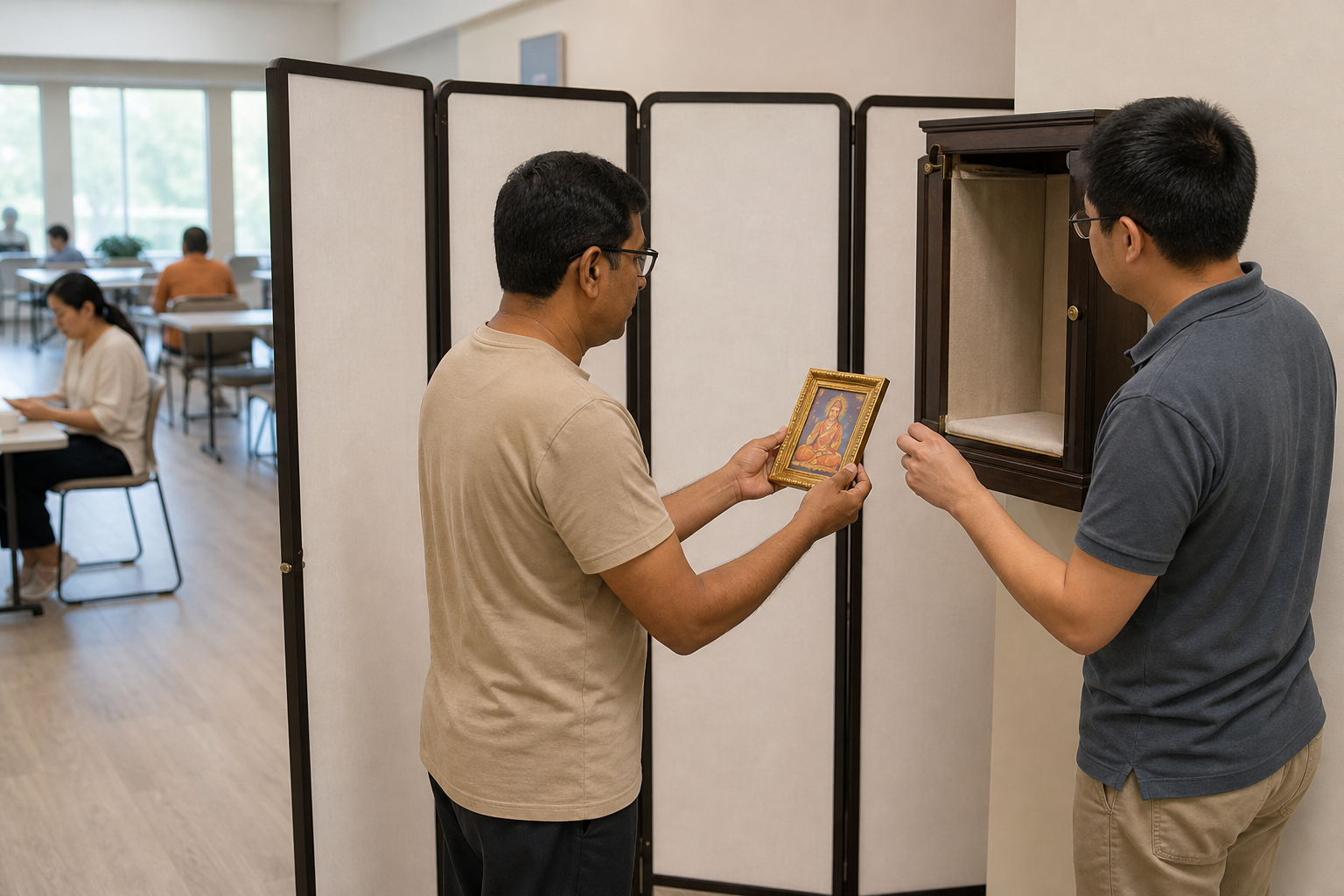
If you encounter sacred imagery near a toilet or another degrading location in a business, your goal is correction, an accurate record, and prevention of recurrence. Public anger may be understandable, but a crowd or livestream can make a straightforward remedy harder and less safe.
- Document the context. Take a clear image showing the sacred object and its surroundings. Preserve the date, place, and any communication with staff. Do not rearrange the scene merely to make the image more dramatic.
- Find the responsible manager. Explain the problem directly to someone who can authorize an immediate change. Avoid directing abuse at cleaners, guards, or junior staff who may not have selected the location.
- Request a temporary correction. Ask that the item be covered with a clean cloth and placed on a clean, elevated surface away from sanitation, refuse, and footwear until its proper destination is decided.
- Ask how recurrence will be prevented. The useful follow-up is not only where the item went, but whether staff, designers, and vendors will be told not to return it or install similar imagery in the same area.
- Escalate according to evidence. Prompt cooperation usually calls for a documented, educational resolution. Refusal, recurrence, deliberate damage, or evidence of malicious intent warrants preserving the record and contacting a credible community body, local authority, or qualified lawyer.
A calm sentence is often enough to begin: “This image is sacred to many people, and its placement beside the toilet, footwear, or rubbish area is inappropriate. Please move it now to a clean, elevated place and tell us who will prevent it from being returned here.” This identifies the harm and asks for a verifiable remedy without assigning a criminal motive before the facts are known.
In India, penal consequences for religious insult depend on evidence of intent and context. Do not announce at the scene that a specific crime has been proved. Document what happened and let the appropriate authority or legal professional assess whether the facts justify formal action.
A commercial-facility incident in Mehrauli, Delhi, offers a practical model: Radha-Krishna idols found outside a toilet were removed respectfully, representatives were informed, and recurrence was addressed directly. The transferable lesson is the sequence: end the inappropriate placement, speak to the decision-maker, and establish accountability.
Use social media only if it helps secure a remedy or establish a truthful record. Blur faces and personal details that are not necessary to the complaint. Do not publish private phone numbers, encourage harassment, or circulate an accusation that goes beyond what you can demonstrate. If management has corrected the problem, say so. Publicizing the remedy can set a stronger standard than preserving outrage after the facts have changed.
Make respectful placement an assigned responsibility

Businesses and institutions prevent these incidents when sacred imagery is treated as a governance matter rather than an informal decorating choice. The weak point is often the handoff: a manager approves a design, a vendor supplies generic “Indian” decor, and installation staff place it wherever space remains. Give the decision to a named person and make review part of the display process.
- Create an inventory of mūrtis, framed images, thangkas, Tirthankara depictions, sacred symbols, and scriptural quotations on the premises.
- Mark approved respect zones and prohibited locations on the floor plan used by facilities and merchandising teams.
- Require designers, printers, contractors, and suppliers to flag religious imagery before production or installation.
- Add a religious-sensitivity check to proposals and invoices so responsibility does not disappear between approval and installation.
- Include placement examples in staff onboarding: no sanitation adjacency, no footwear or waste areas, no floor-level reproduction, and no unstable or cluttered surfaces.
- Recheck displays after refurbishment, stock movement, event decoration, or a change of vendor.
- Name the manager and community contact who will respond when a concern is raised.
A workable internal policy can be brief: Religious images, sacred objects, and scriptural text may be displayed only in clean, stable, designated locations away from sanitation, waste, footwear, floor traffic, and storage. Removal or retirement must be approved by the responsible manager, documented, and referred to an appropriate religious custodian when consecration or tradition-specific handling may apply.
This is cultural literacy in operational form. It protects devotees from avoidable indignity, gives staff a clear rule, and respects the shared Dharmic concern for śuddhi, maryādā, satya, and ahimsa without erasing the differences among Hindu, Buddhist, Jain, and Sikh practice.
Key takeaways
- Identify the object and its sacred status before choosing a permanent destination.
- Use a clean, stable, elevated respect zone away from toilets, refuse, footwear, floor traffic, and unrelated storage.
- For an urgent temporary move, prepare the destination first, handle the object carefully, cover it with a clean cloth, and keep it above waist height.
- Seek priestly guidance before relocating or retiring a mūrti that has undergone prāṇa-pratiṣṭhā.
- In public premises, document the placement, involve the manager, request immediate correction, and escalate only according to the evidence.
- Prevent recurrence by training staff and making sacred-image review part of vendor, design, and facilities workflows.
If a sacred image is in front of you now, begin with the smallest action that restores dignity: prepare a clean elevated place, identify its custodian, and ask the right religious authority about the final step. Respect is shown not by the volume of the response, but by the care with which the object is protected and the certainty that the mistake will not be repeated.