
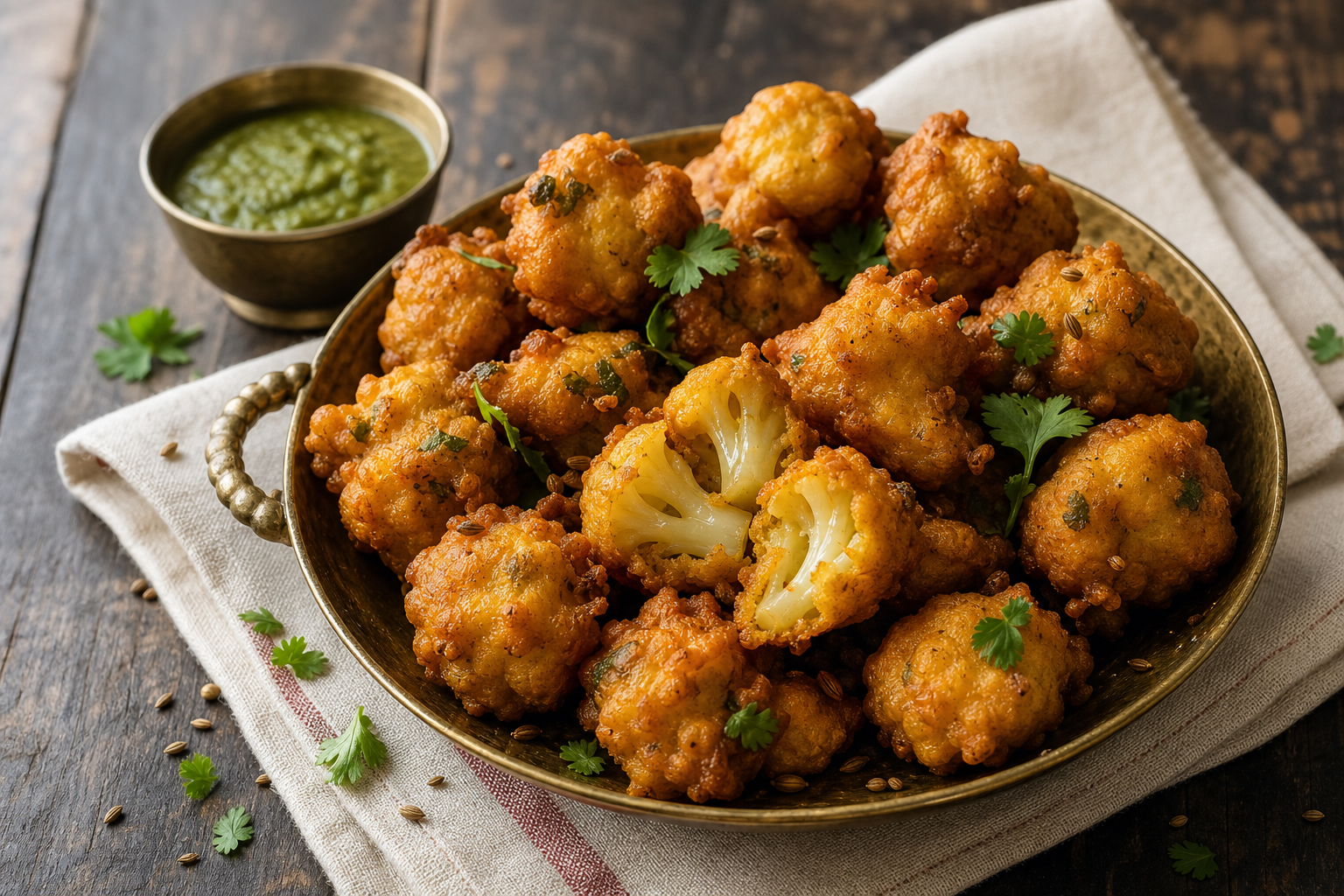
If you want to make the cauliflower pakoras associated with Srila Prabhupada, you do not need an elaborate modern recipe. You need the original proportions, small and dry cauliflower florets, and disciplined control of the frying temperature.
The measured formula below preserves the distinctive cumin, coriander, turmeric, allspice, cinnamon, and chili combination from 1973. It also makes clear what the old recipe leaves open, including the quantity of cauliflower and the volume of ghee, so you can cook confidently without inventing false precision.
What the 1973 attribution actually means
The cauliflower version is connected to a particular journey rather than to Srila Prabhupada’s original breakfast request. While traveling on the Radha Damodar bus from New York to Gita Nagari, Pennsylvania, Srila Prabhupada had a chest cold and asked for something hot: pakoras made with green chilies.
Green chilies were unavailable that morning. Sunanda Prabhu later recalled substituting cauliflower and using the formula from the 1973 Hare Krsna Cookbook. He prepared nearly twenty pakoras, and Srila Prabhupada ate every one.
That distinction matters if you are trying to cook the historical preparation accurately. The batter came from the 1973 cookbook; cauliflower was the practical substitution made during the remembered meal. The story does not establish a standard serving yield, because the size of the individual pakoras was not specified. It also should not be retold as though cauliflower had been the initial request.
You can still honor the requested version by dipping slit green chilies in the same batter. Deseeding mild chilies reduces their heat; leaving the seeds gives a hotter result. For the cauliflower version remembered from the journey, use small florets and follow the method below.
The exact batter and how to prepare the cauliflower
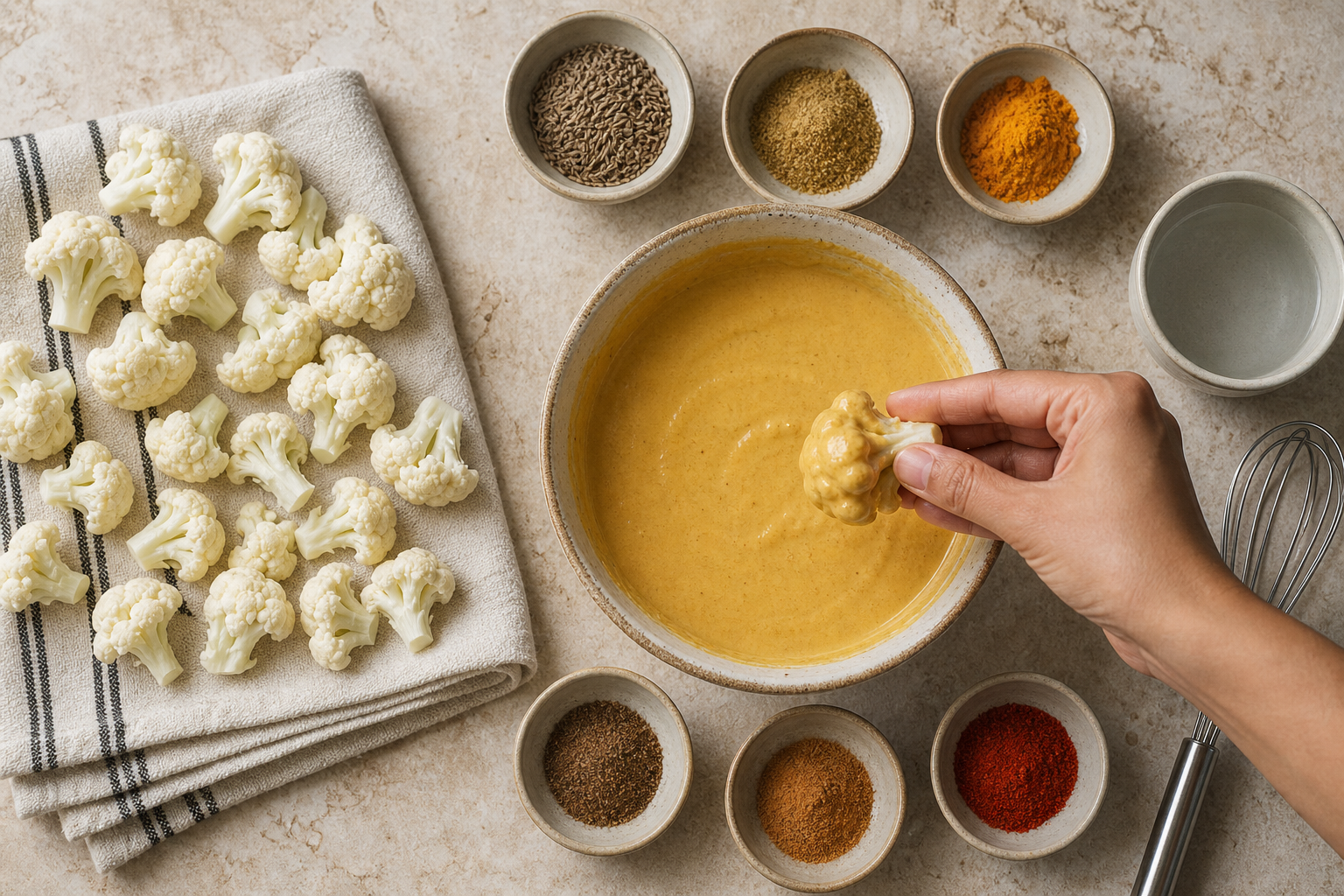
Batter ingredients
- 1 cup chickpea flour, also called besan
- 1 teaspoon ground cumin seed
- 1 teaspoon turmeric
- 1 1/2 teaspoons ground coriander
- 1/2 teaspoon allspice
- 1/2 teaspoon cinnamon
- 3/4 teaspoon salt
- 1/2 teaspoon crushed chilies
- 3/4 teaspoon baking powder
- A little less than 1 cup water
- Ghee, in the amount required for deep-frying in your chosen vessel
Here the old abbreviation “t.” has been expanded to “teaspoon.” Allspice is the name of one spice; it does not mean an assortment of spices. If historical fidelity matters to you, do not quietly replace the allspice and cinnamon with a more familiar contemporary pakora masala. Those two warming notes belong to this particular formula.
The crushed chili is the sensible place to accommodate children, elders, or guests who prefer less heat. Reducing it changes the heat more than the basic structure. By contrast, changing the besan, water, or baking-powder proportions changes the way the coating clings and puffs.
Cauliflower and equipment
- Small cauliflower florets, with each piece no longer than 2 inches
- A sieve for the chickpea flour
- A mixing bowl
- A stable, deep frying vessel
- A frying thermometer, if available
- A skimmer or slotted spoon
- A wire rack or absorbent paper for draining
No fixed weight of cauliflower accompanies the preserved batter quantities. Cut only as much as the batter will coat comfortably. Keep the flowerets small and relatively thin through the stem so the vegetable becomes tender during the same interval in which the coating turns golden.
Wash the cauliflower early enough for it to dry thoroughly. Just before dipping, pat every piece dry. Water on the surface weakens adhesion and can spit violently when it enters hot ghee. Do not pre-salt the florets; salt can draw moisture to their surface. The batter already contains salt, and any additional seasoning can be added after frying.
The batter works through a simple combination: chickpea flour supplies its protein-starch structure, baking powder supports aeration, and the hot cooking fat rapidly sets the coating. A smooth, slightly thick batter should cling as an even sheath and puff into a crisp exterior. It should not run off and leave bare patches of cauliflower.
Mix and fry the pakoras step by step
- Sift the besan. Chickpea flour can form persistent compact lumps. Sifting now is easier than trying to crush them after water has been added.
- Combine every dry ingredient thoroughly. Mix the cumin, turmeric, coriander, allspice, cinnamon, salt, crushed chilies, and baking powder evenly through the flour. The original method calls for mixing with clean hands. What matters is that no concentrated pocket of salt, spice, or baking powder remains.
- Add water gradually. Do not pour in the whole allowance at once. Add a little, mix it in completely, and repeat until the batter is smooth, lump-free, and thick enough to remain on a dry floret. “A little less than 1 cup” is an upper guide, not an instruction to force every drop into the bowl.
- Rest the batter if time allows. A rest of 10 to 15 minutes gives the chickpea flour more time to hydrate and can produce a more even coating. Stir gently afterward and check the consistency again before dipping the cauliflower.
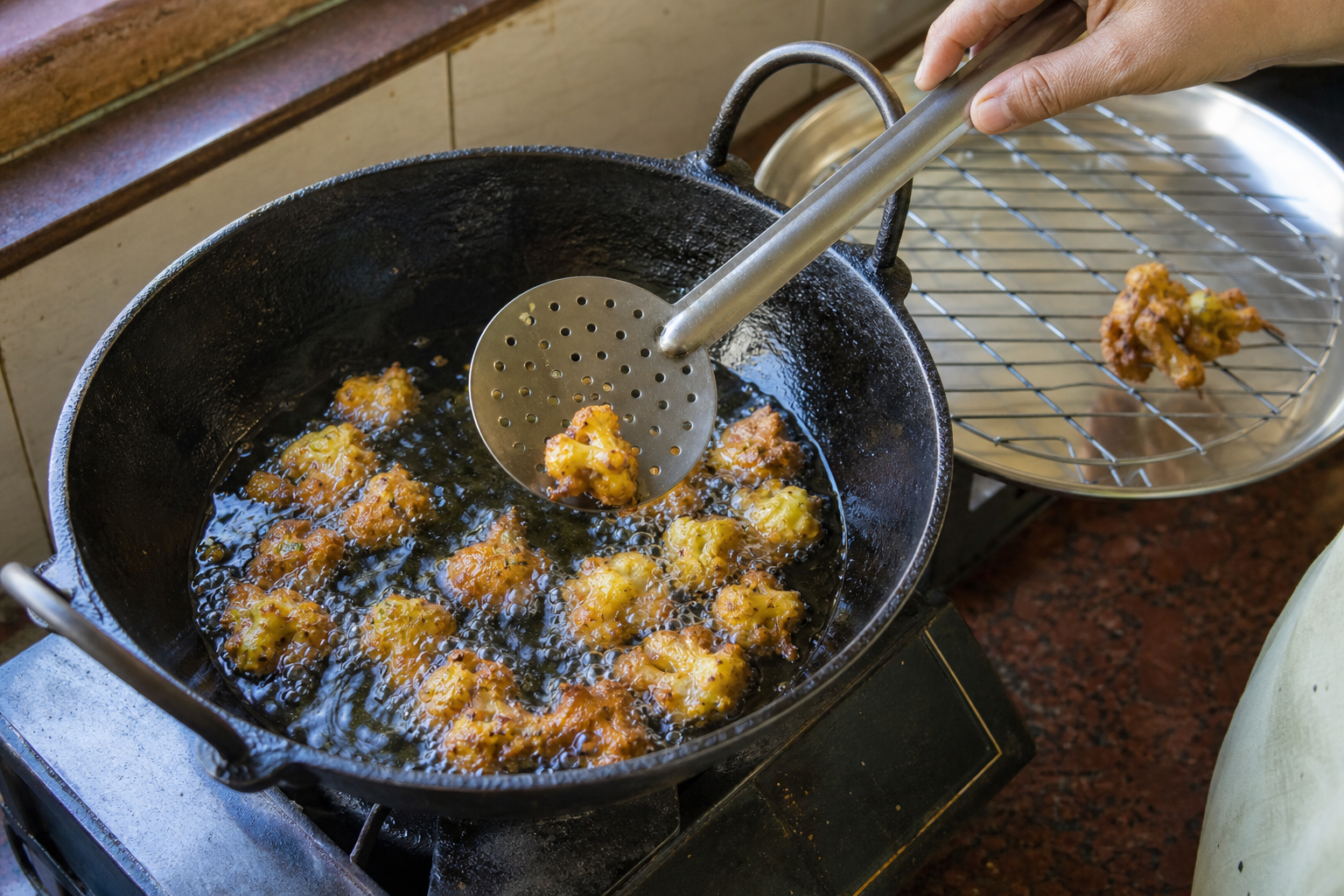
- Heat the ghee steadily. Aim for 170-180°C, or 338-356°F. Ghee’s approximate smoke-point range of 230-250°C sits well above this frying range, but that is not a reason to overheat it.
- Test before committing a floret. A small drip of batter should sink slightly, then rise and sizzle briskly. If it stays low and barely bubbles, the ghee is too cool. If it colors immediately or gives off a scorched smell, the ghee is too hot.
- Coat the cauliflower completely. Dip one dry floret, turn it in the batter, and let only the obvious excess fall back into the bowl. The goal is a continuous coating rather than a heavy tail of batter.
- Fry in moderate batches. Lower the coated pieces into the ghee without crowding the vessel. Turn them so the coating colors evenly. Allow the temperature to recover between batches instead of compensating by keeping the heat excessively high.
- Judge the first floret before frying the rest. No fixed frying time survives with the recipe. Remove the first pakora when it is puffed and golden, let it cool briefly, and open it. If the cauliflower is still firm, make the remaining florets smaller or slightly reduce the heat so the interior has longer to cook before the crust darkens.
- Drain without trapping steam. Lift the pakoras with a skimmer and place them on a rack or absorbent paper. Keep them in a single layer. Skim loose drops of fried batter from the ghee between batches so they do not continue darkening.
The hollow-sounding tap traditionally used to judge a plain, tablespoon-sized ball of batter is less decisive for a filled pakora because cauliflower occupies the center. For the vegetable version, use a combination of golden color, a set crust, and the opened first piece. That test gives you information about your actual floret size and frying temperature.
Hot ghee deserves your full attention. Use a deep vessel with ample empty space above the fat, keep its handle turned away from the edge, and never leave it unattended. Keep water away from the vessel. If the fat ignites, turn off the heat if you can do so safely and cover the vessel with a suitable metal lid. Never throw water onto burning fat.
Read the crust: common problems and precise corrections
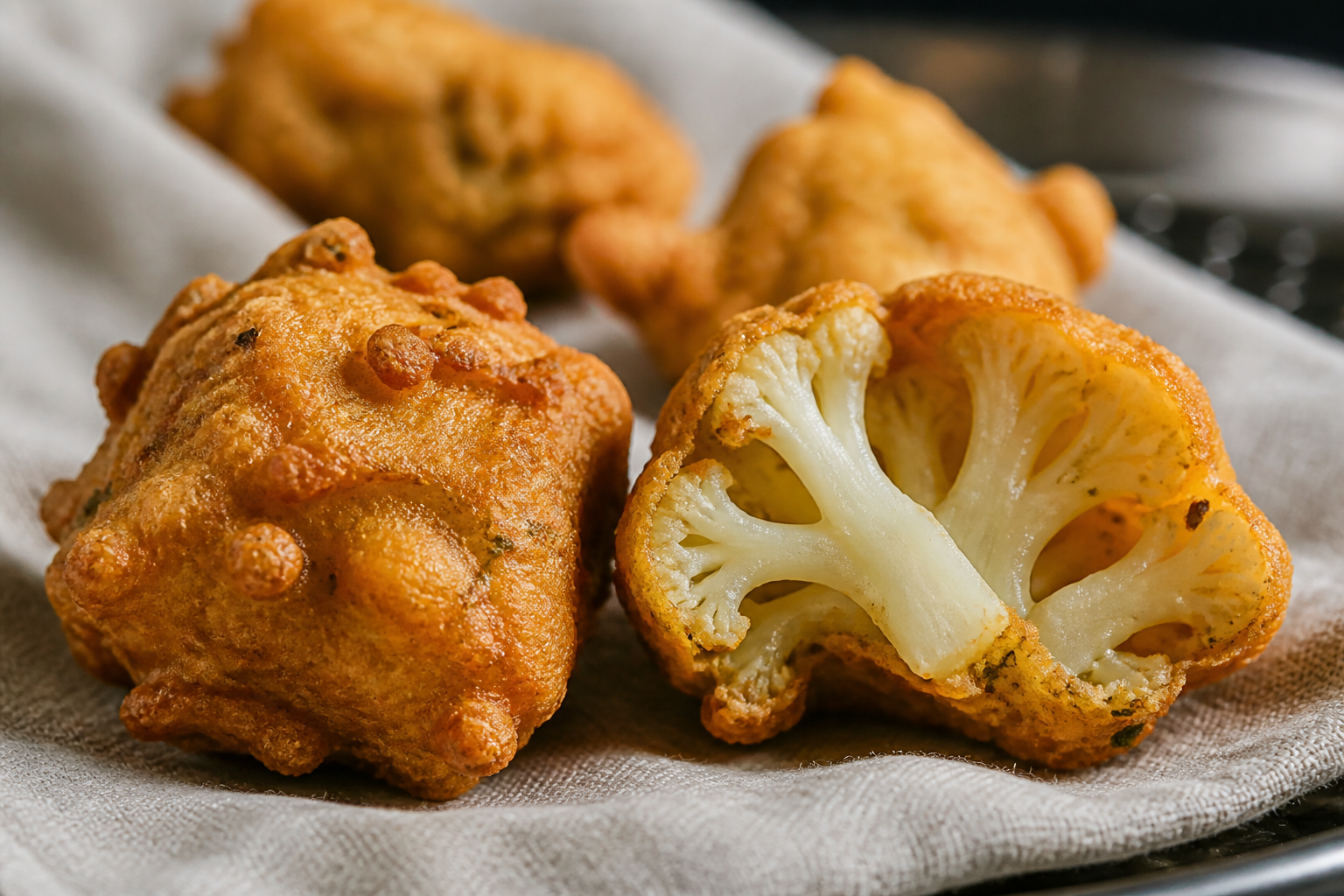
Pakora trouble usually appears in the first piece. Treat that piece as a calibration rather than pushing through the whole bowl. Change one variable at a time, or you will not know which correction worked.
| What you notice | Likely mechanism | What to change |
|---|---|---|
| The batter slides off | The cauliflower is wet, the batter is too thin, or both | Pat every floret dry and add water more cautiously. Do not salt the raw cauliflower. |
| The pakora is pale and greasy | The ghee cooled when the batch entered | Let it return to 170-180°C and fry fewer pieces at once. |
| The crust darkens before the cauliflower softens | The floret is too thick or the ghee is too hot | Cut smaller pieces and keep the ghee within the stated range. |
| The coating is dense or uneven | The besan was lumpy or the baking powder and spices were not distributed evenly | Sift the flour and mix all dry ingredients thoroughly before adding water. |
| The crust softens while waiting | Stacked pakoras are trapping their own steam | Hold them in one layer on a wire rack in a 90-95°C oven. |
| Dark, bitter flecks cling to later batches | Dropped batter has continued frying in the ghee | Remove loose crumbs with a skimmer between batches. |
Do not solve a low-temperature problem by leaving pakoras in lukewarm ghee for much longer. That gives the coating more opportunity to absorb fat while it colors slowly. Restore the temperature first. Likewise, do not solve an undercooked center by driving the heat higher; the exterior will simply darken sooner. Make the cauliflower smaller.
The little fried drips are not necessarily waste. Once removed before they burn, they can be reserved as a crisp garnish for salad or a preparation of peas and peanuts. If you are cooking for an offering, handle and reserve them under the same kitchen discipline as the rest of the preparation.
Key takeaways for offering and serving
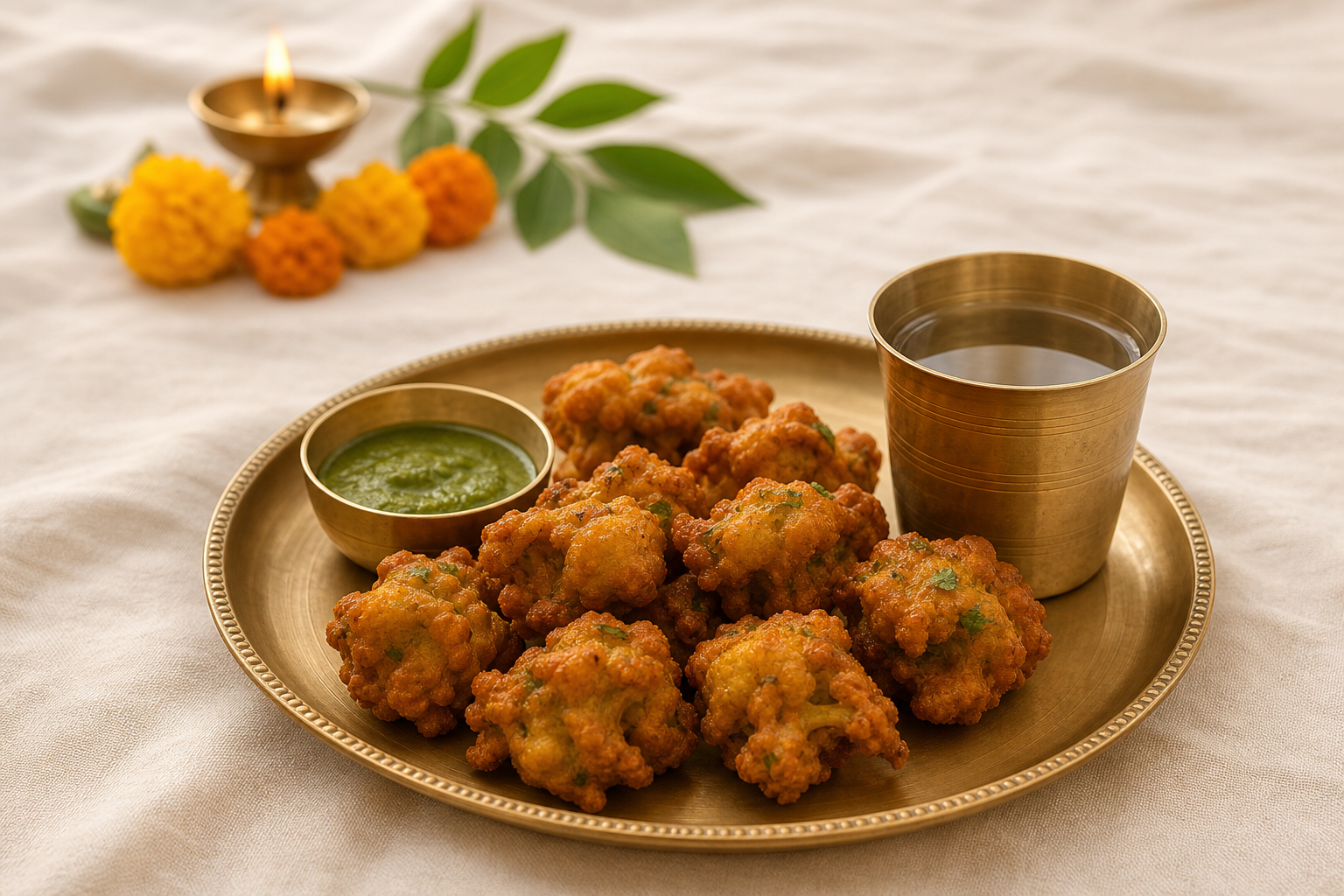
- Preserve the measured spice combination, especially the easily overlooked allspice and cinnamon, if you want the distinctive 1973 batter.
- Use dry cauliflower flowerets no longer than 2 inches; thick pieces can remain undercooked after the crust has browned.
- Add less than 1 cup of water gradually and stop when the batter forms a smooth, clingy coating.
- Fry at 170-180°C in moderate batches, using one pakora to calibrate the temperature and floret size.
- Drain in a single layer and, when necessary, hold the pakoras on a rack in a 90-95°C oven.
- Complete the offering according to your Vaishnava temple, guru, or household practice before distributing the preparation as prasadam.
In Vaishnava practice, careful cooking is not the final step. Food is prepared for Krsna, offered according to the community’s devotional procedure, and then respectfully distributed as prasadam. Culinary skill serves that offering; it does not replace attention, cleanliness, gratitude, or the instructions followed in your own temple or household.
The broader Dharmic values of seva, hospitality, fellowship, and ahimsa-aligned nourishment also appear in Hindu, Sikh, Jain, and Buddhist communities. The specific rites and dietary disciplines are not interchangeable, however. If you are cooking across traditions, ask what the gathering observes instead of assuming that one devotional procedure fits everyone.
Plan for dietary needs before heating the fryer. Chickpea flour is naturally gluten-free, but someone who must avoid gluten still needs besan processed without cross-contact. Ghee is a dairy ingredient. For vegan service, use a suitable neutral vegetable oil and maintain the same temperature discipline. Adjust the crushed chili for the people being served, especially children and elders, without changing the rest of the batter by guesswork.
For your first batch, begin with one small, thoroughly dried floret. Fry it, let it cool briefly, and open it before proceeding. Once the crust, seasoning, and cauliflower are right, cook the remaining pakoras in steady batches, make the offering according to your practice, and distribute them while the crust is still at its best.