If you are deciding whether to support the Malmi Manor temple restoration, the important question is not whether the finished building will look newer. Ask whether its historic fabric, daily worship, community service and long-term upkeep are being protected as one responsibility.
That distinction matters because a temple can be conserved beautifully yet become awkward to worship in. It can also be modernized efficiently while losing the character that made it worth preserving. Malmi Manor needs a third path: careful repair that keeps the place spiritually alive, physically sound and genuinely usable.
Treat the manor as three kinds of heritage at once
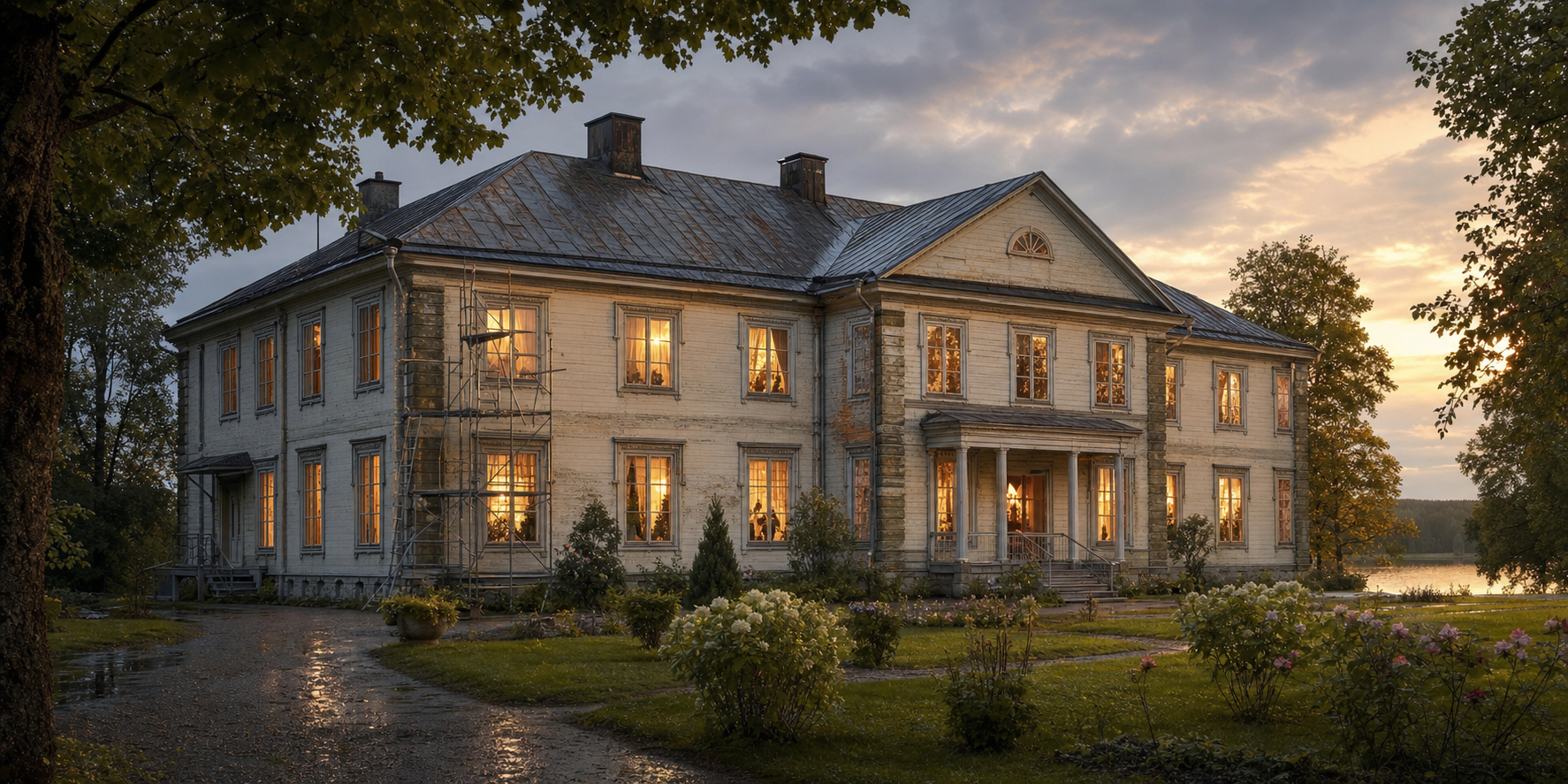
Malmi Manor is not simply an old building occupied by a religious organization. The Helsinki campus carries at least three kinds of value, and a sound decision must account for all three.
- Built heritage: the manor setting, load-bearing walls, timber elements, roof, facades and surviving materials possess architectural and historical value.
- Living heritage: kirtan, darshan, sacred learning, festivals and prasadam distribution give the building its present purpose.
- Community heritage: the campus holds memories of ceremonies, processions, teaching, hospitality and quiet personal encounters with Krishna consciousness.
These values cannot be separated cleanly. The temple has served as an anchor for more than four decades of Krishna-conscious life in Northern Europe. A kirtan hall is therefore both a physical room and a setting for a transmitted practice. A kitchen is not merely a utility area; it enables prasadam seva. An entrance is not truly successful if the masonry is immaculate but an elder or wheelchair user cannot pass through it.
Use that three-part test whenever you see a design proposal or project update. What historic feature is being protected? Which devotional or community activity will the work support? Who will be able to participate afterward who faces difficulty now? If a proposal cannot answer any of those questions, it probably needs more thought.
The right sequence starts with diagnosis, not decoration
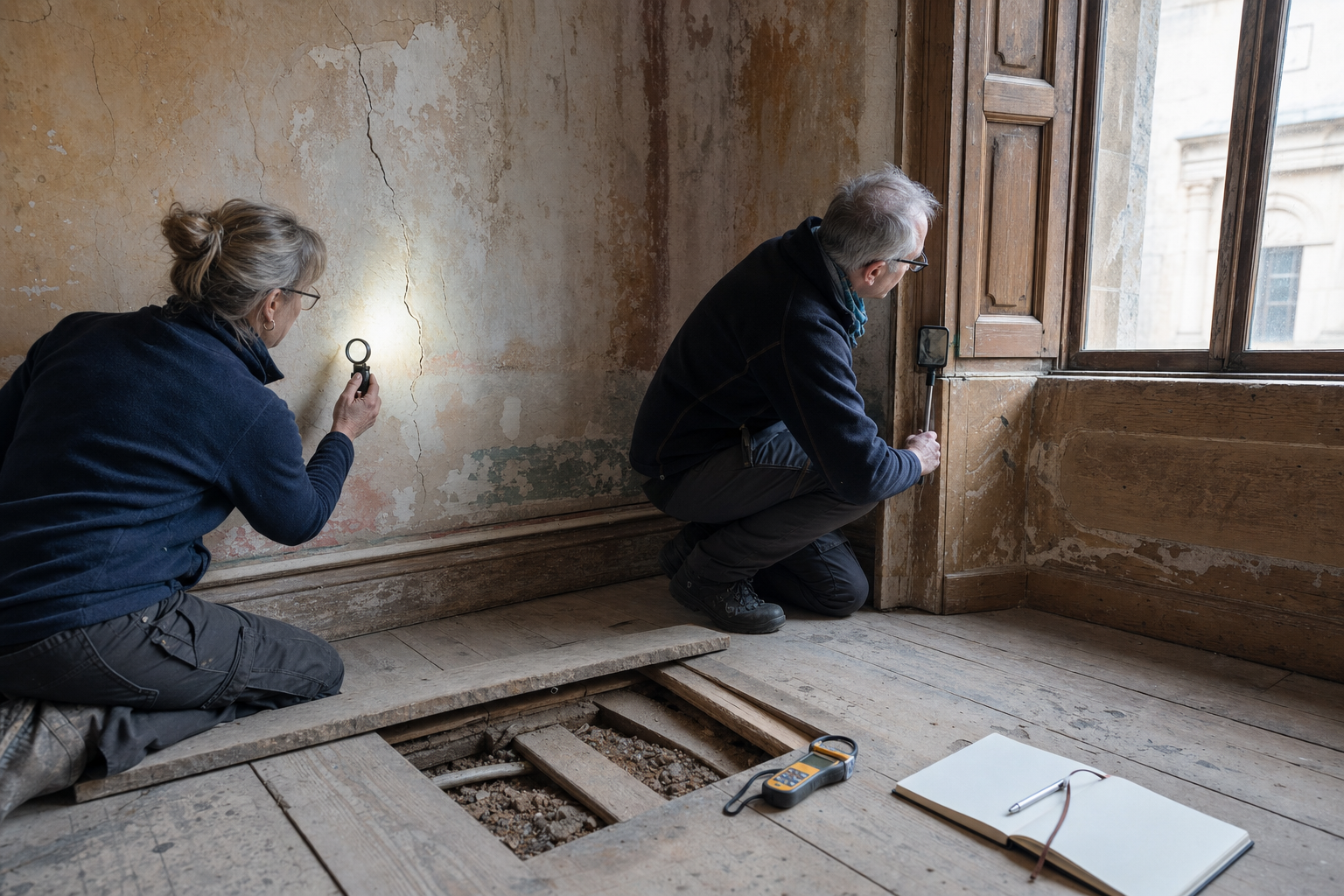
Historic-building work becomes expensive and disruptive when visible finishes are renewed before moisture, movement and failing services are understood. Paint can conceal dampness. New interior surfaces can be damaged by an unresolved roof leak. Added insulation can alter how an old wall dries. Investigation is therefore part of the restoration, not an administrative delay before the real work.
The anticipated multi-year roadmap follows a sensible dependency: investigate and stabilize first, then address the envelope and services, and only afterward complete interior and site refinements. You can read that sequence as four practical stages.
- Record conditions and stabilize immediate risks. The team needs to know what is original, what has already been altered and where water, structural movement or service failures threaten the building. Conditions should be documented before anything is opened or removed.
- Make the envelope dependable. Roof and facade repairs, moisture control and discreet structural reinforcement protect everything installed later. In Helsinki’s climate, freeze-thaw action, wind-driven precipitation and snow loading make this more than cosmetic work.
- Renew essential building services. Electrical, plumbing, heating and ventilation upgrades affect fire safety, hygiene, energy use and indoor comfort. Their routes and equipment must be coordinated with the historic structure rather than forced through significant fabric.
- Refine worship, learning and community spaces. Acoustics, lighting, durable finishes, kitchen workflow, accessibility, classrooms, digital systems and landscaping can then be completed against a stable physical base.
This order does not mean that every stage must wait for the previous one to finish across the entire campus. Carefully separated work zones may proceed at different speeds. It does mean that no finish should be approved without understanding the wall, roof, structure or service behind it.
When you receive a progress report, look for three pieces of information: the condition discovered, the intervention chosen and the evidence that the intervention worked. A photograph of fresh plaster shows activity. Before-and-after moisture readings, a completed inspection or a documented systems test shows performance. The precise evidence will vary by trade, but the distinction between appearance and verified completion is always useful.
Apply five tests to every proposed intervention
Heritage conservation does not require freezing a building in an earlier era. It requires disciplined change. Five tests can help devotees, donors and community members judge whether an alteration respects both the manor and its future use.
- Necessity: What documented problem does the work solve? Repairing a serviceable element is usually less disruptive than replacing it simply because a new product is available.
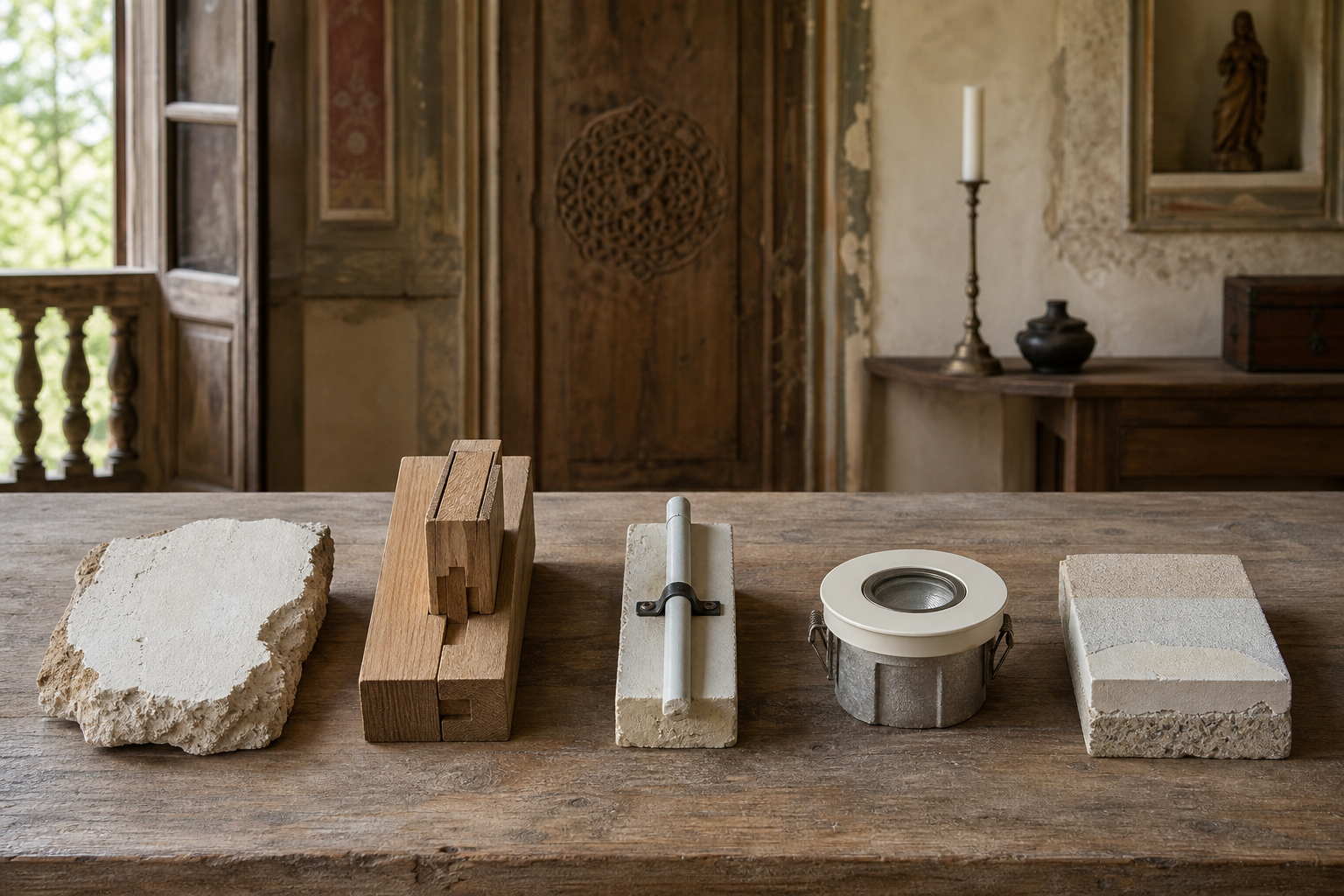
- Material compatibility: Will the new material behave safely beside the old one? Strength, vapor movement, thermal behavior and maintenance needs matter as much as color and texture.
- Minimal intervention: Is the proposal limited to what is required for safety, performance or continued use? More work is not automatically better conservation.
- Reversibility where feasible: Could a future custodian remove or renew the addition without sacrificing important historic fabric? Not every safety or structural measure can be reversible, but the question should still be asked.
- Documentation: Will future caretakers know what was found, retained, repaired, removed and added? Drawings, photographs, specifications and maintenance records prevent the next repair team from having to guess.
These tests are especially important when improving energy performance. The planned approach includes targeted insulation, controlled moisture management and avoidance of thermal bridges. Selective window retrofits, better airtightness and building automation may also be useful where conservation constraints permit. None should be treated as an isolated product purchase. Changing heat flow or air leakage can also change where moisture collects, so envelope and ventilation decisions need to be assessed together.
The same discipline applies to modern services. Heat-recovery ventilation, efficient heating and LED lighting can lower operational demand, but their heritage value depends on placement, installation and maintainability. A technically efficient unit that damages significant fabric or cannot be serviced without repeated disturbance creates a new problem. Ask where equipment and routes will go, how they will be accessed later and whether visible components are sympathetic to the manor rooms.
Safety deserves direct language. Fire detection, alarms and adequate egress are not decorative options, and structural or electrical work is not suitable for unsupervised volunteer labor. The proper goal is compliant protection with the least necessary visual intrusion, designed and installed by qualified specialists.
Design every room around the seva it must enable
A temple restoration succeeds in use, not on an empty-room inspection day. The design brief should therefore describe what people actually do in each space, how often they do it and what prevents them from doing it safely or well now.
Let the kirtan hall carry chant and speech
Congregational chanting and a spoken lecture do not make identical acoustic demands. Kirtan needs tonal richness and collective presence; teaching needs intelligible speech. Blanket sound absorption may make speech clearer while draining life from the chant. Too little control can turn a lecture into reverberant noise.
The proposed acoustic work should be calibrated for both uses. Before a treatment is repeated across the hall, the team can evaluate a limited installation with live chanting, amplified speech and an occupied room. That gives musicians, teachers and listeners something concrete to assess. Daylight and shading near the altar should receive the same use-based attention: serenity, visibility and protection from glare matter more than a dramatic architectural effect.
Flooring and finishes also need devotional criteria. Barefoot circulation, frequent cleaning and large gatherings call for surfaces that are durable, comfortable underfoot and low in harmful emissions. Material selection should be tested against maintenance routines, not just a showroom sample.
Make the prasadam kitchen a safe service system
A hygienic kitchen depends on workflow as much as new equipment. Food receiving, storage, preparation, cooking, distribution, dishwashing and waste handling should not obstruct one another. Festival demand makes poor circulation especially visible: volunteers cross paths, clean and used items mingle, and service slows just when capacity is most needed.
The envisioned kitchen renewal includes code compliance, stronger storage, efficient dishwashing and improved waste handling. If you help review the space, follow a batch of ingredients from arrival to service and then follow used utensils back through washing and storage. That walk-through can reveal unnecessary crossings and missing work surfaces before fixed equipment makes them costly to correct.
Treat accessibility as participation, not a ramp
A step-free entrance is only the beginning. A visitor must be able to reach the hall, prasadam area, learning spaces and essential facilities without encountering a second barrier. Thoughtfully graded ramps, feasible lift access, tactile cues, clear sightlines and understandable wayfinding work as a connected route.
The planned language set – Finnish, Swedish and English, with standardized transliteration for Sanskrit terms – can help newcomers navigate without erasing the temple’s sacred vocabulary. Quiet rooms and family-friendly amenities can also widen participation for elders, children and people who need a lower-stimulation space. The useful test is a complete visitor journey: arrival, entry, worship, learning, prasadam, facilities and departure.
Build learning and digital reach into the campus
Upgraded classrooms and multipurpose rooms can support sacred-text study, philosophy, music and cultural education. They can also host respectful encounters among Hindu, Buddhist, Jain and Sikh communities around shared dharmic commitments such as ahimsa, seva and satya, while leaving each tradition’s practices distinct.
Discrete fiber connections, suitable audio-video capture and streaming capacity are intended to extend kirtan and teaching beyond the campus. Digital provision should be planned before walls and finishes close, because later cable routes can cause avoidable disturbance. Yet streaming must remain in service to the gathering. Camera positions, microphones and controls should not obstruct darshan, circulation or the direct relationship between teacher, altar and congregation.
Support the work without confusing goodwill with governance
A multi-year heritage project needs devotion, but devotion does not remove the need for professional responsibility. Conservation architecture, structural engineering and building-services expertise protect the community from well-intentioned mistakes. Clear scopes, competent tendering, regulatory coordination, inspection and quality records also protect donations from being consumed by avoidable rework.
If you are considering financial support, ask questions that connect the contribution to a controlled phase rather than demanding an attractive completion date that the investigation cannot yet justify.
- Which phase is presently funded: investigation and stabilization, envelope work, services, interiors or site improvements?
- Which conditions have been confirmed, and which parts of the scope remain provisional until opening-up or specialist assessment?
- Who approves changes when hidden damage alters the original plan?
- How will completed work be inspected, documented and handed into the maintenance programme?
- What temporary arrangements will preserve darshan, kirtan and prasadam service while work areas are closed?
Those questions do not express distrust. They help a project communicate honestly when historic fabric reveals surprises. A credible update may say that part of the scope is still uncertain. False precision before investigation is less reassuring than a clear decision process.
Volunteers can contribute powerfully when roles are bounded. Moving approved non-sensitive items, helping with event arrangements, supporting communications, sorting construction waste where authorized and learning routine custodial care can all strengthen shared ownership. Volunteers should not undertake electrical, structural, fire-safety or specialist conservation work unless properly qualified and assigned through professional supervision. Historic surfaces can be permanently damaged by an enthusiastic cleaning method or unsuitable coating.
Phasing should also respect the temple calendar. Dust, noise and vibration controls protect worship areas and sensitive objects, while temporary arrangements can sustain darshan and kirtan. Coordinating intrusive work around major festivals is not a secondary convenience. Devotional continuity is one of the assets the restoration exists to preserve.
Key takeaways: what to watch and what to ask
- Judge three outcomes together: conserved historic fabric, uninterrupted devotional purpose and wider community participation.
- Expect investigation before certainty: stabilization and envelope performance should guide services and interior finishes, not follow them.
- Ask what changed and why: each intervention should have a documented problem, a compatible solution and evidence of completion.
- Test spaces through real activities: use chant and speech in the hall, trace food through the kitchen and follow a complete accessible visitor route.
- Keep specialist work with specialists: volunteer energy belongs in clearly assigned, non-technical tasks under project supervision.
- Plan beyond reopening: preventive maintenance, custodial training, energy monitoring and reviews of indoor conditions are part of the restoration’s value, not expenses to consider later.
The most useful thing you can do now is ask which project phase is active and what evidence will mark it complete. Then direct your donation, volunteer time or community attention toward that defined need. If Malmi Manor is cared for with this discipline, the renewed campus can remain recognizably historic while serving worshippers, students, families and visitors for generations.