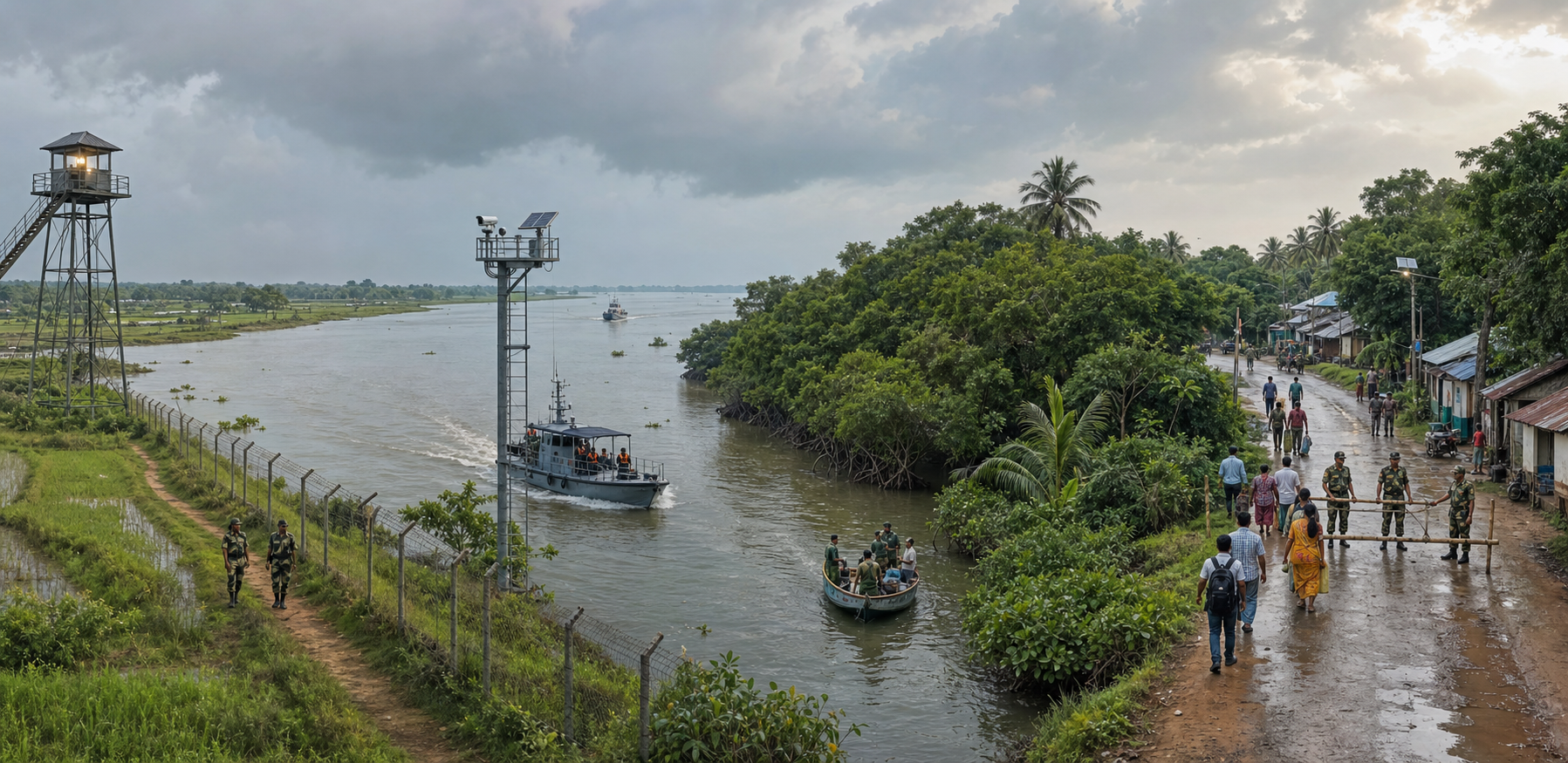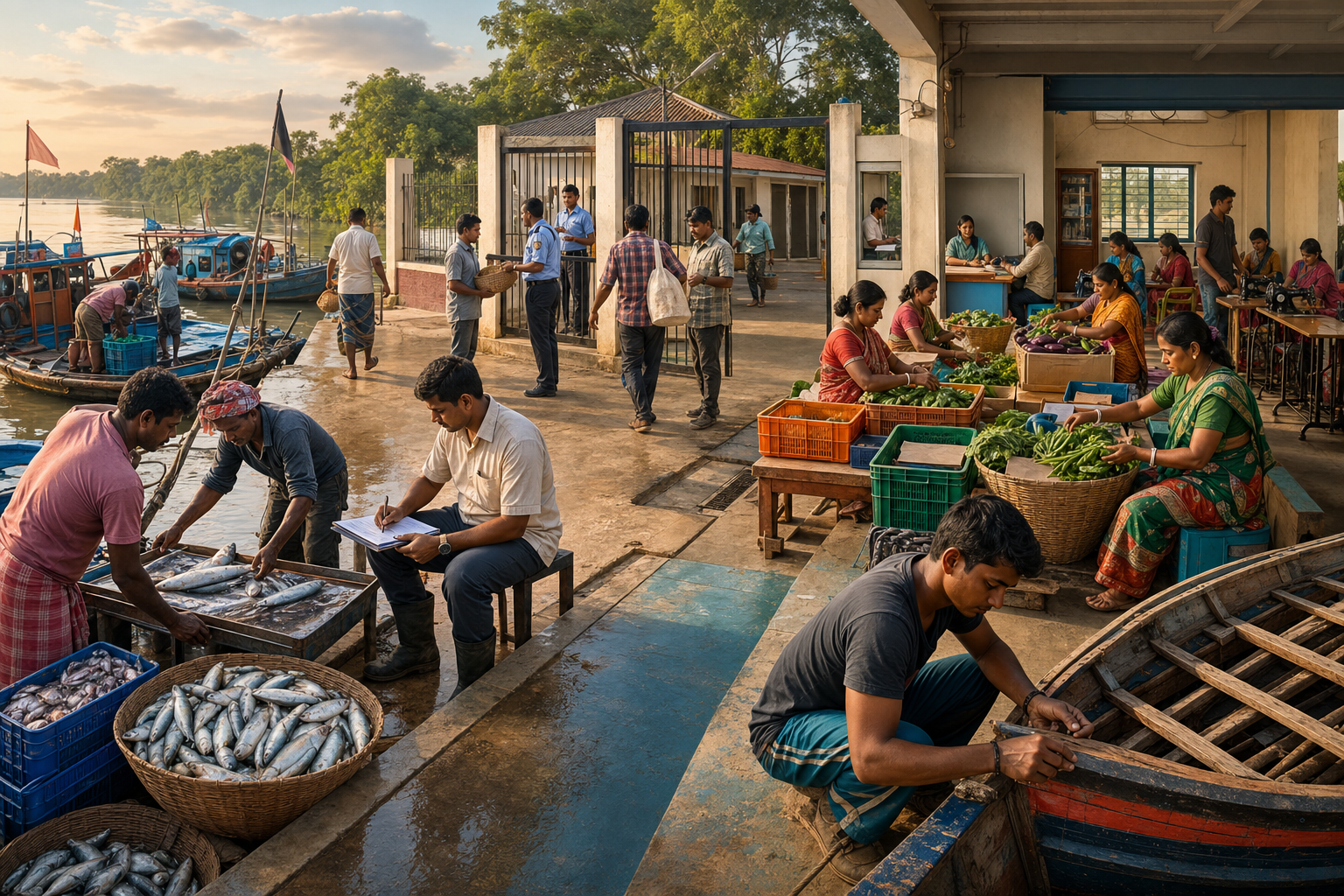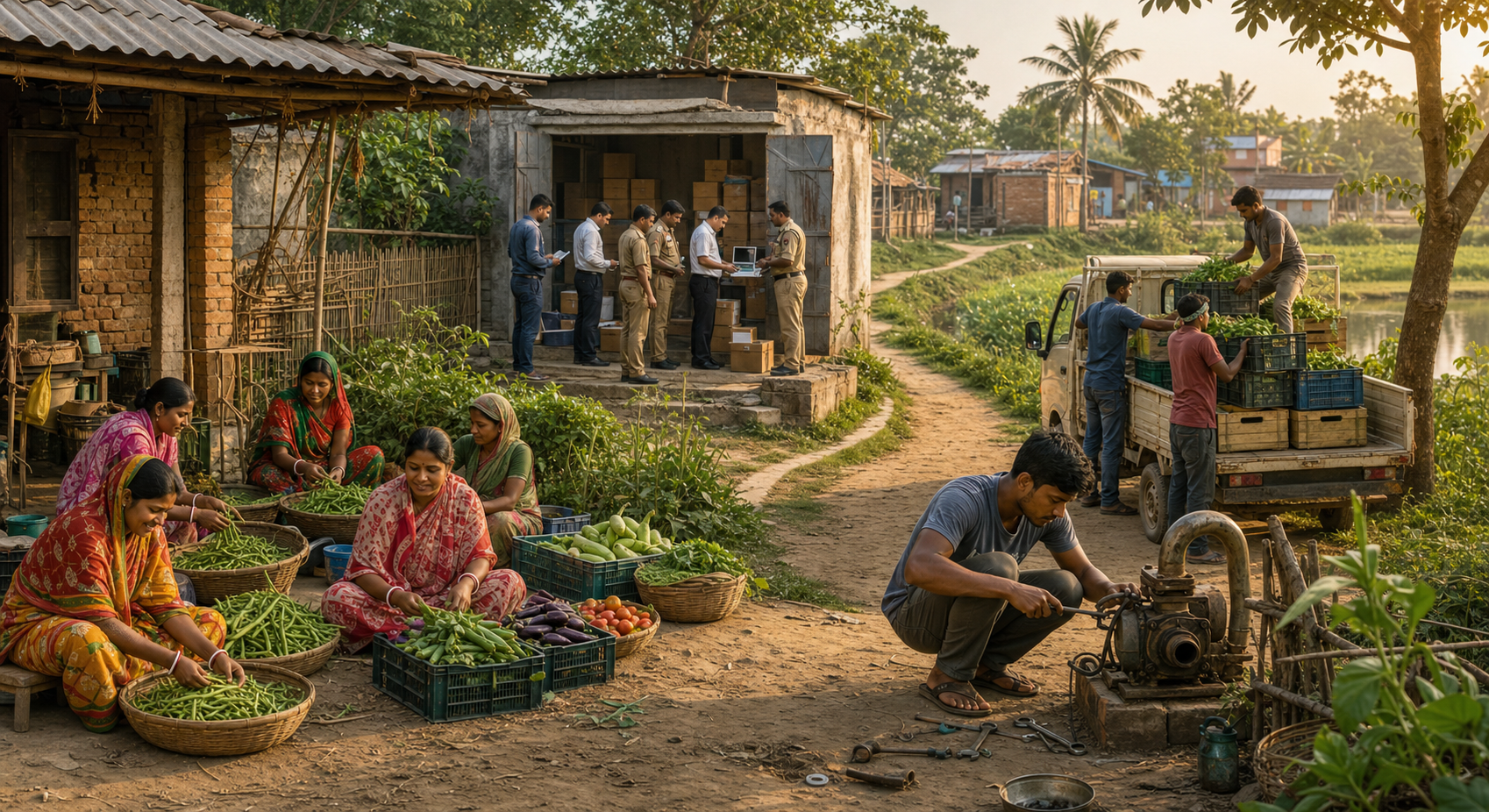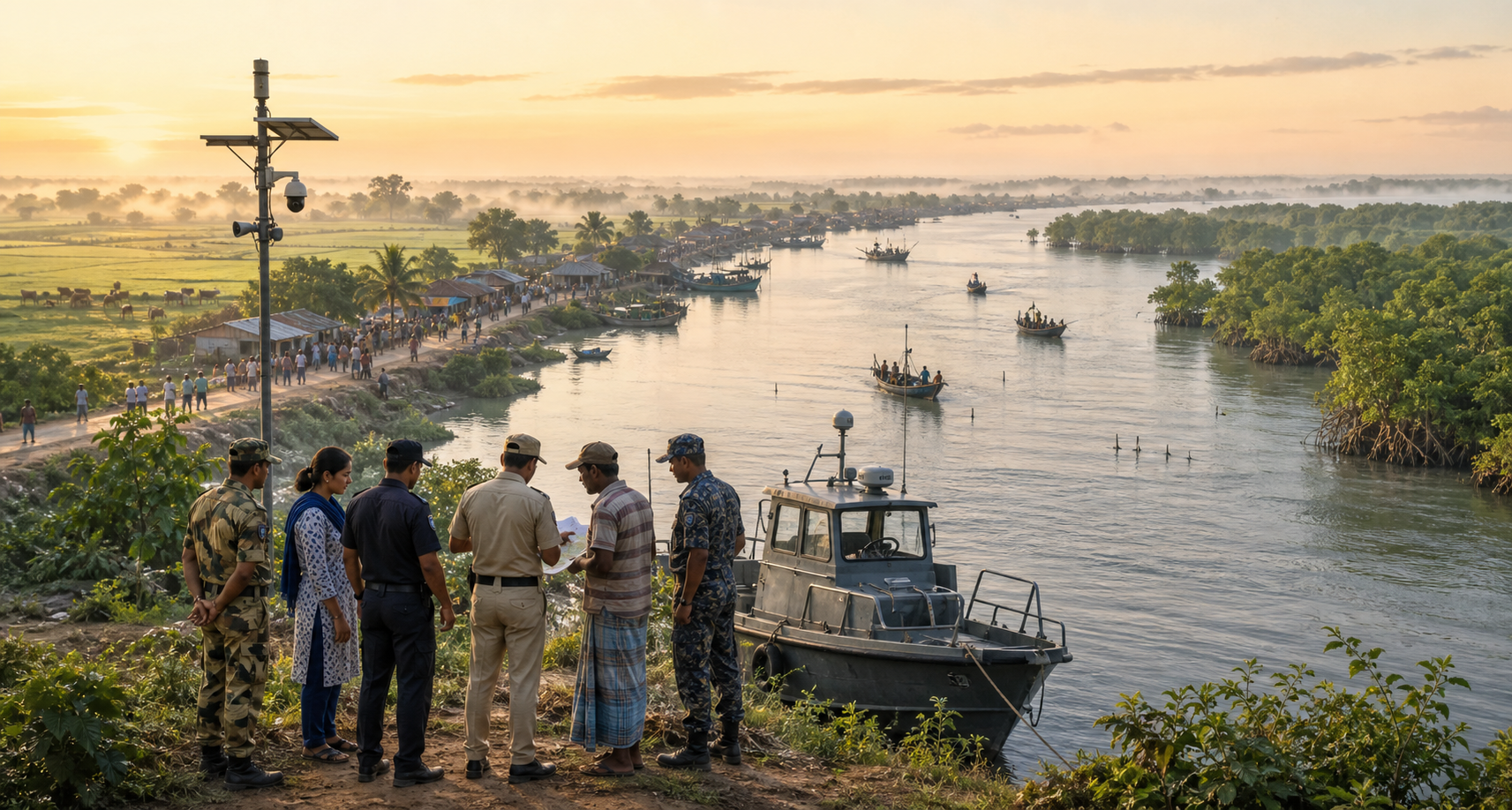
When you hear a promise to seal West Bengal’s border or crush cattle smuggling, the obvious question is whether it can survive contact with the ground. A fence across an open field is one problem. A river that changes course, a mangrove channel used by fishing boats, a crowded village road and a criminal network protected by money are four very different problems.
You can judge any border-security proposal by a demanding but practical standard: does it identify the network behind the crime, match technology to terrain, protect lawful movement and give border residents a better reason to cooperate with the state? If those parts are missing, a dramatic seizure or a newly illuminated stretch of fence may produce a headline without producing durable security.
Measure security by broken networks, not seizure totals
West Bengal shares roughly 2,200 kilometres of border with Bangladesh. Its length matters, but its diversity matters more. Criminal routes cross dry land, roads, farms, rivers, densely inhabited areas and the Sundarbans. Smugglers can shift from a disrupted route to a softer one, so counting animals, vehicles or consignments seized at a particular checkpoint tells you little about whether the organization behind them is weakening.
A credible crackdown starts by treating every interception as the beginning of an investigation. Officers need to preserve the route, vehicle, transport documents, phone links, payment trail and identities of recurring facilitators. Police, the Border Security Force, Customs, intelligence units and prosecutors then need a common case workflow. Otherwise, one agency makes the seizure, another receives incomplete records, and the organizer remains insulated behind replaceable drivers or carriers.
The legal path must also be identified before an operation begins. Illicit cross-border movement can engage the Customs Act, 1962 and the Foreign Trade (Development and Regulation) Act, 1992, while transport, animal-welfare and slaughter rules can involve state law. Financial investigation under the Prevention of Money Laundering Act or examination of benami assets belongs only where the facts and legal conditions justify it. Competent agencies must make those determinations; political rhetoric cannot substitute for admissible evidence.
That distinction protects both security and liberty. A loosely prepared case may collapse even when an offence occurred. A well-documented case can expose the financier, warehouse operator, corrupt facilitator and repeat buyer behind several incidents. West Bengal therefore needs written inter-agency procedures covering jurisdiction, evidence transfer, digital records, animal care after seizure and the officer responsible for moving a file toward prosecution.
Follow the money above the carrier
Street-level enforcement is necessary, but organized smuggling survives when it is cheap to replace the person caught at the border. A specialized state CID capability should connect apparently separate incidents by examining common vehicles, phone contacts, property, payment channels, document suppliers and storage sites. Targeted audits and lawful asset inquiries can then be directed at the higher layer instead of being used as indiscriminate pressure.
Government contracting deserves the same attention. A syndicate economy can extend into transport, local works, markets and public procurement. E-tendering and publication of awarded contracts do not prove corruption or innocence, but they make recurring patterns easier to detect. Conflict-of-interest checks and auditable changes to contracts should be normal wherever border infrastructure creates large local spending flows.
Publish outcomes that reveal whether the policy works
The public dashboard should not disclose patrol routes or other operational secrets. It should disclose enough aggregated information to distinguish progress from theatre: interdictions that became filed cases, cases that reached conviction, repeat offenders linked across incidents, major networks disrupted, seized animals transferred safely, and the time taken to act on verified alerts. Route displacement should be monitored as well. A decline in one district is not success if activity merely moves to the next river or road.
When you evaluate a crackdown, ask for the chain from detection to conviction. A large seizure total without case outcomes may indicate energetic patrolling, weak investigation or both. The government should be able to tell citizens which interpretation the evidence supports.
Fit the barrier to West Bengal’s terrain
No single piece of equipment can secure this frontier. Double-row fencing and floodlighting are foundational on suitable dry-land stretches, but a procurement plan that treats a river like a field will waste money. The useful question is not how much technology has been purchased. It is whether the chosen system can detect a relevant event, preserve evidence, transmit an alert and bring a trained response team to the right location.
Dry land needs completed barriers and maintained sightlines
On land, the priority is to close lawful, technically feasible gaps; illuminate vulnerable approaches; maintain gates; and prevent vegetation, failed power or damaged fencing from creating predictable blind spots. Thermal cameras, day-and-night optics, fiber-linked ground sensors and command software can reinforce the physical barrier. They cannot compensate for an unstaffed response post or an alert queue no one is responsible for clearing.
Every technology contract should therefore include field acceptance tests. Can the system detect the intended movement in rain and darkness? How often does it produce false alarms? Does the control room record who acknowledged an alert? Is footage retained in a form that investigators can use? Is there backup power? Who must repair a failed sensor, and how quickly? A camera installed but routinely offline is not border infrastructure; it is an accounting entry.
Rivers and mangroves need a moving security map
Riverine stretches require shallow-draft boats, night-navigation capability and crews trained for water operations. Low-light cameras, infrared-equipped drones and sensors at known blind spots can extend observation, but the response still depends on the BSF Water Wing and other authorized personnel reaching the location safely. Equipment specifications should reflect water depth, current, vegetation, visibility and seasonal access rather than a generic border template.
The Sundarbans make static mapping especially inadequate. Channels, embankment conditions and navigable approaches can change with the season. Satellite imagery and hydrographic scans should refresh the risk map, while local observations should flag new erosion, damaged lights or unfamiliar night movement for verification. That map must drive patrol allocation; otherwise teams continue covering yesterday’s vulnerability while a new route emerges elsewhere.
Monsoon resilience should be tested before the monsoon, not discovered during it. Control rooms need power redundancy, communication fallbacks and a plan for medical emergencies. Boats, batteries, towers and access roads need documented maintenance. Public reporting can show the percentage of identified gaps closed, illuminated and operational without revealing the precise locations that criminals would exploit.
A useful technology metric joins detection to action: the time between a validated sensor alert and an operational response. If that interval remains long, adding more sensors will create more unattended information rather than more security. Fix command responsibility, transport and staffing before expanding the feed.
Make legitimate work easier than participation in smuggling
A border village cannot be treated only as terrain surrounding a fence. Residents need roads, lighting, communications, schools, clinics, markets and lawful transport. Where legal incomes are fragile and criminal intermediaries offer quick money, enforcement alone leaves the recruitment pool intact. The Border Area Development Programme and complementary state schemes should be targeted to the panchayats where insecurity, infrastructure gaps and syndicate recruitment overlap.
The sequence of investment matters. An all-weather road helps a patrol reach an alert, but it also helps a farmer reach a market and a patient reach a clinic. Solar lighting can reduce a night-time blind spot while improving ordinary village safety. Reliable mobile coverage lets residents report suspicious movement, traders verify documents and students reach digital services. Border development is not compensation for security policy; it is part of the security system.
Trace livestock without criminalizing animal husbandry
Livestock traceability can increase the cost of trafficking while reducing needless delay for lawful farmers and transporters. Ear-tagging and animal-health records under the National Animal Disease Control Programme can be connected, where lawfully authorized, with transport permits, electronic challans, authenticated weighbridge information and tamper-evident documents.
The practical goal is anomaly detection. A vehicle carrying animals inconsistent with its permit, a tag reused in incompatible records, an implausible route or repeated document irregularities deserves examination. A compliant transporter should face a predictable check and a recorded reason for any detention. Blanket obstruction pushes honest commerce toward informal channels and gives corrupt gatekeepers more leverage.
Digital controls also create new risks. Someone may steal credentials, alter records, compromise a weighbridge or enter false data at the point of origin. Systems need role-based access, logs that cannot be casually changed, periodic reconciliation between physical inspections and database entries, and independent audits. Digitization does not remove corruption; it changes where investigators must look for it.
Attach livelihood policy to measurable market access
Livelihood grants are useful only when a legal enterprise can reach customers. Dairy collection, cold storage, farmer-producer organizations, apprenticeships, women-led microenterprises and digital commerce should therefore be assessed by functioning equipment, buyer connections, recurring income and repayment stress—not merely by the number of beneficiaries enrolled.
Community policing can connect this economic pillar to enforcement. Forums should be multilingual, regularly scheduled and linked to a grievance process. Residents need a safe way to report a precise time, place, vehicle, route or infrastructure failure and to receive a reference number. They should never be encouraged to confront suspected smugglers. Organized networks may be violent, and detention or enforcement belongs to authorized personnel.
Anonymous tips should be verified before action. A reporting channel without safeguards can become a weapon in land disputes, commercial rivalry or communal hostility. Officials should track how many reports proved actionable, how complaints were resolved and whether any local group is being subjected to repeated unsupported allegations.
Keep cow protection dharmic, lawful and impartial
For a dharmic society, preventing cruelty to cattle is not merely a question of border accounting. Ahimsa gives the policy moral weight across Hindu, Buddhist, Jain and Sikh traditions. But that moral claim is weakened, not strengthened, when private groups punish people, when allegations replace proof or when an entire religious community is treated as presumptively guilty.
A strong state distinguishes conduct from identity. It investigates the transport, financing and cross-border movement that the law prohibits. It protects lawful animal husbandry and dairying. It records the condition of seized animals and provides for their safe transfer and care. It also acts against assault, extortion, fabricated accusations and political protection, regardless of who commits them.
Vigilantism is not a shortcut to cow protection. It can injure innocent people, destroy evidence, frighten witnesses and compromise a prosecution. If you encounter suspected trafficking, record only what can be observed safely and report it through official channels. Do not chase a vehicle, enter private property, block a road or attempt a detention.
Make restraint operational, not rhetorical
Clear use-of-force procedures, body-worn cameras in sensitive operations, human-rights training and prompt investigation of complaints protect officers as well as civilians. Video can clarify whether instructions were given, how an encounter escalated and who handled evidence. It is not enough to buy cameras: activation rules, secure storage, access logs and consequences for unjustified non-use must be defined.
Oversight should include internal vigilance, appropriate judicial supervision and cooperation with statutory commissions where their mandates apply. Complaint data can be released in aggregate: allegations received, inquiries completed, findings sustained and corrective actions taken. Transparency about misconduct does not make the border weaker. It makes cooperation more likely because residents can distinguish accountable enforcement from arbitrary power.
Coordinate across the international boundary
Traffickers exploit the jurisdictional seam between India and Bangladesh. The Coordinated Border Management Plan, joint patrolling, information exchange, BSF–BGB talks, local flag meetings and hotline protocols provide ways to close that seam without turning every incident into a bilateral confrontation.
Coordination should have an operational purpose: warn the other side about a developing pursuit, identify a recurring group, synchronize action against a route, resolve an accidental crossing and reduce the risk of violence. The relevant measure is not how many meetings occurred. It is whether shared information produced timely prevention, safer resolution or a stronger case against a network.
This is also why loose communal language is strategically damaging. It collapses traffickers, irregular migrants, lawful border residents and citizens into one hostile category. Those groups present different legal and security questions. Conflating them makes intelligence less precise, alienates potential witnesses and allows actual organizers to hide inside political noise.
Key takeaways for judging the policy
- Ask what happens after an interception. The meaningful chain runs from seizure to network analysis, prosecution and conviction—not merely to a publicized total.
- Demand terrain-specific infrastructure. Dry-land fencing, river patrols and Sundarbans surveillance require different equipment, maintenance and response plans.
- Test the alert-to-response system. Sensors create security only when power, communications, trained personnel and command responsibility turn an alert into timely action.
- Protect lawful livelihoods. Traceability should identify anomalies while giving compliant farmers and transporters predictable procedures.
- Measure development by functioning access. Roads, telecom, dairy facilities, training and credit matter when they produce usable services and durable legal income.
- Reject both syndicate protection and vigilantism. Cow protection rooted in ahimsa requires evidence, humane animal care, due process and equal enforcement.
- Publish outcomes without exposing operations. Convictions, response times, infrastructure uptime, complaint resolution and welfare coverage can be disclosed in aggregate.
The next time a border package is announced, look past the total money promised and the equipment photographed. Ask for the completion date, operating authority, maintenance obligation, alert-response target, prosecution outcome and village-level development measure attached to it. If officials cannot identify those six things, the proposal is not yet ready to be judged as a security program.
West Bengal does not have to choose between a firm border and a humane one. The workable choice is a state capable of identifying criminals accurately, protecting animals lawfully, maintaining difficult infrastructure and earning cooperation from citizens who live closest to the risk. That is the standard voters, residents and civil-society groups should now insist on—project by project and quarter by quarter.