
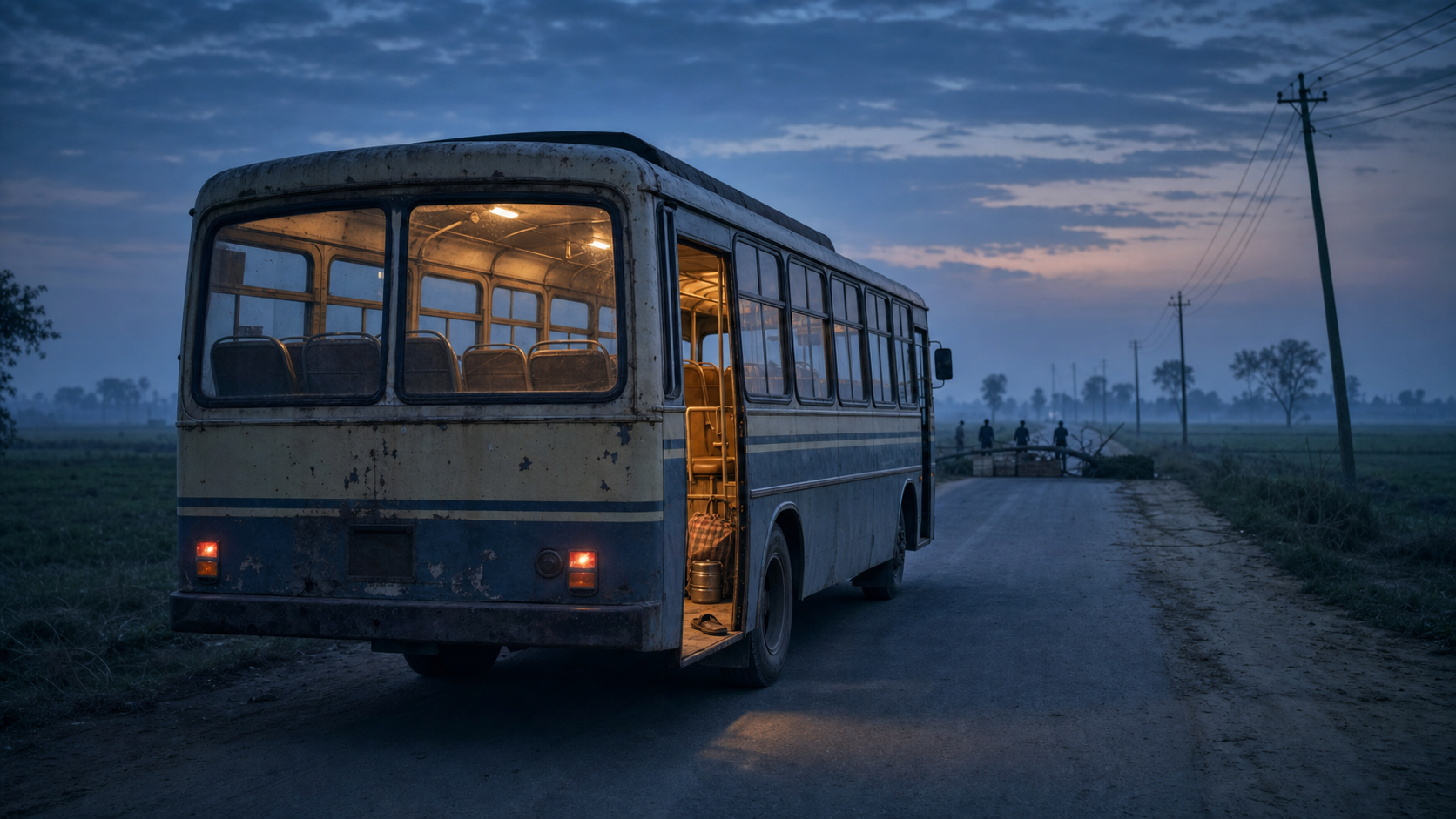
When a massacre aboard a bus is reduced to the vague label of Punjab violence, the decisive fact disappears: an ordinary journey was used to locate, isolate and kill Hindu civilians. To understand what happened, you have to look beyond the vehicle and examine how the attackers controlled movement, sorted identities and chose their victims.
You also need precision about culpability. Khalistani terrorists committed these attacks; Sikhs as a community did not. Naming the ideology and the Hindu targets prevents the crime from being softened into an undefined disturbance, while refusing collective blame denies the terrorists the wider communal conflict they sought to create.
Key takeaways
- The Lalru massacre on 6 July 1987 was a deliberate attack on civilian passengers, not an accidental transport casualty or an exchange of fire.
- Buses and trains were useful to terrorists because passengers could be confined, questioned, separated and attacked in one controlled space.
- Identity checks involving names, accents, appearance and answers demanded at gunpoint show that religious selection was part of the method.
- Accurate remembrance must identify Khalistani terrorism without replacing historical truth with hostility toward Sikhs generally.
The Lalru bus massacre was a sequence of deliberate choices
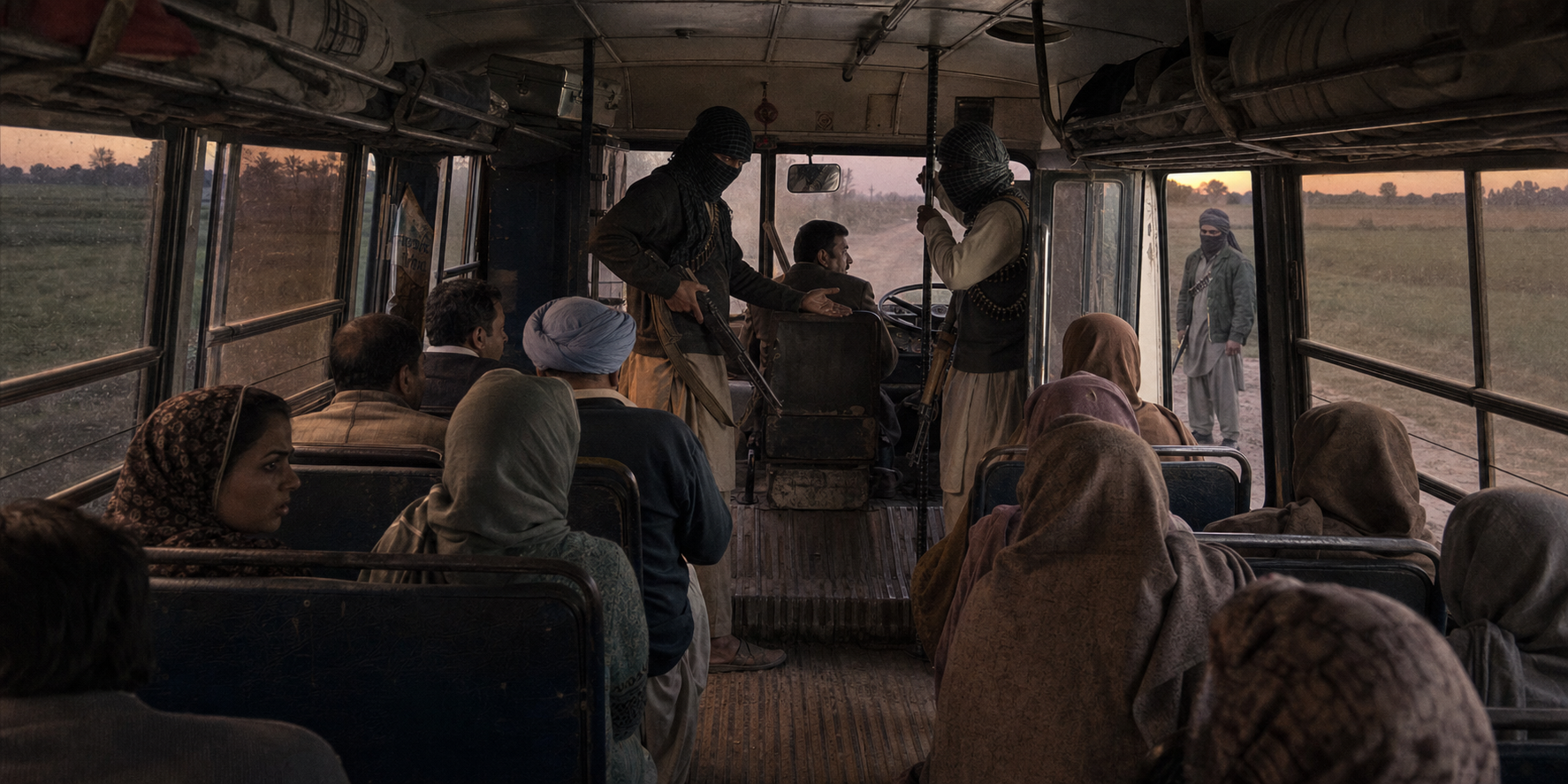
On the night of 6 July 1987, a Haryana Roadways bus travelling from Chandigarh toward Rishikesh approached Lalru. Its passengers included pilgrims, labourers, women, children and other civilians. They were using a routine public service, with no reason to expect that the journey itself would expose them to targeted killing.
A car blocked the bus. Armed men boarded it, forced it away from the main road, taunted and robbed the passengers, and then fired into the vehicle from both ends. Every stage increased the attackers’ control: stopping the bus prevented escape by road, diversion reduced the chance of interruption, and firing from two directions trapped people inside the passenger compartment.
Thirty-eight people were killed, including five women and four children. That toll should not be presented as if it resulted from crossfire. The passengers were civilians, and the Hindus among them had been made targets of Khalistani terror.
The distinction changes how you describe the event. An attack on a bus can mean sabotage intended to disable transport. At Lalru, the bus was primarily a container holding accessible human beings. The roadblock, removal from the main road and gunfire into the enclosed vehicle reveal a massacre carried out through the infrastructure of ordinary travel.
Why buses and trains became instruments of religious selection
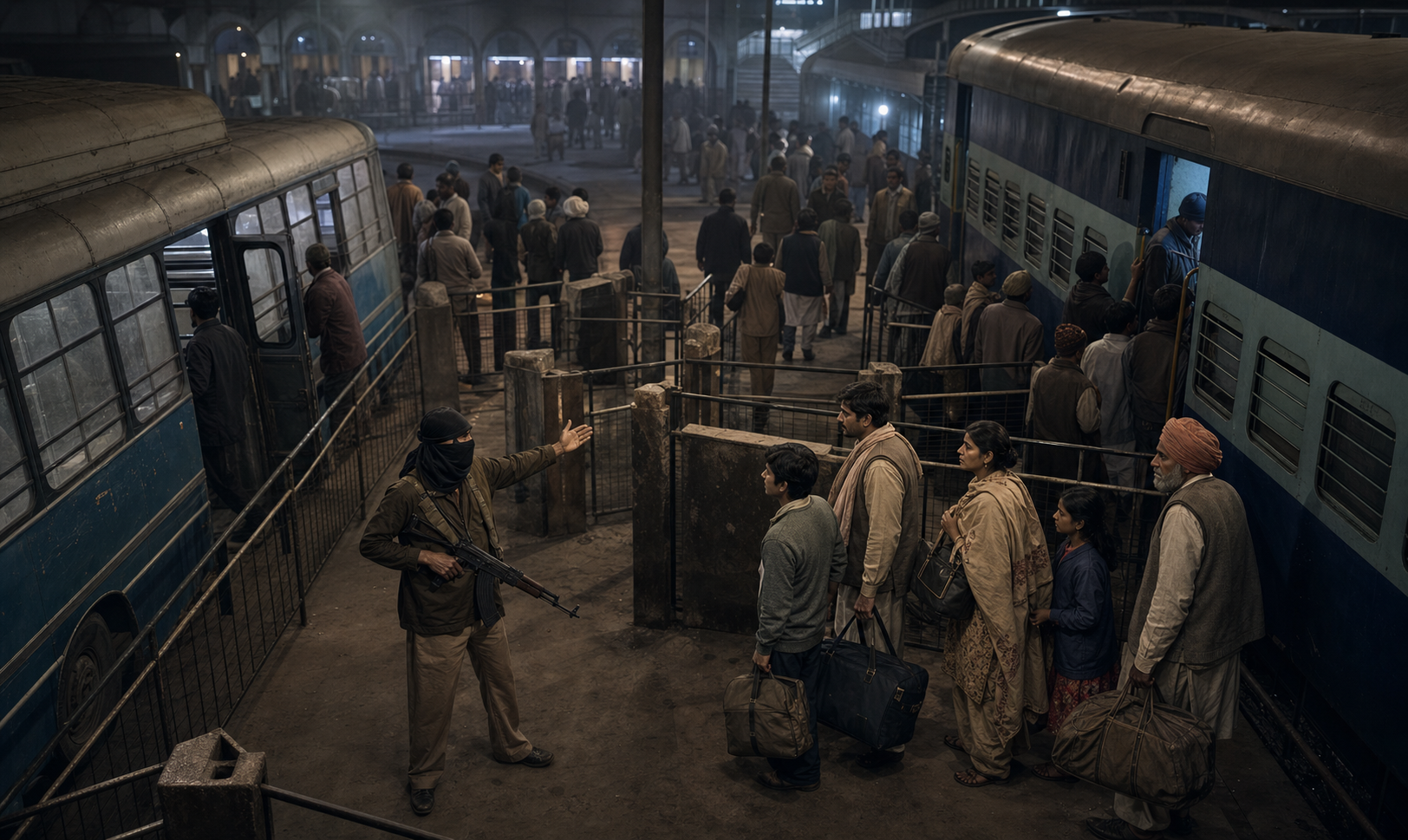
Public transport concentrates strangers who have surrendered some control over their movement. A passenger cannot choose the route, stop the vehicle safely at will or leave quickly when armed men control the doors and aisle. Khalistani terrorists exploited that dependence. The ticket that brought a person aboard also placed that person inside a captive group.
The method appeared in different forms during the Punjab insurgency. A bus could be stopped on the road. A train could be halted by pulling its emergency chain, turning a safety mechanism into a means of coercion. Once movement stopped, armed men could control who remained, who stepped away and who was marked for violence.
Religious identity was assessed through a person’s beard or turban, name, accent, or answers forced from the person at gunpoint. Sikh passengers were sometimes ordered aside. Women and children were spared in some incidents but not in others. You should therefore resist any claim that there was a dependable protective rule for families or other non-combatants. The killing of women and children at Lalru demonstrates the danger of that assumption.
Separating passengers also served a political purpose beyond the immediate attack. It imposed the terrorists’ categories on everyone present: one passenger was classified as a target, another as someone to be removed, and all were made to witness the power of armed identity enforcement. The shared civic space of the bus or train was replaced by a checkpoint in which the gunman decided whose identity permitted survival.
This is why public transport belongs at the centre of the history rather than at its margins. The vehicle was not incidental scenery. Its route, enclosure and mixed passenger body made targeted violence easier to organise and harder for civilians to escape.
Use language that identifies the crime without widening the blame
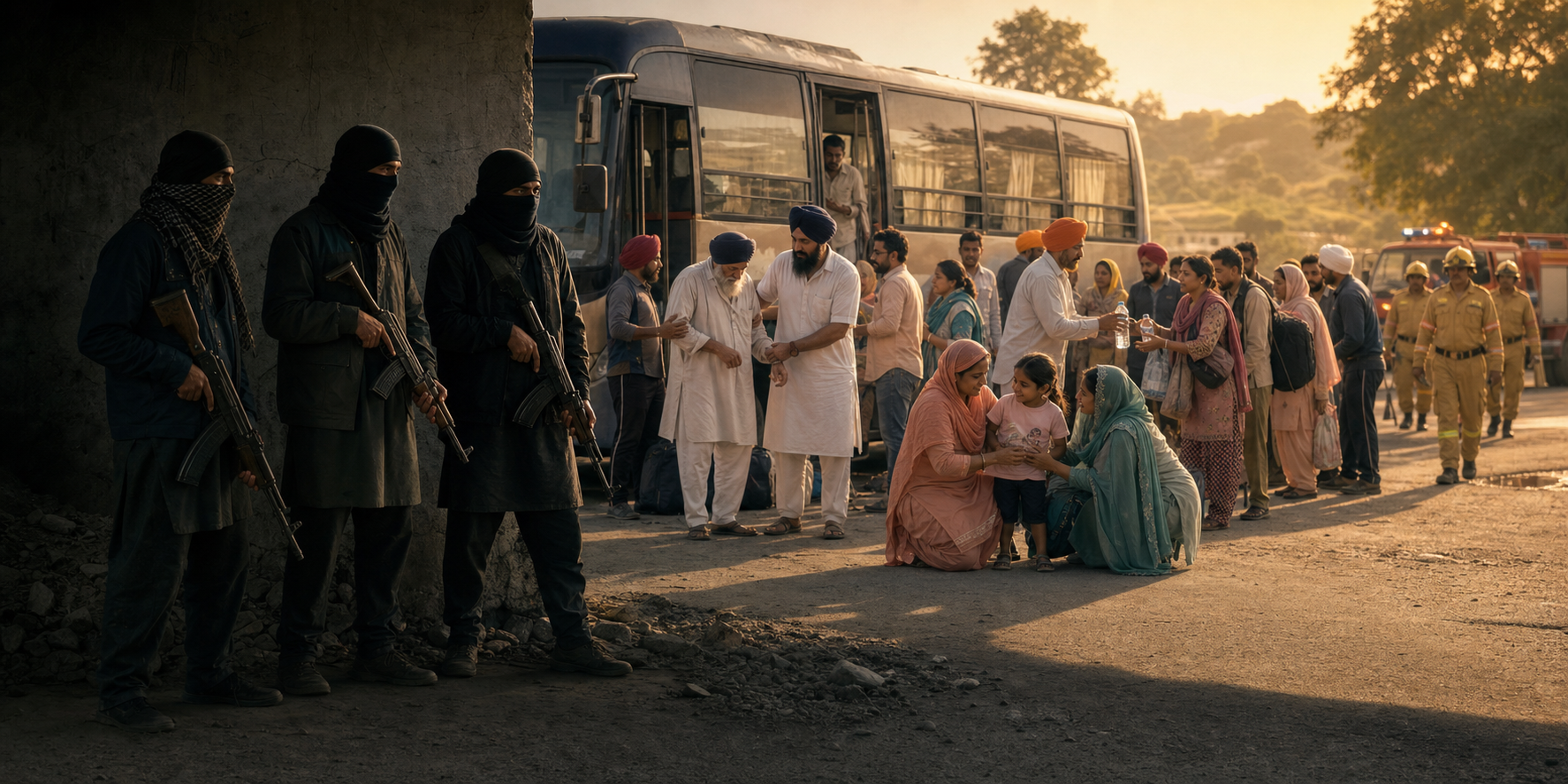
The words you choose determine what a later reader can still see. Several common descriptions blur the event in different ways:
- A clash implies opposing groups engaged in mutual violence. It is inaccurate when armed men trap and shoot civilian passengers who are not fighting them.
- A bus incident centres the vehicle and conceals the people. State that Hindu civilians travelling on a Haryana Roadways bus were massacred near Lalru.
- Random violence erases the identity checks, separation of passengers and selection of Hindus.
- Sikh violence against Hindus spreads responsibility from Khalistani terrorists to an entire religious community. It should not replace a specific description of the perpetrators.
- Everyone was treated alike hides the sorting process. Conversely, claiming that women and children were always spared is contradicted by the Lalru death toll.
Precision is not a concession to either side. It makes two truths visible at once: Hindus were targeted as Hindus, and the perpetrators’ Khalistani ideology cannot be projected onto every Sikh. Sikh passengers who were ordered aside were people under armed control; their religious identity alone does not make them accomplices.
You should be equally careful about details that have not been established. Do not attach a narrower organisation, named commander or invented motive to the Lalru massacre unless you can cite evidence for it. Do not turn one documented death toll into an estimate for an entire period. A truthful account can be morally clear without pretending to know more than the available facts support.
This discipline reflects a Dharmic balance. Ahimsa does not require euphemisms for the deliberate killing of civilians. Dharma does not permit the deed of a terrorist movement to become a pretext for hatred against innocent members of another community. Refusing both erasure and collective blame is not neutrality; it is fidelity to truth.
Build a record that survives slogans and social media
If you are preparing a community talk, memorial note, classroom discussion or social-media thread, begin with an event record rather than a slogan. The following process keeps the account verifiable:
- Fix the journey in place and time. Record the date, road or rail route, vehicle operator and location. For Lalru, those anchors are 6 July 1987, a Haryana Roadways bus from Chandigarh toward Rishikesh, and the approach to Lalru.
- Describe the sequence. Note the car blocking the bus, the armed boarding, the diversion from the main road, the robbery and taunting, and the firing from both ends. Sequence demonstrates deliberation more clearly than an adjective alone.
- Identify the people accurately. Call the passengers civilians and identify the targeted community where the evidence supports it. Name the attackers as Khalistani terrorists, not as Sikhs in general.
- Preserve the casualty qualifiers. Record 38 dead, including five women and four children. Keeping those details together prevents the total from becoming an abstract number.
- Separate fact from interpretation. Facts establish what the attackers did. Your interpretation can explain why control of the vehicle mattered, but it should not add an unverified organisation, individual or quotation.
- Keep the citation attached. A copied paragraph without its link soon becomes an unattributed claim. Preserve the publication, headline and URL wherever you reproduce the event record.
A useful one-sentence template is: On a specified date, identified perpetrators stopped or diverted a named vehicle near a named place, selected a documented civilian target group, and killed a documented number of people. If one of those fields is unknown, say that it is unknown instead of filling the gap.
Visual material needs the same restraint. Do not use an unrelated wreck, weapon or crowd merely because it creates emotional force. A route description, vehicle identification or carefully sourced memorial graphic often communicates more accurately than a dramatic image detached from the event. The purpose is to restore the victims to history, not to turn their deaths into spectacle.
When you next encounter a vague reference to violence during the Punjab insurgency, test it against this method. Ask who controlled the vehicle, whether passengers were sorted by identity, who was targeted and which details are actually documented. If your final sentence cannot name Hindu victimisation and Khalistani culpability without accusing Sikhs collectively, rewrite it until it can. That is how memory becomes both honest and resistant to further communal manipulation.