
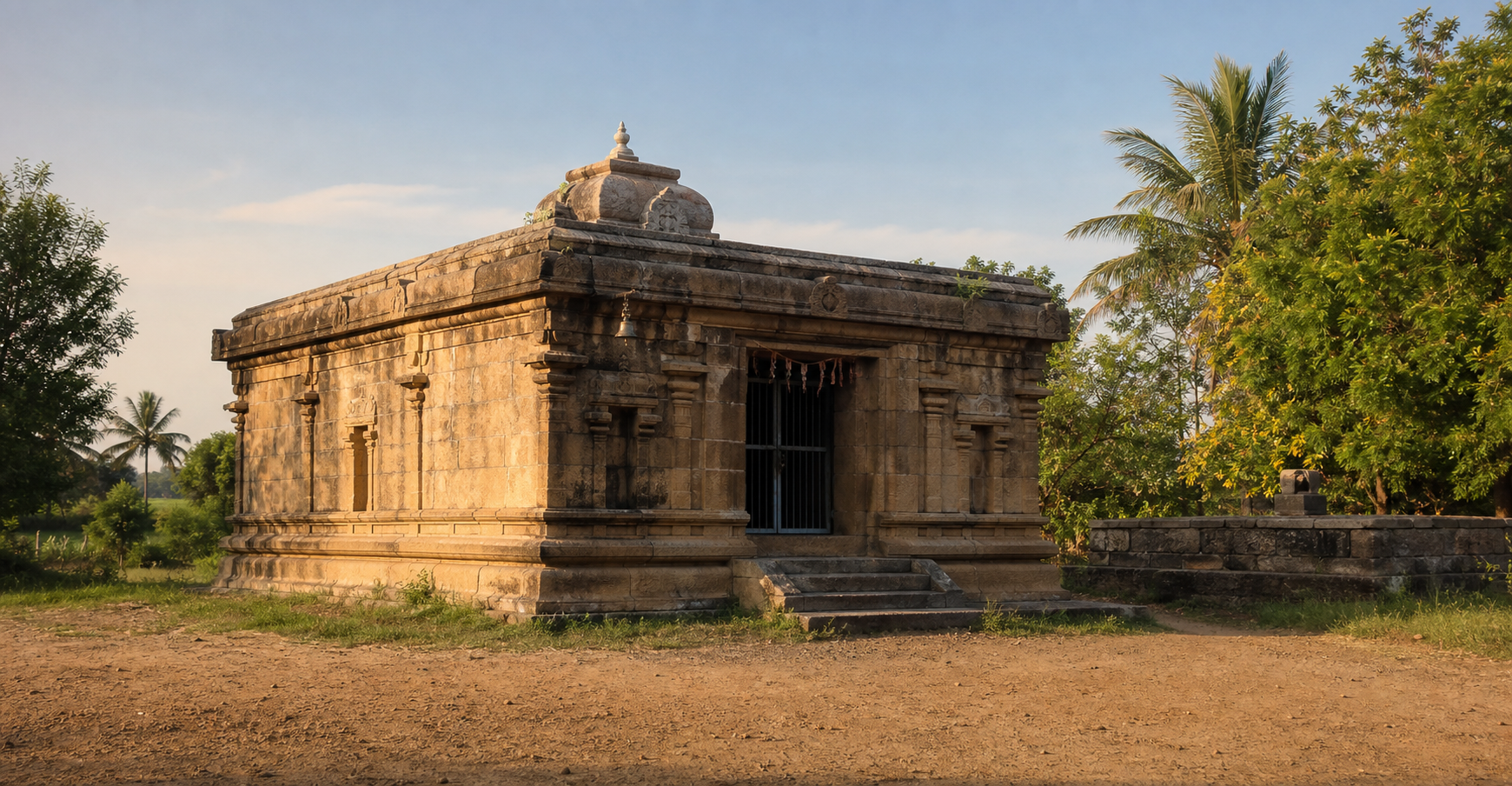
If you are considering a visit to Keezha Kadambur, the first thing to know is that Rudra Koteeswarar Temple does not announce itself through monumental height. You will not find the towering entrance or crowned sanctum that many visitors instinctively associate with Tamil Nadu’s celebrated temples.
That absence is not a reason to pass it by. It is the key to reading the temple. Its unusual form, its association with a crore of Shiva lingas, and its account of Indra’s pride yielding to devotion all direct your attention away from outward rank and towards the quality of your approach.
Read the temple’s architecture before judging its scale
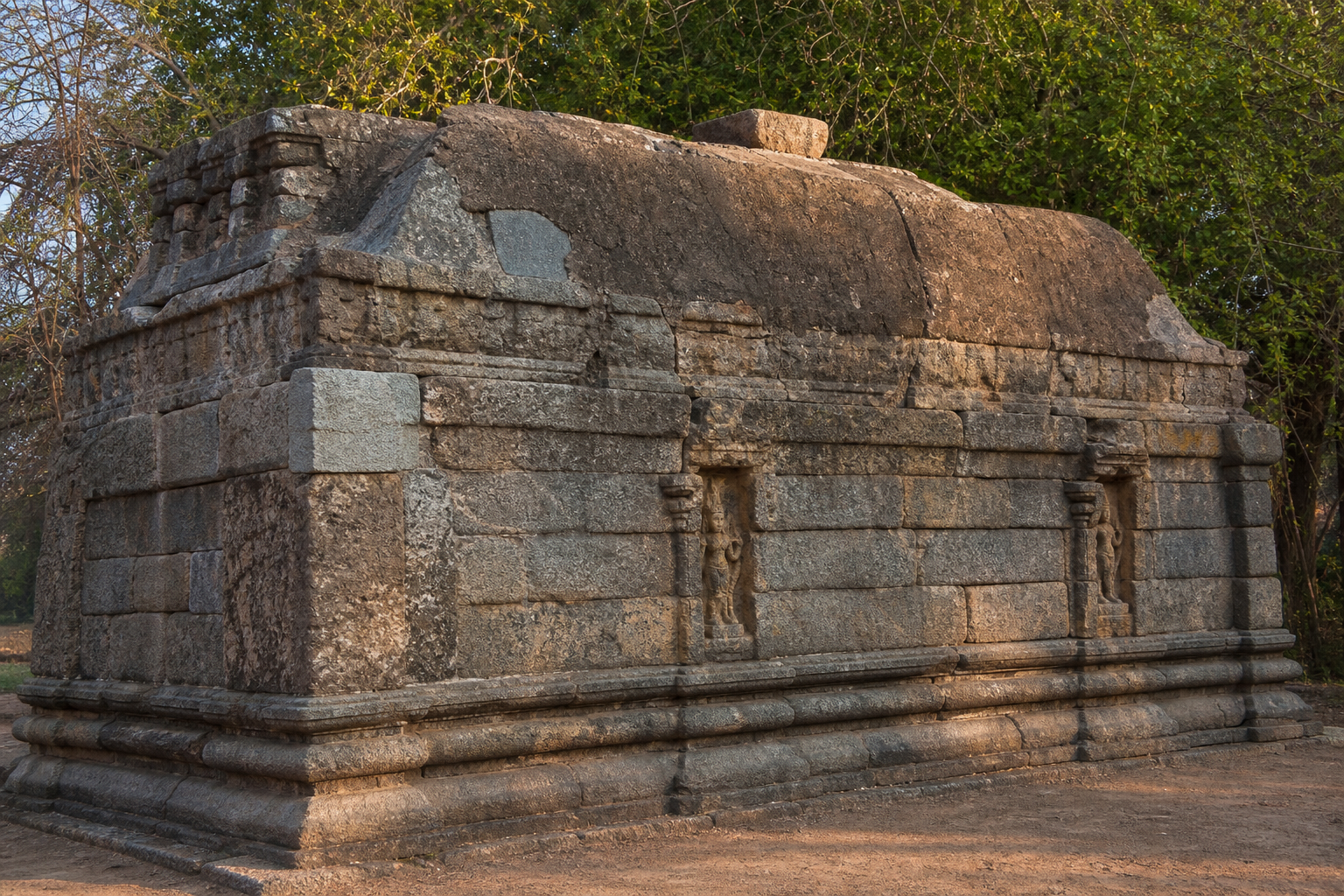
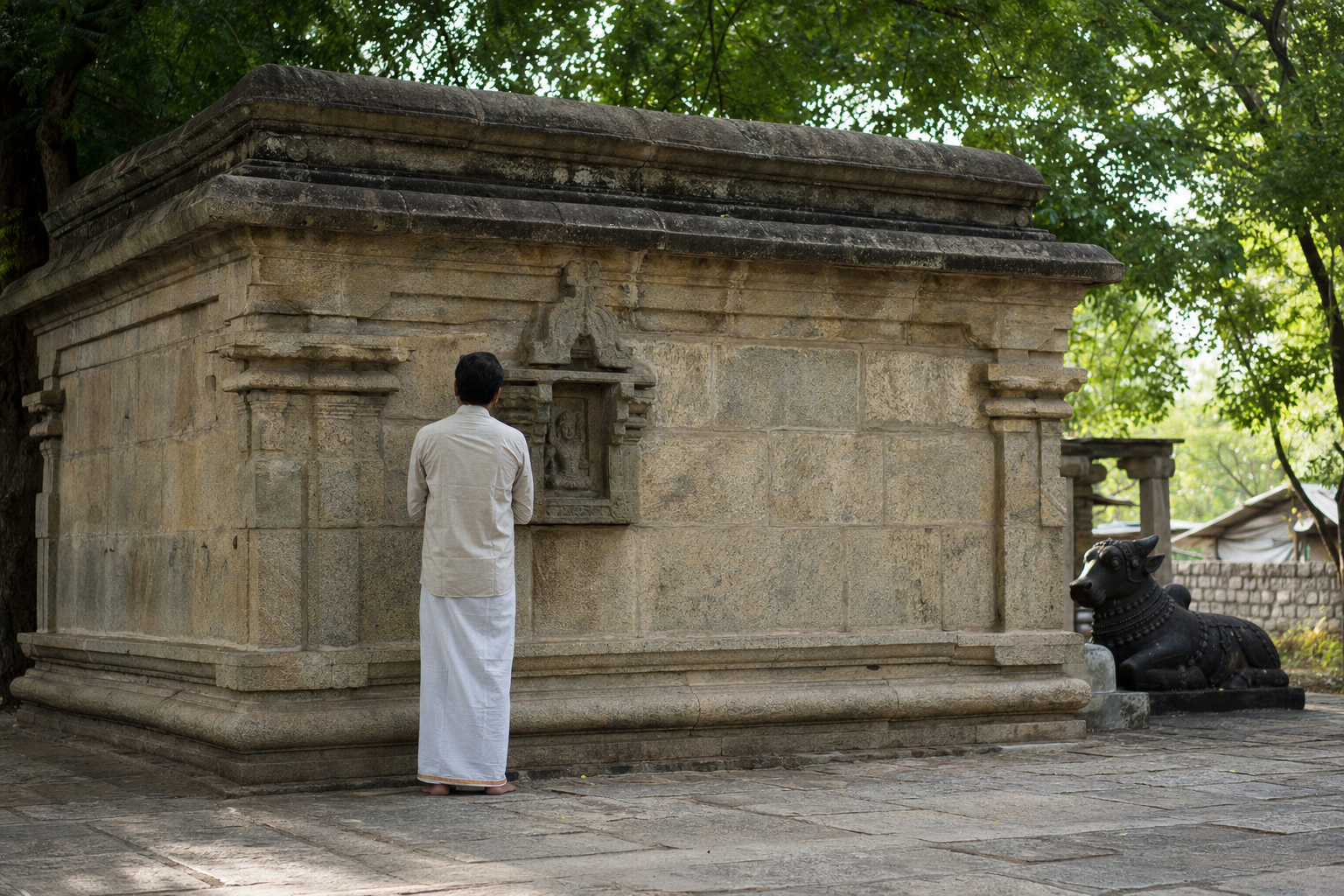
Many major temples in Tamil Nadu orient the visitor through a rajagopuram, the monumental gateway tower visible from a distance. A vimana rises over the sanctum and marks its sacred centre. Keezha Kadambur is distinctive because Rudra Koteeswarar Temple has neither a rajagopuram nor a vimana.
Do not translate that architectural plainness into spiritual insignificance. Nor should you call the temple unfinished, ruined, or inferior without evidence about its history. Those descriptions impose expectations derived from other temples instead of attending to the place in front of you.
When you arrive, pause before looking for ornament or a dramatic photograph. Notice what happens when there is no tall structure commanding your gaze. You must come closer, identify the sacred centre, and allow attention rather than spectacle to orient you. The temple’s modest profile makes that change of pace part of the encounter.
This is also a useful correction for anyone documenting Bharatiya temples. Sacred architecture is not a single visual formula. A temple can belong firmly within the Shaiva landscape while departing from the features that popular photography has taught us to expect. Record what is actually present, including significant absences, before trying to fit it into a familiar template.
Indra’s change of heart is the centre of the temple story
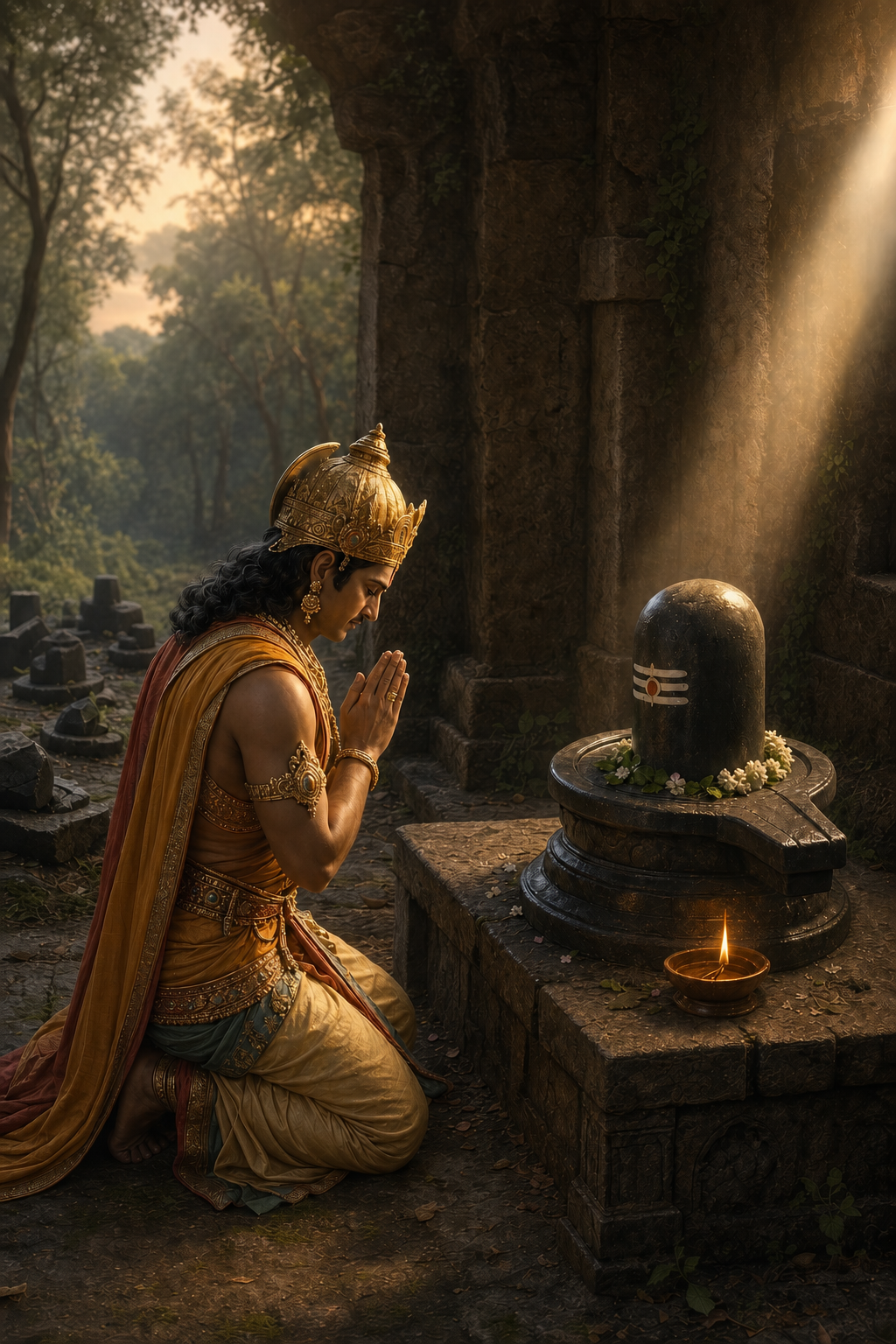
The temple tradition places Indra, king of the devas, before a decisive spiritual movement: his pride dissolves into devotion to Shiva. The important point is not merely that a powerful being is humbled. It is that status, splendour, and divine office do not remove the need for inner correction.
Read this as a mirror rather than as a story about somebody else’s arrogance. Pride is easiest to condemn when it appears in a distant figure. It is harder to recognise when it takes the form of insisting on deference, protecting an identity, displaying knowledge, or believing that achievement entitles us to spiritual importance.
Humility here should not be confused with denying your abilities or accepting mistreatment. Dharmic humility means seeing your position accurately and refusing to make the ego the measure of reality. Indra’s movement towards devotion offers a practical test: can responsibility and distinction be placed in service of something higher, or must they constantly be defended?
Before darshan, choose one area of life in which recognition has begun to matter more than duty. Name it plainly to yourself. Do not manufacture guilt or make an elaborate vow. Ask instead what one act would place that responsibility back in the service of dharma. This turns the temple’s account from an admired legend into a usable discipline.
Understand the crore of Shiva lingas without overclaiming
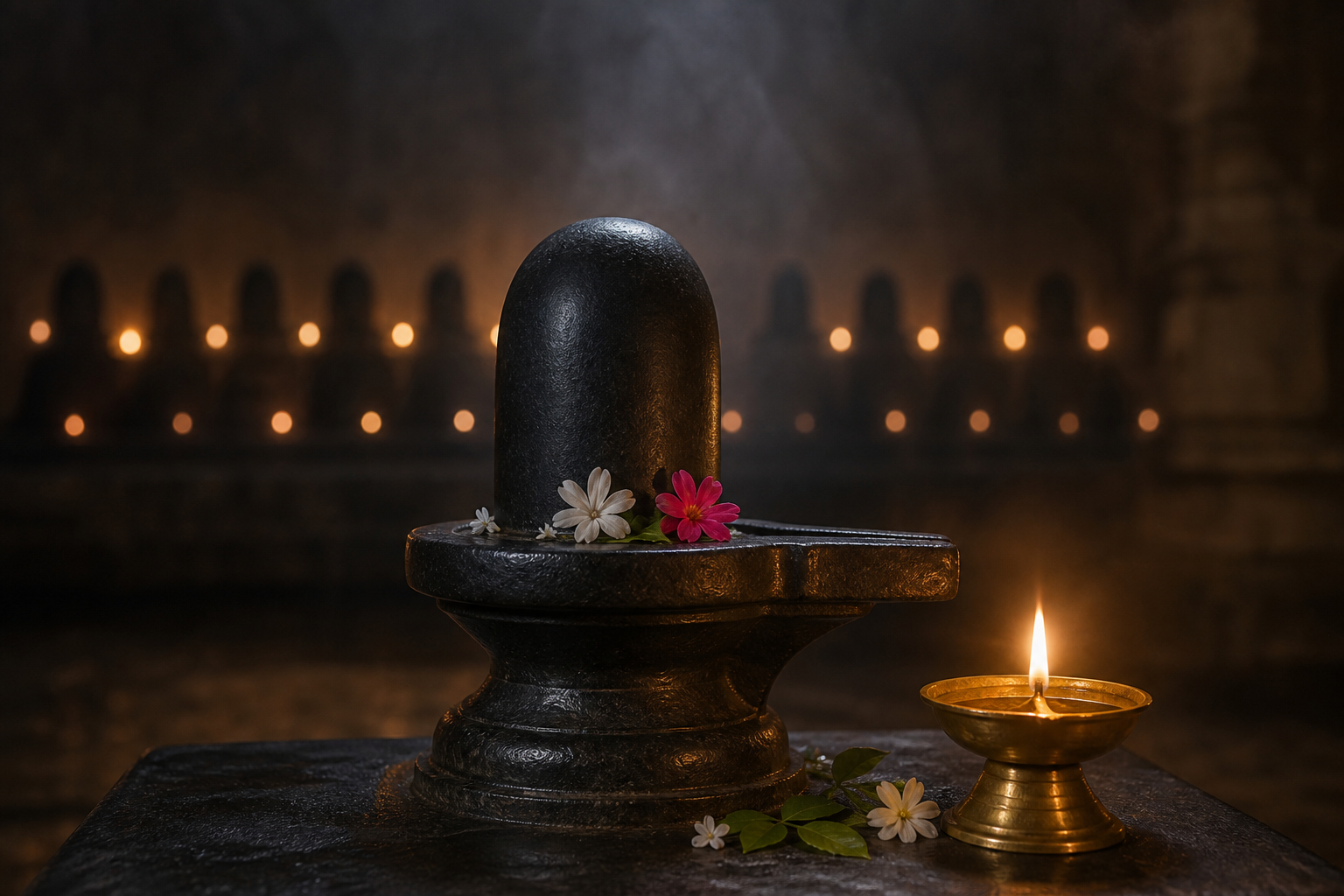
Rudra Koteeswarar Temple carries the sacred identity of the crore Shiva lingas of Kadambur. A crore denotes ten million, but a devotional claim involving that number should not automatically be treated like an archaeological inventory. The temple’s identity connects Rudra Koteeswarar with an immense multiplicity of linga presence; it does not give a casual visitor licence to invent how that presence must be physically counted.
This distinction protects both faith and accuracy. Flattening the tradition into a decorative metaphor empties it of sacred force. Insisting that every devotional number must correspond to separately countable objects can be equally careless. Where the precise ritual or narrative mechanism has not been established, preserve the claim in the form the temple tradition gives it and avoid adding details.
The linga does not require an anthropomorphic image to direct attention towards Shiva. At Keezha Kadambur, the idea of a crore of lingas expands that focus: divine presence is not restricted by the visible size of the structure. This makes the contrast especially instructive. The architecture is outwardly unassuming, while the temple’s sacred name points towards abundance beyond ordinary measurement.
If you explain the temple to a child, fellow pilgrim, or online audience, keep the distinction intact. Say that the temple is associated with a crore of Shiva lingas and that this identity magnifies its Shaiva significance. Do not claim to have seen ten million separate lingas unless you have direct, verifiable grounds for saying so.
Plan a visit around attention, not a monument checklist
A useful visit begins before you travel. Opening hours, festival arrangements, access conditions, photography rules, and available transport can change. Confirm them locally near the date of your journey rather than treating a permanent spiritual description as a current timetable.
- Verify the practical details. Check current opening times and local access before setting out. If mobility, language, or transport is a concern, resolve it before arrival rather than assuming the arrangements will match a larger pilgrimage centre.
- Carry one interpretive question. Ask what changes when sacred presence is not advertised by architectural grandeur. This will help you notice the temple on its own terms.
- Observe before photographing. Look for the absence of the rajagopuram and vimana, then notice how the temple establishes a sacred centre without them. If you want photographs, first confirm the local rule.
- Let local practice lead. Follow the instructions of the priest or temple custodian concerning entry, offerings, circumambulation, and proximity to the sanctum. Do not touch a murti, linga, or ritual object merely because no barrier is visible.
- Use Indra’s story personally. Identify one place where pride is interfering with duty. Keep the reflection concrete: a conversation to repair, credit to share, an apology to make, or work to perform without seeking recognition.
- Write down what was absent as well as what was present. After leaving, note the architectural features you expected, what you actually encountered, and how that changed your attention. This prevents the memory of the visit from being replaced by a generic temple image.
If circumstances prevent a physical visit, you can still contemplate the relationship among modest form, immense linga presence, and Indra’s surrender of pride. Do not pretend that remote reflection is the same as darshan at the temple. Use it as preparation for a future pilgrimage or as a focused Shaiva meditation in its own right.
Key takeaways
- Rudra Koteeswarar Temple is at Keezha Kadambur in Tamil Nadu and belongs to the Shaiva sacred landscape.
- Its lack of both a rajagopuram and a vimana is a defining architectural feature, not something to edit out of its identity.
- The temple story turns on Indra’s pride yielding to devotion, giving you a practical question about the relationship between status and dharma.
- Its association with a crore of Shiva lingas should be preserved faithfully without inventing a physical count or unsupported narrative details.
- For a responsible visit, verify changing logistics locally, follow temple-specific customs, and spend time observing before documenting.
Approach Keezha Kadambur with one question rather than a long sightseeing list: where has outward stature begun to distract you from sacred presence or duty? Let the quiet architecture slow you down, receive darshan according to local custom, and leave with one concrete act through which pride can become service.