
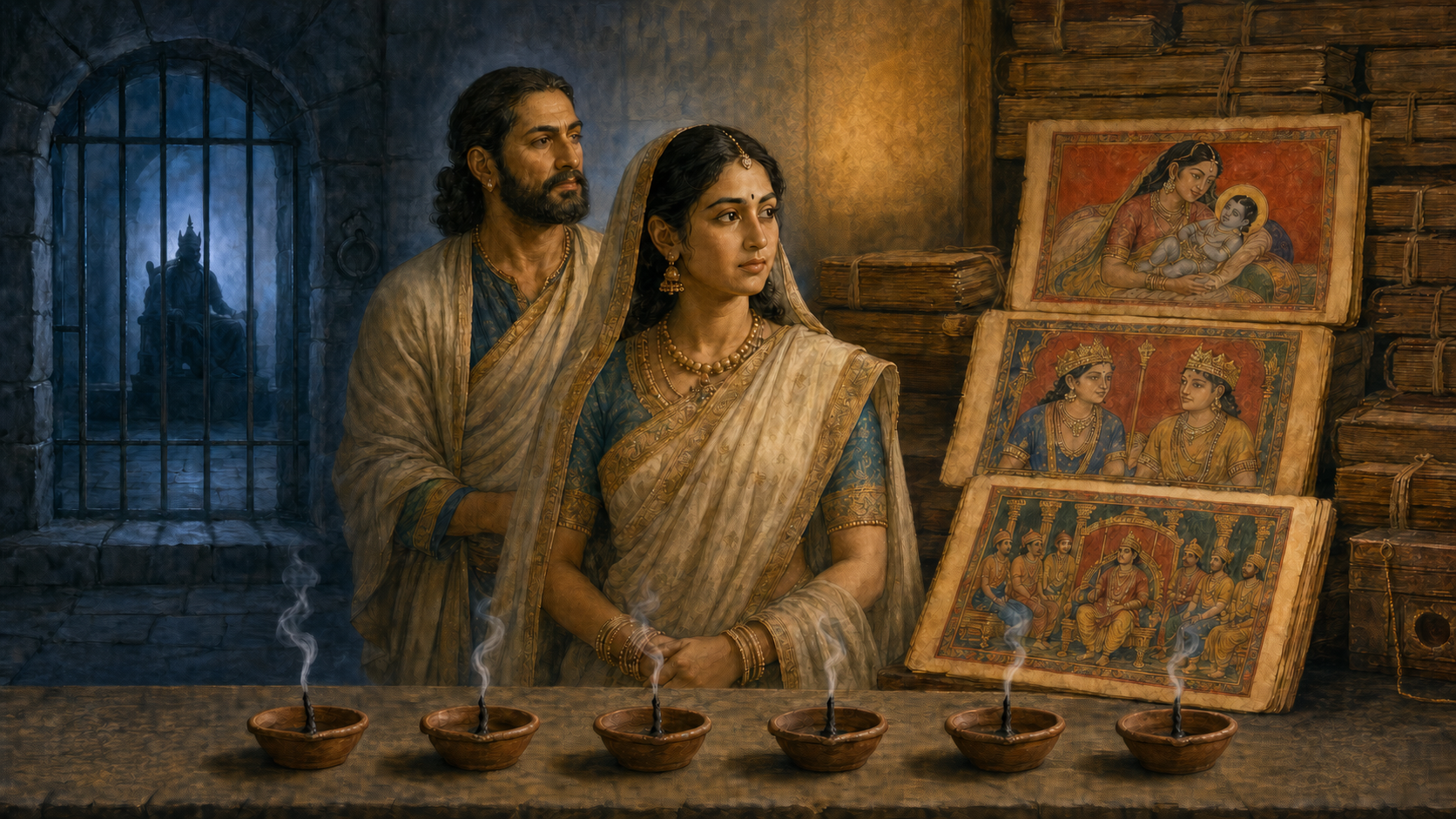
If you were taught that Kamsa killed Devaki’s first six children, then encountered a Jain Krishna narrative in which those deaths barely appear, you may wonder whether one tradition is correcting the other. That is the wrong test. The traditions are answering different religious questions with shared characters.
The clearest answer is this: Hindu Puranic memory makes the six killings central to Kamsa’s adharma and Krishna’s advent. Jain narrative traditions do not offer one uniform parallel account; they often abbreviate, omit, or move the infanticide away from the center. Knowing that distinction lets you discuss Devaki’s sons without inventing a false agreement or an unnecessary conflict.
The answer depends on which sacred narrative you mean
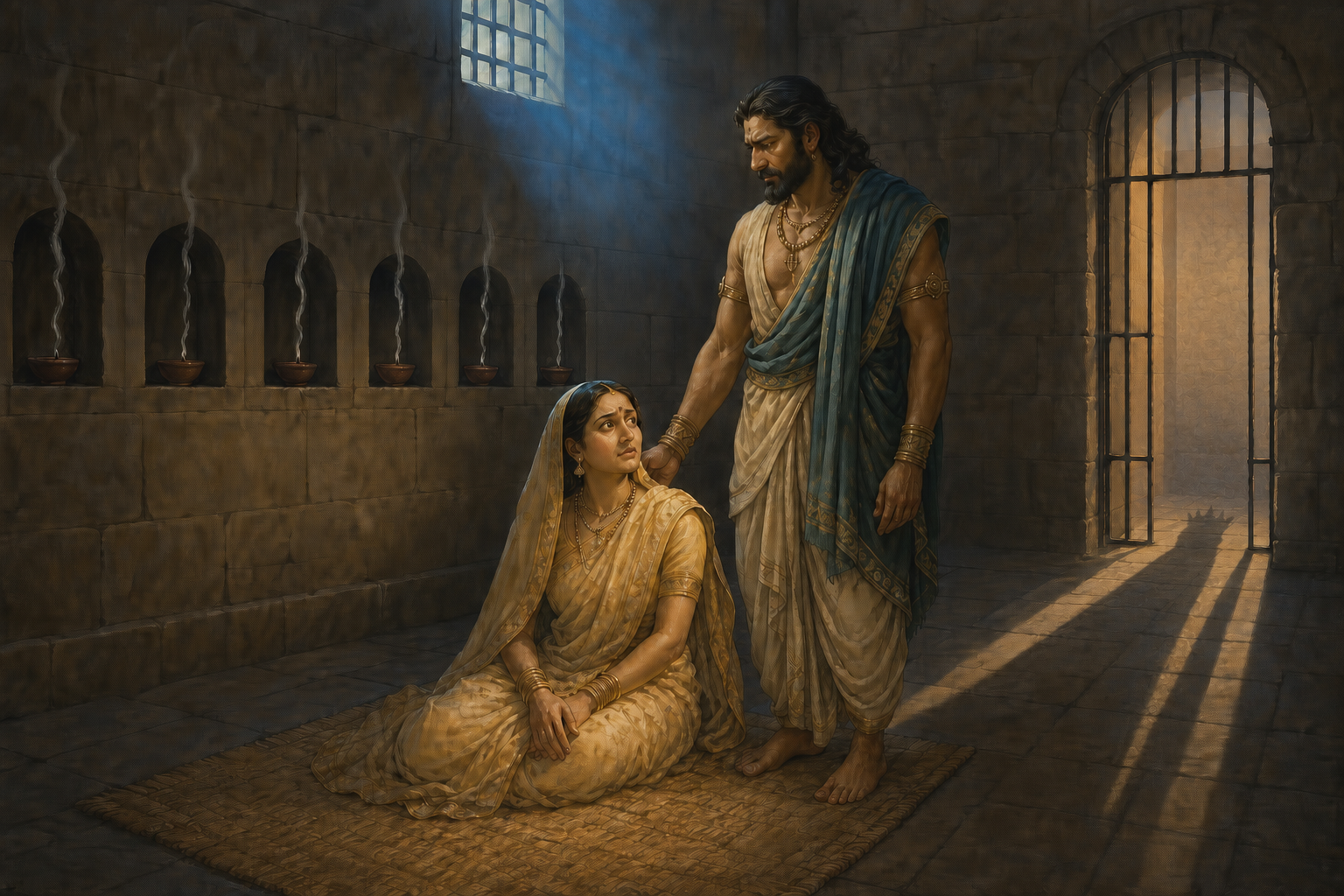
In the Bhagavata Purana, especially Skandha 10, and the Vishnu Purana, Book 5, Kamsa learns that a child of Devaki will bring about his downfall. He imprisons Devaki and Vasudeva and kills each of their first six newborn children. The infants are collectively remembered as the Shad-garbhas, or six embryos.
The pattern changes with the seventh pregnancy. Yogamaya transfers the embryo from Devaki to Rohini, and that child becomes Balarama. Krishna is the eighth child: he is born at midnight, carried across the Yamuna, and placed beyond Kamsa’s immediate reach in Gokula. The sequence of six deaths, the transferred seventh child, and the protected eighth child gives the Hindu account its moral and theological shape.
Kamsa’s actions are not treated as a necessary sacrifice or an ethically ambiguous precaution. They expose what fear does when joined to unrestrained political power: even newborn kin are turned into imagined enemies. Krishna’s birth then marks the beginning of a restoration in which tyranny does not have the final word.
Later Vaishnava interpretation adds a karmic prehistory. In some explanations, the six were exalted beings whose immediate deaths completed an earlier curse. Names and details can vary among textual and commentarial traditions. Treat that explanation as a theological layer, not as a reason to soften the crime. A curse may explain why the six enter this birth, but Kamsa still chooses the violence that identifies him with adharma.
If someone asks you what happened to Devaki’s six sons in the familiar Hindu account, you can therefore answer directly: Kamsa killed them at birth. Add the curse narrative only when the particular school, commentary, or teacher being discussed actually uses it.
Why the Jain account does not mirror the six killings
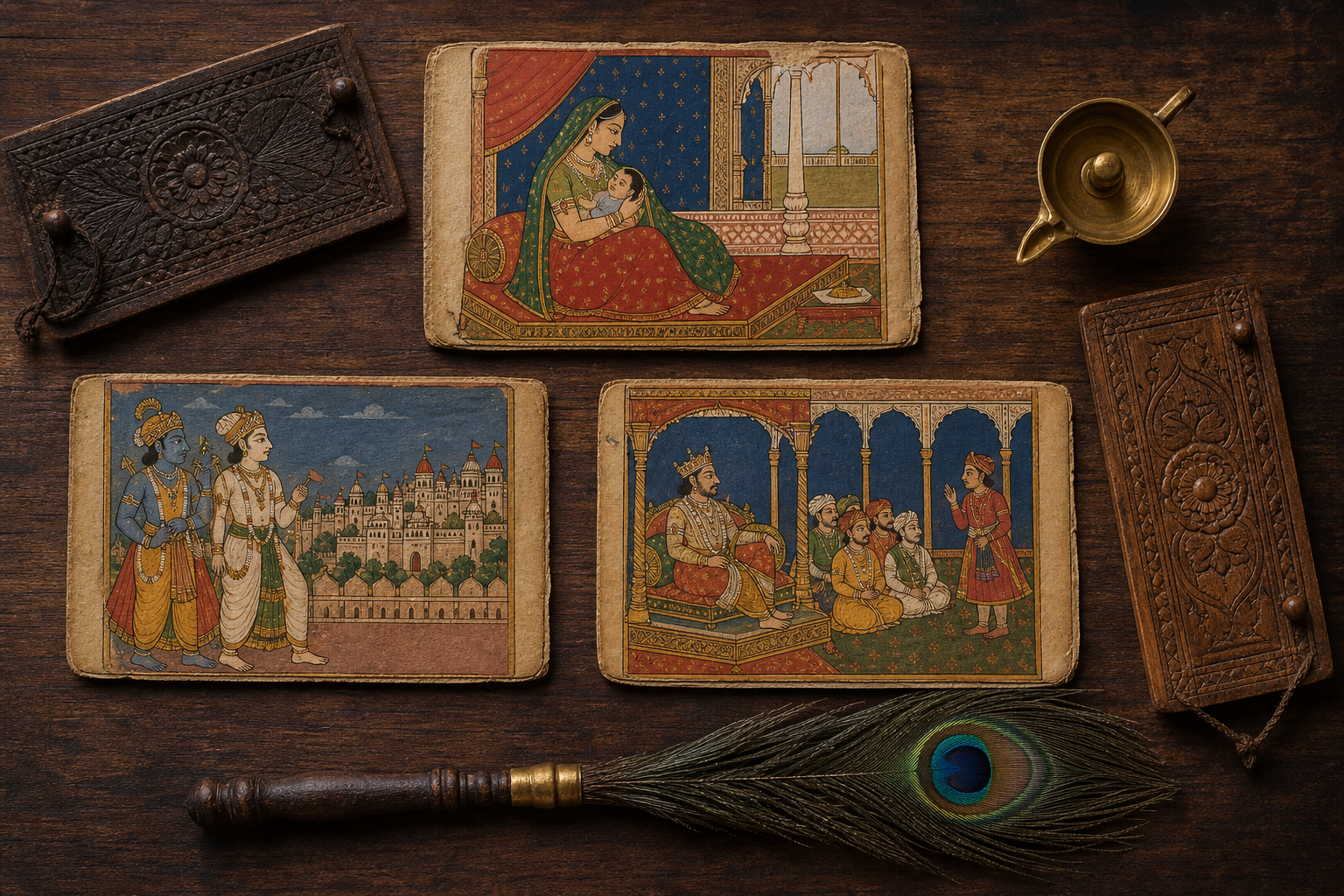
First check the title in front of you. Two similarly named works are easy to confuse:
- Harivamsha: the Sanskrit appendix to the Mahabharata, belonging to the Hindu scriptural world of Krishna narrative.
- Jain Harivamsa Purana: an independent Jain retelling that places Krishna and his relatives inside Jain cosmology and ethics.
That distinction matters because the Jain narrative is not simply the Hindu sequence with a few altered incidents. Inside its cosmological framework, Balarama occupies the role of Baladeva, an exemplary figure associated with restraint. Krishna is a Vasudeva, the forceful hero who confronts a Prativasudeva adversary. Neminatha, or Aristanemi, supplies the wider horizon of renunciation and liberation.
Krishna can therefore remain a great civilizational hero without becoming the Supreme Being descending in the Vaishnava sense. His victories also remain subject to karmic evaluation. Heroism does not cancel the consequences of violence, and worldly success does not equal liberation.
Within this setting, you may find the serial killing of Devaki’s infants greatly shortened or absent. In other Jain tellings, the sibling structure is distributed differently through the households associated with Vasudeva. The practical result is that six newborn deaths do not consistently drive the plot as they do in the Hindu Puranic account.
Do not turn that narrative restraint into a claim that every Jain version explicitly saves the six sons. Omission is not the same as an alternative survival story. Unless you can identify the particular text and passage, the accurate formulation is narrower: many Jain tellings do not foreground Kamsa’s killing of six infants.
The shift follows a different center of gravity. In the Hindu frame, Kamsa’s escalating cruelty prepares the world for divine intervention and grace. In the Jain frame, Krishna’s royal and martial career is measured against ahimsa, karma, restraint, and the liberating possibility represented by Neminatha. One asks how the Divine enters a world overcome by adharma. The other keeps asking what even a victorious hero’s actions bind to the soul.
What the number six can mean without replacing the story
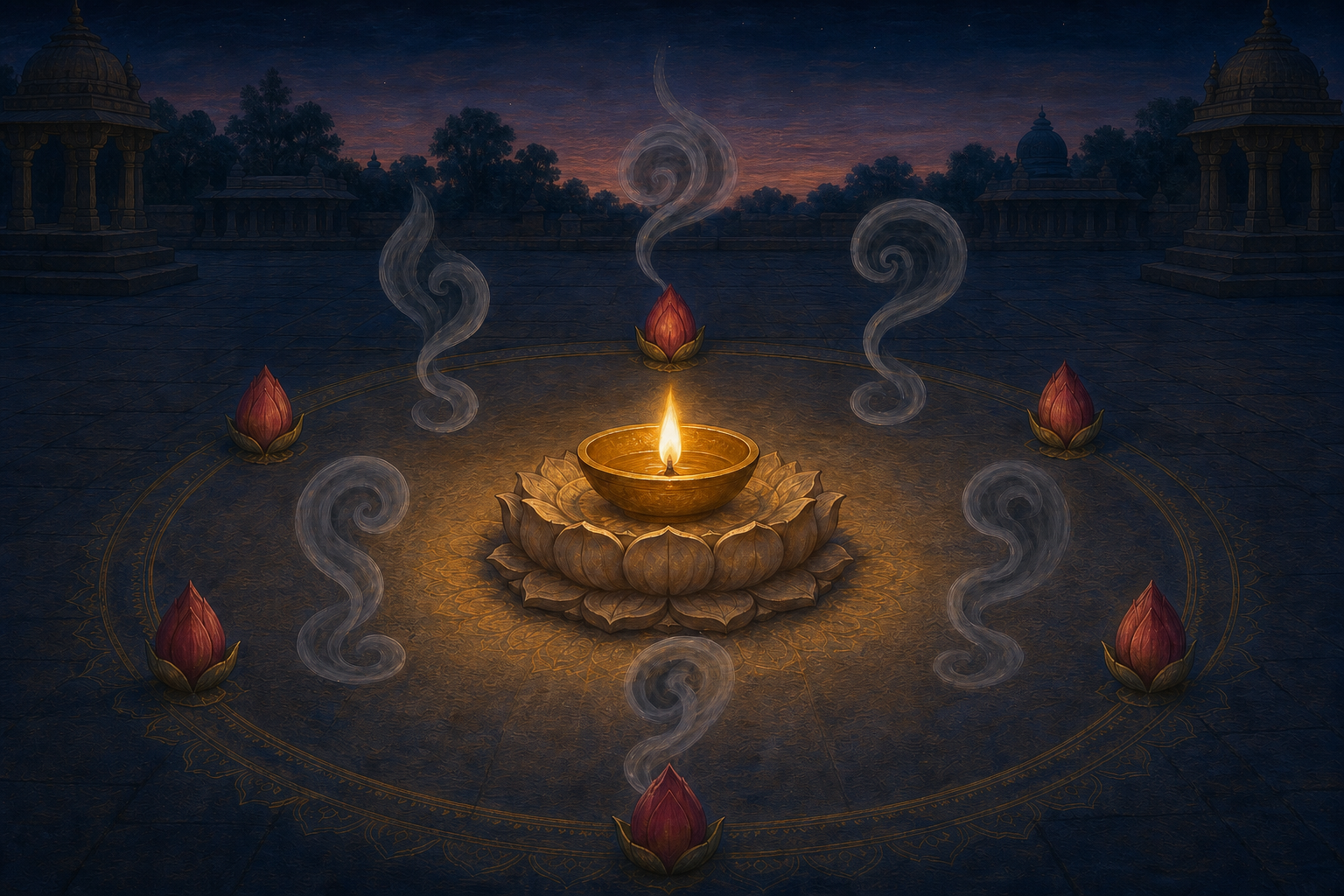
A common Hindu contemplative reading places Devaki’s six lost children beside the shad-ripu, the six inner enemies: kama, desire; krodha, anger; lobha, greed; moha, delusion or attachment; mada, pride; and matsarya, envy. The association turns the episode inward. Kamsa is not only a tyrant outside us; his fear-driven possessiveness also reveals tendencies a practitioner must recognize within.
Use this as a spiritual application rather than a claim that every narrative detail was composed as an allegorical code. Devaki’s grief should not disappear behind symbolism, and the Shad-garbhas should not automatically be equated with the shad-ripu in every school. The literal story condemns violence against innocents; the contemplative reading asks how the same passions begin much earlier, before they harden into action.
Jain ethics offers a related but non-identical diagnosis through the kashayas: anger, pride, deceit, and greed. These four passions attract and sustain karmic bondage. The parallel with the Hindu six inner enemies is ethical, not numerical. Both frameworks ask you to notice the passions that distort judgment, but they classify those passions differently and prescribe them within different paths.
For personal reflection, keep the question concrete: What fear makes Kamsa treat another life as a threat to his control? Which passion prevents him from hearing the prophecy without grasping for violence? Where does restraint need to enter before fear becomes policy? Those questions preserve the force of the narrative without pretending that Hindu and Jain categories are interchangeable.
A reliable way to discuss both traditions
If you are teaching this episode, discussing it at home, or responding to an apparent contradiction, use the following sequence:
- Name the narrative family. Say “the Bhagavata Purana account,” “the Vishnu Purana account,” or “a Jain Harivamsa tradition,” rather than presenting one version as the only Indian memory of Krishna.
- State the Hindu plot before interpreting it. Six infants are killed, the seventh embryo is transferred to Rohini, and Krishna is the protected eighth child. This prevents symbolism from replacing the event.
- Describe the Jain difference with careful verbs. “Abbreviates,” “omits,” and “does not foreground” are accurate when supported by the version you are reading. “Denies” or “corrects” assumes a polemical purpose that may not be present.
- Separate narrative role from spiritual status. The Jain Krishna as Vasudeva and the Vaishnava Krishna as divine descent are not merely two spellings of the same theology.
- Identify the shared concern only after preserving the difference. Both traditions subject power to moral judgment, but one emphasizes divine protection and restored dharma while the other emphasizes karmic accountability, ahimsa, and the horizon of renunciation.
Anekantavada is especially helpful here when used precisely. Many-sided understanding does not require you to say that every account makes the same factual or theological claim. It asks you to identify the standpoint from which each claim becomes meaningful. That discipline makes room for deep disagreement without reducing another Dharmic tradition to error or treating all distinctions as superficial.
The next time the six sons come up, begin with one question: “Which telling are we discussing?” That small clarification will usually resolve the apparent contradiction and open the more worthwhile conversation about fear, power, karma, grace, and restraint.
Key takeaways
- In the Hindu Puranic sequence, Kamsa kills Devaki’s first six newborn children; Balarama is the transferred seventh child, and Krishna is the protected eighth.
- Later Vaishnava explanations may give the Shad-garbhas a karmic history involving a curse, but details vary and do not excuse Kamsa.
- Jain Krishna traditions often abbreviate, omit, or decenter the six killings rather than supplying one universal alternative fate for the children.
- The Hindu Harivamsha and Jain Harivamsa Purana are distinct works with different theological purposes.
- The shad-ripu and Jain kashayas provide related tools for examining destructive passions, but they are not matching numerical systems.
- A fair comparison names the text, preserves its differences, and only then considers the moral concerns the traditions share.