

A video reaches your phone claiming that a Muslim man has deceived Hindu women. Anger is already building in the comments, and someone wants you to forward the clip or join a confrontation. Before you choose a side, ask three questions: What has actually been verified? Is anyone in immediate danger? Which lawful authority can establish the facts?
That sequence is not indifference to the safety of Hindu women. It is how you protect them without turning an allegation into a licence for assault. A pro-Dharma response can take coercion, fraud, and unlawful conversion seriously while refusing collective blame and street punishment.
Key takeaways
- The expression love jihad is a contested political and social label, not a defined criminal offence. Translate the label into a specific allegation: force, fraud, threats, allurement, unlawful conversion, assault, or no crime at all.
- A relationship freely chosen by consenting adults belongs to them. Family disapproval, religious difference, and online suspicion do not give a crowd authority to detain or punish either person.
- If there is evidence of coercion or fraud, preserve it and take it to the police. The Uttar Pradesh conversion law does not deputise private citizens to investigate, interrogate, or assault anyone.
- If violence is occurring, call 112 in Uttar Pradesh, move away from the crowd, and avoid actions that increase the danger. Do not surround, restrain, strike, or publicly expose the people involved.
- Dharmic restraint is active, not passive: protect the endangered person, insist on truthful inquiry, and prevent anger from producing a second wrong.
Start with the status of the Varanasi claims

On 17 May 2026, online claims and local reports alleged that a group of men assaulted a Muslim youth in Varanasi. The men were said to have accused him of maintaining ties with several Hindu women and acting with love jihad intentions. Video fragments circulated, but independently verifiable details remained limited at that stage.
Those limits matter. A clip may show that a confrontation occurred without proving what preceded it, whether a relationship existed, whether any adult complained, or whether deception or coercion took place. It may also fail to identify who first used force. The disciplined position is therefore neither automatic belief nor automatic dismissal. It is to keep each claim at the level the available evidence supports.
Virality does not supply corroboration. Hundreds of posts may all descend from one caption attached to one incomplete recording. Identity threat and confirmation bias then fill the missing frames: viewers accept the interpretation that matches what they already fear. Treat the number of shares as a measure of distribution, not truth.
Before forwarding material about an interfaith relationship, check:
- Who uploaded the earliest version you can locate, and did that person directly witness the event?
- Are the date and location independently established, or merely repeated from the caption?
- Is an uncut recording available? Look for missing intervals, abrupt audio changes, and captions that claim more than the images show.
- Has the police or district administration issued a statement? An official statement is not a verdict, but it can confirm whether a complaint, investigation, or protective action exists.
- Does sharing expose a woman, family, address, phone number, or uninvolved person? If so, stop. Doxxing can create danger without adding evidence.
- What evidence would make you revise your view? If the answer is nothing, you are defending a conclusion rather than examining a claim.
Use careful language while facts remain unsettled: alleged assault, reported accusation, circulating video, and police inquiry if one has been confirmed. Do not call someone a conspirator, criminal, victim, or attacker merely because a caption assigned that role.
Separate adult choice, alleged coercion, and mob violence
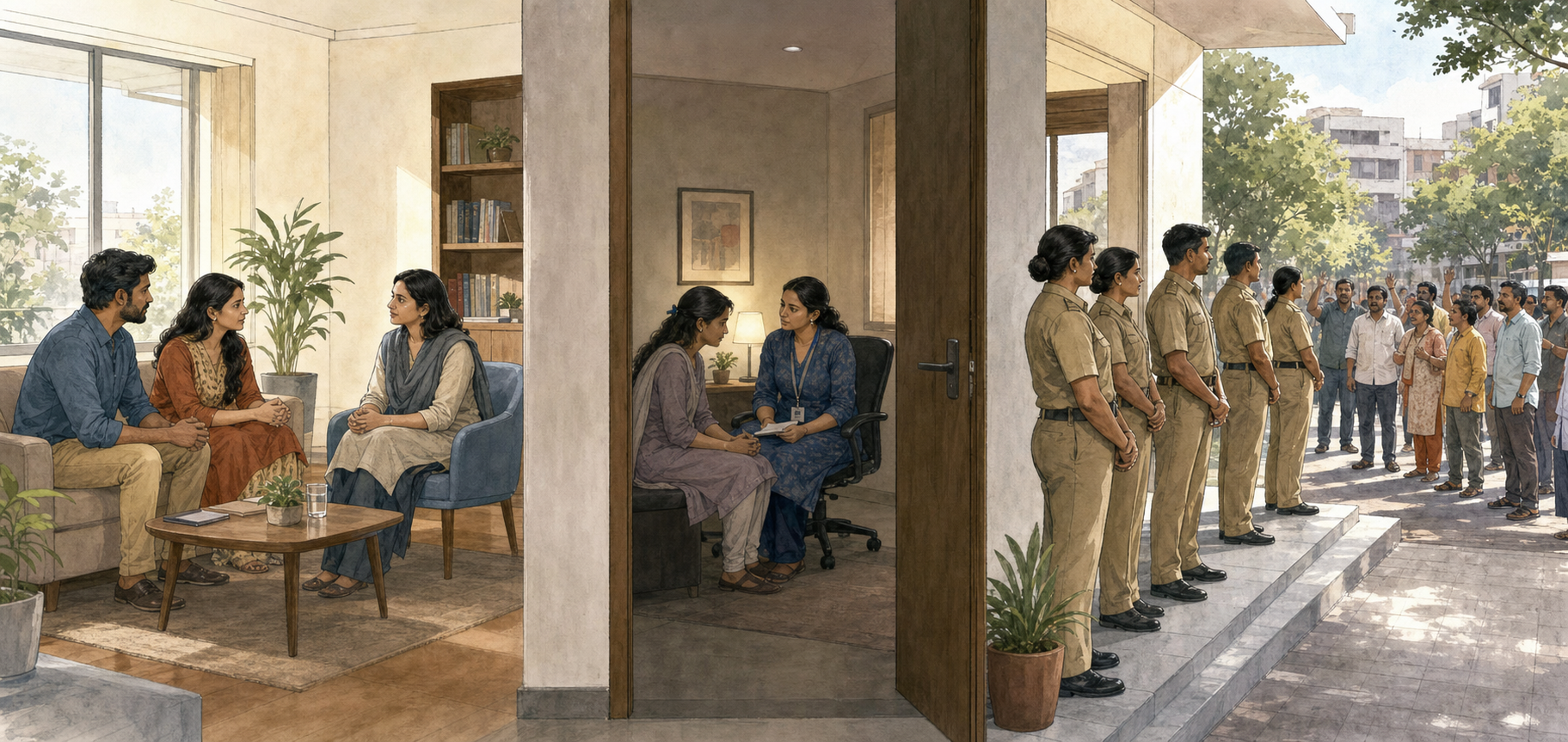
Interfaith controversies become combustible when three different questions are collapsed into one. Keeping them separate gives you a lawful response to each.
| Situation | Question that matters | Lawful response | What a private citizen must not do |
|---|---|---|---|
| A relationship between adults | Are both adults choosing it freely? | Respect their autonomy. If they seek a civil legal route, the Special Marriage Act, 1954 provides one for interfaith couples. | Confine, threaten, publicly shame, or forcibly separate them. |
| Possible coercion, fraud, or unlawful conversion | What specific conduct, communication, witness, or record supports the allegation? | Preserve the evidence and report the particular facts to police. Obtain advice from a qualified local lawyer where liberty or safety is at stake. | Conduct an interrogation, seize a device, compel a confession, or treat religious identity as proof. |
| Assault, restraint, intimidation, or a gathering crowd | Who is in immediate danger, and what evidence can be secured safely? | Call 112, seek medical assistance, identify direct witnesses, and allow police to separate the parties and record statements. | Join the crowd, block an exit, retaliate, or livestream identities to a wider audience. |
Indian constitutional law places adult autonomy on firm ground. Articles 14, 15, 19, and 21 protect equality, non-discrimination, freedom, and personal liberty. The Supreme Court decisions in Lata Singh, Shafin Jahan, and Shakti Vahini affirm the freedom of consenting adults to choose partners and the responsibility of the state to protect couples from intimidation and violence. Adult choice does not excuse a separately proven crime, but neither can an unproven crime be presumed merely because the couple crosses a religious boundary.
Uttar Pradesh’s Prohibition of Unlawful Conversion of Religion Act, 2021 addresses conversion brought about through force, fraud, or allurement. It establishes legal procedures and penalties; it does not authorise neighbourhood groups, political workers, or religious organisations to act as police and court. A genuine concern should become a detailed police complaint, not a public beating.
The same rule applies in the other direction. No concern about coercive conversion can justify unlawful assembly, wrongful restraint, hurt, grievous hurt, or criminal intimidation. The precise charge depends on the proven facts and the criminal law in force, which is why social-media claims about section numbers should not substitute for advice from a local lawyer. Criminal guilt must ultimately be established before a competent court beyond reasonable doubt.
The Supreme Court’s anti-lynching directions in Tehseen S. Poonawalla require preventive action against mob violence, prompt registration of cases, and expeditious prosecution. These protections do not depend on whether the targeted person is Hindu, Muslim, Sikh, Jain, Buddhist, or of no faith.
This is the point often missed in heated debate: the rule of law does not demand that you ignore danger. It demands that you describe the suspected danger precisely, preserve admissible evidence, protect the person at risk, and place coercive power in accountable hands.
A practical response when a relationship becomes a flashpoint
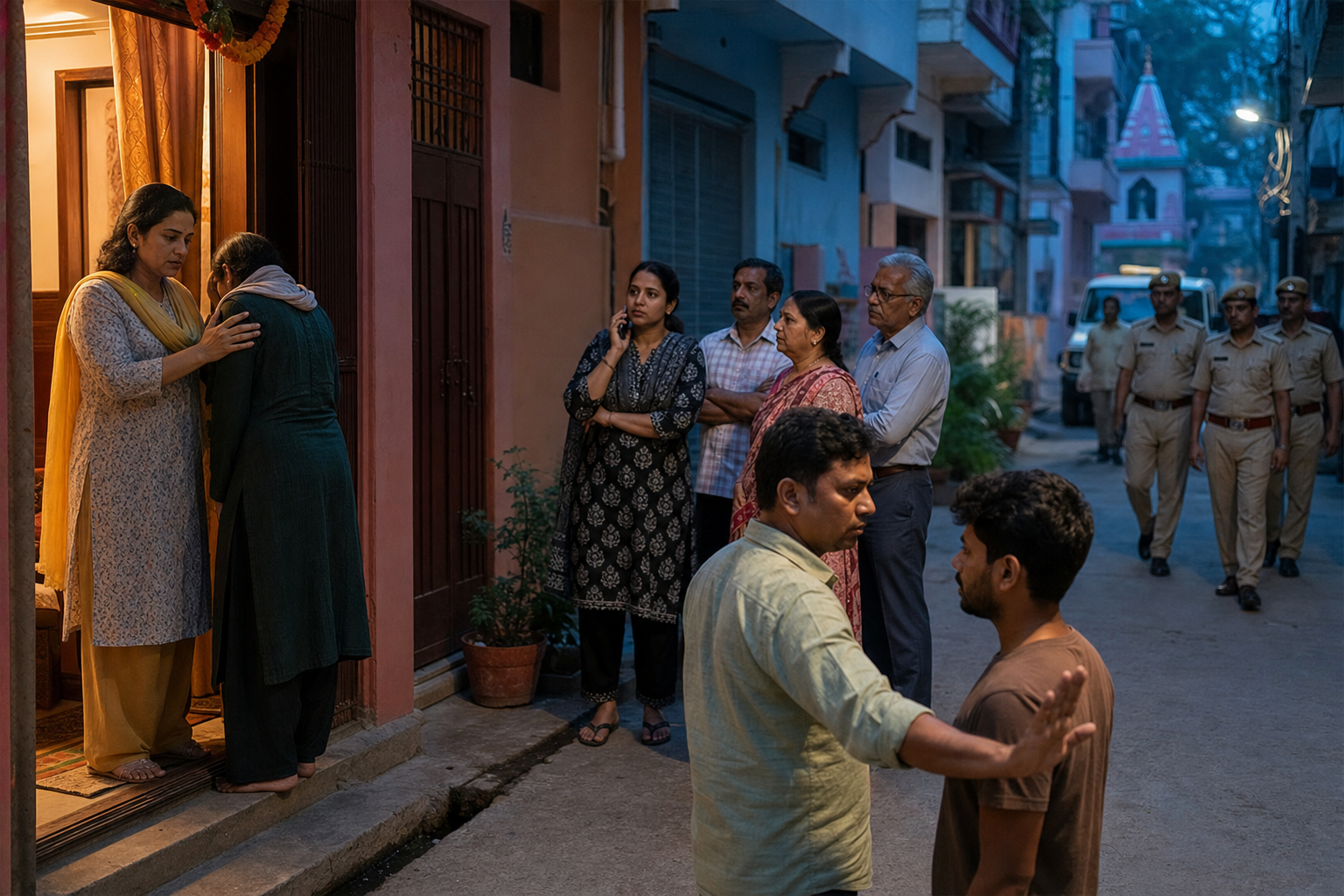
If violence or a crowd is forming
Call 112 in Uttar Pradesh and give an exact location, the approximate number of people present, whether weapons are visible, whether anyone is injured, and a safe callback number. Do not step into the crowd to argue theology or politics. Your immediate purpose is to reduce access to the targeted person and bring trained responders to the scene.
If you can do so without increasing risk, note the time, preserve the original video or link, and record the names of people who directly witnessed the event. Do not seize anyone’s phone, demand a password, or force a statement. A medical examination and a properly registered complaint will usually matter more to a lawful outcome than another edited clip online.
If the allegation concerns someone in your family
Speak to the adult privately, without a crowd and without the alleged partner present. Ask questions about conduct rather than community identity:
- Are you choosing this relationship freely?
- Has anyone lied to you about a material fact or pressured you to conceal the relationship?
- Has anyone threatened you, restricted your movement, taken money, or attached conversion to a threat or inducement?
- Do you feel safe saying no, leaving, or asking for help?
- Do you want to speak with police, a lawyer, or a trusted support person?
Listen to the answers before supplying your own. If the adult describes threats, violence, fraud, or forced conversion, help preserve messages and other records, seek safety, and contact lawful authorities. If the adult consistently says the relationship is voluntary, family members may express disagreement but cannot replace the adult’s decision with confinement, intimidation, or force.
Where a couple wants legal protection or a civil marriage, the Special Marriage Act may be relevant. Where there is a specific allegation of crime, a qualified lawyer can explain the current procedure and available protective measures. General online commentary is not a substitute for advice on an individual’s legal position.
If you only received a clip
Do not add another accusatory caption. Contact the sender and ask for the original uploader, the uncut file, the time and location, and any confirmed police statement. Save what may be evidence, but keep it out of public circulation. Send relevant material privately to investigators or counsel rather than turning it into communal entertainment.
If you cannot verify the clip, say exactly that. A useful correction is short: the claim is unverified, the available footage does not establish motive, and any evidence of coercion or violence should go to police. Avoid speculating about an entire religious community, because collective accusation makes it harder to isolate the conduct that actually requires investigation.
If you lead a temple group, neighbourhood body, or local organisation
Set a protocol before the next rumour arrives. Name one or two people who will contact police, one who will verify public information, and one who can reach a peace committee or trusted community representatives. Prohibit members from publishing names, addresses, or inflammatory claims while facts remain unconfirmed.
After an incident, ask the administration for concrete safeguards rather than a performative show of force:
- Prompt recording of complaints and separate statements from the people involved.
- Medical documentation of injuries and preservation of digital evidence with an accountable chain of custody.
- Regular factual updates that distinguish allegations, confirmed actions, arrests, and judicial findings.
- A designated contact for interfaith couples and families facing credible threats.
- Training for police on crowd prevention, separation of hostile groups, and protection of witnesses.
- Public information on the Special Marriage Act and the Uttar Pradesh conversion law so that residents understand both adult rights and the route for reporting coercion.
Transparency can interrupt a rumour cascade, but police updates should not prejudge guilt. The aim is to replace competing captions with an accountable record: complaint, evidence, investigation, charge if warranted, defence, and judgment.
Dharmic restraint protects truth as well as life

Ahimsa is sometimes mistaken for withdrawal. In public life, it requires intervention that does not reproduce the harm being opposed. You can move a person away from danger, call police, support a complainant, preserve evidence, challenge a false rumour, and demand prosecution without striking or humiliating anyone.
Jain Anekantavada adds an intellectual discipline: one viewpoint rarely exhausts a complex event. That does not mean every claim is equally true. It means confidence must be earned through evidence. A short recording, an anonymous caption, and communal expectation are not enough to establish intention.
The Dhammapada teaches that hatred is not ended by hatred. Sikh teaching refuses to reduce another person to enemy or stranger. These principles do not require blindness to fraud, intimidation, or violence. They require us to oppose the wrongful act without manufacturing guilt from a person’s religious name.
A specifically Hindu concern for the safety and dignity of Hindu women is compatible with their agency. Protection becomes domination when it silences an adult woman, speaks over her, or punishes another person before her account has even been heard. Equally, respect for her autonomy must never be used to wave away a disclosure of coercion. The decisive questions concern consent and provable conduct.
This distinction matters especially in Kashi. Varanasi’s identity as a centre of learning, devotion, trade, and longstanding coexistence gives the city a responsibility larger than the fate of one viral clip. Kashi is not defended when its lanes become an improvised courtroom. It is defended when truth is pursued without fear, the vulnerable are protected without prejudice, and punishment follows proof.
The next time an incendiary clip arrives, make your first actions simple: do not forward it, check whether someone is unsafe, and direct specific evidence to police or qualified counsel. Then ask your community leaders to defend Hindu women from real coercion and all adults from unlawful intimidation. Dharma needs courage, but courage governed by ahimsa, evidence, and nyaya.