

If you’re trying to decide whether 2026 has become safer for journalists, the honest answer is narrower than the headline: the first-half death toll is encouraging, but it does not yet prove that reporting conditions are safer.
You can reach a more trustworthy judgment by checking four things: whether the time periods match, where the killings occurred, what protection existed before each attack, and what institutions did afterward. That approach matters across Bharat and the wider Asian region, where a national or regional total can conceal sharply different local realities.
Key takeaways
- From 1 January through 30 June 2026, six journalist or media-worker killings were reported in South and Southeast Asia, compared with at least 21 during the whole of 2025. Those are not equivalent reporting periods, so they should not be converted into a percentage decline.
- Three of the six cases occurred in the Philippines. India, Pakistan and Bangladesh recorded one each. A regional average therefore tells you little about the risk facing a particular local reporter.
- India’s Northeast has gone more than eight years without a reported journalist killing, after losing more than 30 media workers over the preceding three decades. The outcome deserves careful local examination, but the numbers alone do not identify its cause.
- A serious press-safety assessment must look beyond homicide. It should examine threats, assignment planning, emergency support, healthcare, insurance, family assistance and progress toward accountability after an attack.
Six deaths are a signal, not a complete safety verdict

The six people in the first-half count were Julio Calo of DNN News FM, RJ Nicole Ledesma of Paghimutad-Negros, Nestor Miketor of Empire Radio Station, Jaganmohan Reddy of ABN Andhra Jyothi, Lala Israfil Khan of HUM News and Rana Pratap Bairagi of Dainik BD Khabar. Naming them matters because a declining graph can make each killing look like a statistical exception rather than a failure that requires an investigation and an institutional response.
The comparison with 2025 must nevertheless be handled carefully. At least 21 cases were reported during 2025, while the 2026 figure stops at midyear. Six is below the previous full-year total, and that is welcome. It does not establish how the first six months compare with the same six months of 2025, what the final 2026 total will be, or whether a lasting reduction in risk has occurred.
Do not calculate a decline percentage from 21 and six. That would compare a full year with half a year. If someone presents the figures as proof of a regional safety transformation, use this three-part test before repeating the claim:
- Check the window. Compare January through June with January through June wherever a same-period count is available.
- Check the definition. Ask whether the tally covers every journalist who was killed, only killings judged to be related to journalistic work, or a broader category of media workers.
- Check the status. Midyear totals are provisional, while motives and connections to a victim’s work may remain under investigation.
This does not make the lower number meaningless. It makes it a lead indicator that needs verification. The defensible statement is that fewer cases had been reported by 30 June than during the whole previous year. Anything more precise needs comparable data and completed case assessments.
National totals hide sharply different local realities
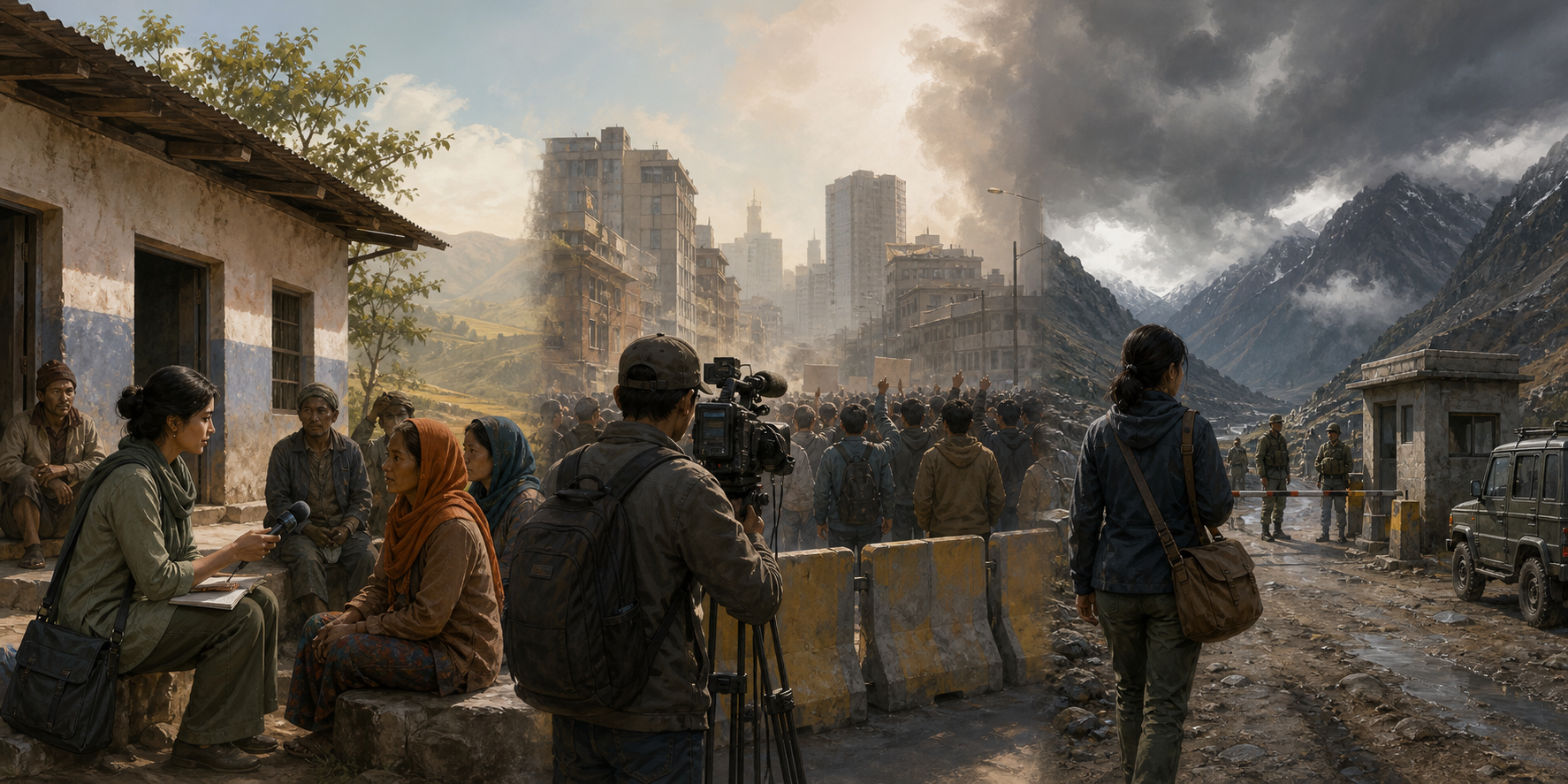
Half of the first-half cases occurred in the Philippines, while India, Pakistan and Bangladesh each recorded one. That distribution should change how you read the total. A regional count can identify a broad direction, but assignment decisions and protective measures have to be based on the reporter’s locality, subject matter and specific threat environment.
India has generally recorded between five and ten journalist killings a year. Its only reported case in the first half of 2026 was the killing of 40-year-old Jaganmohan Reddy in Andhra Pradesh on 28 April. The Indian Journalists Union and other journalist organisations protested and demanded effective policies for the protection of working journalists and press freedom. The Press Emblem Campaign identified him at that point as the 28th media worker killed worldwide during 2026.
One case is a substantial improvement over India’s usual annual range, but it cannot function as a national all-clear. It should instead create a concrete test: does the investigation produce visible, non-sensitive progress, and do the policy demands made after the killing become written protections with named responsibility?
Northeast India offers an especially important subnational contrast. The region, with a population of roughly six crore, has recorded no journalist killing since 2017. That follows three decades in which more than 30 editors, reporters and correspondents were killed, including more than 25 media workers in Assam between 1987 and 2012.
The long quiet period is significant, but the count does not tell us why it happened. A responsible local review would examine possible changes in conflict exposure, policing, newsroom coordination, political conditions and community response. It would also ask whether intimidation and non-fatal attacks were consistently recorded. Until those questions are answered, celebrate the outcome without inventing its mechanism.
Press safety starts before an attack and continues afterward
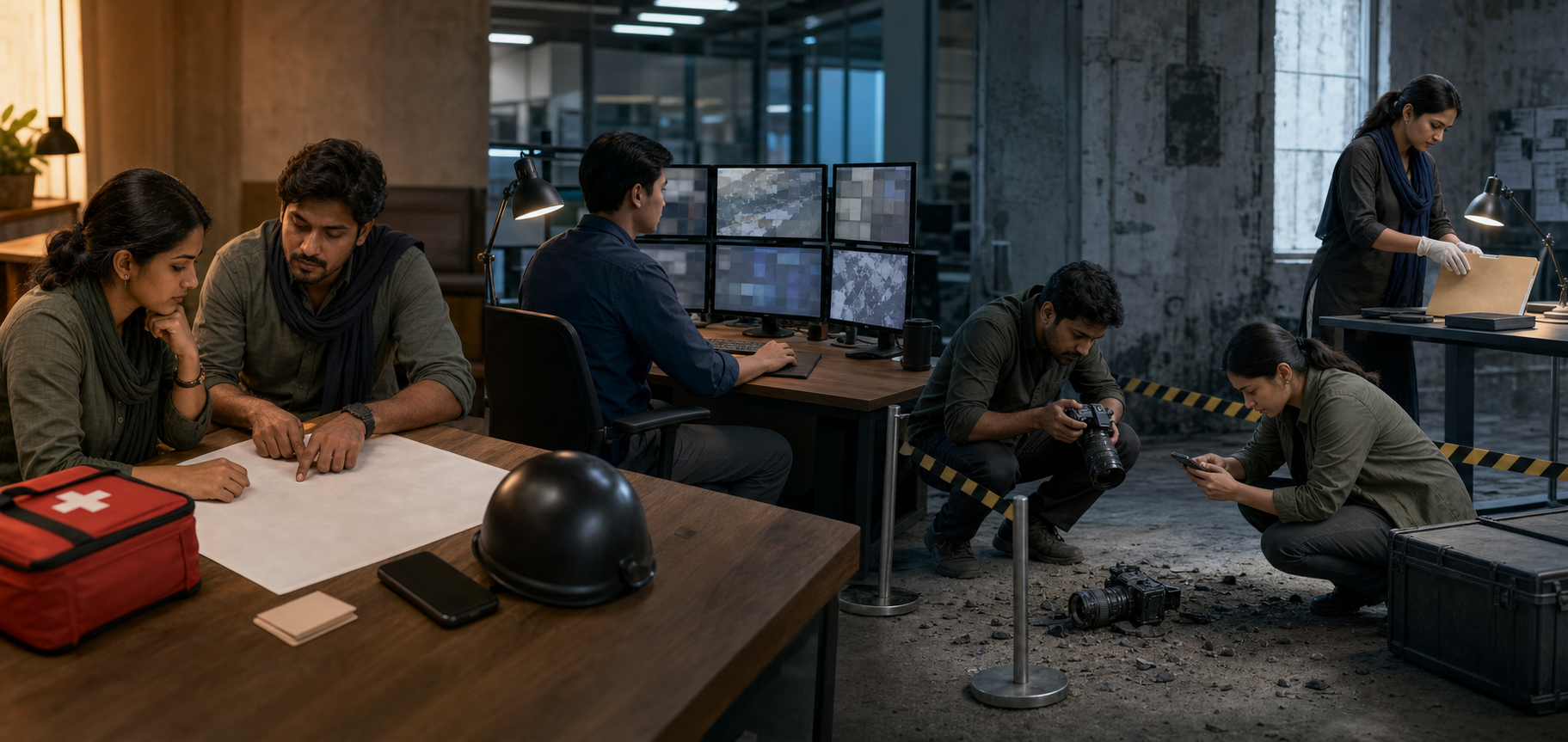
A killing count measures the most irreversible endpoint. It cannot tell you whether reporters are abandoning sensitive assignments, whether threats are being resolved, or whether a newsroom could help a journalist during an emergency. Editors, journalist associations and public authorities therefore need a system that covers four stages:
- Before an assignment, designate a person responsible for the risk decision. Confirm a check-in and escalation plan, safe transport options, medical contingencies and protection of sensitive source information. The plan should be agreed with the journalist, not imposed as paperwork after departure.
- During reporting, provide a confidential way to record threats, stalking, assaults and coercion. Keep non-fatal incidents separate from homicide statistics, but do not let them disappear merely because nobody was killed.
- Across employment, put medical coverage, insurance eligibility and emergency support in writing. Reporters and their families should not have to discover exclusions only after an injury or death.
- After an attack, assign a family and case liaison, identify available legal and financial support, and publish non-sensitive investigation updates. Accountability reporting must not reveal witnesses, sources, routes or protective arrangements that could place others at risk.
If you or a colleague faces a specific threat, do not publish operational details or rely on a general online checklist to assess the danger. Use a trusted editor or newsroom security contact, a journalists’ union, locally qualified legal counsel and locally appropriate emergency channels. A targeted threat requires knowledge of the person, place and institutions involved.
The COVID-19 experience shows why health and family support belong in this framework. More than 20 media workers in Northeast India died during the pandemic. Those deaths were not journalist killings and should never be combined with murder data. They nevertheless tested whether people doing public-facing media work had meaningful medical, insurance and family protection.
Assam initially announced that media workers affected by COVID-19 would be included with other frontline workers under a ₹50 lakh life-insurance plan, but the state later fell silent on compensation promised to bereaved families. The practical lesson is precise: an announcement is not a protection system. Eligibility rules, the claims process, the responsible office, available funding and delivery status must all be visible before a family needs them.
Put four accountable questions on the record

You do not need to be a security specialist to ask for better evidence. When a government, media organisation or civil-society group describes 2026 as safer, ask these four questions:
- What exact dates, geographic boundaries and definitions does the count use?
- For each killing, is a possible connection to the victim’s journalistic work being examined, and which institution is responsible for the next non-sensitive case update?
- What written protections are available before a high-risk assignment, who can activate them, and do they cover local correspondents and other media workers rather than only permanent metropolitan staff?
- What medical, insurance, legal and family benefits exist, who qualifies, and which promised benefits have actually been delivered?
A concise request can be sent to an editor, journalists’ association or relevant public office: Please provide the dates and definitions used for the 2026 count, the non-sensitive status of each investigation, the written journalist-safety policy and responsible office, and the eligibility and delivery status of support for injured journalists or bereaved families.
Ask whether the system exists and how it is audited; do not ask anyone to disclose a reporter’s sources, movements or specific protective arrangements. Public accountability and operational secrecy can coexist when institutions report decisions and milestones without exposing people.
For a Dharmic public culture, commitment to satya cannot depend on whether we agree with a particular reporter. Protecting a journalist is not an endorsement of every report. It protects the conditions in which facts can be gathered, challenged and corrected. Apply the same safety test across parties, regions, languages and ideological camps.
When the next 2026 update arrives, compare the same period, map the cases locally and look for documented action after every attack. Keep asking until the responsible institutions provide answers that can be checked. A lower toll is welcome; a safer press is a working system that journalists can rely on before the next crisis.