
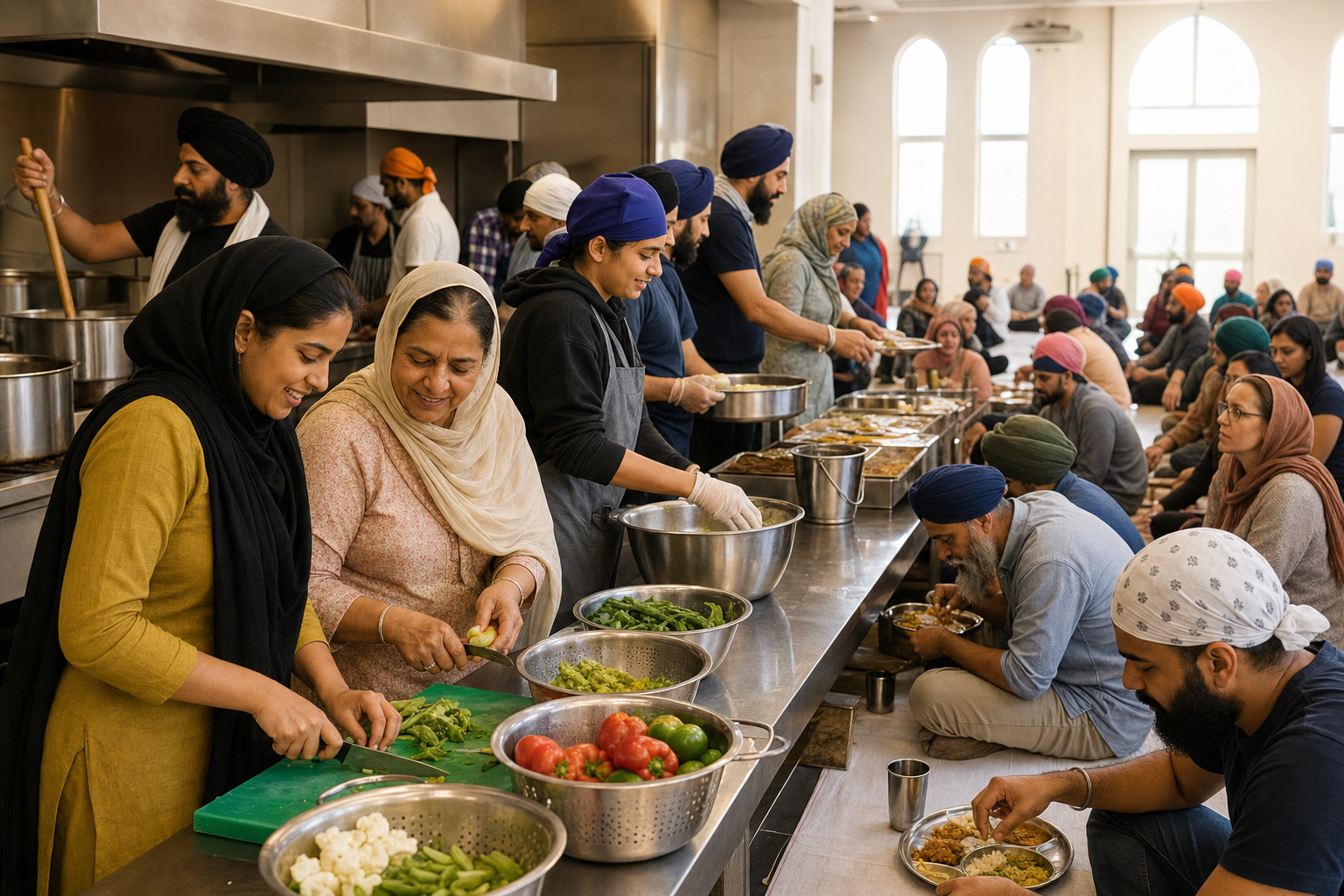
You may be ready to volunteer but unsure whether a meal drive, tutoring program, or donation campaign will really help. Sikh seva gives you a harder and more useful question: will the way you serve protect dignity, share responsibility, and keep working after the first enthusiasm fades?
You can use Sikh ethics to examine an existing project or design a new one. The aim is not activity for its own sake. It is dependable care rooted in spiritual discipline and directed toward the common good.
Choose service from the Sikh ethical centre
Seva is more than unpaid work. It is a discipline that joins inner orientation to public responsibility. Naam Japna, Kirat Karni, and Vand Chakna connect remembrance of the Divine, honest labour, and sharing with others. Remove any part of that pattern and service can become hollow: devotion without social duty, generosity detached from integrity, or activism driven by ego.
Before you join an initiative, test its foundation. Ask whether its resources were earned and handled honestly, whether people closest to the need helped define the response, and whether you would still do the work without public recognition. If the project depends on displaying the distress of recipients, inflating a leader’s importance, or overlooking questionable finances, humility has already been displaced.
Sarbat da bhala widens the test. A program may serve a particular neighbourhood or group, but its rules should not make religious identity, social status, gender, or personal loyalty a condition of basic dignity. Ik Onkar does not permit an easy moral division between people who count and people who do not. You can start locally while keeping the welfare of all as the governing horizon.
Simran also has a practical role. Pause before committing money or volunteers and distinguish the actual need from the response your organisation already knows how to provide. Sometimes the compassionate decision is to support an experienced partner, refer a person to qualified help, or repair an unreliable program instead of launching another visible campaign.
Design every encounter around dignity
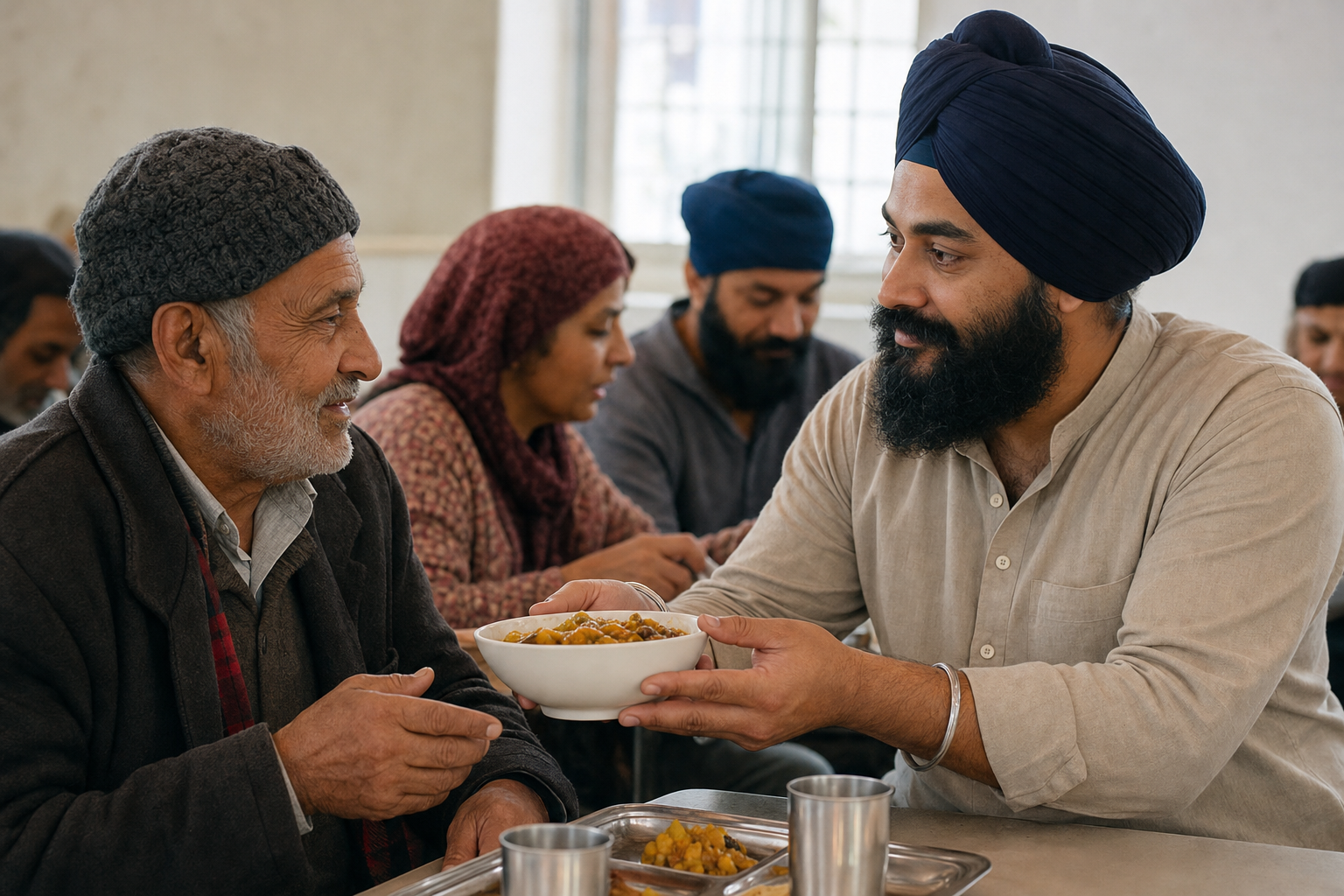
Langar is a working model of ethical design because its values are expressed through ordinary arrangements. Open access, vegetarian food, and egalitarian seating turn equality into something a person can experience rather than merely hear praised.
Examine your service from the participant’s point of view. Can a newcomer find the entrance and understand the process without embarrassment? Are elders, children, and people with mobility needs able to participate safely? Do volunteers speak with guests instead of speaking about them? Ask someone unfamiliar with the program to walk through the full experience, from arrival to departure, and report every moment that feels confusing, exposing, or unnecessarily controlling.
Collect no more personal information than the work genuinely requires. A meal normally does not require a person’s life story. A tutoring program needs learning goals and suitable contact arrangements, not intimate family details circulated among volunteers. A health initiative can coordinate screenings and health literacy, but clinical judgement and mental-health care belong with qualified professionals and clear referral pathways.
Dignity also requires voice. Invite intended participants to help choose hours, locations, languages, and access arrangements before decisions harden. Provide a private way to report disrespect or unsafe conduct. Make one person responsible for responding, and explain what will happen after a concern is raised.
Apply the same standard inside the volunteer community. Gender equality becomes real through substantive leadership opportunities, equal access to resources, safety rules, and workable redress. If women and younger members do most of the labour but remain absent from planning and financial decisions, the structure is contradicting the equality the seva claims to express.
Turn goodwill into a reliable and accountable system
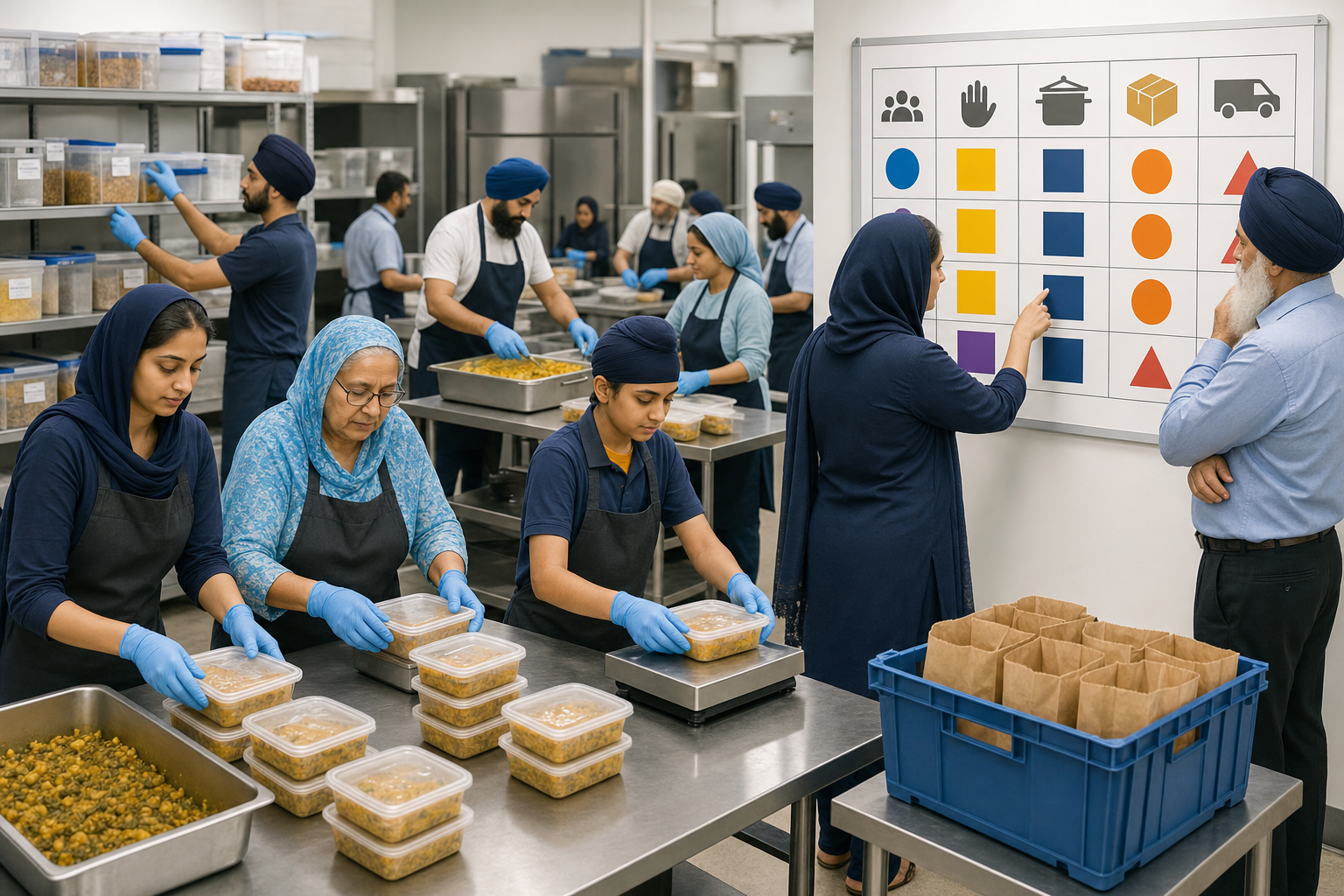
Write a one-page service charter before expanding a project. State the need, the people the program intends to reach, the service being promised, the person responsible, the resources required, the main safety risks, and the route for feedback or referral. If the promise cannot be stated clearly, the team is not ready to make it publicly.
Convert volunteers’ goodwill into a rota with named roles. For langar, that means planning procurement, food handling, cleaning, serving, stock checks, fire controls, and first-aid readiness. Each shift should know who can make an urgent decision and how the next shift will receive a proper handover. Compassion becomes trustworthy when a guest does not have to wonder whether the service will function this time.
Money needs the same discipline. Approve and publish a budget, record purchases, check vendors, separate authorisation from payment where practical, and arrange independent review. Traceable contributions and procurement protect donors, recipients, volunteers, and the institution itself. Transparency is not suspicion of the sangat; it is care for the trust the sangat has placed in its stewards.
Measure both output and effect. Meals served, learners mentored, screenings completed, volunteer hours, and trees planted show the scale of activity. They do not by themselves show whether people received nutritious food consistently, learners progressed toward an agreed goal, referrals were completed, or planted trees survived. Pair operational counts with participant feedback and follow-up. Collect personal stories only with informed consent, and never treat someone’s hardship as promotional property.
Digital tools can help with donations, schedules, multilingual communication, and access for people who are housebound or geographically distant. They also create obligations. Treat data as entrusted rather than owned: use data minimisation, consent, controlled access, documented limitations, and meaningful redress. Remove information when it is no longer needed, and retain a human route for correcting errors or contesting an automated decision.
Before the next shift, review what failed, what created avoidable strain, and what participants requested. Give each correction an owner and check that it was completed. This small rhythm of service, reflection, and repair is more valuable than waiting for a crisis or an annual celebration to expose structural weaknesses.
Build Dharmic cooperation without erasing differences
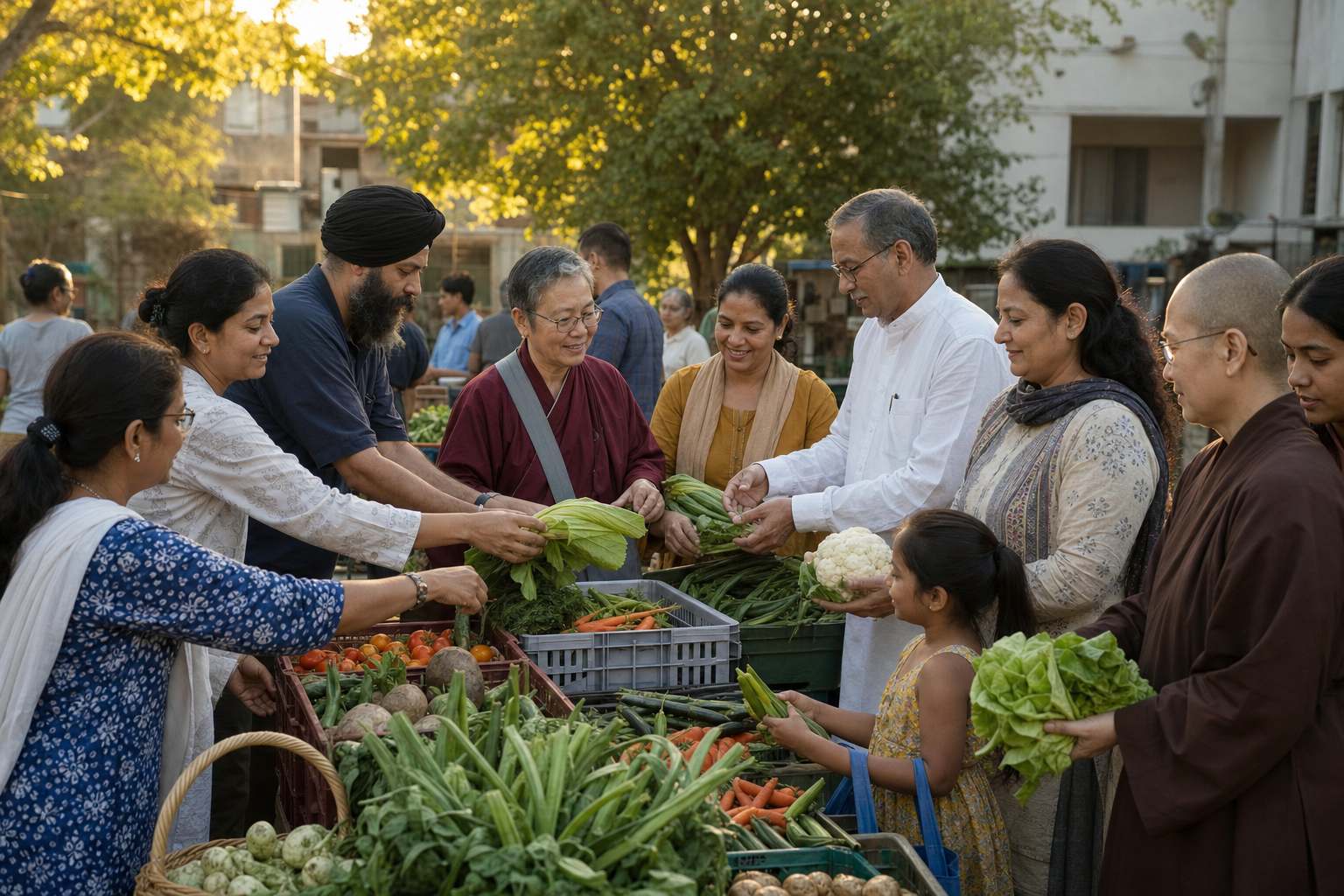
Joint seva works best when traditions agree on the work without pretending to agree on every metaphysical question. Sikh commitments to Ik Onkar, seva, and sarbat da bhala can meet Hindu teachings on dharma and dana, Buddhist karuna, and Jain ahimsa and anekantavada in practical care for people and the natural world. Ethical kinship does not require liturgical conformity.
Begin a partnership with a shared need rather than a ceremonial display of unity. Let local people describe the problem, then agree on eligibility, responsibilities, safeguarding, finances, and the intended result. Participation in worship or religious instruction should remain voluntary. Each community can name its own spiritual reason for serving while accepting common operational standards.
Decide how disagreement will be handled before it arrives. A trusted mediation circle can document the concern, hear the affected people, assign time-bound corrective action, and review the result. Clear bylaws and accurate minutes prevent influence or seniority from silently replacing truth. Confidential details should remain protected even when the institutional lesson is shared.
Choose projects in which cooperation improves the result: food provision, tutoring, preventive-health access, elder support, water conservation, tree care, or reduction of single-use plastic. Judge success by whether vulnerable people receive more dependable care and whether communities can address later problems with greater trust. A photograph of religious leaders together is not an outcome.
Key takeaways
- Test seva through remembrance, honest labour, sharing, humility, and the welfare of all.
- Ask intended participants to shape access, timing, language, and safeguards before launch.
- Use written roles, shift handovers, safety procedures, transparent budgets, and independent review.
- Measure human benefit as well as activity, and collect stories or personal data only with consent.
- Build inter-Dharmic partnerships around a defined need, shared standards, and a clear way to resolve conflict.
At your next sangat meeting, put one existing seva activity through these tests. Make one concrete repair before starting something new: publish the budget, clarify the rota, add a complaint route, remove an unnecessary form field, or bring a participant into planning. The common good grows when spiritual intention becomes a dependable public promise.
References
- SikhNet – Baba Balwinder Singh Dhaliwal (1958-2026): A Life of Seva, Sarbat da Bhala, and Dharmic Unity
- SikhNet – Coding Compassion: Sikh Reflections on Pope Leo XIV’s AI Encyclical and Dharma-Centered Ethics