
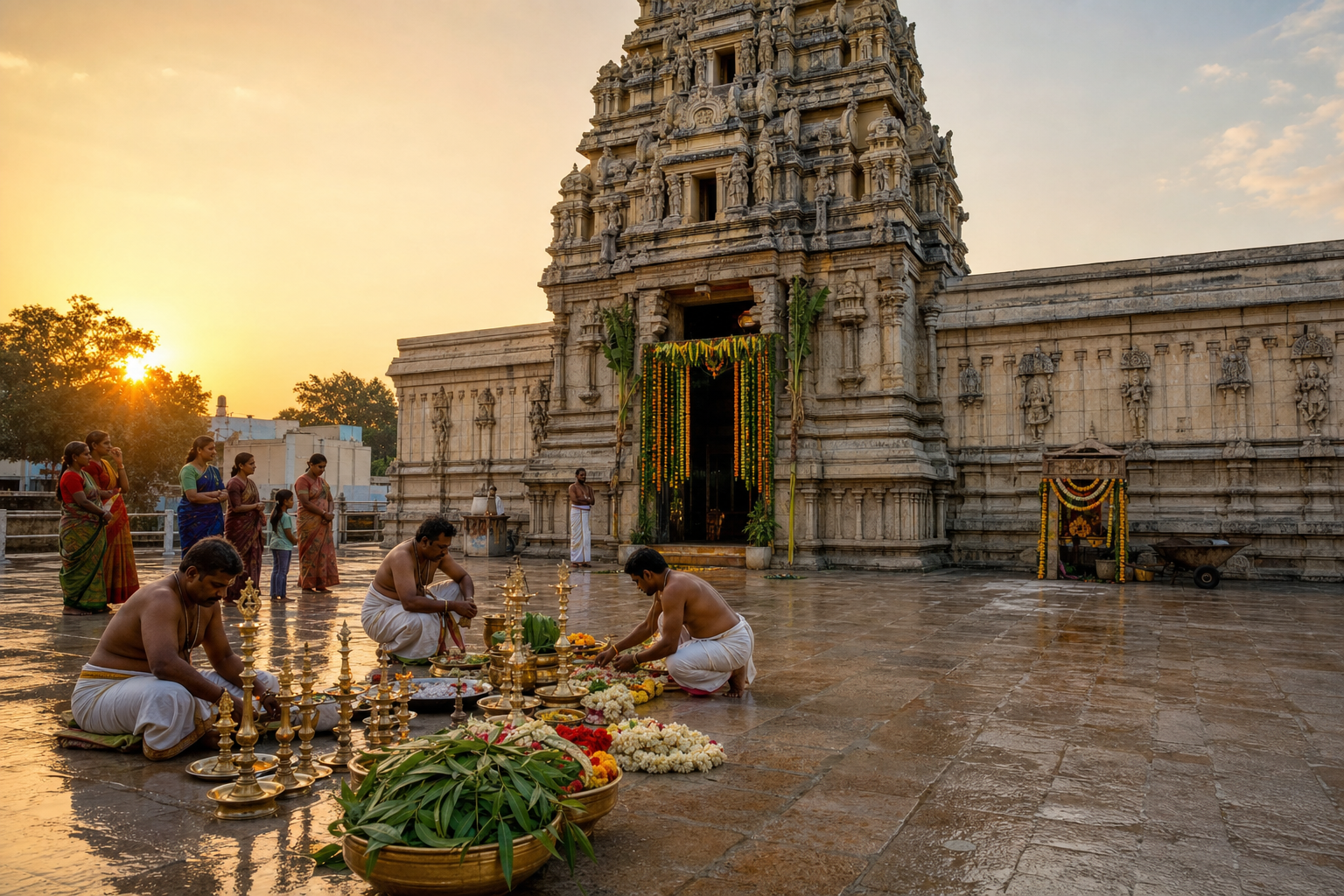
At Appalayagunta, the reported preparations for the 2026 annual Brahmotsavam placed a comprehensive temple purification immediately before the festival. DharmaRenaissance Blog reported that Koil Alwar Tirumanjanam was scheduled for 23 June 2026 at the TTD-managed Sri Prasanna Venkateswara Swamy Temple, followed by Brahmotsavam from 24 June to 3 July.
The schedule brings together three concerns that matter to devotees: the ritual meaning of cleansing the shrine, the operational work required to prepare it for an intensive festival cycle, and the temporary effect on darshan. Understanding that connection makes the purification more than a timetable interruption; it is the threshold between ordinary worship and the heightened liturgical rhythm of Brahmotsavam.
Key takeaways
- The source scheduled Koil Alwar Tirumanjanam for 23 June 2026, from 8:00 am to 10:30 am.
- The purification was to follow Suprabhatham, Thomala Seva, Koluvu and Archana, with darshan paused during the cleansing window.
- The reported work extended beyond routine cleaning to the sanctification of the sanctum, mandapas and associated ritual spaces.
- The annual Brahmotsavam was reported for 24 June to 3 July, although the source did not provide a confirmed day-by-day festival programme.
A carefully placed transition in the temple calendar
DharmaRenaissance Blog described the purification as taking place after the morning sequence of Suprabhatham, Thomala Seva, Koluvu and Archana. The reported 8:00 am to 10:30 am window therefore occupied a deliberate position: regular early worship would be completed before the temple interior was prepared for the festival beginning the following day.
This placement links ritual readiness with practical readiness. Brahmotsavam brings a denser sequence of worship, adornment and processional activity than an ordinary day. Preparing the shrine beforehand allows vessels, ornaments, surfaces and worship materials to be cleaned, protected or restored in an orderly sequence rather than amid the festival programme itself.
The source reported that darshan would be unavailable while the purification was underway and would resume after completion of the rite, restoration of the worship setting and post-ritual naivedyam. The stated end time should consequently be understood as the reported cleansing window, not an unconditional promise that every visitor-facing operation would restart at that exact minute.
How physical cleansing becomes ritual preparation

The source characterised Koil Alwar Tirumanjanam as a Sri Vaishnava, Agama-based observance encompassing the garbhagriha, mandapas and wider ritual environment. Its purpose was described in terms of both shuddhi, or purification, and renewed readiness for the more intensive services of Brahmotsavam. Physical order and sacred order are therefore presented as complementary rather than separate outcomes.
According to the account, movable ornaments, vessels and other puja materials are respectfully withdrawn or secured where necessary, while protective coverings prevent the moola murti from being directly exposed during the work. Priests and temple personnel then carry out the prescribed purificatory observances and clean the relevant interior spaces.
A distinctive part of the reported process is the use of an aromatic preparation called parimalam. The guide says that it traditionally includes substances such as sandalwood powder, turmeric and camphor, together with other fragrant ingredients permitted by Agamic practice. It is applied to floors, pillars and selected interior surfaces before careful rinsing and wiping.
The sequence is completed by returning the ritual materials to their places, adorning the deities, offering naivedyam and restoring darshan. This final stage is essential to the meaning of the observance: the objective is not an emptied or merely polished building, but a fully reconstituted place of worship prepared for the festival cycle.
What the purification does and does not confirm about Brahmotsavam
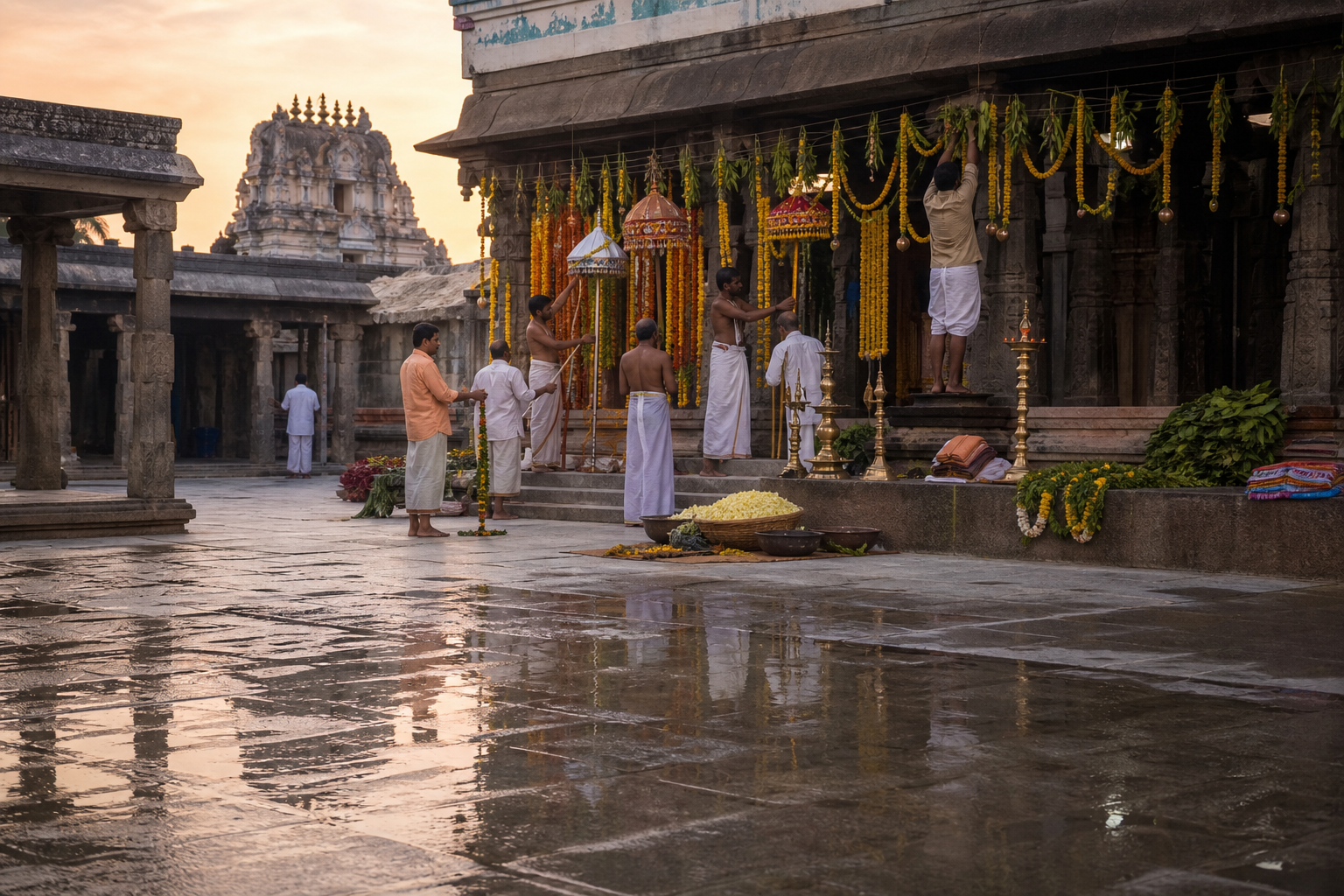
The source reported the annual Brahmotsavam for 24 June through 3 July 2026 and explained that festivals of this kind typically feature Dwajarohanam, daily vahana sevas, special alankarams, processions, Garuda Seva and a concluding Chakrasnanam. These details provide a general framework for understanding why substantial preparation is required.
They should not, however, be treated as a confirmed daily schedule for Appalayagunta. The cited report advised devotees to rely on TTD announcements for precise timings, queue arrangements and the programme for individual days. In particular, no exact timing for Garuda Seva or any other procession can be derived from the information supplied in the source.
The purification and the festival programme also serve different functions. Koil Alwar Tirumanjanam prepares the fixed sacred environment and its ritual equipment; Brahmotsavam then activates that prepared environment through successive sevas, adornments and public observances. Seen together, they form a progression from sanctification to celebration.
Planning darshan around the reported closure
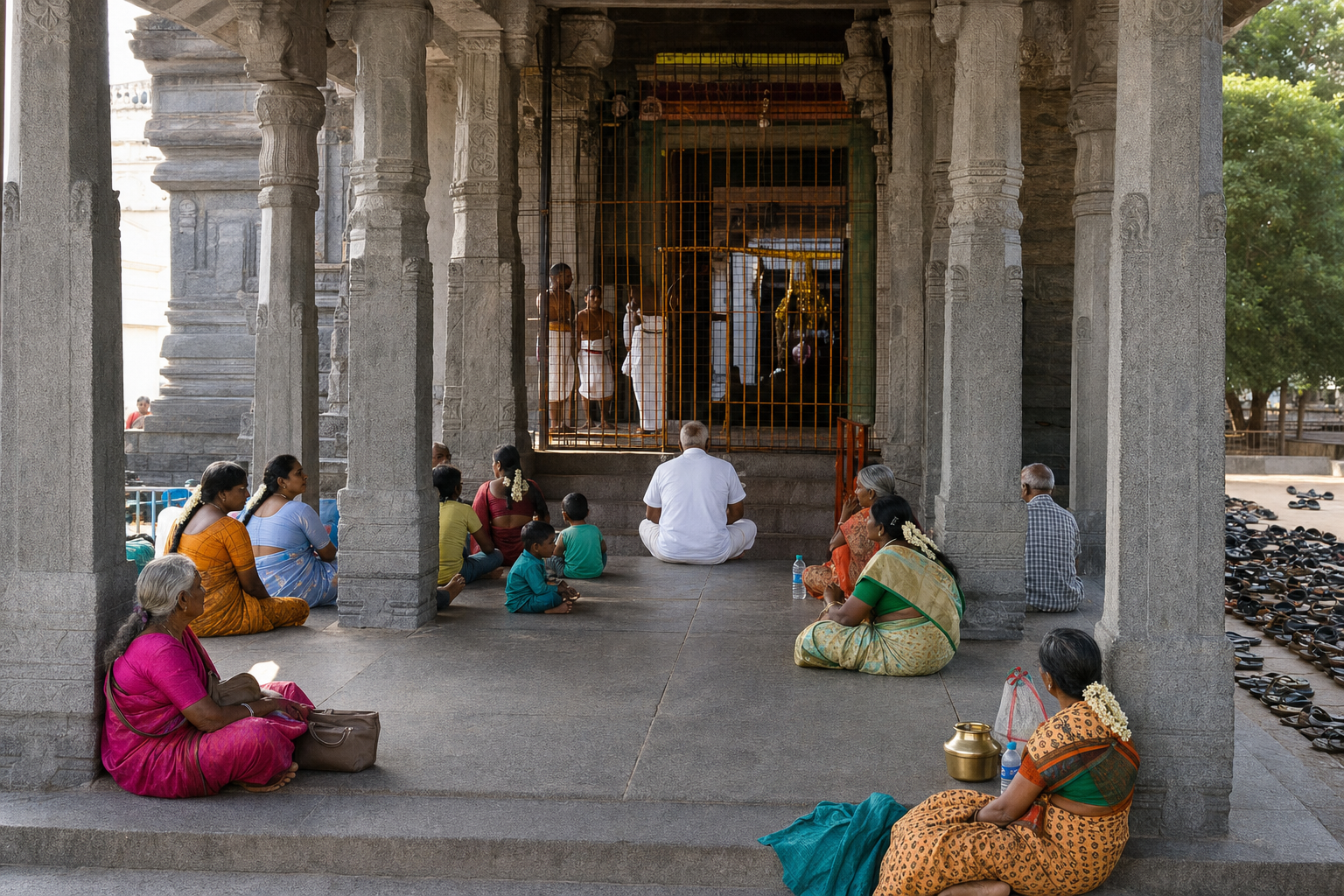
For 23 June, the practical implication of the report was straightforward: general visitors would avoid the announced 8:00 am to 10:30 am purification period and plan for darshan after the temple had completed its post-cleansing worship arrangements. The source also cautioned that selected arjitha sevas could be curtailed or rescheduled if operational needs required it, with instructions issued by the temple administration taking precedence.
The guide recommended modest attire, minimal baggage and quiet conduct near the sanctum. It also advised families accompanying elders or children to plan for hydration and shaded waiting in late-June conditions. These measures support both personal comfort and smoother movement when festival-linked attendance increases.
Appalayagunta was described as accessible from Tirupati by local bus, hired vehicle or private transport. Parking, pedestrian access and any temporary traffic changes would remain subject to TTD and local directions. For festival-linked visits, checking those official advisories remains the most reliable final step before departure.