

Kallurti and Panjurli stand at the meeting point of kinship, justice, cultivated land and sacred memory in Tulunadu. The most useful way to approach them is not as detached figures in a catalogue of regional deities, but as daivas whose meanings emerge through relationships: between family members, communities and moral obligations, as well as between human settlement and the forces surrounding it.
That approach also requires care with genealogy. DharmaRenaissance presents Kallurti and Panjurli within the devotional idea of sibling daivas and the phrase Thage Thangadi Sathyolu, while also noting that regional narratives connect Kallurti closely with the sculptor-daiva Kalkuda. Because relationships and stories can vary with place, lineage and ritual setting, the pairing is best understood without forcing every oral tradition into a single fixed account.
Two complementary forms of guardianship
The source article characterises Kallurti as a force of justice, protection and moral order. Her fierceness is not presented as uncontrolled anger: it acquires meaning through its response to violated truth and the suffering of the wronged. This makes her an expression of feminine sacred power that can nurture and defend, but also warn, correct and confront adharma.
Panjurli represents a different but complementary field of responsibility. DharmaRenaissance associates the daiva with the wild boar, fertility, agrarian protection and the guarding of boundaries and cultivated land. The symbolism contains a productive tension. A force capable of disturbing fields becomes protective when acknowledged through reverence, restraint and right relationship. Panjurli therefore embodies not the denial of the wild, but its moral integration into communal life.
Read together, the two traditions connect social and ecological order. Kallurti directs attention toward truth, dignity and accountability; Panjurli directs it toward land, livelihood and limits. Their pairing suggests that justice cannot be confined to relationships among people, while prosperity cannot be separated from disciplined care for the environment that sustains a community.
Ritual makes memory and accountability public
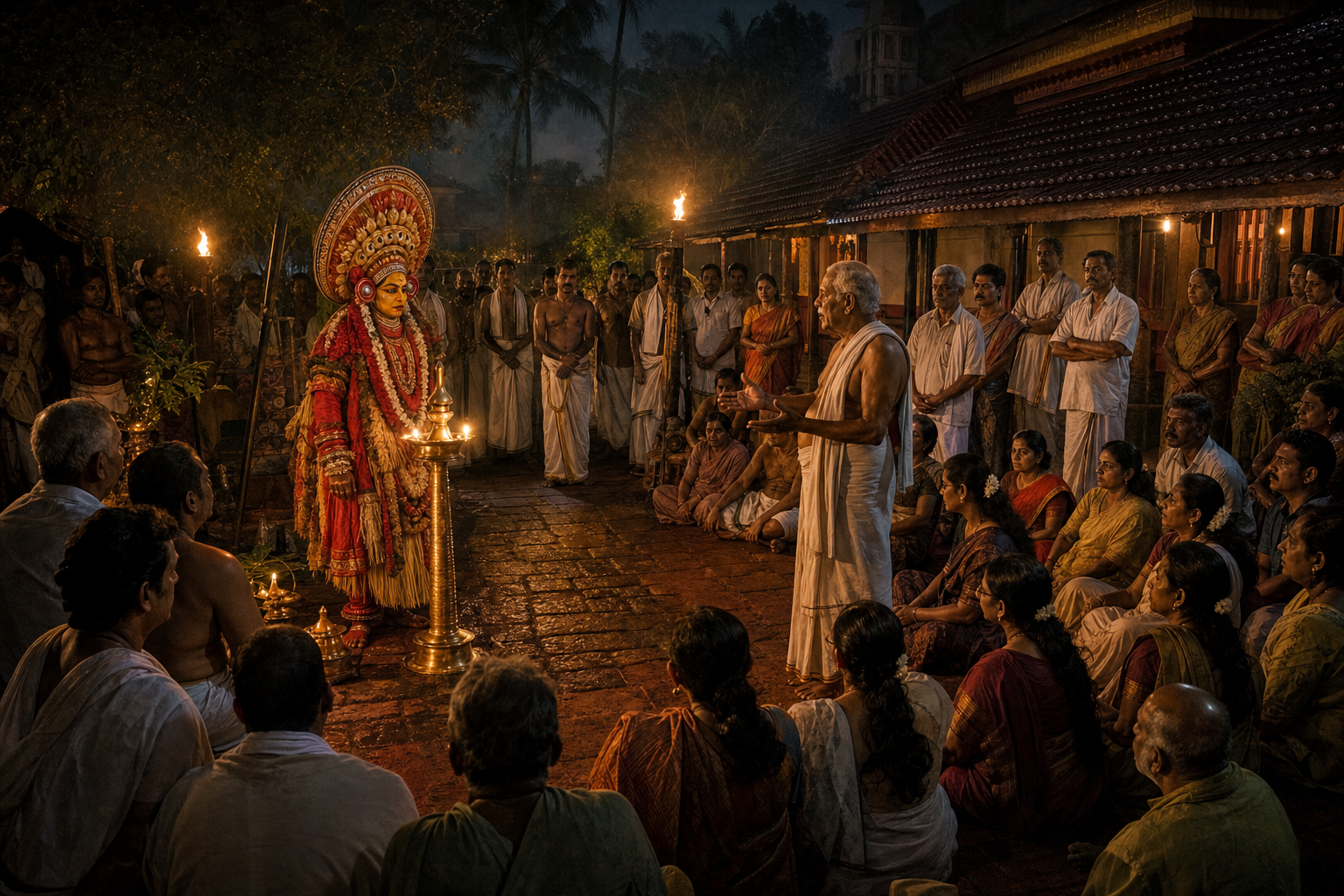
Kallurti and Panjurli belong to the ritual world described through terms such as Bhuta Kola, Daiva Kola and Daiva Nema. According to the source, music, lamps, offerings, costume, facial design, dance, recitation and trance help establish the conditions in which a ritual specialist embodies the presence of a daiva. The event is therefore not adequately understood as staged entertainment, even though it contains highly developed performative elements.
The distinction matters because the assembled community is more than an audience. It witnesses invocations, remembers obligations and may bring unresolved grievances into the daiva’s presence. DharmaRenaissance reports that concerns involving land, family tensions, betrayal, promises and other disputes can enter this sacred forum. The article does not equate the process with a modern court; instead, it presents ritual authority as a form of public moral accountability in which truth is spoken before both community and daiva.
This public dimension links devotion with civic life. A vow is not merely an inward intention when relatives, neighbours and ritual authorities remember it. Likewise, wrongdoing is not treated only as an individual lapse when its effects disturb family relations, access to land or communal trust. The ritual setting gives social consequences a sacred vocabulary and places the restoration of order before collective witnesses.
Paddanas preserve a living and variable archive
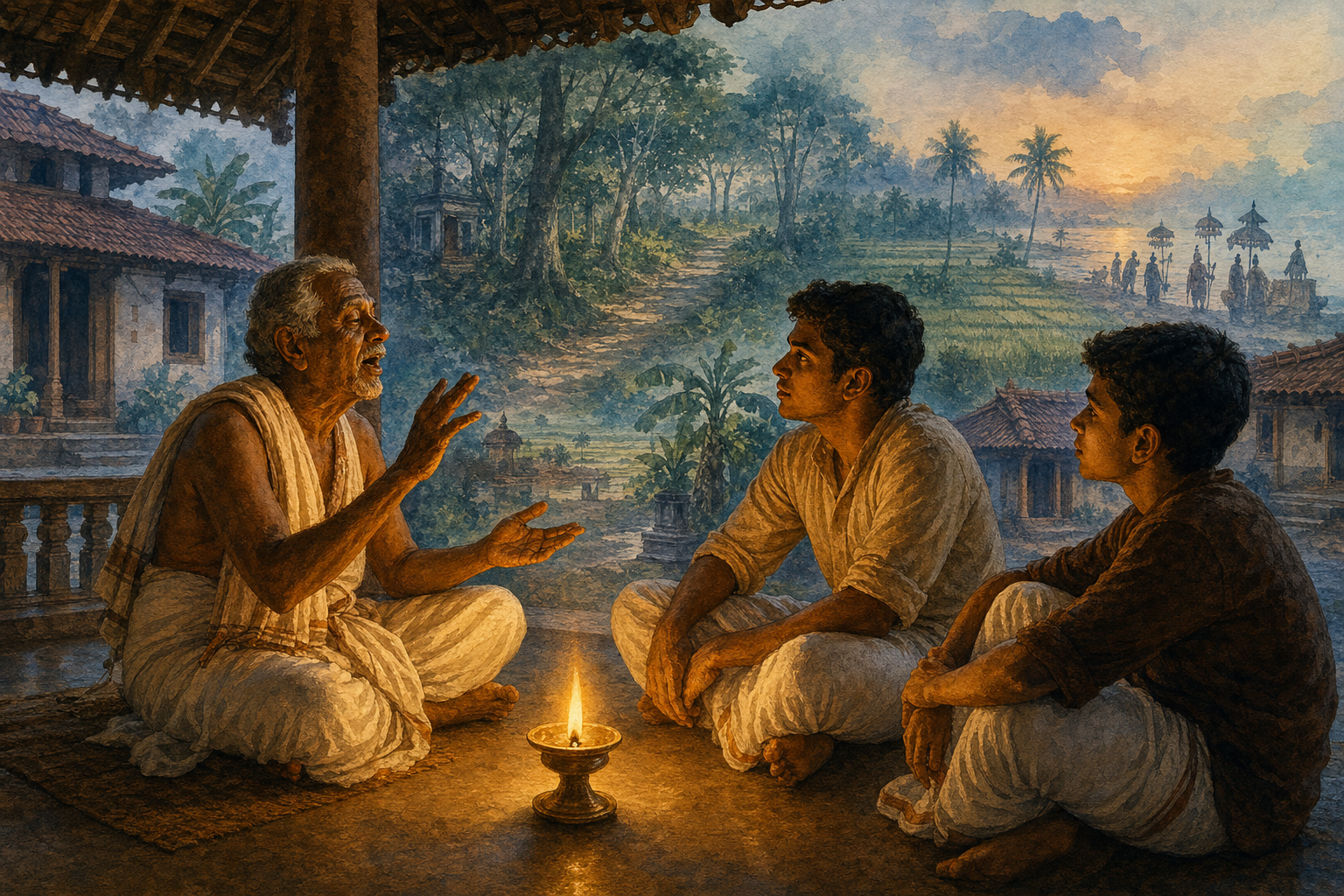
Paddanas, the narrative songs performed within this world, carry accounts of the daivas’ origins, journeys, conflicts, vows and powers. The source also credits them with preserving memories of places, families, migrations and transformations. They consequently work on several levels at once: as devotional remembrance, ethical teaching, oral history and ritual theology.
Their oral character explains why variation deserves interpretation rather than dismissal. A version maintained by one place or lineage need not reproduce another version in every relationship or episode. The differences can show how communities locate sacred memory within particular landscapes and inherited responsibilities. DharmaRenaissance accordingly treats variation as a characteristic of living oral culture, not simply as an error awaiting correction by a single written narrative.
This has a practical consequence for readers and researchers. Claims about Kallurti, Panjurli or their relationships should be situated by asking which ritual setting, community memory or narrative version supports them. Such contextual reading protects the texture of the tradition while still allowing its recurring ethical themes to become visible.
Key takeaways
- Kallurti is presented as a guardian of truth, dignity and moral order whose fierceness responds to injustice.
- Panjurli links sacred guardianship with the wild boar, cultivated land, fertility and the protection of boundaries.
- Daiva ritual joins embodied worship to public memory, allowing vows and communal obligations to be addressed before witnesses.
- Oral variation is essential context: the sibling framing should not erase other regional narratives, including Kallurti’s reported connection with Kalkuda.
Continuity depends on preserving relationships, not images alone
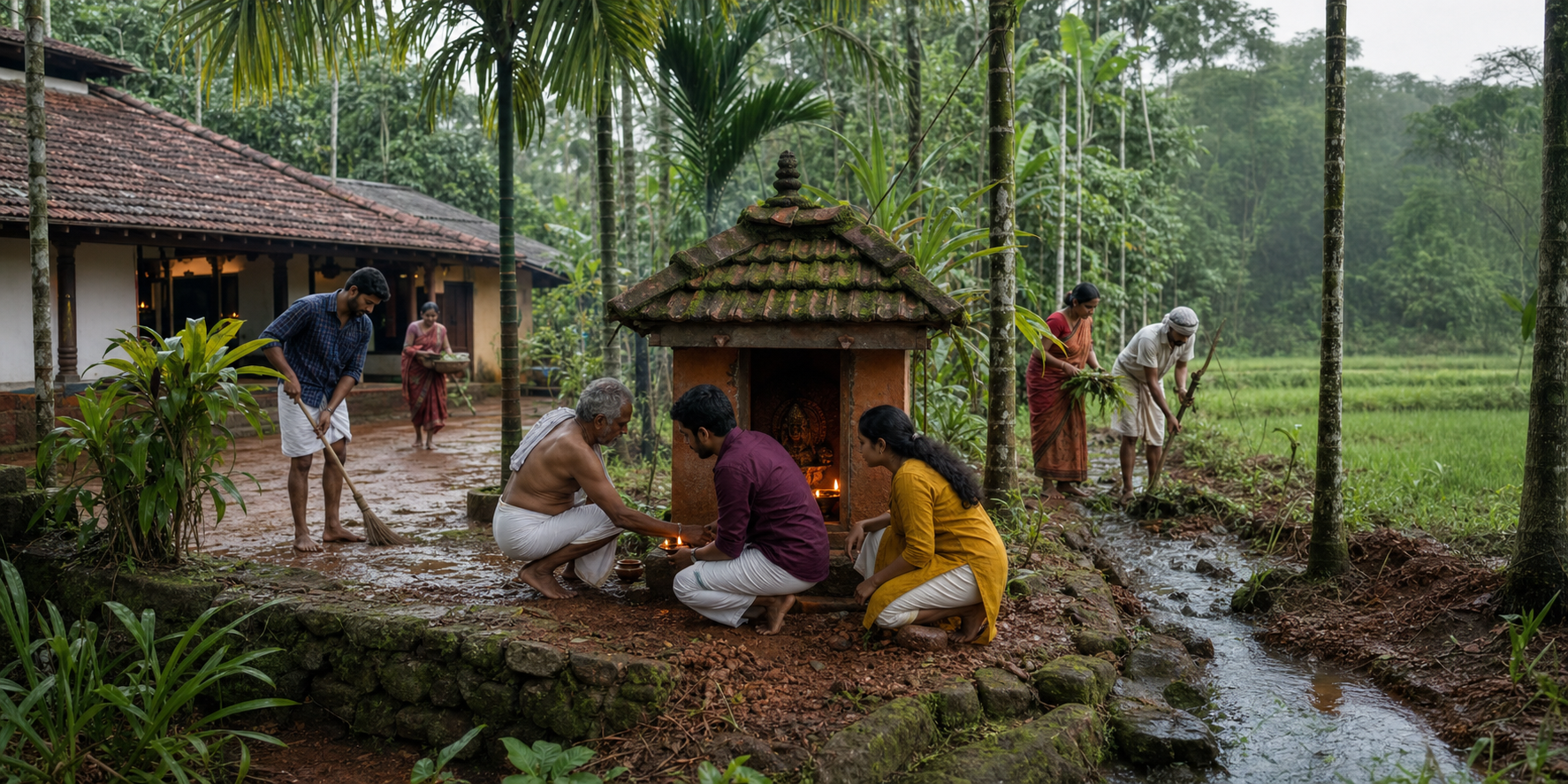
The source locates these traditions in paddy fields, ancestral homes, village shrines, family vows and seasonal ritual life. That nearness to ordinary concerns helps explain why the daivas can be approached for protection, reconciliation, healing, courage and justice rather than being confined to abstract theological discussion.
Preservation therefore involves more than recording costumes or extracting a definitive legend. It requires attention to paddanas, ritual specialists, local custodians, variant narratives and the social circumstances in which the daivas are invoked. Separating the visible performance from those relationships would retain an image while losing much of the tradition’s function.
Future documentation can serve the tradition best by identifying the community and ritual context of each account, respecting differences among versions and keeping the ethical connection between truth, land and responsibility in view. That approach allows Kallurti and Panjurli to remain intelligible as living presences in Tulunadu rather than flattened symbols detached from the communities that remember them.