

The first six months of 2026 brought a substantial decline in the number of journalists reported killed worldwide. Hindu Post, reporting figures from the Press Emblem Campaign (PEC), placed the toll at 39, compared with 85 in the same period of 2025—a reduction of 54%.
The improvement was neither uniform nor sufficient to establish that journalists had become durably safer. Deaths remained concentrated in the Middle East, murders continued across Latin America and Asia, and the PEC said accountability had made no comparable progress. Understanding the first-half figures therefore requires looking beyond the global total to geography, circumstances and unresolved investigations.
Key takeaways
- The reported global toll fell by more than half from the corresponding period of 2025, but the comparison covers only the first six months of each year.
- The decline was geographically uneven: the Middle East still accounted for the largest regional toll, followed by Latin America.
- The report indicated a marked improvement in South and Southeast Asia, although an inconsistency in its 2025 baseline prevents a precise regional percentage comparison.
- According to the PEC, fewer deaths were not accompanied by progress against impunity, particularly in cases involving military operations or alleged criminal-state entanglement.
A steep decline with an uneven regional pattern

The Hindu Post article, dated 16 July 2026, attributed the following first-half distribution to the PEC:
| Region | Reported killed | Distribution stated in the report |
|---|---|---|
| Middle East | 19 | Lebanon 9; Gaza 7; Syria 1; Iran 1; Yemen 1 |
| Latin America | 12 | Mexico 5; Colombia 2; Haiti 2; Venezuela 2; Guatemala 1 |
| Asia | 6 | Philippines 3; Bangladesh 1; India 1; Pakistan 1 |
| Africa | 2 | Somalia 1; Uganda 1 |
| Europe | 0 | No journalist deaths counted; people who died while serving in military ranks were excluded |
The regional figures add up to the reported worldwide total of 39, but the accompanying qualifications show why a half-year count can remain provisional. Mexico’s five cases included two journalists said to have been murdered in June whose bodies were found in July. The Venezuelan figure excluded earthquake victims. Such decisions distinguish deaths attributed to violence against or affecting media workers from deaths caused by other events, while delayed discoveries can alter a tally after its formal cutoff.
Conflict zones and criminal violence present different risks
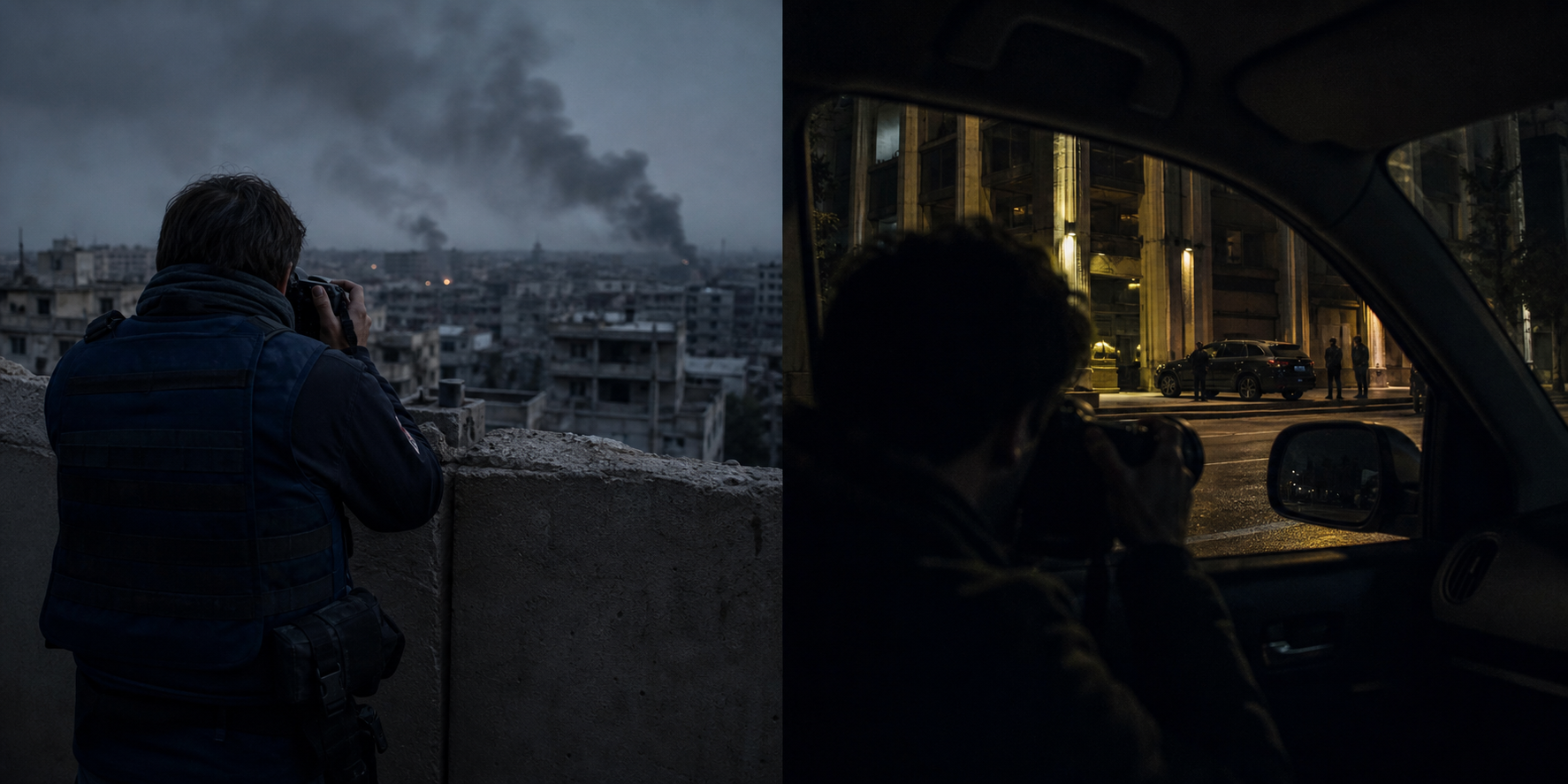
The Middle Eastern toll was dominated by deaths during military operations. According to the report, nine media workers were killed in Lebanon during Israeli operations and seven journalists were killed in Gaza. The PEC attributed a high proportion of these deaths to the Israeli military, with particular emphasis on Lebanon. This is the PEC’s assessment as relayed by Hindu Post, not an independently established finding within the supplied material.
The first-half decline also sits within a much longer and heavier Gaza tally. The PEC said 228 Palestinian journalists had been killed in the fighting since 7 October 2023, assigning 81 deaths to 2023, 80 to 2024, 60 to 2025 and seven to 2026. It stated that alleged affiliation with Hamas was not, by itself, a reason to exclude a journalist from its count unless the person had participated in fighting. That counting position is important because definitions can materially affect totals in a conflict where the status and conduct of victims may be disputed.
Latin America reflected a different accountability problem. Mexico had the region’s largest country total, at five, while the PEC linked stalled investigations there to unclear relationships between criminal networks and state institutions. In practical terms, military cases raise questions about targeting, identification and precautions during operations; murders outside war zones raise questions about protection, investigative independence and whether institutions are capable of pursuing perpetrators. A lower global number does not resolve either set of problems.
Asia improved, but the comparison needs qualification
The report counted six journalist deaths in Asia during the first half of 2026. It identified the Philippines as the region’s deadliest country, with three victims: Julio Calo of DNN News FM, RJ Nichole Ledesma of Paghimutad-Negros and Nestor Micator of Empire Radio Station. Hindu Post also named Jaganmohan Reddy of ABN AndhraJyothy in India, Lala Israfil Khan of HUM news channel in Pakistan and Rana Pratap Bairagi of Dainik BD Khabar in Bangladesh.
The article described this as an improvement over the corresponding regional situation in 2025, but its baseline contains an internal inconsistency. It stated that there had been at least 21 casualties in the earlier period, then listed six in India, five each in Bangladesh and Pakistan, four in the Philippines, two in Afghanistan and one in Nepal. Those country figures total 23 rather than 21. The direction of change remains evident within the report, but an exact percentage decline for South and Southeast Asia should not be inferred until the baseline is clarified.
Accountability remains the decisive measure

The PEC’s central warning was that the decline in deaths had not produced progress against impunity. The report relayed its allegation of near-total impunity for Israeli military personnel in cases that it considers deliberate killings. It also presented Mexico’s criminal-state relationships as an obstacle to credible investigations. The PEC called for international mechanisms to identify and prosecute those responsible when national systems fail to act.
Europe offered a cautiously encouraging counterpoint. The report counted no journalist deaths there during the period despite the war involving Russia and Ukraine, after excluding people who died while serving in military ranks. The PEC interpreted this as evidence that precautions can prevent media-worker deaths in war zones. A six-month zero cannot by itself prove which measures caused the outcome, but it provides a relevant case for examining how identification, deployment practices and operational safeguards may reduce exposure.
For the remainder of 2026, the most meaningful assessment will pair the casualty count with transparent definitions, corrections for late-reported cases and evidence of investigations or prosecutions. A falling toll is welcome; durable improvement will depend on whether protective practices spread and whether those responsible for unlawful killings face credible scrutiny.