
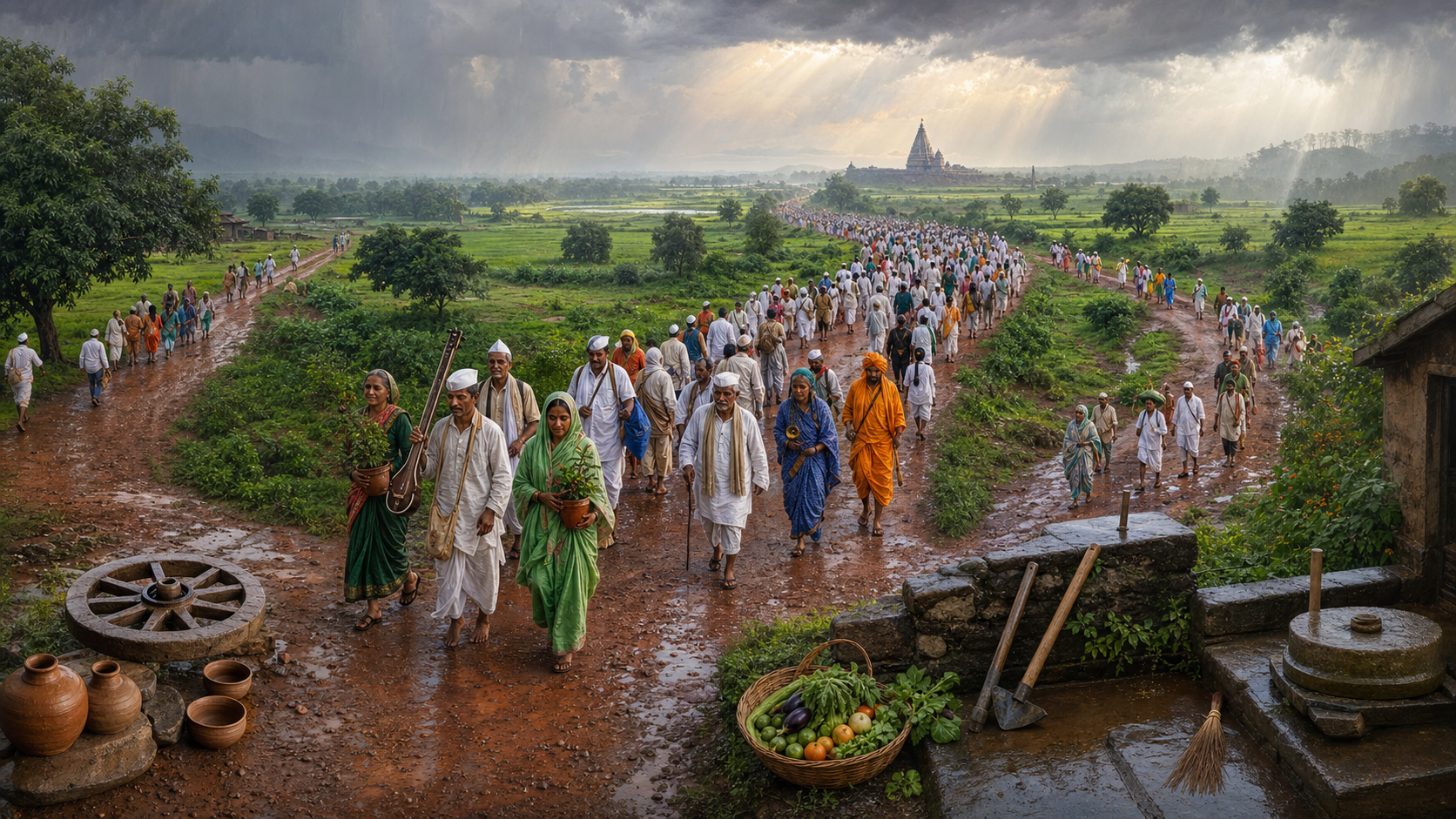
The 2026 Ashadhi Wari is not represented by one procession or one regional story. The traditions associated with Sant Goroba Kaka, Sant Savata Mali, Sant Chokhamela and Sant Janabai bring different parts of Maharashtra, different forms of work and different experiences of social life into a shared movement toward Vitthal.
Read together, the four source articles reveal a pilgrimage culture that achieves unity without flattening local identity. Each saint tradition interprets the road, the destination and the meaning of devotion through its own moral vocabulary: craftsmanship, cultivation, equality or domestic service.
One sacred season, several regional points of departure
All four source articles report that Ashadhi Ekadashi falls on 25 July 2026. The articles on Sant Goroba Kaka, Sant Savata Mali, Sant Chokhamela and Sant Janabai therefore place their regional observances within the same devotional calendar centered on Pandharpur, Vitthal and Rakhumai.
Three of the sources also report 7 July as the expected departure date of the Sant Tukaram Maharaj Palkhi from Dehu and 8 July as that of the Sant Dnyaneshwar Maharaj Palkhi from Alandi. These dates establish the broader Wari context, but they do not supply definitive stage-by-stage schedules for the four regional traditions considered here. Each article advises prospective participants to confirm local departures, halts and administrative arrangements with the relevant organizers and authorities.
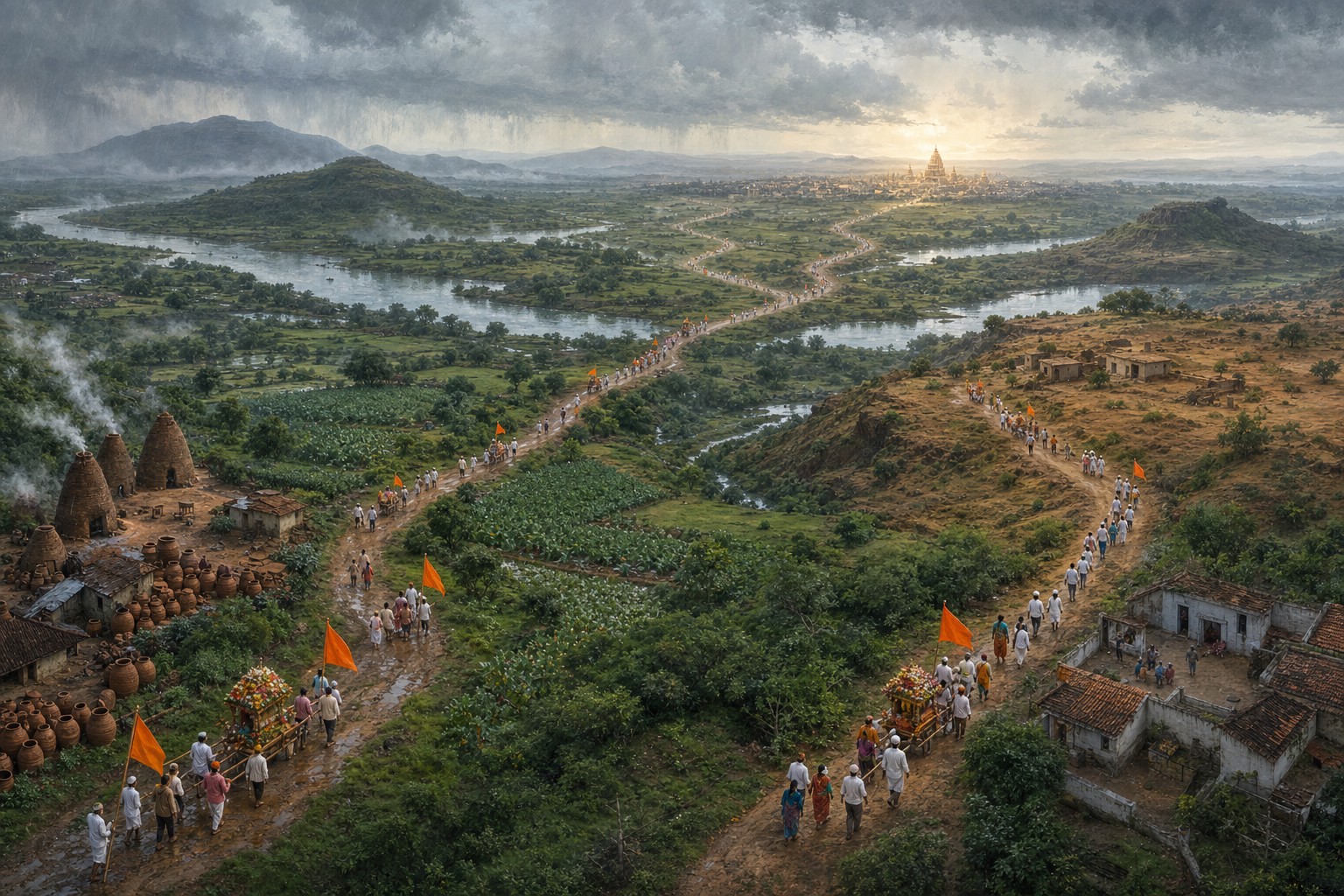
This distinction matters. Pandharpur supplies a common destination, but the Wari’s cultural reach comes from the many places that send saint memories into that center. The Goroba Kaka tradition connects Ter and wider Marathwada with Pandharpur. The Savata Mali tradition is associated with Aran near Modnimb in Solapur district. The Chokhamela account links Mangalvedha and Pandharpur, while Janabai’s palkhi carries the memory of Gangakhed in Parbhani district and the devotional geography of Marathwada. Regional identity is not peripheral to the pilgrimage; it is one of the ways the pilgrimage becomes representative of Maharashtra.
Four saints give the journey four interpretive lenses
| Saint tradition | Regional association reported by the source | Distinctive lens on bhakti |
|---|---|---|
| Sant Goroba Kaka | Ter and wider Marathwada | The potter’s work makes clay, pressure, patience and fire symbols of spiritual formation. |
| Sant Savata Mali | Aran near Modnimb in Solapur district | Cultivation and faithful attention to duty become a setting in which Vitthal approaches the devotee. |
| Sant Chokhamela | Mangalvedha and Pandharpur | Devotion confronts exclusion and affirms the spiritual dignity of people marginalized by society. |
| Sant Janabai | Gangakhed in Parbhani district and Marathwada | Household service and women’s vernacular poetry become sites of spiritual insight and authority. |
The comparison shows why these traditions should not be treated as smaller copies of the more publicized Dehu and Alandi processions. A palkhi does more than add another group of walkers to the road. It carries a particular account of what kind of life can disclose the divine.
Goroba Kaka’s remembered identity as a potter gives the journey a language of spiritual craftsmanship. The source article draws an analogy between centering and firing clay and the refinement of human character through remembrance, service and discipline. Savata Mali’s tradition uses another relationship with the soil. Its central narrative reverses the expected direction of pilgrimage: when the saint remains immersed in cultivation and remembrance, Vitthal is believed to come to him. The theological point is not that pilgrimage lacks value, but that sincere devotion is not invalidated by necessary work or an inability to travel.
Janabai’s remembered world shifts attention from field and workshop to domestic labor. Her source article presents grinding, cleaning, cooking and serving as activities that need not stand outside spiritual life. Chokhamela’s tradition adds a different test: devotion must recognize dignity where social hierarchy has denied it. His remembered experience of exclusion and his Marathi abhangas give the pilgrimage a moral question as well as a destination.
Labor is the common ground, but not the whole message
Work connects the four accounts, although it does so in different ways. Goroba Kaka and Savata Mali explicitly embody artisan and agricultural identities. Janabai’s poetry locates divine companionship within household service. Chokhamela’s legacy directs attention to the worker and devotee whose humanity can remain unrecognized even when labor is indispensable.
This shared emphasis prevents bhakti from becoming an escape reserved for people with leisure, status or formal learning. Clay, crops and household tasks supply recognizable languages through which rural families, artisans, women and working devotees can understand spiritual practice. The traditions suggest that ordinary responsibility can be disciplined by nama-smarana, humility and service rather than abandoned in the search for a supposedly separate sacred life.
The sources nevertheless present complementary rather than interchangeable teachings. Goroba Kaka emphasizes formation: the person, like clay, remains capable of being reshaped. Savata Mali emphasizes divine accessibility: duty performed with remembrance does not place the devotee beyond grace. Janabai emphasizes the sanctity of work routinely hidden inside the home. Chokhamela emphasizes recognition: devotional claims are ethically incomplete if they leave inherited exclusion unexamined.
Agriculture also gives the synthesis an ecological undertone without requiring a separate doctrine to be imposed on the sources. The Savata Mali article describes cultivation through patience, uncertain rain and trust in cycles larger than the individual. The Goroba Kaka account similarly begins with earth and water before turning to pressure and fire. In both cases, material work becomes a vocabulary for resilience, although each saint tradition retains its own emphasis.
Equality is enacted through memory, movement and care
The Chokhamela and Janabai traditions make especially visible two questions that can be obscured by a generalized celebration of unity: whose devotional voice is heard, and whose work is treated as spiritually meaningful? The Chokhamela article presents his abhangas and his samadhi near the Vitthal temple as parts of Pandharpur’s social conscience. It also situates Sant Soyarabai and other members of his devotional orbit within a wider archive of bhakti and struggle. The Janabai article highlights a woman poet whose compositions challenge restrictive assumptions about who may articulate sacred experience.
Goroba Kaka and Savata Mali contribute to the same discussion through occupational dignity. Their remembered identities do not disappear when they become saints; pottery and cultivation remain essential to how their spirituality is understood. Across the four accounts, authority arises through devotion, ethical conduct and realization rather than through wealth or elevated social position.
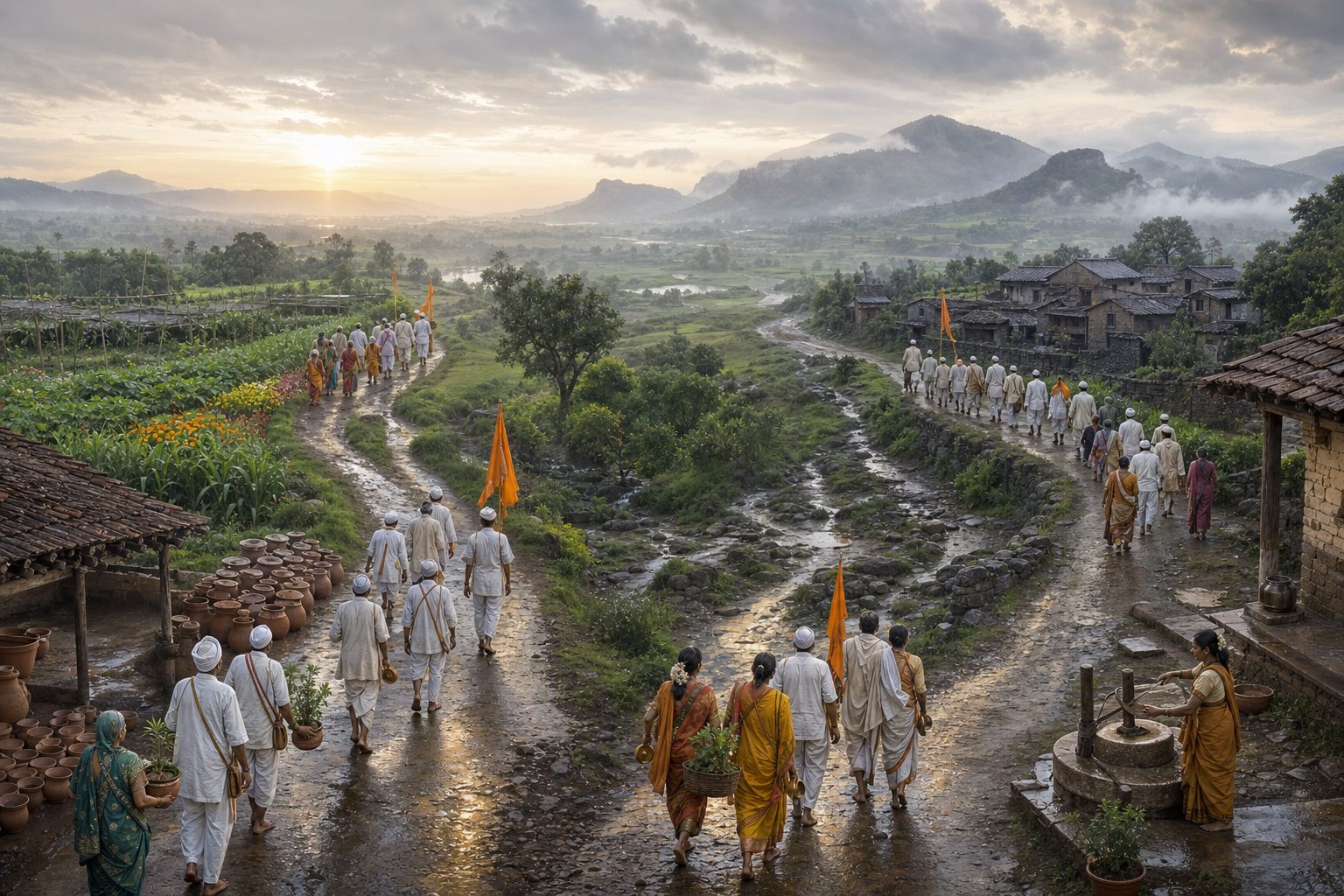
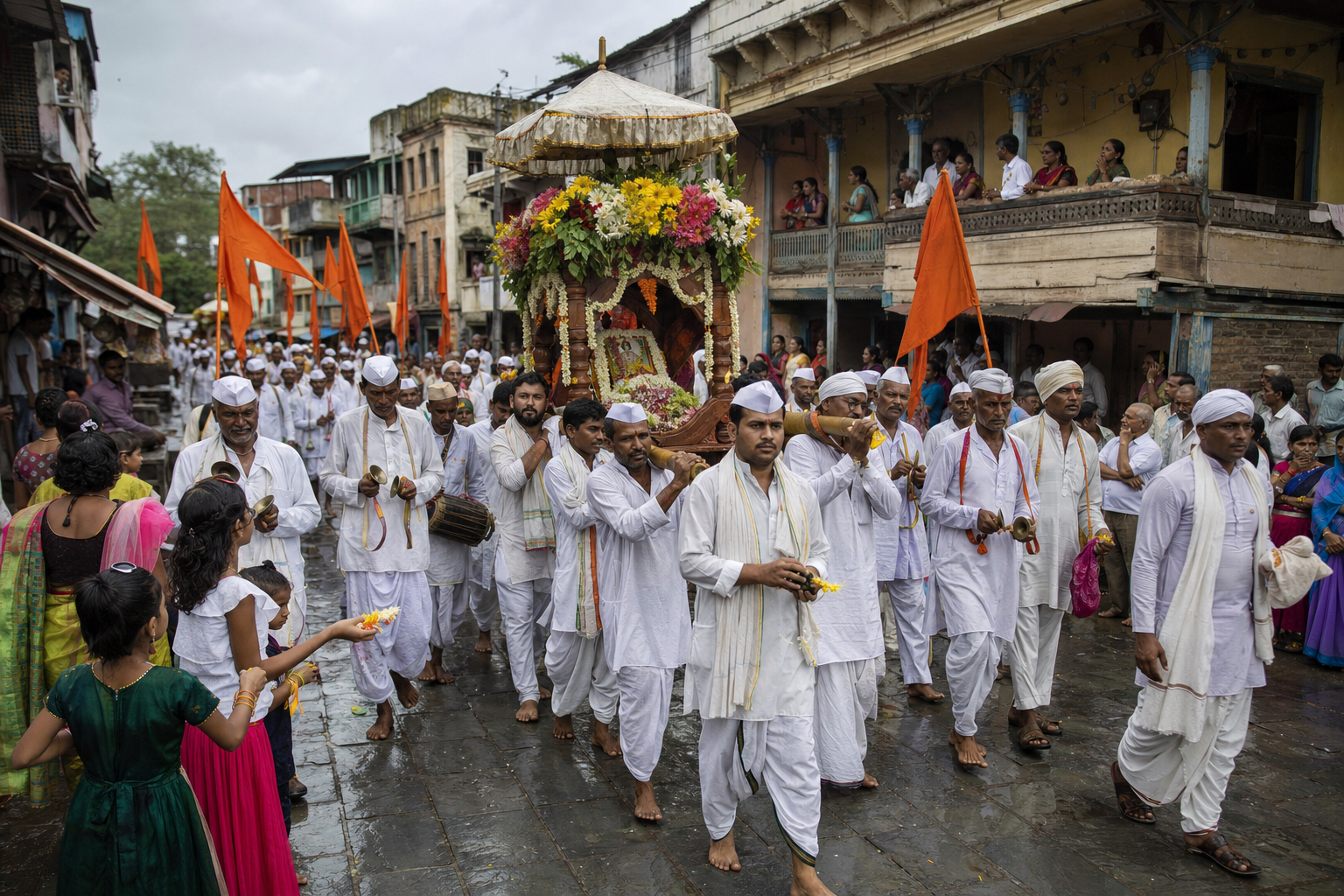
The sources also describe the palkhi as an embodied institution rather than a symbolic statement alone. Dindis coordinate walking, chanting, food, rest and discipline. Villages, volunteers, temple committees, medical workers, police and administrators support water, sanitation, health, traffic and crowd arrangements. Shared care makes the road a temporary devotional community.
That experience should not be romanticized as proof that every social inequality has disappeared. The Savata Mali article itself notes a gap between the Varkari ideal of participation across divisions and the record of historical society. The stronger synthesis is therefore that the Wari preserves an ethical standard against which conduct can be measured. Chokhamela’s memory makes that standard explicit, while Janabai, Goroba Kaka and Savata Mali show how widely spiritual dignity must extend.
Reading and approaching the regional Wari in 2026
Readers and prospective pilgrims can distinguish between what the sources establish as shared context and what remains locally contingent. The Ashadhi Ekadashi date is consistently reported across the four articles, while detailed regional routes and halts are left for organizers to announce or confirm.
Key takeaways
- The four traditions converge on Pandharpur without surrendering the identities of Ter, Aran, Mangalvedha or Gangakhed.
- Goroba Kaka, Savata Mali and Janabai show in different ways how skilled, agricultural and domestic labor can become a field of devotion.
- Chokhamela’s legacy makes equality and the recognition of marginalized devotees central to interpreting the Wari.
- The organized dindi, local hospitality and public services translate devotional ideals into collective practices of care.
- Participants should treat the regional timetables in the source articles as incomplete and verify 2026 routes, halts and instructions with recognized local bodies.
The practical guidance across the sources is consistent: walking during the monsoon calls for attention to personal health, hydration, rain protection, suitable footwear, medicines and crowd conditions. Elderly devotees, children and first-time participants may benefit from traveling with a known dindi or organized group. These preparations are not separate from the pilgrimage’s meaning, because patience, cleanliness, cooperation and responsibility are part of its discipline.
Those unable to walk are not excluded from the devotional field described by the sources. Namasmarana, reading or singing abhangas, supporting pilgrims, serving food or water and practicing compassion in ordinary responsibilities extend the Wari’s values beyond physical mobility. The Savata Mali narrative gives this point its clearest theological form, while the other three traditions show how remembrance can inhabit a workshop, a household or a life constrained by social barriers.
As local committees publish their 2026 arrangements, the significance of these traditions will lie in more than their arrival at Pandharpur. Their continuing value will depend on whether regional memories remain audible and whether the disciplines of labor, dignity and mutual care travel with the palkhis.
References
- DharmaRenaissance Blog — Sant Goroba Kaka Palkhi 2026: Powerful Marathwada Devotion to Pandharpur
- DharmaRenaissance Blog — Sant Savata Mali Palkhi 2026: Powerful Wari Tradition Where Vitthal Comes Home
- DharmaRenaissance Blog — Sant Chokhamela Palkhi 2026: A Powerful Journey of Bhakti, Equality and Wari
- DharmaRenaissance Blog — Sant Janabai Palkhi 2026: Powerful Marathwada Wari Journey to Pandharpur