
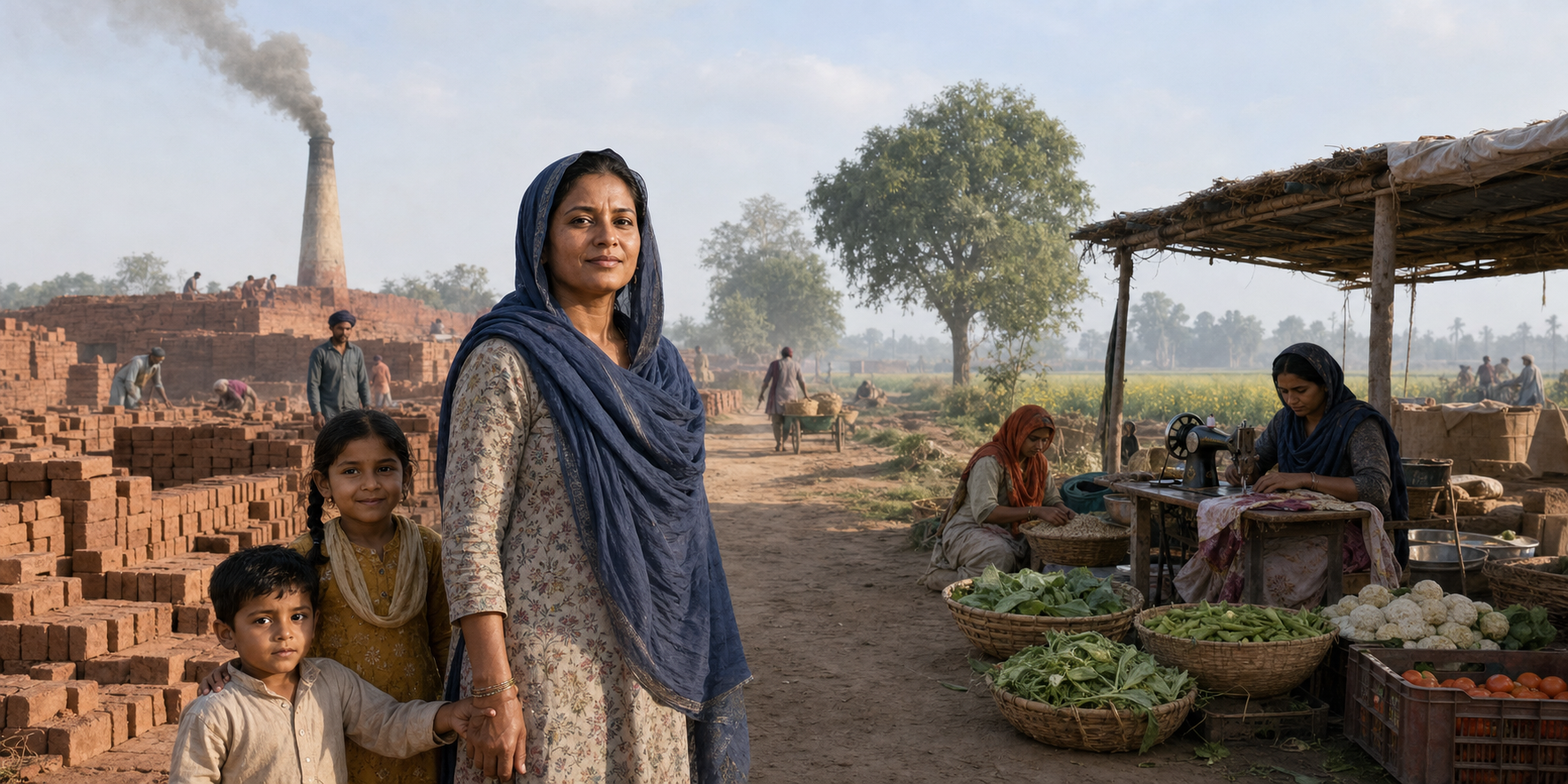
Poverty, bonded labour and women’s livelihoods belong in the same discussion, but they are not interchangeable. A household with little spending power is not automatically trapped in forced labour, and a vocational course does not automatically create economic freedom. The connection lies in bargaining power: families facing irregular earnings and urgent expenses may accept risky advances, while accessible and fairly paid work can give them more room to refuse exploitative terms.
Three accounts illuminate different parts of this chain: a reported bonded-labour case at a Punjab brick kiln, an examination of life around a ₹150-per-person daily expenditure level, and a market-linked livelihood initiative for women in Moradabad. Read together, they suggest a practical framework in which freedom requires enforceable labour rights, household security and viable sources of independent income.
Key takeaways
- Low and irregular income can make an employer or contractor’s advance appear indispensable, especially when a family faces illness, migration costs or another urgent expense.
- Debt becomes an instrument of bondage when it is combined with coercion, restricted exit, withheld or opaque wages, manipulated accounts or control over movement.
- Women’s livelihood programmes are most credible when nearby training leads to real orders, transparent payment, useful digital skills and continued access to markets.
- Preventing renewed bondage requires both enforcement against illegal labour arrangements and economic alternatives that allow households to survive without another coercive advance.
How a fragile household budget can become a labour trap
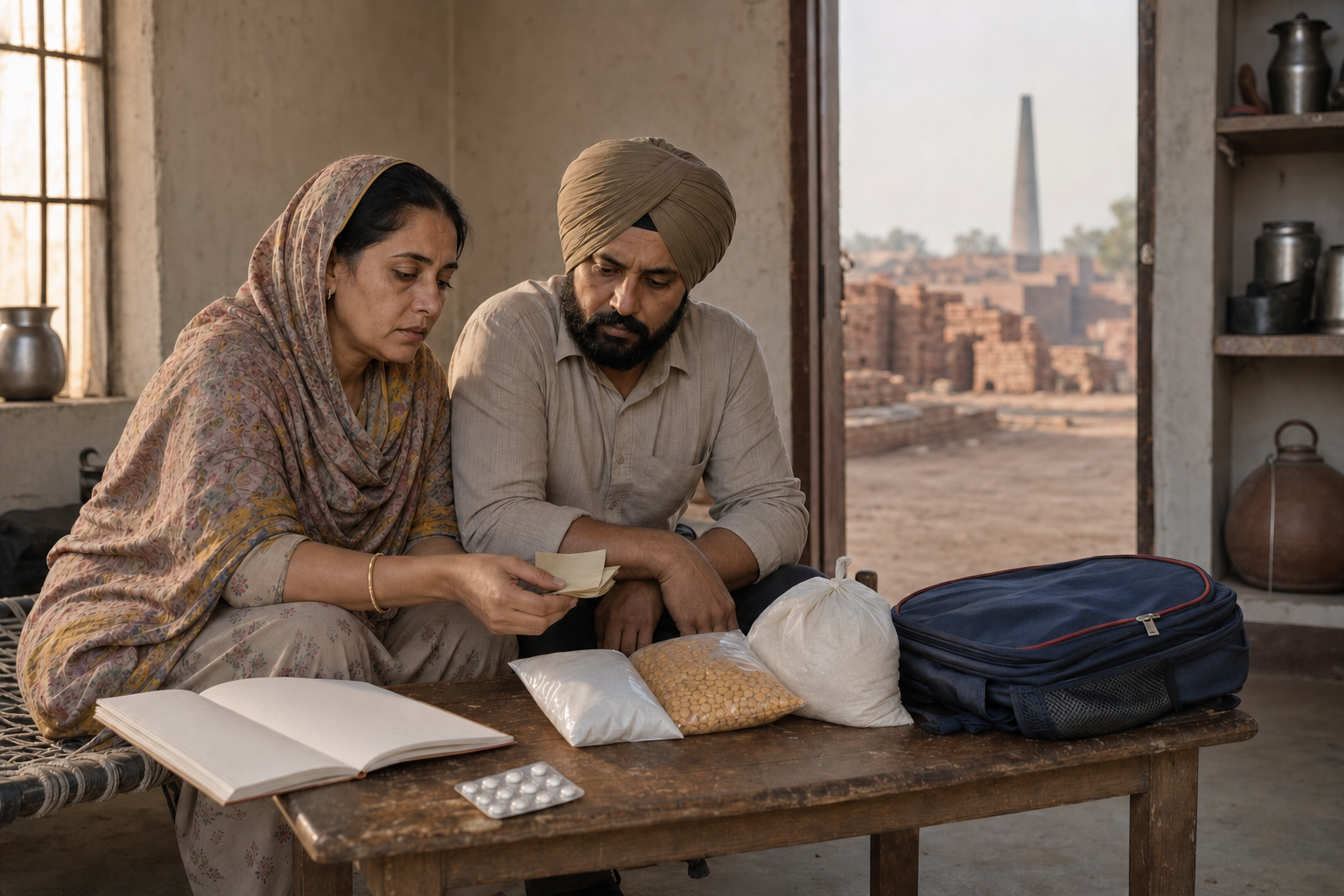
The account of India’s low-income households uses approximately ₹150 per person per day as an illustrative expenditure level. For a four-person family, it calculates monthly spending capacity at roughly ₹18,000. The article does not present that figure as a complete legal definition of poverty; it uses the arithmetic to show how food, rent, fuel, transport, schooling, medicine and social obligations compete for a very small pool of cash.
This distinction between low income and unstable cash flow is crucial. A family may manage routine expenses yet have no reserve for a medical emergency, lost workday, failed crop or migration journey. Under those conditions, an advance from a labour contractor can serve as informal credit as well as recruitment. The immediate relief is real, but so is the imbalance created when the lender also controls employment, transport, wage calculations and the terms of repayment.
The Punjab bonded-labour article reports that advances beginning at about ₹10,000 helped draw workers into a brick-kiln arrangement in Patti Sandhuan village in Moga district. It describes 56 members of 10 Scheduled Caste families from Saharanpur and Muzaffarnagar, including 26 children, at the kiln from which 26-year-old Ankush Kumar reportedly escaped in January 2025. These details are reported allegations from that article rather than independently verified findings here.
The size of a debt alone does not establish bonded labour. The decisive questions concern freedom and control: Can workers leave? Can they see and challenge their accounts? Are wages actually paid? Are deductions documented? Does a contractor threaten, confine or deceive them? According to the Punjab article, Article 23 of the Constitution prohibits begar and similar forms of forced labour, while the Bonded Labour System (Abolition) Act, 1976 extinguishes bonded debts and criminalises their enforcement. An informal advance therefore cannot lawfully purchase a worker’s liberty.
Family-based migration makes detection harder and the consequences wider. When adults and children live at a worksite and production is measured collectively, an inspection limited to a nominal worker or a disputed account can miss lost schooling, dependency and restrictions affecting the whole household. The reported presence of 26 children is therefore not a peripheral detail; it indicates that labour enforcement, child protection and education authorities may all have responsibilities in the same case.
What women’s livelihoods add to household freedom
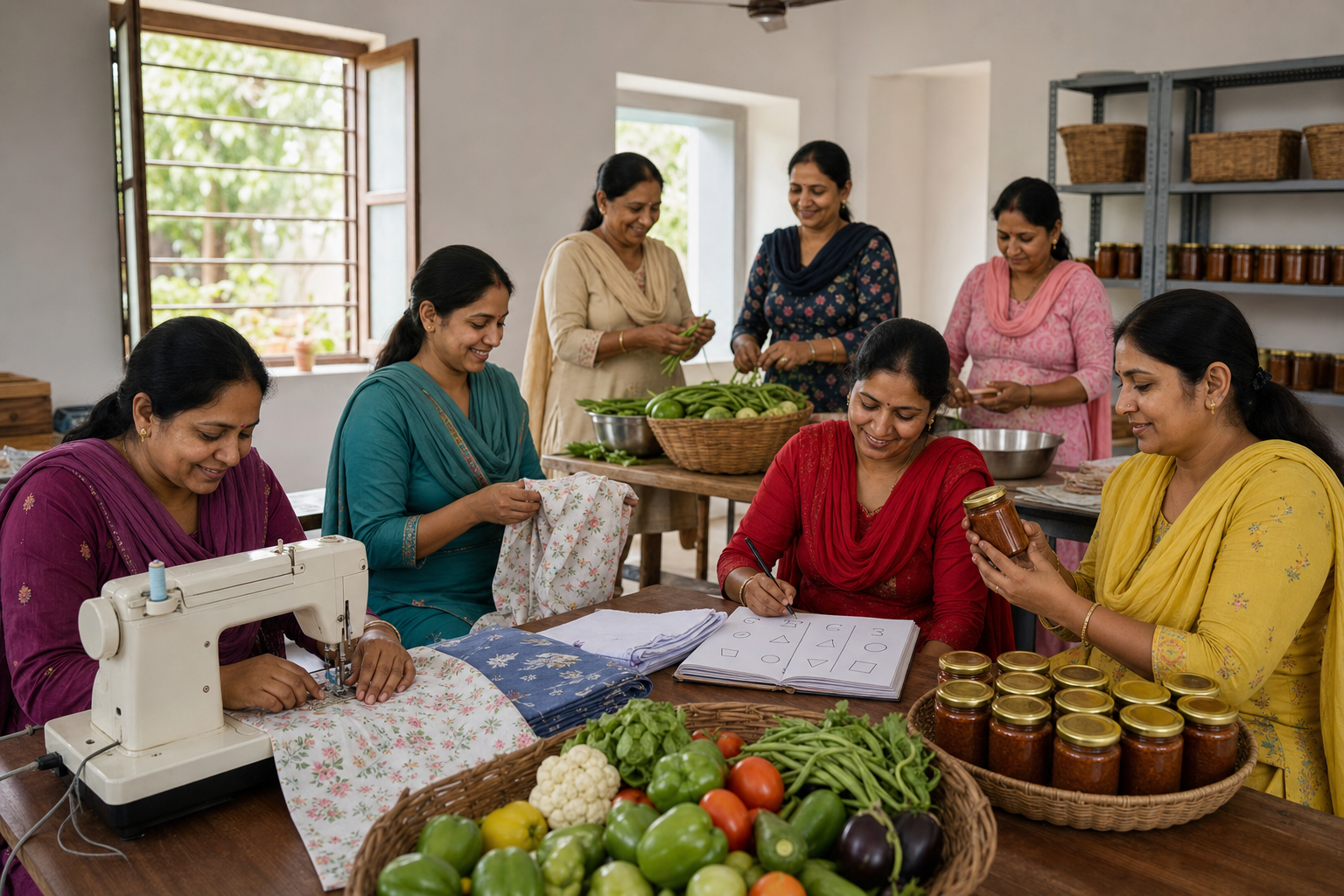
A household’s ability to reject a dangerous advance depends partly on whether it has more than one viable source of income. The Project Sneh article describes a Moradabad initiative, founded in 2019 and associated with Shikha Gupta, that offers women free vocational training linked to craft production. Its relevance is not simply that participants learn stitching, weaving or product-making. The reported model connects training with quality requirements, continuing production and buyers.
Drawing on an H&M HOME account, the article reports that 280 women had approached Project Sneh to learn a craft, that formal training could last three months and that 90% of trained participants chose to continue producing with the initiative. It also says participants could enter Moradabad’s broader craft-manufacturing network or establish village shops. Those figures describe the programme as reported by the source; they do not by themselves establish participants’ earnings, income stability or long-term movement out of poverty.
The programme’s decentralised design addresses another part of the livelihood problem. The source reports village-based activity in Bhola Singh ki Milak, Chaudharpur and Faleda, as well as 60-day computer courses covering basic operations, internet safety and digital literacy. Locating instruction closer to participants can reduce travel costs and accommodate household responsibilities. Digital familiarity can also support communication, documentation and payments, although its value ultimately depends on whether it leads to usable economic opportunities.
The synthesis with the low-income account is straightforward but should not be overstated. If women receive regular and personally accessible earnings, a household may be better able to pay for food, medicine or schooling without seeking an employer-controlled loan. Income can also strengthen a woman’s participation in household decisions. The supplied sources, however, do not demonstrate that Project Sneh directly prevents bonded labour, so the relationship is best understood as a plausible pathway to greater resilience rather than a proven causal result.
Nor is market linkage sufficient by itself. Piece-rate work can be empowering when rates, quantities, deductions, acceptance standards and payment dates are transparent. Without those protections, home-based or decentralised production can reproduce some of the same informational imbalance seen in other informal labour markets. A sound livelihood programme should therefore be judged by earnings and worker control, not merely enrolment, training completion or the prestige of a buyer.
Joining enforcement, social protection and earning power
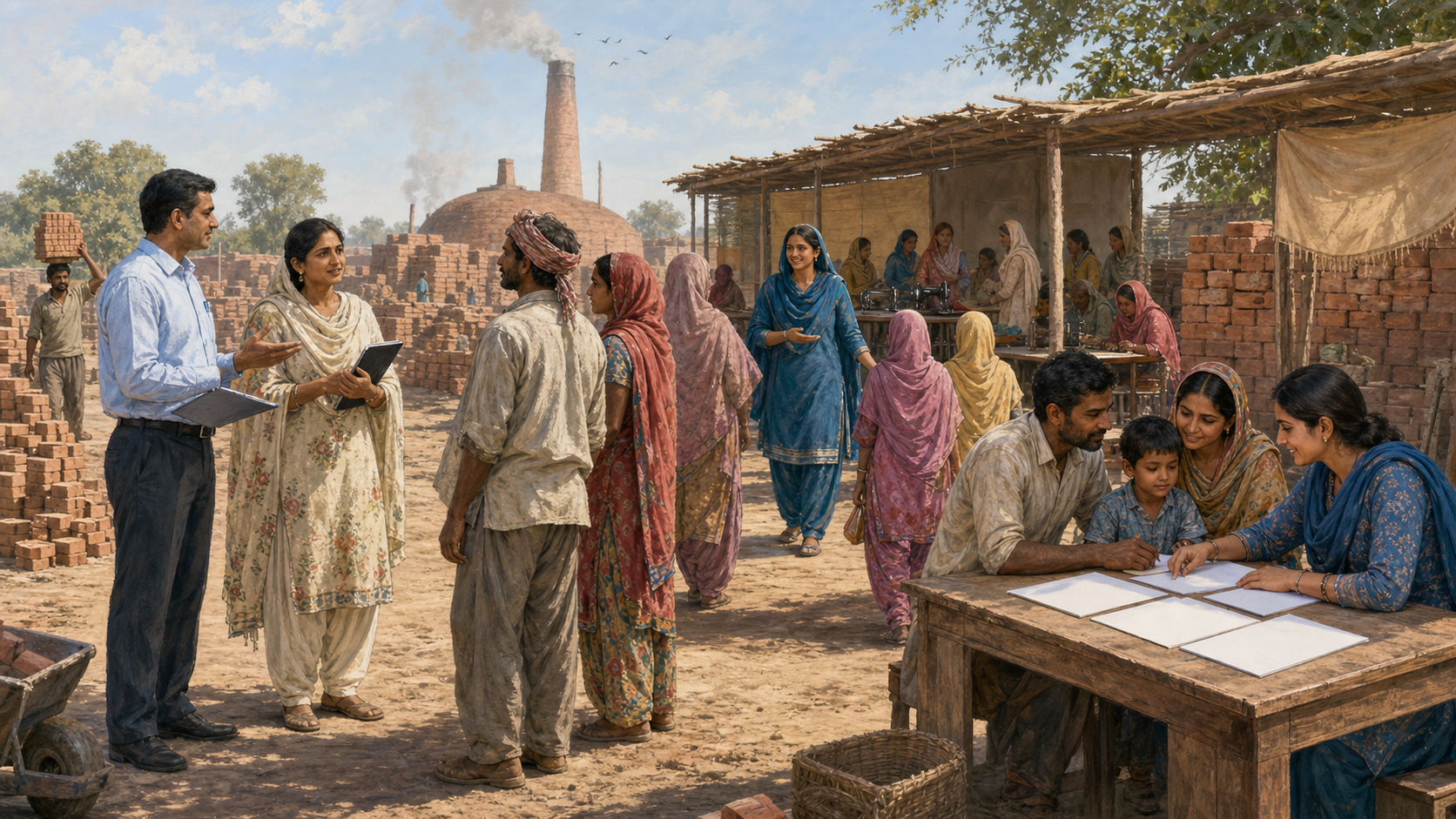
The three accounts point toward a sequence rather than a single remedy. Enforcement must first separate lawful debt from coerced labour and restore freedom where bondage is found. Social protection must then keep the released or at-risk household from being forced back into the same choice. Finally, livelihood support must create work that is accessible, fairly governed and connected to demand.
Identify control across the recruitment chain
The Punjab article argues that authorities must examine contractors as well as the physical worksite because recruiters may arrange advances, transport and placement. Useful scrutiny would follow the worker’s entire path and compare the original promise with actual freedom of movement, wage records, deductions and payment. Registers written only by the employer cannot be treated as conclusive when workers have no independent access to the account.
The same source identifies district magistrates, labour officials, police, child-welfare authorities, legal-services institutions and civil-society organisations as parts of the response. That breadth reflects the nature of the harm: a bonded-labour case can simultaneously involve illegal debt, unpaid wages, intimidation, migration, missing documents and children outside school.
Stabilise the household after release
Physical removal from a worksite is only the beginning. The Punjab account stresses release certificates, which formally recognise bonded-labour survivors, extinguish the asserted bonded debt and enable access to rehabilitation. It also identifies immediate needs such as food, safe transport, medical care, wage recovery, school admission, identity documents, legal assistance, housing support and protection from intimidation.
The low-income article explains why these measures matter beyond administrative procedure. When an entire monthly budget is already divided among essentials, delayed support can leave a released family with no workable alternative to fresh borrowing. Ration access, public health care, schooling and other basic services function as economic stabilisers because they reduce the amount of cash a vulnerable household must find at once.
Build livelihoods around demand and worker control
Project Sneh offers a reported example of training designed around production rather than certificates alone. Its combination of local instruction, multiple craft tracks, digital literacy, quality discipline and commercial orders addresses barriers that isolated training programmes can leave untouched. The model’s most transferable principle is the connection between learning and a buyer, not any single craft.
For such work to strengthen freedom, participants also need intelligible rates, records they can retain, predictable payment and the ability to decline work without penalty. Women should be recognised as workers and producers in their own right rather than as invisible additions to family output. These safeguards connect livelihood policy to labour rights instead of treating the two as separate fields.
The forward task is to measure success by durable autonomy: whether a rescued worker remains free, whether children return to education, whether women control income they have earned, and whether a household can face its next emergency without surrendering its bargaining power. That standard would turn legal abolition and livelihood promotion into complementary parts of the same economic freedom.
References
- DharmaRenaissance Blog — Punjab’s Hidden Bonded Labour Crisis: Why a 1976 Law Still Fails Villages
- DharmaRenaissance Blog — भारत का निम्न आय वर्ग: ₹150 प्रतिदिन की कठोर सच्चाई और विकास की असली चुनौती
- DharmaRenaissance Blog — Project Sneh’s Powerful Model for Women’s Economic Freedom in Moradabad