
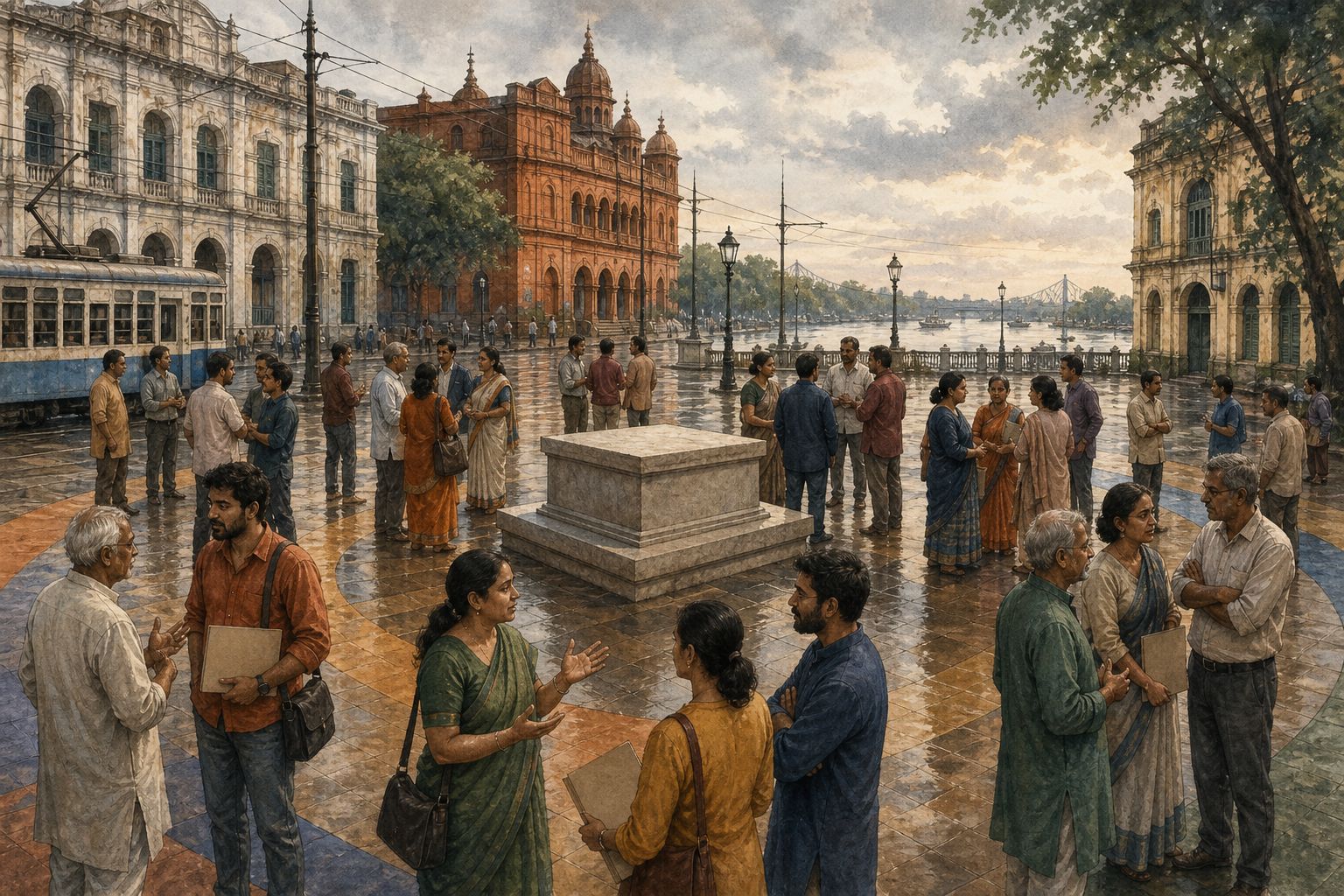
The supplied DharmaRenaissance Blog article presents Hindutva politics in West Bengal as an effort to connect several contentious subjects – a Uniform Civil Code, interfaith relationships and coercive conversion, OBC classification, and border-linked migration – through a common claim about equal citizenship. In this account, Suvendu Adhikari is attempting to turn that claim into a distinctly Bengali political programme rather than merely repeating a national campaign vocabulary.
The central question is whether these issues can form a credible governance agenda. Examining them together reveals the strategy’s potential appeal, but also the legal precision, evidence and restraint it would require. Because the supplied material contains one publication, its specific claims are treated here as that article’s reporting and analysis, not as independently corroborated facts.
Key takeaways
- The source portrays Adhikari as a local translator of Hindutva whose background in Bengal politics gives him a different position from that of an external campaigner.
- Uniform civil law, OBC classification, coerced conversion and border management can be placed under an equal-citizenship argument, but each requires a different legal and administrative response.
- A credible policy platform would need detailed drafting, group-level evidence, protection of adult autonomy and fair procedures for determining legal status.
- Bengal’s varied religious practices, social histories and political traditions make cultural translation essential; a standard national script cannot simply be assumed to fit.
The contest is over Bengal’s political vocabulary
The source describes West Bengal as a state whose public language has long combined linguistic identity, regional pride, Left-era secularism and the Trinamool Congress’s emphasis on welfare. Hindutva therefore enters an already crowded political field. Its advocates are not only asking voters to identify more explicitly as Hindus; they are attempting to redefine debates about law, public benefits, migration and citizenship.
Adhikari’s importance in this account comes partly from his political biography. The article reports that he was associated with the anti-Left movement in Nandigram, rose within the Trinamool Congress and later became the BJP’s leading state-level figure after defeating Mamata Banerjee in Nandigram in the 2021 Assembly election. That trajectory supports his claim to understand Bengal’s regional, organisational and community dynamics from within. It does not by itself establish public agreement with his programme, but it gives the programme a recognisably local author.
The proposed political reset rests on a contrast. According to the source, the BJP and its supporters argue that selective accommodation of minorities has displaced constitutional equality and Hindu civilisational confidence. Opponents can dispute both that diagnosis and the proposed remedy. The analytically important point is that the argument shifts Hindutva from cultural representation toward the design of rules: whose family law applies, how backwardness is measured, what conduct the state may punish and how citizenship claims are assessed.
Four disputes, one claim about equal citizenship

Uniform civil law needs more than a slogan
The source places a Uniform Civil Code at the centre of Adhikari’s platform because it combines the language of constitutional equality with concerns about personal law and gender justice. Supporters cited in the article contend that marriage, divorce, inheritance and adoption should not produce unequal civil consequences solely because citizens belong to different religions.
That general principle leaves the hardest work unresolved. As the article notes, a serious proposal would have to address marriage registration, divorce, maintenance, inheritance, guardianship, adoption, customary practices, tribal protections, religious freedom and the relationship between state law and federal arrangements. Consultation also matters in a setting where legal reform may be received through an atmosphere of political mistrust. Without a draft that answers these questions, supporters and critics can project very different systems onto the same phrase.
Coercion and adult choice must remain distinct
The article treats the expression "Love Jihad" as a politically charged allegation applied to some relationships between Muslim men and Hindu women. It reports the supporting argument that fraud, force, intimidation, trafficking or organised pressure connected to conversion require stronger safeguards. At the same time, it insists on a boundary that identity-based campaigning can easily blur: coercive conduct is not the same as a voluntary relationship between consenting adults.
This distinction has practical consequences. A conduct-based policy would require evidence of deception, threats, violence or compulsion before the state intervened. A community-based presumption, by contrast, could place consensual interfaith couples under suspicion and weaken the autonomy it claims to protect. The source’s Dharmic framing reinforces the same point in ethical terms: opposition to coercion should be joined to respect for conscience, truthfulness, non-coercion and individual dignity. Women cannot be treated as possessions of either a family or a religious community.
OBC review is a classification question, not a religious verdict
The source reports the BJP’s contention that the inclusion of several Muslim groups in West Bengal’s OBC lists requires scrutiny and may have reduced opportunities available to Hindu OBC communities and other disadvantaged groups. It also states the governing principle behind the dispute: OBC protection is intended to address demonstrable social and educational backwardness rather than provide an entitlement based on religion alone.
That principle does not logically exclude a disadvantaged occupational or social group because its members are Muslim. The relevant questions concern measurable backwardness, educational access, social position, representation in public employment and review by an independent commission. The supplied article does not provide group-by-group data or commission findings, so it supports a case for transparent examination rather than a conclusion about every existing classification. A defensible review would distinguish allegedly defective administrative decisions from a collective judgment about Muslims.
Border politics combines legal status with historical memory
The Bangladesh border gives the Hindutva debate another dimension. The source says migration has affected political demography, land pressures, labour markets and local identity debates, although the supplied text provides no numerical evidence with which to measure those effects. It also emphasises that Hindu refugees may understand citizenship through memories of Partition, East Pakistan and reported persecution in Bangladesh, while residents of border districts encounter the issue through documents, land, policing, welfare access and allegations of political patronage.
These experiences should not be compressed into one category. Refugee protection, citizenship eligibility, unauthorised entry and ordinary relations among neighbouring communities present different questions. A governance programme would need procedures capable of distinguishing among them, as well as safeguards against both fraudulent claims and arbitrary exclusion. Rhetoric about demography may mobilise anxiety; administration must determine individual status through evidence.
Why Bengal complicates a standard Hindutva template
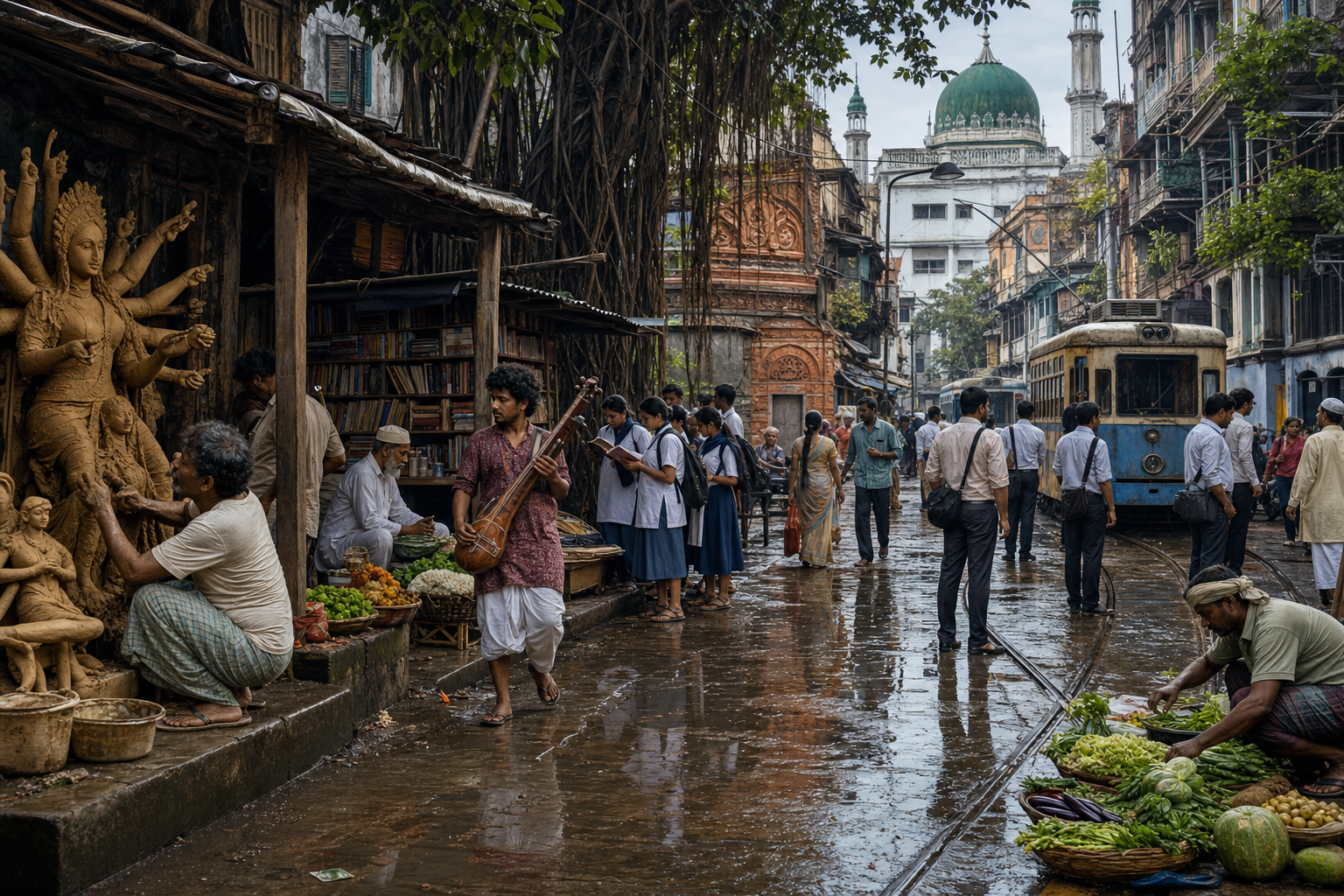
The source’s most important contextual observation is that Hindutva does not arrive in a culturally empty state. It identifies the Bengal Renaissance, bhadralok culture, Shakta and Vaishnava traditions, reformist Hindu thought, Dalit assertion, refugee memory, Partition trauma and the legacy of Left politics as overlapping influences. Bengali Hindu life has also been expressed through Durga Puja, Kali worship, village deities, devotional communities, monastic institutions, folk practices and learning traditions rather than through a single central political idiom.
This diversity creates both an opportunity and a constraint for Adhikari’s approach. It offers abundant civilisational material through which Hindu identity can be articulated in Bengali terms. Yet it also prevents any one political definition from automatically representing the whole field. Ritual participation does not necessarily imply agreement on civil law, reservations, policing or citizenship, while shared religious identity does not erase differences of caste, region, class or historical experience.
A durable state-level Hindutva would consequently have to demonstrate how its cultural language relates to everyday administration. It would also have to decide whether Bengali distinctiveness is a source of policy judgment or merely a regional wrapper around positions developed elsewhere. Adhikari’s local biography may help bridge that gap, but policy design remains the stronger test.
The line between mobilisation and governance

Legal precision is the first dividing line. A UCC proposal can be evaluated only when its treatment of family rights, custom and protected practices is visible. An anti-coercion policy becomes assessable when it defines prohibited conduct without turning religious difference into presumed guilt. An OBC review becomes credible when classifications are examined with consistent criteria and disclosed evidence. Border enforcement becomes governable when documentation and status decisions follow fair procedures.
Evidentiary discipline is equally important. The source links the platform to anxieties about demographic change, conversion, unequal access to benefits and legal asymmetry, but anxiety is not itself proof of a particular allegation. Policies that affect rights require case-specific evidence, reliable social data and institutions capable of correcting mistakes. Otherwise, an equal-citizenship frame can produce unequal treatment in practice.
Finally, the programme’s treatment of ordinary Muslims will reveal its governing character. Reviewing a classification is different from condemning a community; prosecuting force is different from policing intimacy; verifying citizenship is different from presuming illegality. Maintaining those distinctions would allow strong claims about law and civilisational continuity to be debated without making collective suspicion the organising principle of public life.
Whether Adhikari’s Hindutva line becomes a lasting Bengali political settlement will depend less on the intensity of its language than on the quality of the institutions and proposals built around it. The next meaningful stage is therefore not another expansion of the slogan, but enough legal and administrative detail for citizens to judge who would be protected, who could be burdened and how errors would be remedied.