Leadership becomes visible when intention meets resistance: a plan fails, feedback stings, communication misses its audience, or a team loses alignment. Indian classical arts offer a useful lens on these moments because they place discipline, correction, expression, and coordination inside a continuous practice rather than treating them as separate management concepts.
The available DharmaRenaissance account connects these arts to leadership through reflections attributed to classical dancer Radhe Jaggi. Its strongest contribution is not a claim that performers automatically become effective leaders. It is a set of practical mechanisms through which sustained artistic training may cultivate receptivity, adaptability, communicative responsibility, and disciplined cooperation.
The correction loop turns feedback into work
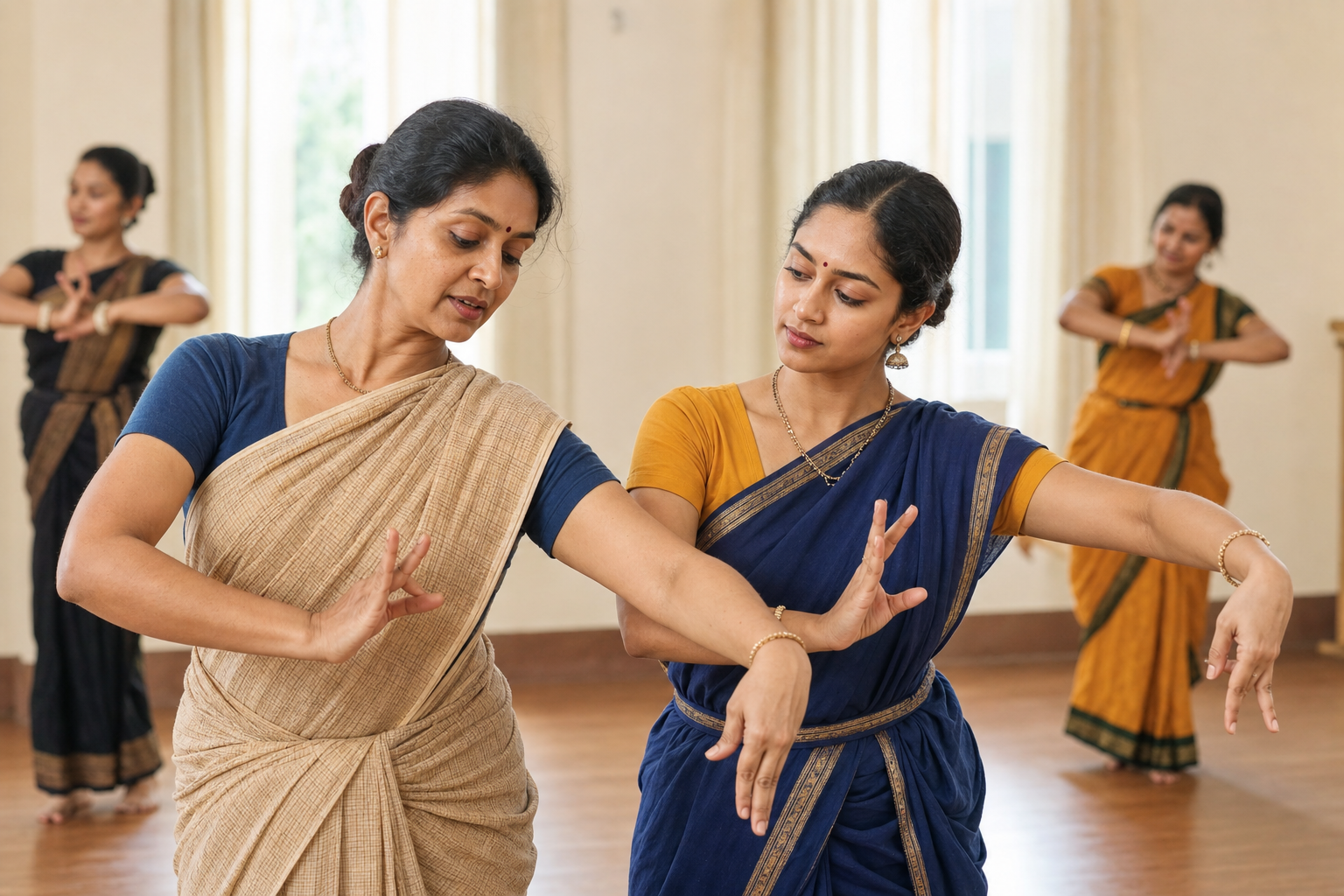
According to the source, rigorous training repeatedly exposes small discrepancies between intention and execution: posture is misplaced, timing slips, expression becomes excessive, or an ensemble falls out of alignment. The practitioner cannot resolve these problems merely by understanding them intellectually. Correction must appear in the next movement, phrase, or rehearsal.
This creates a leadership lesson about the relationship between identity and performance. When revision is normal, an error need not become a verdict on the person who made it. A leader can ask whether a plan is working without treating that question as a challenge to personal worth or authority. Accountability then becomes attention directed toward the work, not a ritual of blame.
The source illustrates this disposition through Jaggi’s recollection of receiving a severe assessment before a major tour. As reported in the essay, she acknowledged that the performance was weak and asked what was not working. The important element is the sequence: reality was accepted, discomfort was contained, and inquiry followed. In organizational life, the equivalent is recognizing weak results early, separating commitment to the goal from attachment to the current method, and making a proportionate correction.
Artistic discipline also complicates the idea that confidence requires constant self-assertion. The essay notes that a practitioner will encounter people with greater skill, creativity, or stage presence. Such comparisons can threaten an insecure identity, but they can also establish a more useful standard: excellence elsewhere is information about what remains possible. For leaders, humility in this sense is neither passivity nor self-dismissal. It is the ability to learn without first defending rank.
Rasa makes communication a shared outcome
The source uses rasa to move the discussion beyond technique. It presents rasa as the aesthetic experience evoked in an audience, not simply the emotion felt or displayed by a performer. On this account, technical brilliance and personal intensity are insufficient if the audience is not carried into the intended experience.
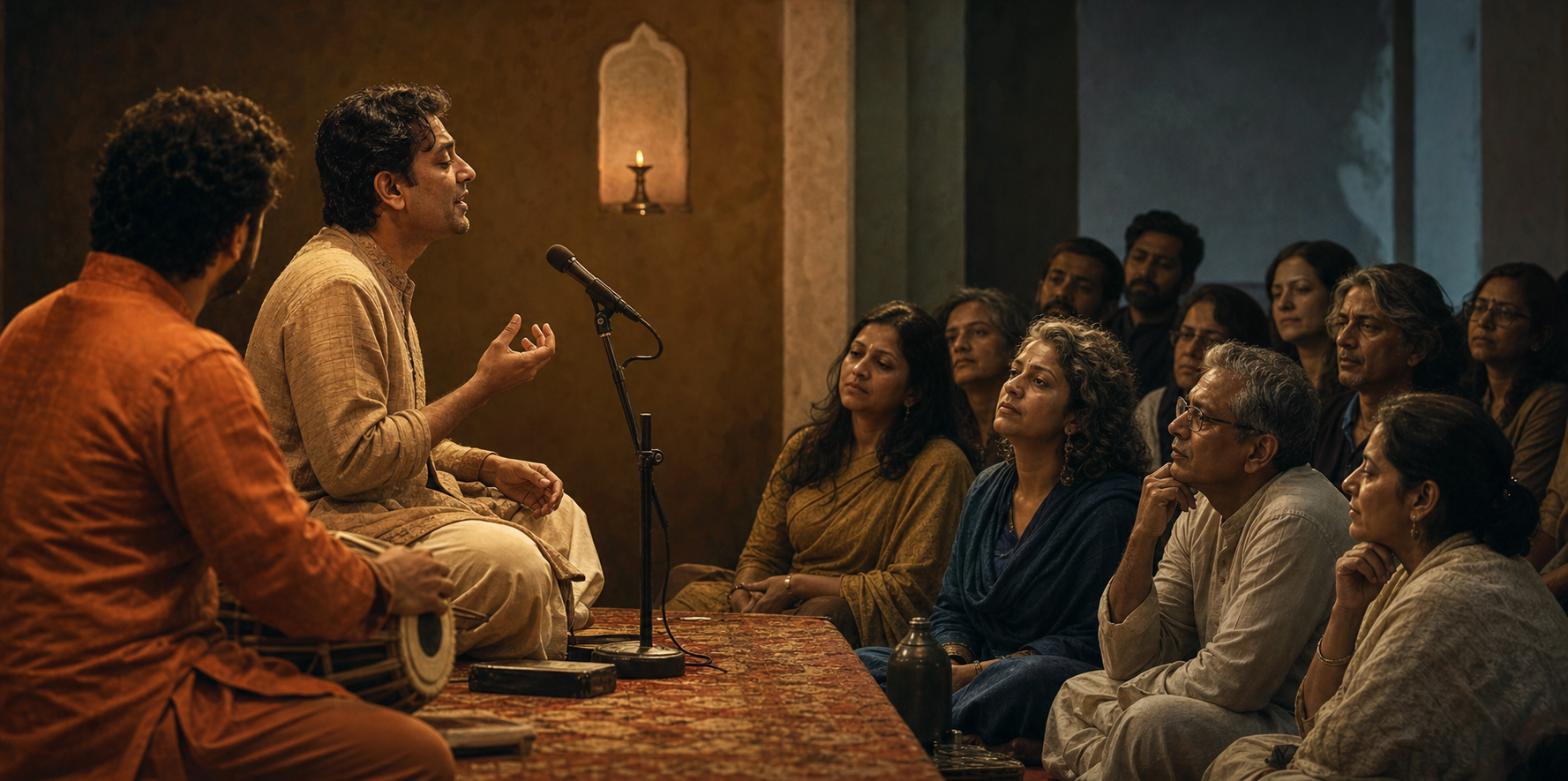
That distinction produces a demanding standard for leadership communication. A message cannot be judged only by the clarity it has in the speaker’s mind, the effort invested in delivering it, or the elegance of the presentation. Its practical meaning depends on what others understand, feel able to question, and can act upon. The receiver is therefore not the final stop in a one-way transmission; the receiver helps determine whether communication has occurred at all.
Rasa also points toward emotional calibration rather than theatrical intensity. A performer must relate expression to context, form, and audience. The parallel for leaders is not to manufacture emotion but to understand the human effect of tone, timing, emphasis, and silence. Urgency delivered without proportion can produce confusion. Reassurance without candor can conceal risk. Communication becomes responsible when inner intent, outward expression, and received meaning are brought into closer alignment.
Form and ensemble create dependable freedom
The DharmaRenaissance essay describes Indian classical dance as requiring coordination among movement, rhythm, memory, breath, emotion, imagination, symbolism, and awareness of the audience. It also situates learning within ideas such as guru-shishya transmission, sadhana, abhyasa, seva, tapas, and self-discipline. In this framing, knowledge is demonstrated through an increasingly refined capacity to act.
This helps resolve an apparent leadership paradox. Discipline can look like the opposite of adaptability, yet a well-practised form may provide the stability from which intelligent adjustment becomes possible. Shared rhythm, vocabulary, and standards reduce uncertainty about fundamentals. Attention can then move toward the unexpected rather than being consumed by preventable disorder.
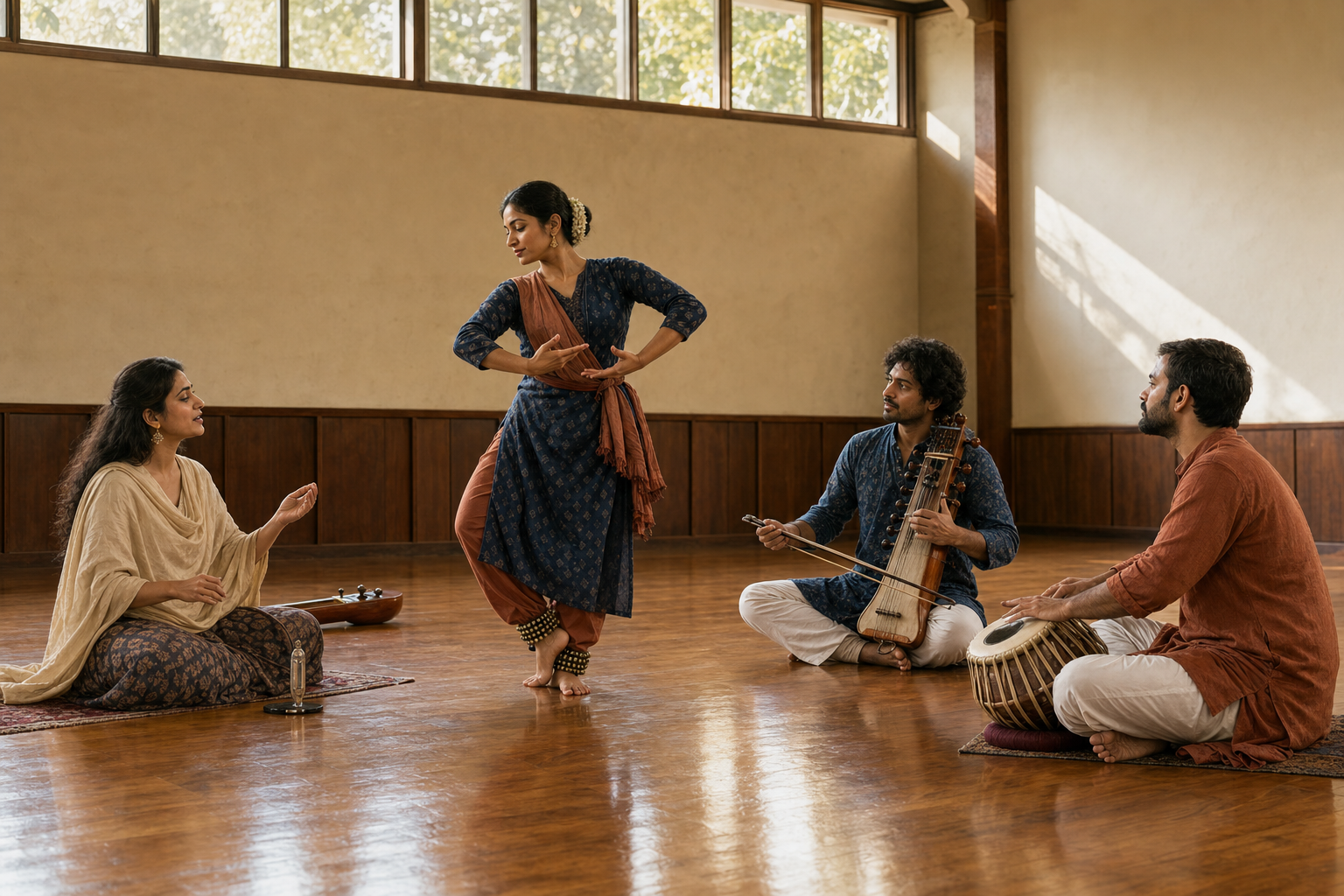
Ensemble awareness adds another dimension. Individual excellence matters, but an isolated display can weaken a collective performance if it disrupts timing, balance, or shared intent. Leadership likewise involves judging when to initiate, when to support, when to make room, and when to restore coordination. The central question is not whether one person appears impressive; it is whether the whole group can move coherently toward its purpose.
The arts therefore suggest that adaptability is not constant improvisation. It is responsive action grounded in preparation. Nor is teamwork simple harmony. It requires differentiated roles, mutual attention, and enough discipline for one person’s choices to remain intelligible to others.
Key takeaways
- Treat feedback as information about the work rather than as a referendum on status.
- Separate commitment to an outcome from attachment to the method currently being used.
- Judge communication by received understanding and coordinated action, not by the sender’s effort alone.
- Use shared forms and standards to support adaptation rather than to suppress judgment.
- Distinguish capacities developed through art from the ethical and institutional responsibilities leadership also requires.
Applying the lessons without flattening the tradition
The available account is a reflective leadership argument built around an artist’s experience; it does not present comparative outcome data establishing that classical arts training causes leadership effectiveness. That boundary matters. Artistic excellence may cultivate attention, endurance, expression, and openness to correction, but it does not by itself guarantee sound judgment, fairness, subject expertise, or responsible use of authority.
Organizations can still learn from the underlying practices. Feedback can be made frequent and specific enough that revision becomes ordinary. Important presentations can be rehearsed for audience understanding rather than polished only for appearance. Teams can examine breakdowns in timing and coordination without immediately searching for a culprit. Leaders can test whether their intended message is the experience others actually received.
Such applications should preserve the depth of the traditions rather than reducing them to decorative exercises or convenient corporate metaphors. The source presents sustained practice as transformative precisely because it demands time, correction, relationship, and responsibility. A brief workshop may introduce the vocabulary, but it cannot substitute for the discipline from which the insight emerged.
The most promising direction is therefore neither to turn every leader into a performer nor to convert classical art into a management toolkit. It is to design leadership development around the same serious habits: attentive practice, honest correction, calibrated expression, and responsibility for the experience created in others.