
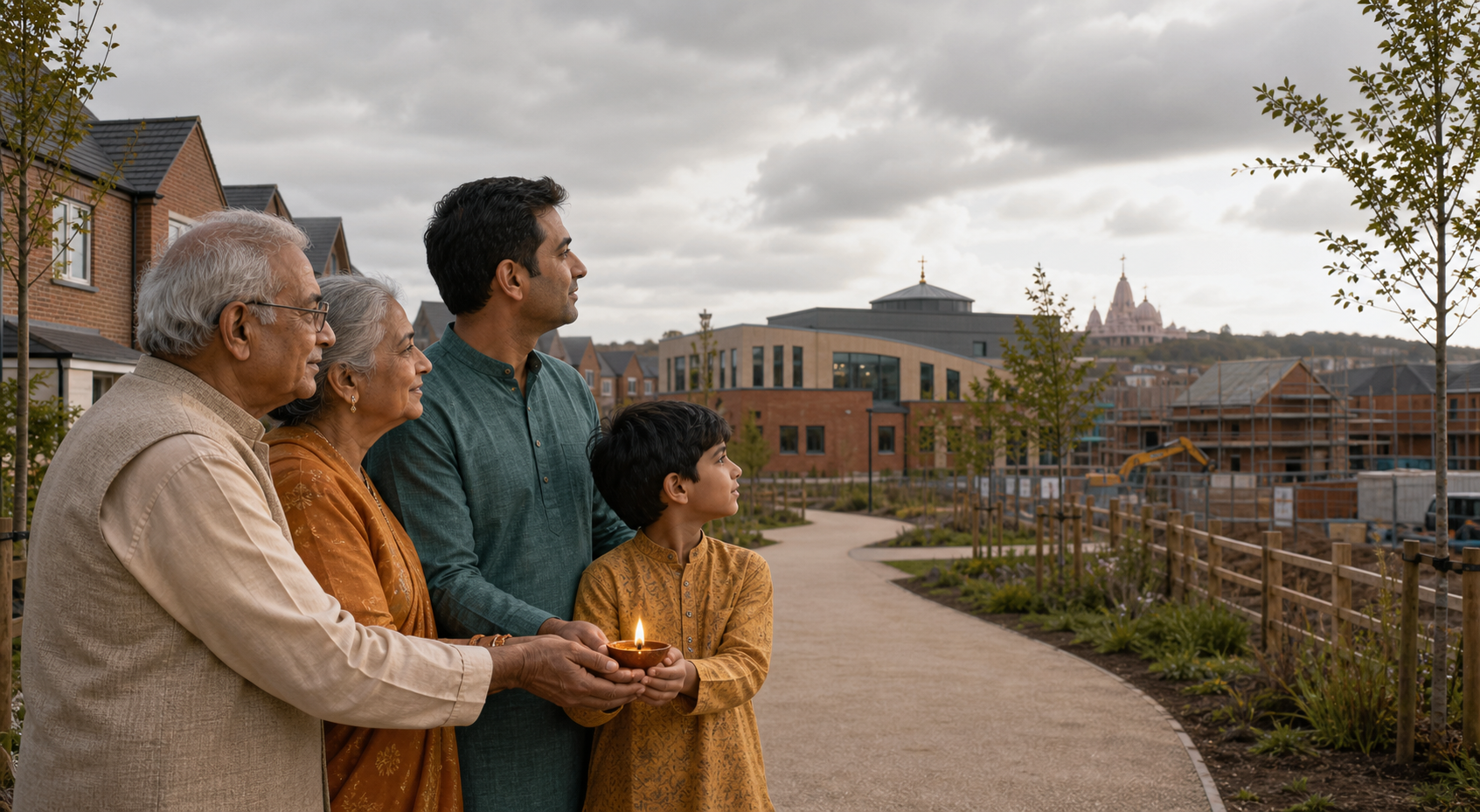
The Northstowe dispute is not simply about which organisation secured one site. It raises a broader question for the Hindu diaspora: can a religious tradition remain part of ordinary family life when its institutions are distant, uncertain or absent from the places where families are settling?
The available account presents Northstowe as a case where a failed faith-hub bid and the possible loss of a regional temple overlap. Examining those pressures together reveals why proximity, institutional continuity and inclusive town planning all matter to the transmission of Hindu culture.
The immediate dispute combines two infrastructure losses
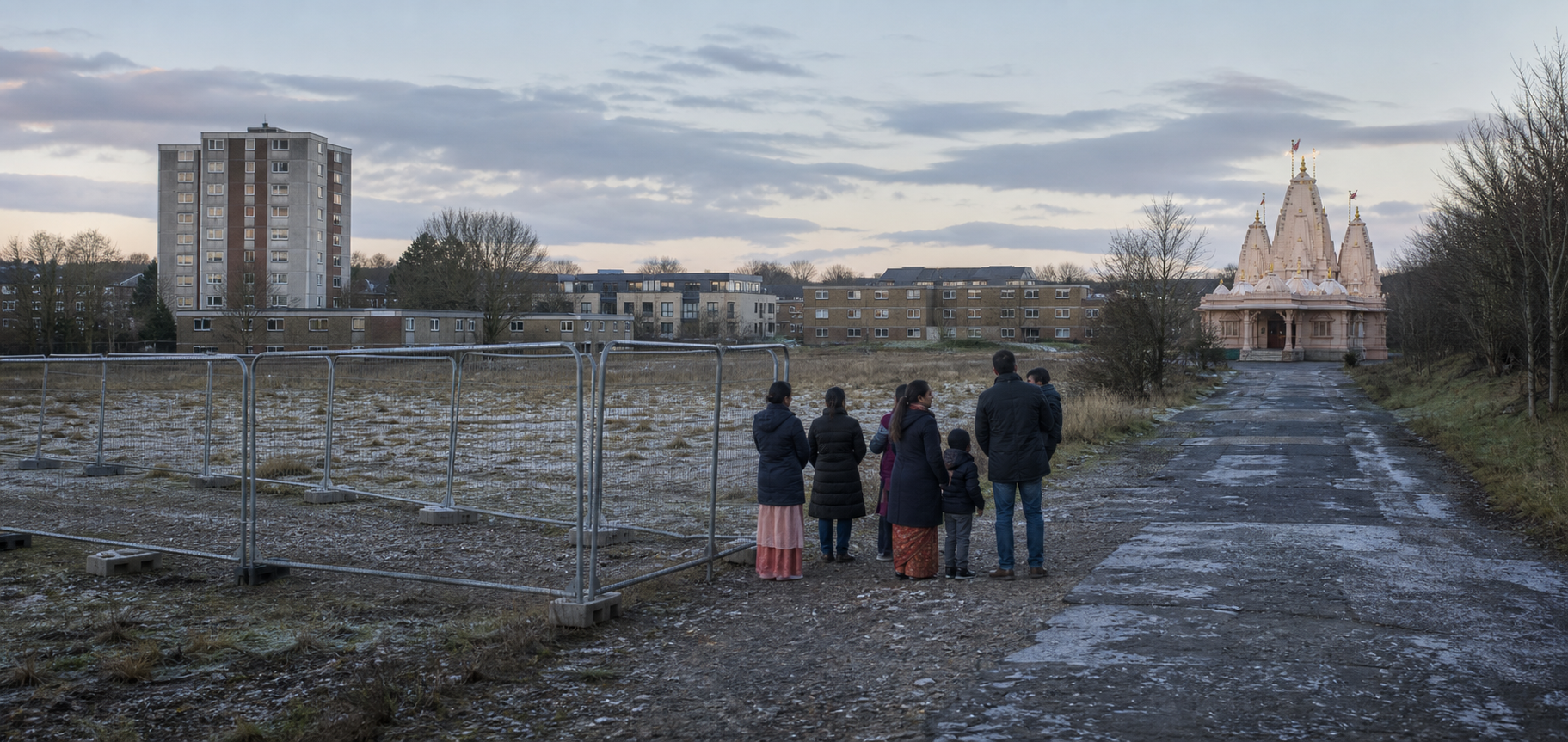
According to the supplied DharmaRenaissance Blog article, some Hindu families moved to Northstowe partly hoping that Hindu Samaj Northstowe would be selected to build and operate the planned town’s first faith hub. The bid instead went to the Northstowe Church Network. The article does not establish that Hindu families were entitled to the site or that the outcome resulted from improper conduct, but it argues that the decision left their underlying need unresolved.
That unresolved need is made more consequential by a separate development reported in the same article: the proposed closure of the Bharat Hindu Samaj Temple in Peterborough. The source says Northstowe families may consequently have to travel to temples in London or Birmingham. These are two distinct issues. One concerns the allocation of a new facility; the other concerns the possible disappearance of an existing regional anchor. Together, however, they could leave the community without either the hoped-for local institution or a practical nearby alternative.
This distinction is important because the argument is not that every unsuccessful bid constitutes exclusion. The more useful question is whether the planning system has identified a continuing need after the competition has ended. Selecting one organisation settles an allocation process; it does not necessarily settle how a growing and religiously diverse town will accommodate other communities over time.
Why distance changes more than the journey to worship
The source describes a mandir as more than a building used for occasional ceremonies. In a diaspora setting, it can bring together worship, festivals, language learning, stories, charitable service, counselling and relationships across generations. It can also provide a communal setting for samskaras and other family milestones. These functions make the temple part of the community’s educational and social infrastructure as well as its religious life.
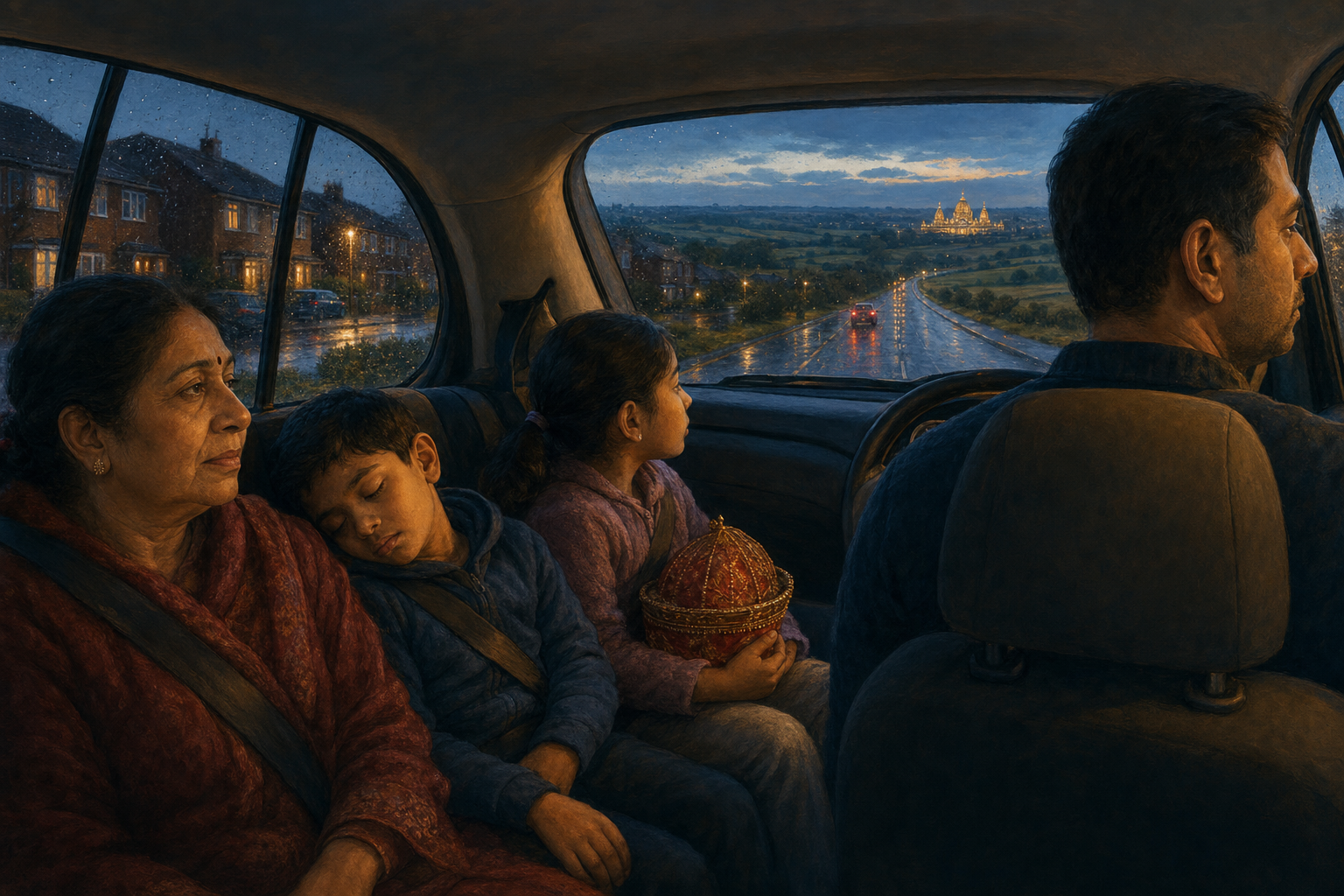
Distance affects each function differently. A family may still undertake a long journey for Diwali, a wedding or another major observance. Regular participation is harder to sustain when an evening aarti, a children’s class, a volunteer shift or a meeting with elders requires extensive travel. The practical shift is from frequent involvement to exceptional attendance.
That change matters especially for children raised away from an ancestral homeland. The article’s concern about a possible “lost generation” is best understood as a warning about weakened cultural fluency, not as a claim that young Hindus automatically abandon their identity. Religious understanding is often formed through repetition: hearing devotional music, observing how elders conduct worship, sharing prasad, participating in seva and encountering sacred narratives within a community. A household can teach much of this, but a household alone cannot reproduce the full network of teachers, peers, ritual occasions and public belonging created by an institution.
The consequences are therefore gradual rather than dramatic. Hindu identity may remain meaningful while becoming less embodied in weekly routines. Festivals can survive while knowledge of their context thins. A temple visit can remain valued while ceasing to be part of everyday life. The Northstowe case illustrates how cultural continuity can be weakened by an accumulation of logistical barriers even without an explicit prohibition on religious practice.
A faith-hub decision is also a test of pluralist planning
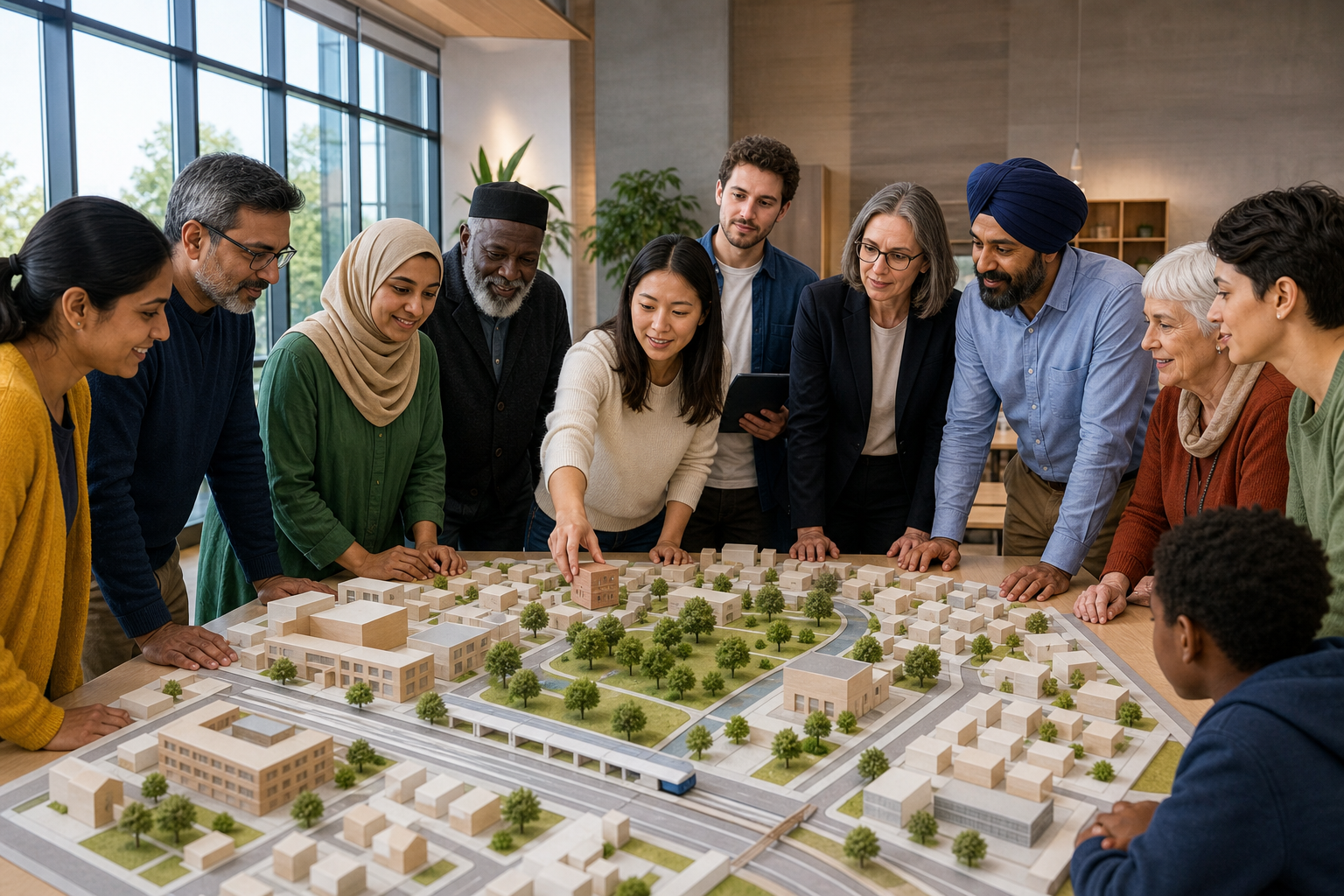
Northstowe is described by the source as a planned new town. That makes the dispute relevant to urban policy as well as community advocacy. New settlements are intended to combine homes with the institutions that make daily life workable. If provision for worship and cultural association trails population growth, newer or less established communities must rely on private homes, borrowed halls, irregular gatherings or travel to other cities.
The label “faith hub” can also conceal an important planning question. A site awarded to one religious network may meet a genuine need for that network while leaving the needs of other traditions unanswered. Recognising this does not require treating Christian and Hindu communities as opponents. It requires distinguishing fair competition for a particular site from the longer-term responsibility to understand the town’s range of religious requirements.
The source places that responsibility within the United Kingdom’s Human Rights Act framework and public bodies’ equality obligations, while also acknowledging that no community can automatically receive every site it seeks. On that framing, fairness depends less on guaranteeing a preferred outcome than on using transparent criteria, assessing evidence consistently and explaining how unmet needs will be addressed in future planning.
A credible assessment would look beyond headline population totals. It would consider whether residents can reach an appropriate facility regularly, whether children and older people face disproportionate travel barriers, whether temporary accommodation can support sustained community activity, and whether planned capacity reflects likely development. These are general tests of accessibility and resilience, not demands for preferential treatment.
The case also exposes the limits of treating all worship spaces as interchangeable. Religious communities differ in their calendars, forms of worship, educational activities and relationships to permanent institutions. A generic room may support meetings or occasional celebrations, but the availability of temporary space does not by itself answer whether a community can establish stable leadership, recurring programmes and an intergenerational home.
Key takeaways for Northstowe and other growing towns
- The Northstowe issue involves both an unsuccessful local faith-hub bid and the reported proposed closure of a temple in Peterborough; either development alone understates the community’s concern.
- Temple access affects education, service, family rites and social connection as well as formal worship.
- Long journeys tend to turn regular participation into occasional attendance, placing the greatest pressure on children, older people and families managing school or work schedules.
- A fair decision on one contested site does not remove the need to plan for religious communities whose requirements remain unmet.
- Pluralism is strengthened when rooted communities can participate confidently in shared civic life, rather than being asked to choose between cultural continuity and social integration.
A durable response would therefore do more than revisit the result of one bid. It would establish how Northstowe will measure religious demand, provide transparent routes for future facilities and maintain practical interim access while the town develops. For the Hindu diaspora, the outcome will matter most if it turns cultural continuity from an exhausting special effort into an ordinary and sustainable part of local life.