

A DharmaRenaissance account presents the journey from a Muslim family in Russia to Hare Krishna monkhood as a passage across several boundaries at once: inherited religion, national culture, communal expectation and personal spiritual practice. Its significance lies less in exchanging one label for another than in the difficult question of how a new devotional commitment relates to the life that came before it.
Viewed through that wider lens, the journey offers a useful case study in cross-cultural bhakti. It shows how moral continuity can coexist with theological change, how daily practice makes a global tradition locally inhabitable, and why the treatment of family and community is an important measure of spiritual maturity.
Conversion does not require a simple story of rejection
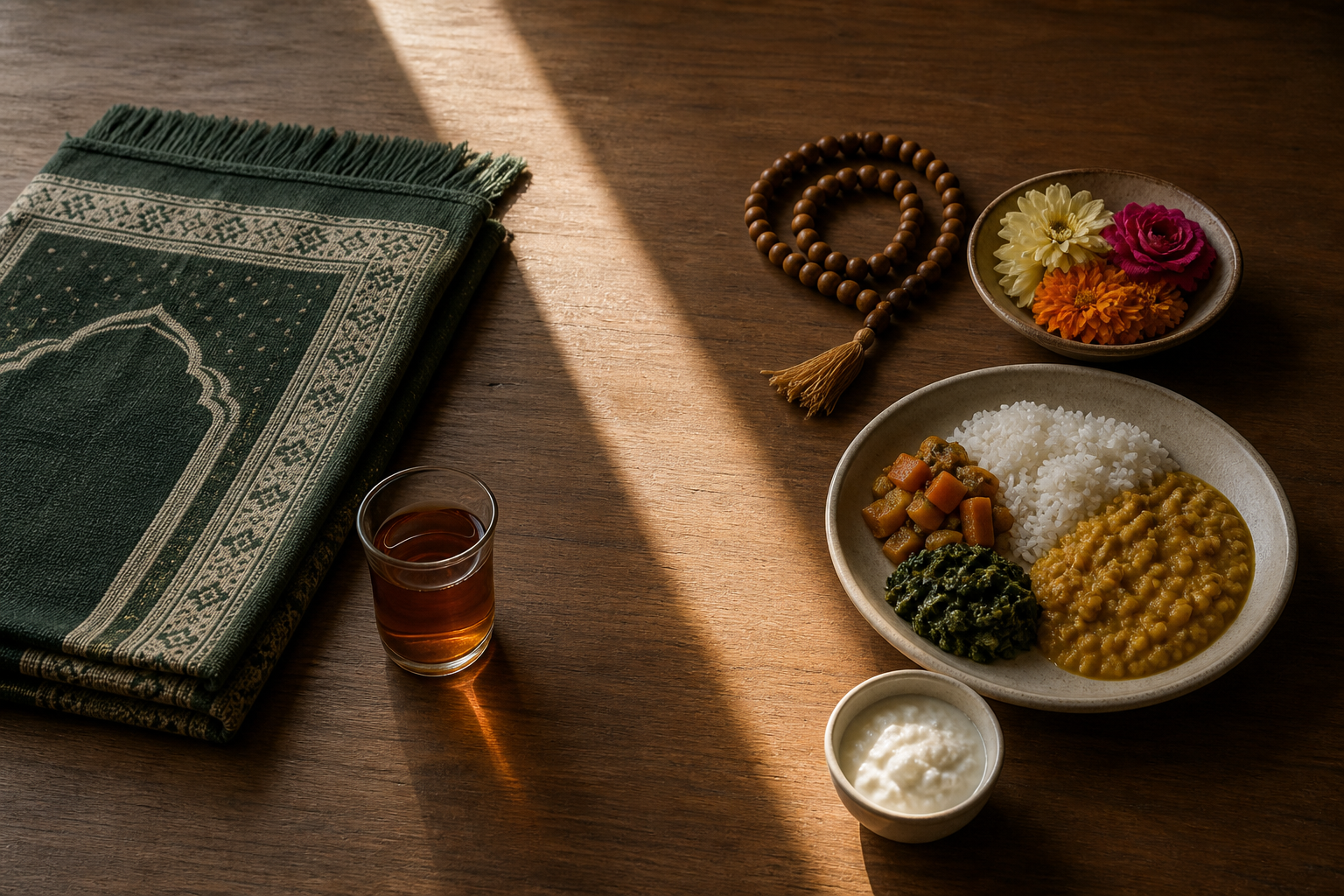
The source frames the transition as a reorientation rather than an act of contempt toward the seeker’s first religious home. That distinction matters. A person can adopt a substantially different theology and ritual life while remaining grateful for qualities cultivated by family, including reverence, discipline, modesty, prayer and moral responsibility.
The article draws a bridge between those qualities and the surrender, humility, regulated conduct and remembrance emphasized in Krishna bhakti. The comparison should not be mistaken for theological equivalence. Islam and Gaudiya Vaishnavism describe God, revelation, worship and the human relationship with the Divine through different conceptual worlds. The more defensible point is that familiar ethical dispositions may help a seeker recognize the seriousness of an unfamiliar practice.
This creates a layered identity rather than a clean before-and-after division. Family formation remains part of the person’s history, while chosen sadhana supplies a new center of spiritual allegiance. The resulting tension is not necessarily evidence of confusion. It can be the normal work of integrating gratitude for an inheritance with conviction about a different path.
The supplied account offers no direct quotation from the seeker or detailed personal chronology. Motives and emotions should therefore be understood as the publication’s interpretive framing, not as independently documented first-person testimony. That limitation does not erase the value of the case, but it does call for care when drawing conclusions about the individual’s inner life.
Portable practices make bhakti cross-cultural
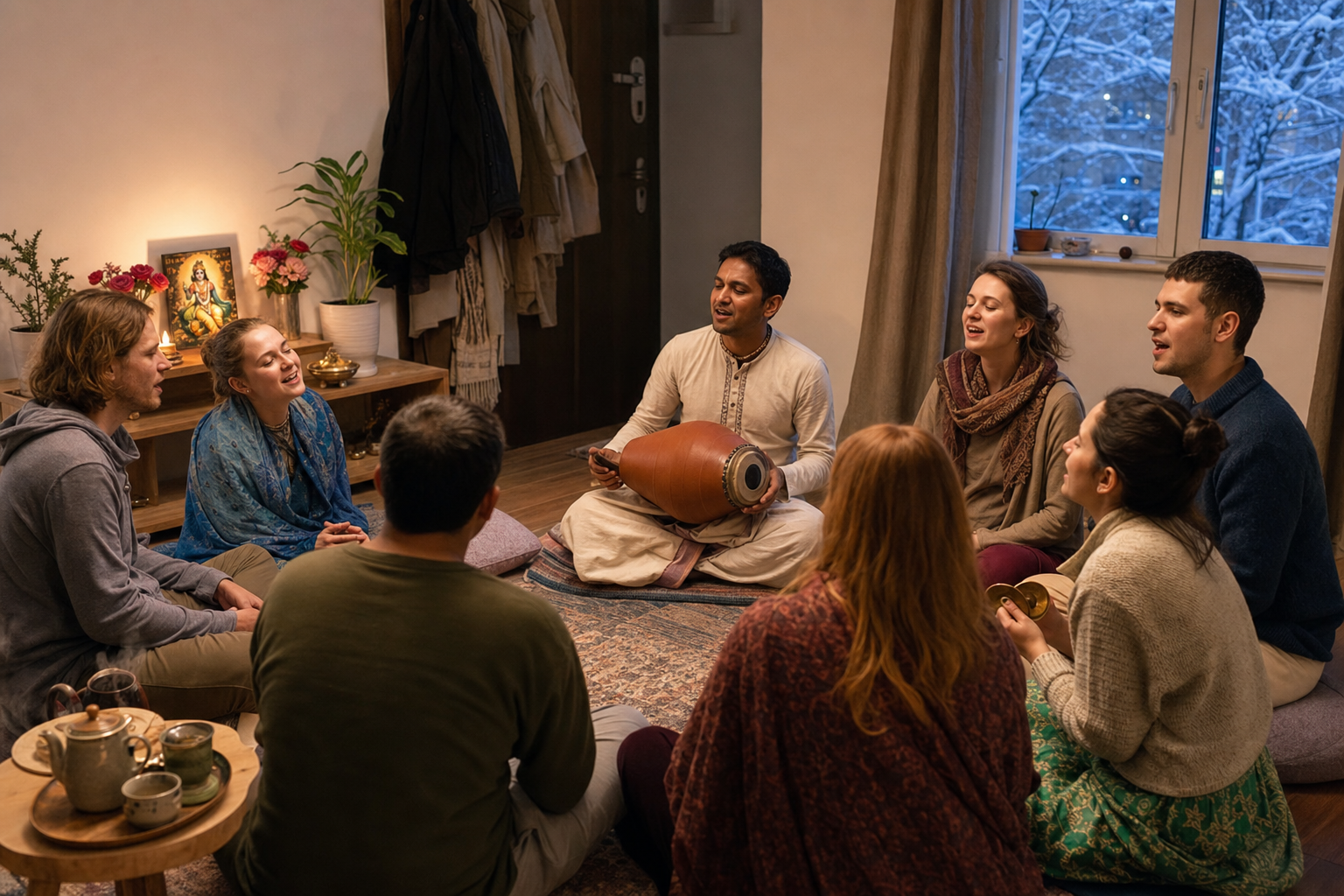
The account places the personal transition within the international spread of Gaudiya Vaishnavism. It reports that A. C. Bhaktivedanta Swami Prabhupada founded the International Society for Krishna Consciousness in New York in 1966 and identifies public kirtan, scriptural teaching, temple worship, vegetarian prasadam and regular sadhana as important means by which Krishna devotion entered societies far beyond its Indian sacred geography.
Bhakti, in its broad sense, is devotion expressed through a relationship with the Divine. In the Gaudiya Vaishnava form described by the source, that relationship is centered on loving service to Krishna. Its cross-cultural accessibility rests partly on practices that can be learned and repeated without requiring Indian ancestry. Chanting, hearing sacred teachings, serving a community and preparing offered food give an aspirant ways to participate before every philosophical question has been resolved.
The Hare Krishna maha-mantra occupies the center of the account’s discussion. The article presents nama-sankirtana, the devotional chanting of divine names, as both an accessible entry point and a lifelong discipline. Its portability is important: sacred sound does not depend on a particular building, nationality or social status. At the same time, repetition is not portrayed as a shortcut. Its meaning develops through attention, ethical discipline and service.
Prasadam gives the same process a social and material form. According to the source, vegetarian food is prepared devotionally, offered to Krishna and then received as grace. For someone entering an unfamiliar tradition, the shared meal can connect doctrine, hospitality and belonging. Food that might otherwise mark cultural difference becomes a practical point of welcome.
Monastic discipline tests both conviction and character
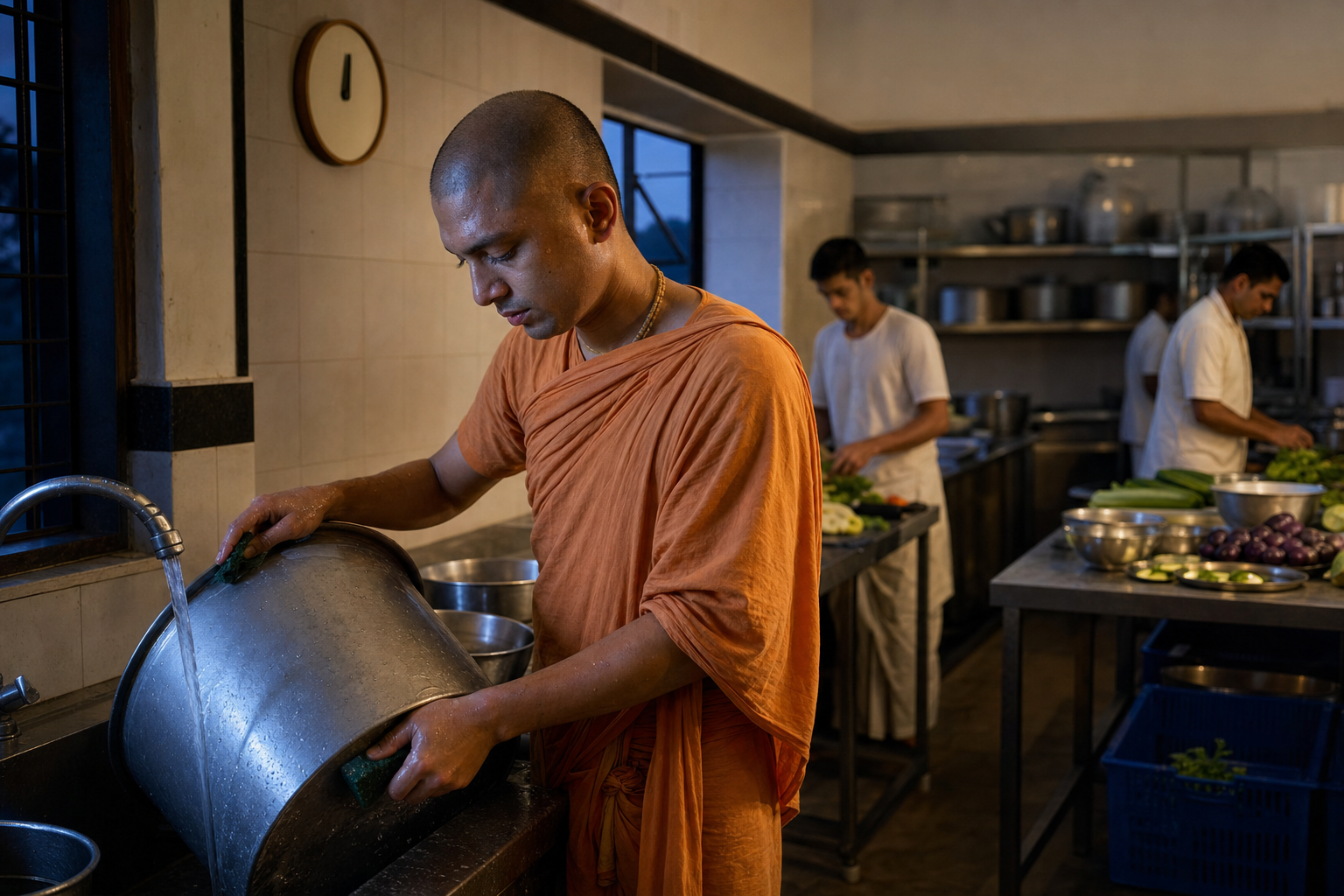
The source describes Hare Krishna monastic life as a daily rhythm of japa meditation, study, worship, seva, kirtan and communal responsibility. These repeated activities shift the center of identity from attraction to an idea toward sustained conduct. The decision to become a monk is therefore not completed by adopting a robe, a new name or another visible marker; it must be renewed through the ordinary demands of practice.
This distinction between external and internal change is especially important in a cross-cultural journey. Tilaka, beads, robes and dietary rules can make transformation immediately visible, but anger, fear, attachment and the desire for approval do not disappear at the same speed. The account consequently treats monkhood as training in consciousness rather than a costume that proves spiritual attainment.
Family relationships provide another test. The article notes that departure from an expected communal path can lead to worry, misunderstanding and emotional distance. Relatives may experience the change as rejection even when the practitioner understands it as spiritual fulfillment. A mature response must hold conviction together with patience: firmness need not become hostility, and respect need not require abandoning a chosen discipline.
The Russian setting adds a further layer in the source’s interpretation. The article situates the journey against Soviet-era suspicion of organized religion and a post-Soviet environment in which several established religions and newer movements negotiated public legitimacy. Within that account, Russian participation in Krishna consciousness demonstrates that bhakti can be adopted outside both India and the Indian diaspora. This is a claim about religious portability, not about the disappearance of local culture.
Key takeaways
- Cross-cultural bhakti can combine a decisive change of theology and practice with gratitude for moral formation received in an earlier religious home.
- Shared values such as discipline, humility and remembrance can serve as bridges between traditions without making their doctrines interchangeable.
- Chanting, study, seva and prasadam turn an unfamiliar philosophy into a lived devotional rhythm that can travel across languages and cultures.
- The strongest evidence of spiritual development is not an external symbol but conduct: steadiness in practice, service to others and respectful engagement with family.
As Krishna bhakti continues to take root in varied cultural settings, accounts of such journeys will be most illuminating when they include the practitioner’s own words, distinguish personal experience from interpretive commentary, and make room for family perspectives. That fuller record can show not only that devotion crosses boundaries, but how people negotiate those boundaries with integrity.