
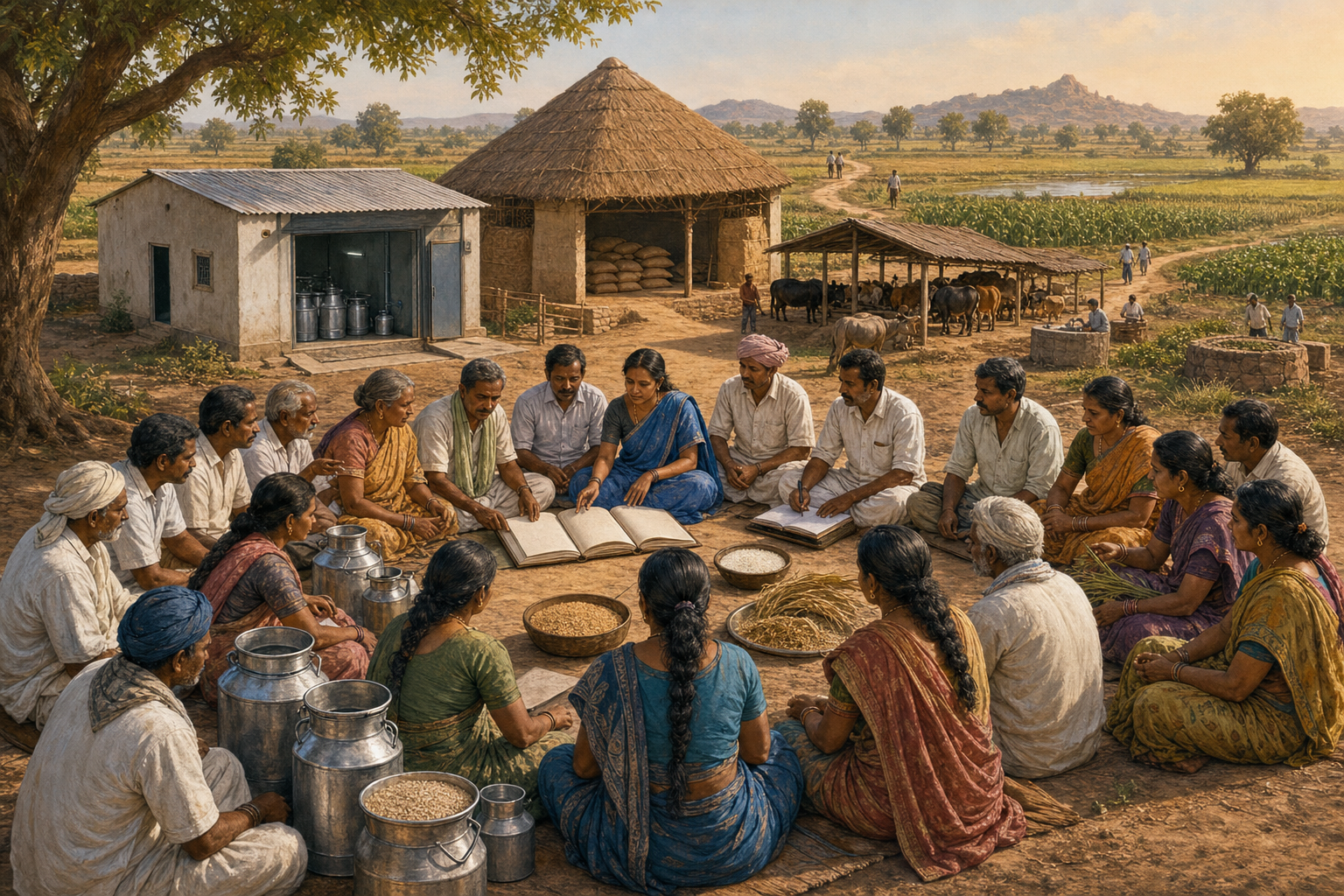
Rama Reddy Mamidi’s public legacy, as presented in the supplied profile, rests on a demanding idea: rural people should not merely receive services but govern the institutions that provide them. The account links his work in Telangana and undivided Andhra Pradesh to primary agricultural cooperatives, thrift groups, paddy collectives, dairy institutions, and the Co-operative Development Foundation (CDF). It also reports that he was posthumously awarded the Padma Shri in 2026.
Read together, these strands reveal an institutional approach to rural development. Credit, markets, livestock, and savings mattered, but so did elections, transparent accounts, member education, legal autonomy, and the division of responsibilities between village organizations and federations.
Turning rural beneficiaries into institutional owners
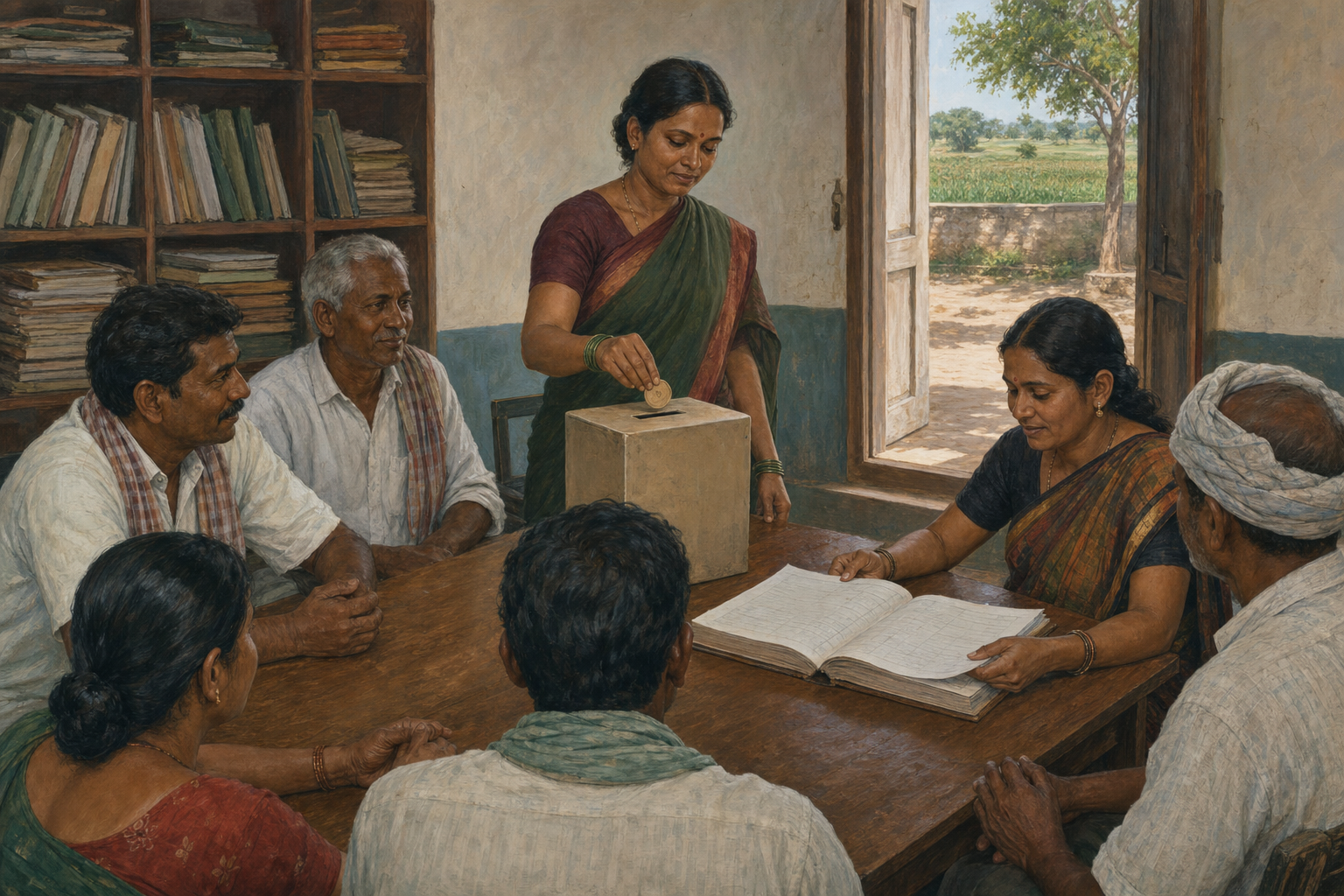
The profile traces an important influence on Mamidi’s thinking to the 1970s, when he studied the Mulukanoor cooperative model near Hanumakonda while serving as President of the Panchayat Samiti in Rajendranagar. What attracted him was reportedly the possibility of making a primary agricultural cooperative more than a channel for loans. Such an institution could bring credit, farm inputs, agricultural guidance, produce marketing, consumer supplies, and welfare support under member control.
This model changed the farmer’s institutional position. A borrower deals with rules and services determined elsewhere; a cooperative member can participate in elections, scrutinize accounts, shape priorities, and hold managers answerable. Mamidi’s contribution, as the source describes it, was to treat this distinction as an operating principle rather than an aspirational slogan.
CDF consequently emphasized community-owned and community-managed organizations. The profile says that familiar cooperative principles, including democratic control, economic participation, autonomy, education, cooperation among cooperatives, and concern for the community, were expressed through practical arrangements such as training, bookkeeping, elections, and dispute resolution. Governance was therefore part of the economic model, not an administrative addition to it.
Why legal autonomy became part of rural development
The limits of institution-building became apparent in the early 1980s. According to the profile, cooperative boards were suspended and administrators appointed, forcing CDF to choose between continuing its field programmes within state-controlled bodies and defending member governance. Mamidi and his colleagues chose litigation, advocacy, and institutional resistance, even at the cost of slowing developmental activity.
That decision joined democratic principle to economic performance. A cooperative governed from outside may retain its name while losing the incentives and accountability that distinguish collective ownership. Members have less reason to monitor finances or accept shared discipline when consequential decisions can be displaced by political or bureaucratic authority.
The source connects this struggle to the Andhra Pradesh Mutually Aided Co-operative Societies Act, 1995, which opened legal space for autonomous cooperatives operating without government funding. It further reports that comparable approaches were later adopted in other states. Mamidi’s participation in the Co-operative Initiatives Panel, the Brahm Prakash Committee process, and subsequent reform discussions illustrates how field experience could be translated into legal design.
Dairy cooperatives provided another test. The profile reports that their later exclusion from the mutually aided framework was challenged by CDF using the equality guarantee under Article 14 and the freedom to form associations under Article 19(1)(c). It says the favorable outcome was ultimately upheld at the Supreme Court level. The account places this legal work within the broader constitutional trajectory that included the Constitution (Ninety-Seventh Amendment) Act, 2011. Its central implication is that a cooperative is both an economic organization and an association whose democratic character needs protection.
Local value addition with selective federation
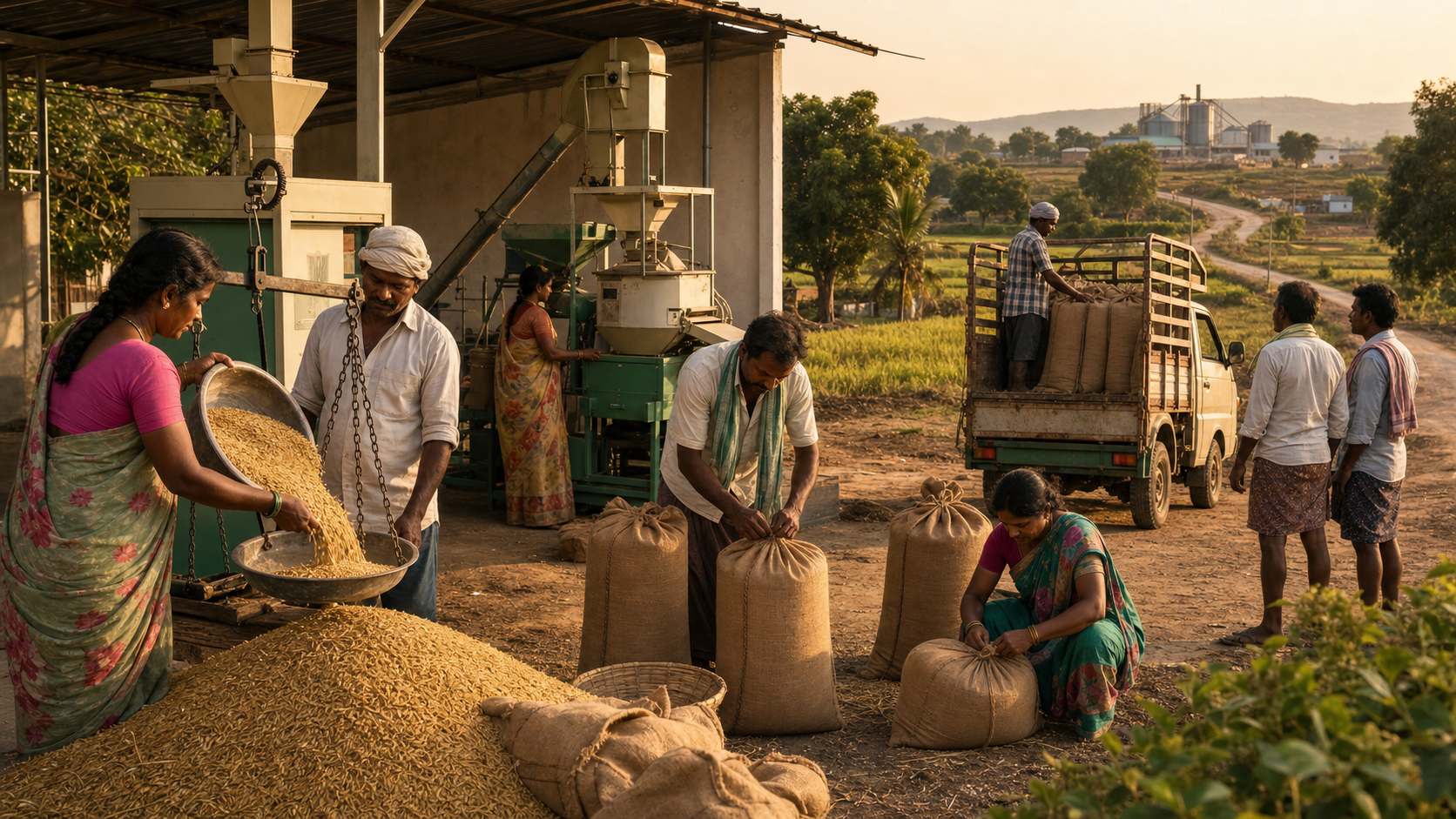
Mamidi’s decentralism did not require every village institution to operate in isolation. In the paddy sector, the profile describes a layered design in which primary cooperatives could retain responsibility for local storage, milling, and value addition, while a lean federation handled functions such as coordination, information, levy obligations, and regulatory requirements.
This division responded to a recurring cooperative problem: scale can lower coordination costs, but excessive centralization can move authority away from members. The reported paddy model assigned activities to the level suited to them. Local organizations retained control over core economic operations, while shared tasks that crossed village boundaries could be handled collectively.
The work associated with the Sriram Sagar command area applied the same logic to agricultural change. As irrigation prospects altered cropping patterns in parts of Karimnagar and Warangal, CDF reportedly prepared cooperatives through training in thrift, governance, accounts, financial discipline, and management. The intervention treated new physical infrastructure as only one part of development: local institutions also needed the competence to manage the economic opportunities and risks that followed.
Key takeaways
- Member ownership requires meaningful control over decisions, elections, accounts, and management.
- Local cooperatives and federations should perform different tasks according to the scale at which each task works best.
- Training, thrift, and financial transparency are continuing disciplines, not one-time project activities.
- Legal autonomy is necessary when political or administrative intervention can displace member governance.
- Credit, production, processing, marketing, and household savings become more useful when connected through accountable institutions.
Dairy and thrift as pathways for women’s agency
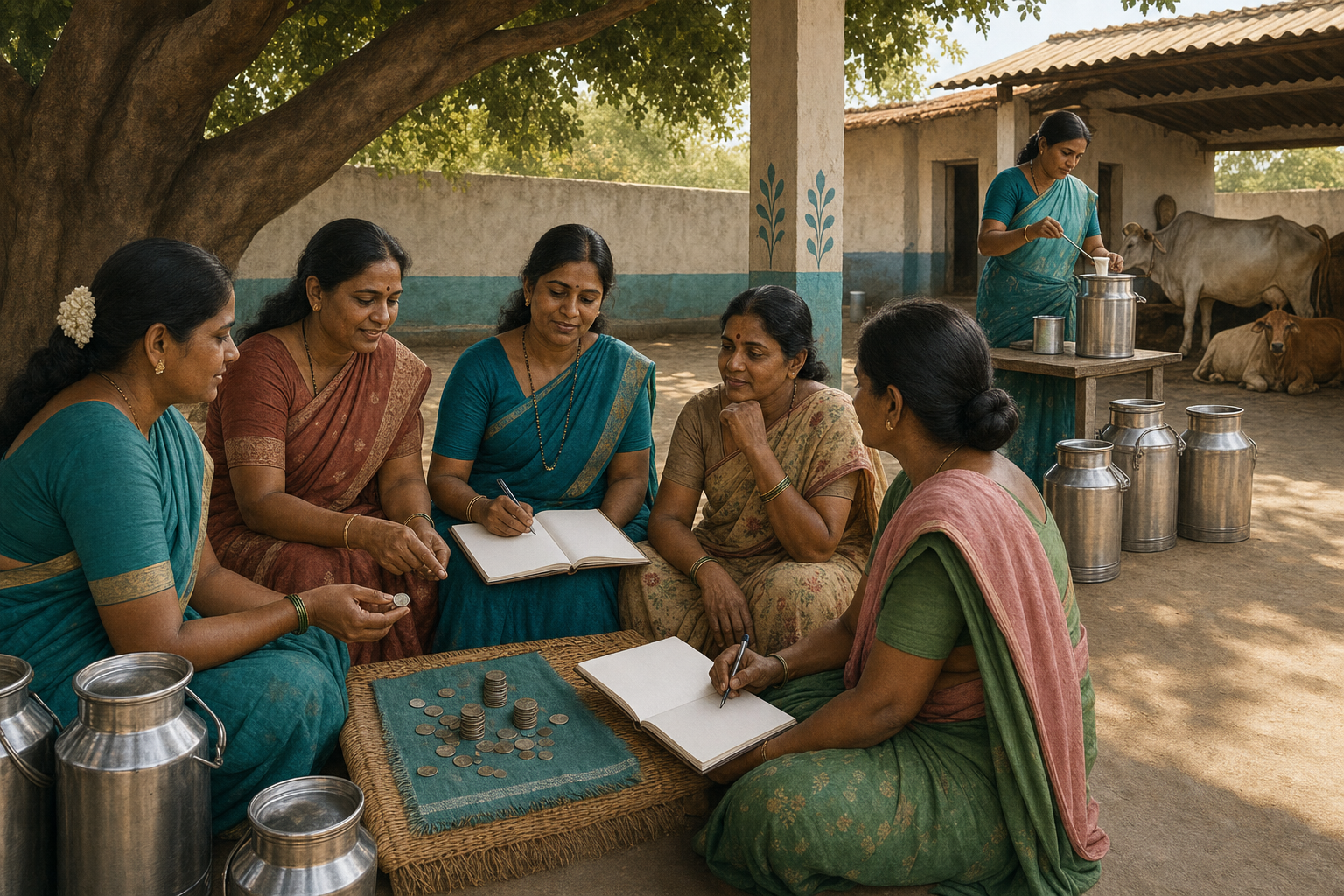
The source gives animal husbandry a wider significance than the sale of milk alone. It presents livestock as connected to nutrition, manure, savings, resilience, regular cash flow, and women’s contribution to household income. For families with small holdings or uncertain agricultural income, a member-owned procurement and marketing institution could make dispersed household production more dependable.
The profile particularly highlights women’s thrift groups and women’s dairy cooperatives. Rural women already performed much of the work associated with livestock and household saving, it observes, but their economic contribution was often weakly represented in formal organizations. CDF’s reported thrift approach encouraged regular saving and financial discipline, while cooperative participation created a route into collective economic decision-making.
Taken together, the initiatives suggest a complementary institutional sequence. Dairy creates recurring production and market transactions; thrift develops a shared financial practice; member governance gives participants a formal role in deciding how the organization operates. The available profile does not provide comparative income data or participation rates, so it supports this interpretation of institutional design more strongly than any quantified claim about outcomes.
A legacy to test through institutional performance
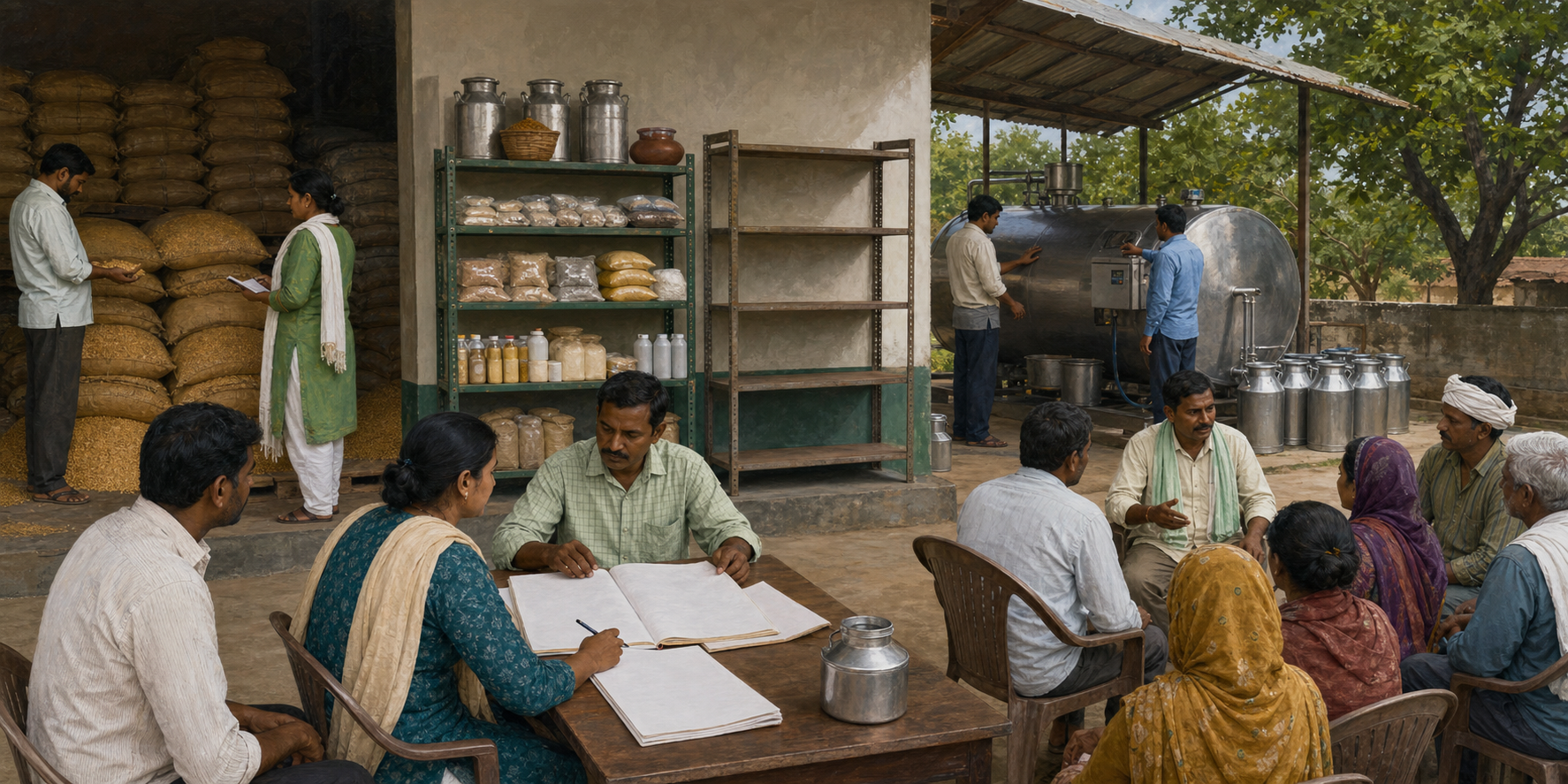
Mamidi’s reported career offers principles rather than a universal organizational blueprint. Commodities differ, local capacities vary, and federated structures must be adapted to the work members actually need. The durable test is whether a cooperative transfers practical authority to its members while remaining financially disciplined and capable of reaching markets.
The source is a commemorative profile rather than an impact evaluation: it does not supply balance-sheet comparisons, longitudinal household-income evidence, or counterfactual results. Its strongest contribution is therefore to illuminate the connections among ownership, training, economic scale, women’s participation, and legal protection. Future cooperative policy can build on that framework by measuring not only services delivered, but also member participation, accountable management, local value retained, and resilience after external support recedes.