
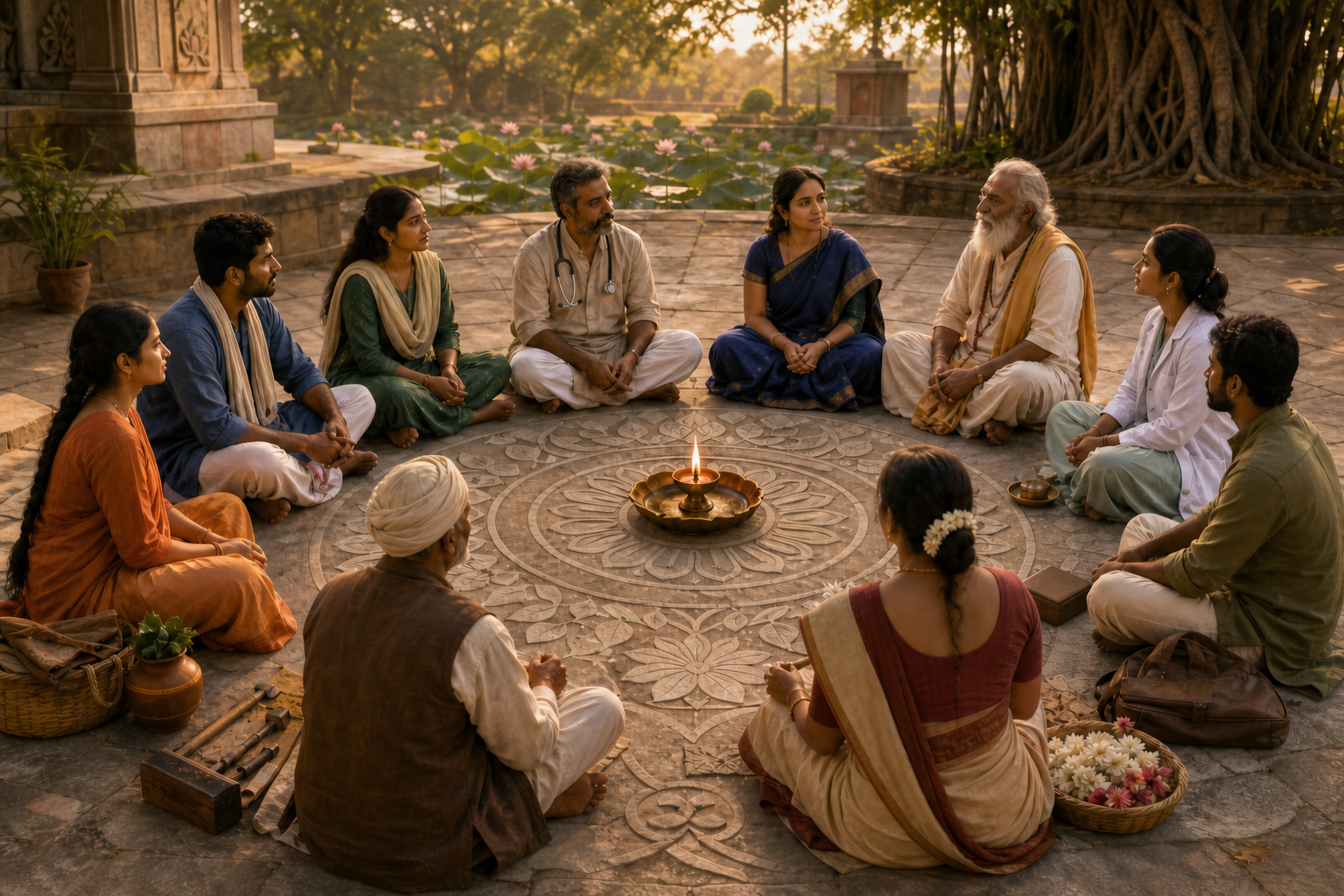
Debates about equality in Sanatan Dharma often collapse three different questions: whether every person possesses dignity, whether social functions may differ, and whether inherited practices have honored that dignity. Separating these questions makes it possible to examine scripture and society without assuming that difference means inferiority or that an ideal cancels the reality of abuse.
The DharmaRenaissance article considered here connects equality with guṇa, karma, character, knowledge, duty, compassion, and self-refinement. Its central standard is demanding: social standing must be justified by conduct, while ritual and tradition cannot excuse humiliation.
Equality is a moral standard, not enforced sameness
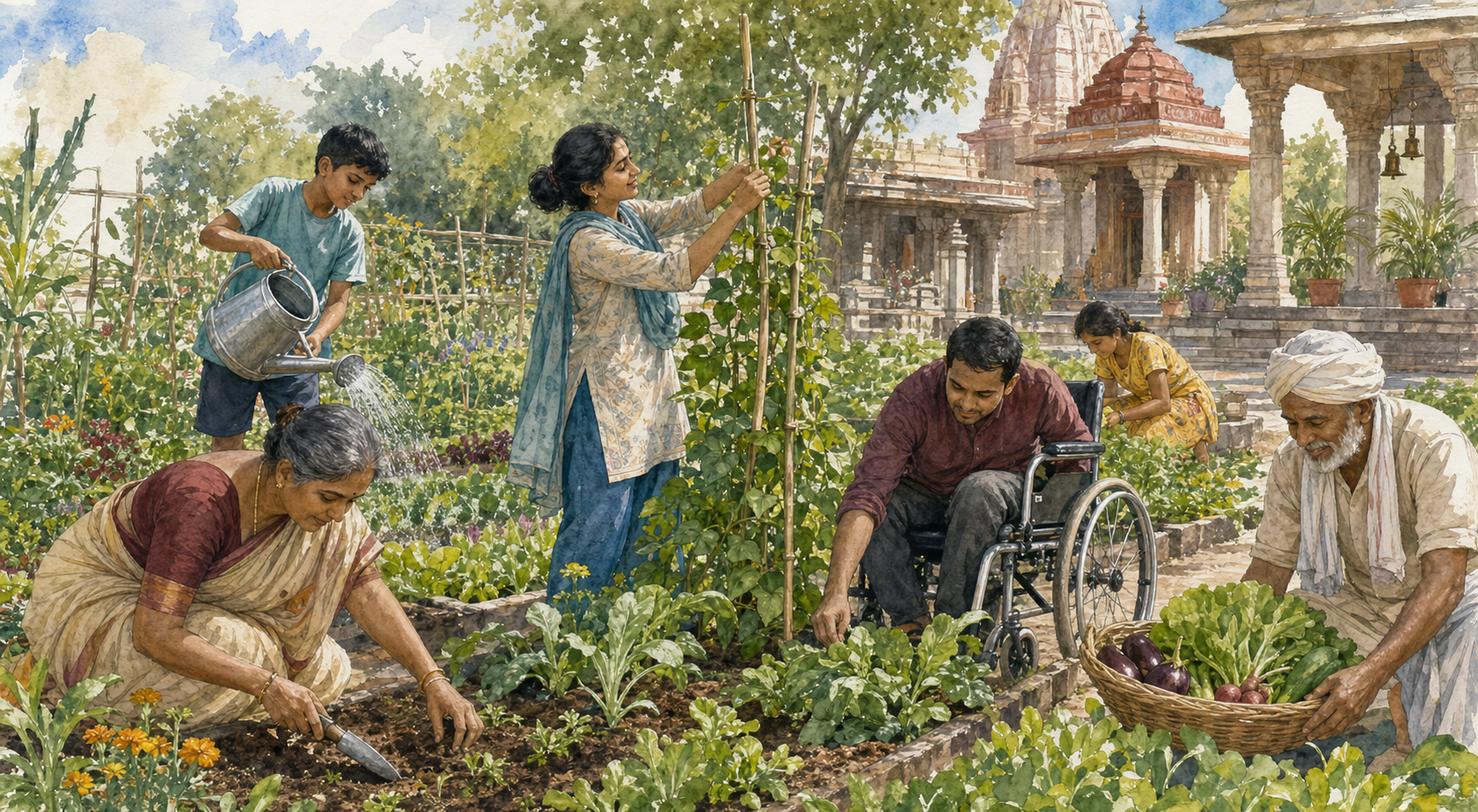
In the article’s account, equality does not require every person to perform the same work or possess identical aptitudes. It requires a distinction between human worth and social function. Different responsibilities may contribute to a common order, but those differences do not establish unequal humanity.
This distinction prevents two opposite mistakes. One is to treat every difference of role as oppression. The other is to turn functional distinctions into permanent ranks of honor and dishonor. The source places the ethical emphasis on what a person cultivates and contributes, rather than on inherited claims to superiority.
This is a normative dharmic argument, not proof that every historical institution operated accordingly. Its value lies in supplying a standard by which inherited arrangements can be judged: do they foster character, responsibility, opportunity, and mutual respect, or do they preserve privilege without corresponding virtue?
Varna becomes defensible only as responsibility
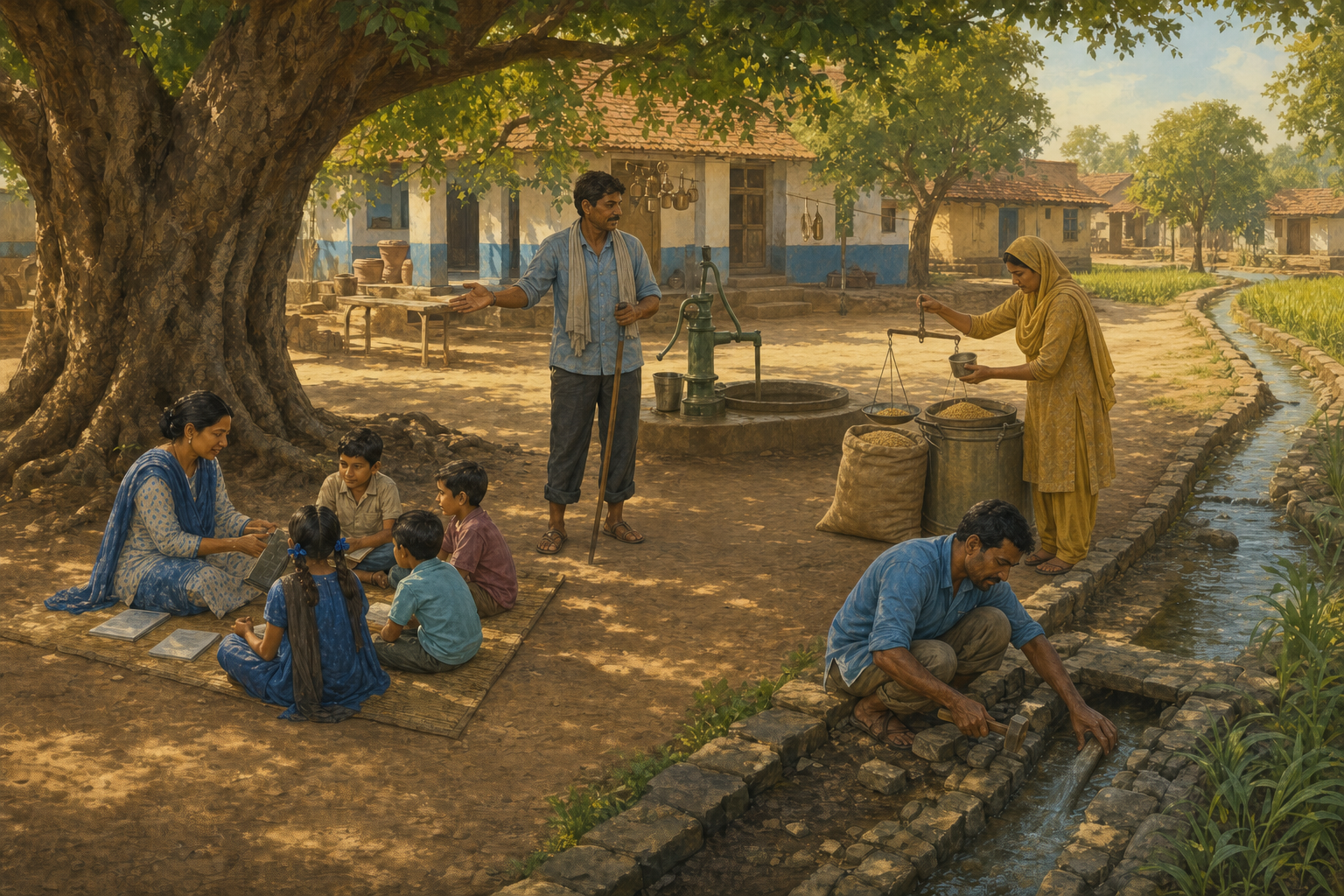
The article interprets the fourfold varna framework through the complementary needs of a social body: knowledge and instruction, protection and governance, production and exchange, and skilled service and practical execution. On this reading, the body metaphor signifies interdependence. No function sustains society by itself, and indispensable labor cannot coherently be treated as contemptible.
The essay also invokes Bhagavad-gītā teachings about guṇa, karma, and svabhāva. It reads them as locating responsibility in qualities, actions, and disposition rather than in birth alone. A person claiming the standing of a brāhmaṇa would therefore need learning, self-control, humility, and devotion to truth. Political or martial authority would require courage, restraint, justice, and protection of the vulnerable. Economic activity would carry duties of fairness and social responsibility, while service and labor would retain their essential dignity.
This interpretation changes varna from an entitlement into an audit of conduct. A title without its corresponding virtues becomes morally empty. The same logic also exposes a practical danger: an inherited order cannot become a guṇa-and-karma system merely by adopting that vocabulary. If education, training, mobility, and honest evaluation remain restricted, birth continues to determine outcomes regardless of the language used to describe them.
A genuinely functional account of varna must therefore be tested by consequences. It should widen the cultivation of ability, hold every role to ethical standards, preserve the dignity of labor, and prevent family background from becoming an unquestionable claim to authority.
Gender dignity must create reciprocal obligations
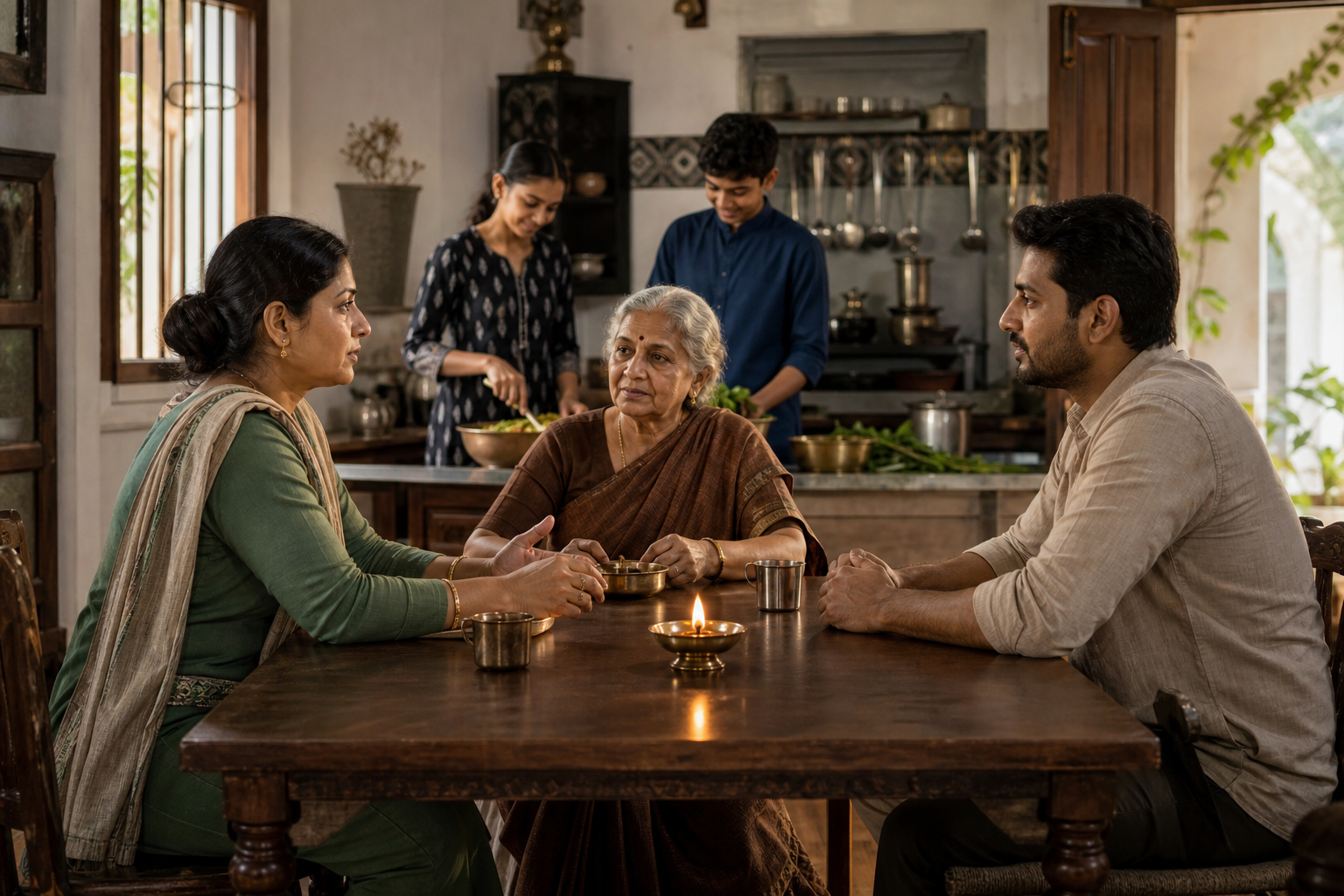
The source presents several scriptural passages as affirmations of women’s intellectual, spiritual, and moral standing. It reads an Atharvavedic marriage passage as depicting husband and wife as companions in wisdom and sacred responsibility. Another passage, identified by the article as Atharvaveda 7.38.4, is interpreted as placing fidelity and restraint upon the husband. This matters because moral responsibility is not assigned to women alone.
A Rāmāyaṇa passage is discussed in terms of character and refinement as the foundation of dignity, while the well-known Manusmṛti maxim about honoring women is used to argue that ritual loses moral force where women are humiliated. Taken together, these examples shift the issue from ceremonial praise to ethical obligation: a community cannot claim dharmic excellence while its treatment of women contradicts that claim.
The article further invokes women remembered as philosophers, saints, poets, teachers, and seekers, including Gargi, Maitreyi, Andal, Akka Mahadevi, and Mirabai. Within its argument, these figures demonstrate that wisdom, devotion, leadership, and the pursuit of moksha are not exclusively male domains.
Yet the language of honor is insufficient if it remains symbolic. Dignity becomes socially meaningful through education, voice, spiritual access, security, and accountability for misconduct. Praise that leaves restrictive power relations untouched can reproduce the very inequality it appears to reject. A dharmic standard must therefore examine what institutions enable women to do, not only what they say about women.
Scriptural ideals and social outcomes require separate scrutiny
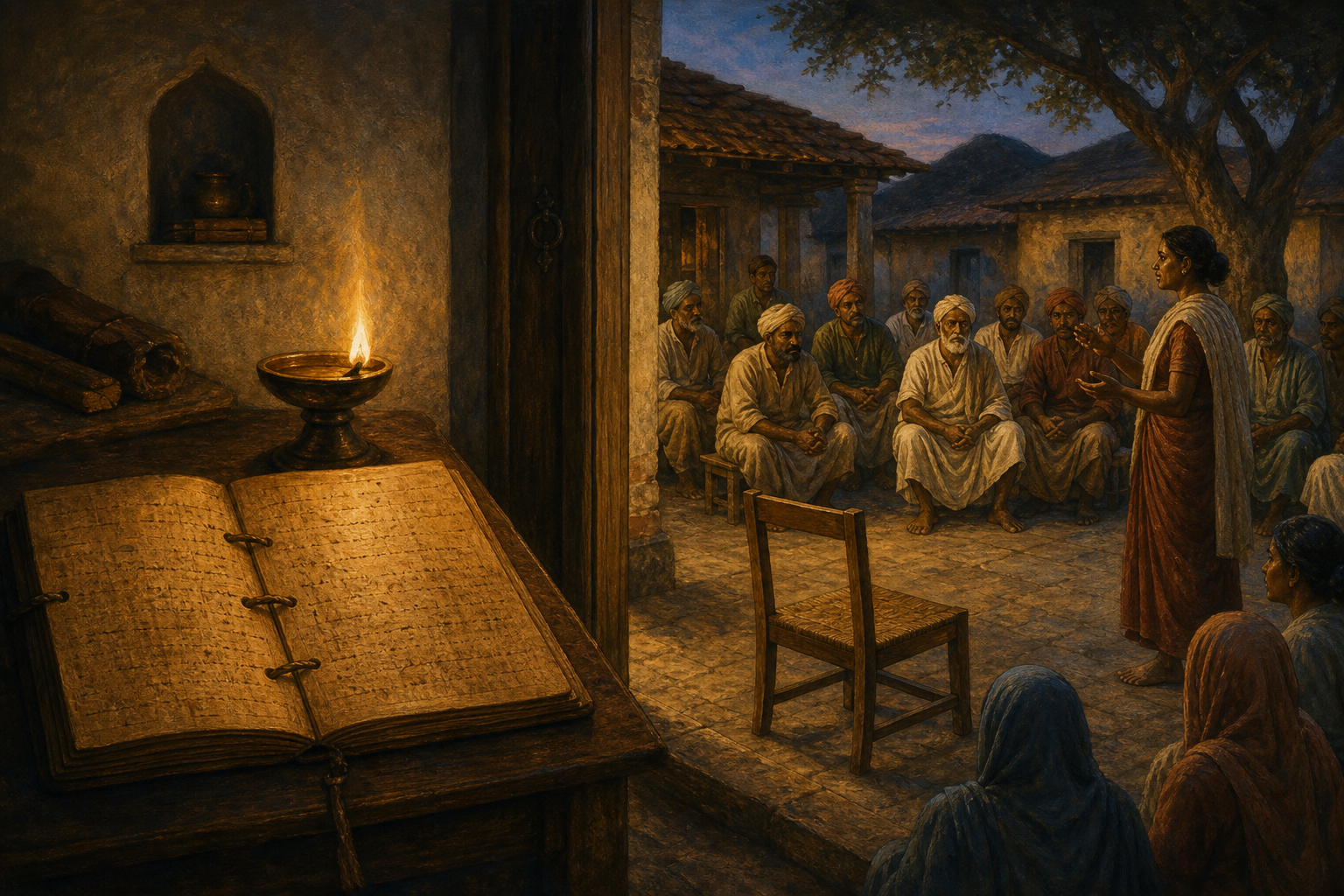
The most useful interpretive principle in the source is its refusal to equate an ideal automatically with historical practice. The existence of injustice does not by itself settle the intended meaning of every text, but textual ideals cannot be used to erase the testimony of injustice. Both claims require examination.
A disciplined reading therefore moves across three levels: what a passage says in context, how communities have interpreted it, and what those interpretations have produced in lived experience. Confusing these levels creates apologetics on one side and reductionism on the other. Birth-based exclusion cannot be vindicated simply by relabeling it varna, just as praise of feminine sacredness cannot compensate for denying women agency or respect.
The DharmaRenaissance essay is best understood as a normative interpretation rather than a comparative study of translations, commentarial disagreements, or social history. Its cited passages support the position it advances, but one article cannot establish cross-publication or scholarly consensus. Responsible further inquiry would compare translations, textual contexts, traditional commentaries, and historical evidence while retaining the ethical questions the essay raises.
Key takeaways
- Equal dignity does not erase differences of aptitude or responsibility, but differences of function cannot justify unequal humanity.
- A guṇa-and-karma account of varna is credible only when status follows demonstrated qualities and conduct rather than inherited entitlement.
- Respect for women must impose duties upon men and institutions and must be visible in agency, opportunity, safety, and spiritual participation.
- Dharmic interpretation should examine textual ideals and lived outcomes together without using either to conceal the other.
The next stage of this conversation should join careful textual comparison with institutional practice. Education, family life, temples, and community leadership can then be assessed by a clear question: do they convert dharmic claims about dignity into conditions in which character and ability can genuinely flourish?