
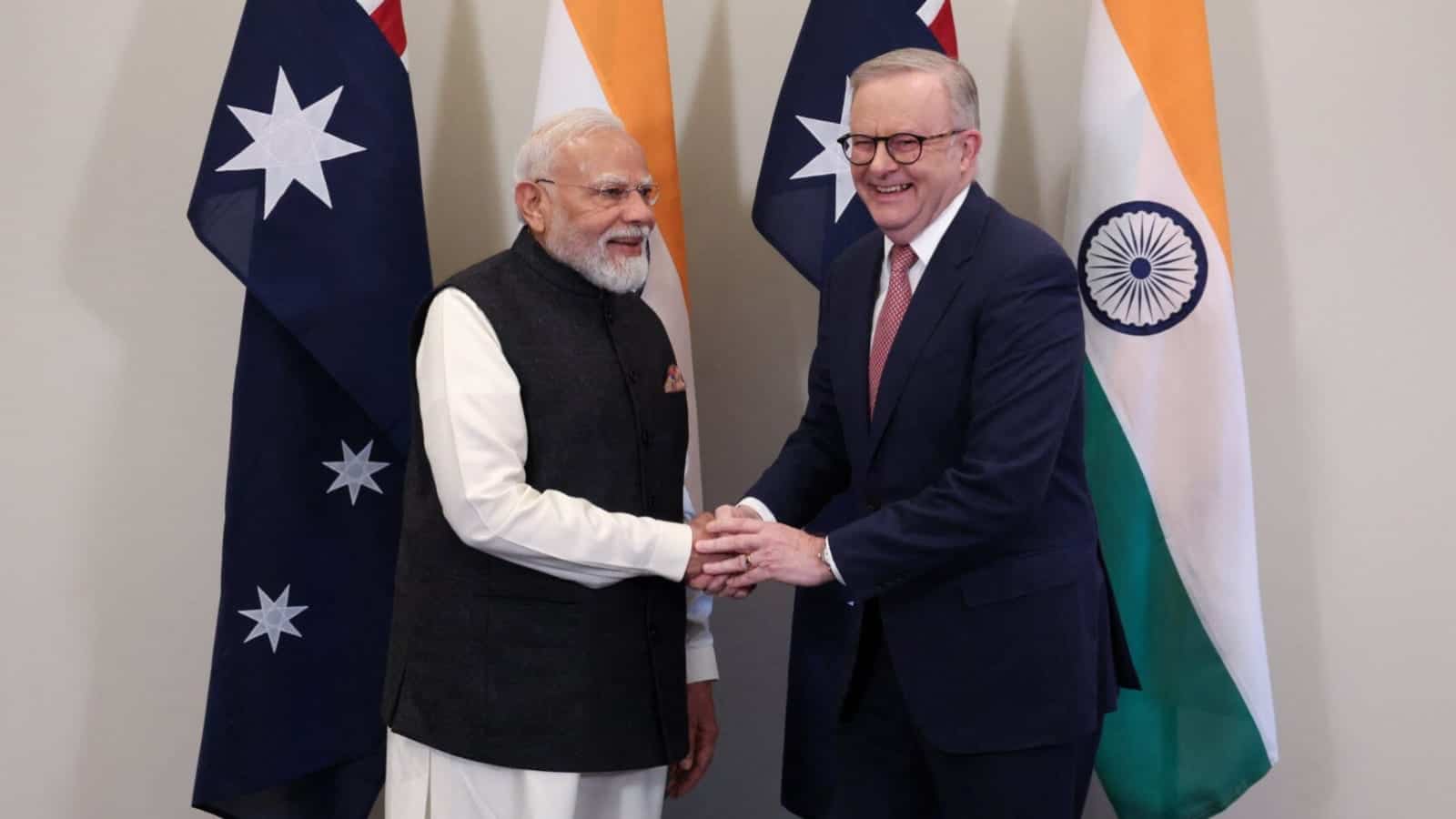
Prime Minister Narendra Modi’s reported July 2026 visits to Australia and New Zealand brought energy security, critical minerals and investment into the same diplomatic frame. Hindu Post, summarizing a News18 opinion article dated July 13, presents the tour as an effort to convert Indo-Pacific relationships into practical economic capacity for Bharat.
The central question is not simply whether agreements were announced. It is whether these partnerships can reduce industrial vulnerability, support advanced manufacturing and give Bharat greater freedom of action in a contested global economy.
Critical minerals are becoming industrial leverage
Critical minerals sit near the beginning of several strategic supply chains. Lithium, cobalt, nickel, copper, graphite and rare earth elements are used across electric vehicles, renewable-energy systems, electronics and defence manufacturing. Rare earths such as neodymium, dysprosium, praseodymium and cerium are particularly important for specialized components, including permanent magnets.
The source reports that Bharat imports nearly all of its lithium, cobalt and nickel requirements. It also says China accounts for roughly 60-70 per cent of global rare-earth mining and more than 80-90 per cent of refining and processing. These figures are claims reported in the source rather than independently verified here, but they illustrate the strategic problem: access to ore is insufficient when processing remains concentrated elsewhere.
Supply-chain resilience therefore requires more than purchasing contracts. It depends on reliable extraction partnerships, processing capacity, transport links, finance, technical knowledge and manufacturers able to turn raw materials into useful components.
Australia addresses a high-risk supply gap
According to Hindu Post’s account, the Australia visit produced a uranium supply agreement and progress on a Critical Minerals Corridor. The source describes Australia as the world’s largest lithium producer, second-largest cobalt producer and fourth-largest producer of rare earth elements. It further reports that Australian reserves cover at least 21 of the 49 minerals Bharat designates as critical.
That resource profile makes Australia relevant to both energy security and industrial policy. A dependable minerals relationship could support Bharat’s ambitions in electric mobility, semiconductors, renewable energy and defence production while reducing excessive exposure to any single supplier.
The visit also built on existing foundations identified by the source: the Australia-India Economic Cooperation and Trade Agreement, effective since 2022; the 2023 Critical Minerals Investment Partnership; and the Quad Critical Minerals Initiative. The strategic value lies in moving from parallel initiatives toward an integrated chain of investment, processing and manufacturing.
New Zealand broadens the partnership beyond minerals
The New Zealand engagement served a different but complementary purpose. The source says bilateral relations were elevated to a Strategic Partnership and that the visit advanced a recently signed Free Trade Agreement. It also reports investment commitments and memoranda covering defence, education, agriculture and maritime cooperation.
This wider portfolio matters because national resilience is not produced by mineral access alone. Agricultural technology can strengthen productive capacity, education links can develop skills, maritime cooperation can protect commercial routes, and investment can help translate diplomatic intent into enterprises and employment. New Zealand also adds depth to Bharat’s network of trusted Indo-Pacific relationships.
Key takeaways
- The Australia relationship is being positioned around uranium, critical minerals and more resilient industrial supply chains.
- The New Zealand partnership extends across trade, investment, agriculture, education, defence and maritime cooperation.
- The strategic objective is diversification: dependable partners, domestic capability and less exposure to concentrated processing networks.
- Announcements will matter only if they lead to investment, technical capacity, accountable implementation and production inside Bharat.
From diplomatic agreements to durable capacity
The source material is an opinion excerpt, not the full text of the agreements, so it supports a strategic interpretation rather than a detailed audit of costs, timelines or obligations. The practical tests will be whether projects secure long-term supply, expand refining and manufacturing in Bharat, attract patient investment and distribute risk without replacing one dependency with another.
A civilisationally confident Bharat can pursue strategic autonomy without retreating from cooperation. Hindu, Buddhist, Jain and Sikh traditions differ in doctrine and practice, yet all offer strong vocabularies of responsibility, restraint and service. Applied as an ethical standard rather than a slogan, that shared dharmic inheritance asks whether economic power is exercised with environmental care, social responsibility and concern for future generations.
If the reported initiatives mature into transparent projects and domestic capability, the Australia-New Zealand outreach could become more than a successful diplomatic tour. It could help Bharat secure the material foundations of cleaner energy, advanced industry and independent decision-making.
Inspired by this post on Hindu Post.
