
Communal violence creates two urgent duties at once: protect people from immediate harm and establish what happened without allowing fear, identity or political rhetoric to decide the facts. The reported violence during a rural festival in Haveri illustrates the first duty, while the wider weakness of religious hate-crime data in India complicates the second.
Read together, the source articles suggest a practical framework for handling such cases. Authorities need event-level evidence strong enough for prosecution, researchers need consistent data before inferring a larger pattern, and communities need preventive arrangements that protect both cultural observances and places of worship.
What the Haveri incident shows, and what remains unproven
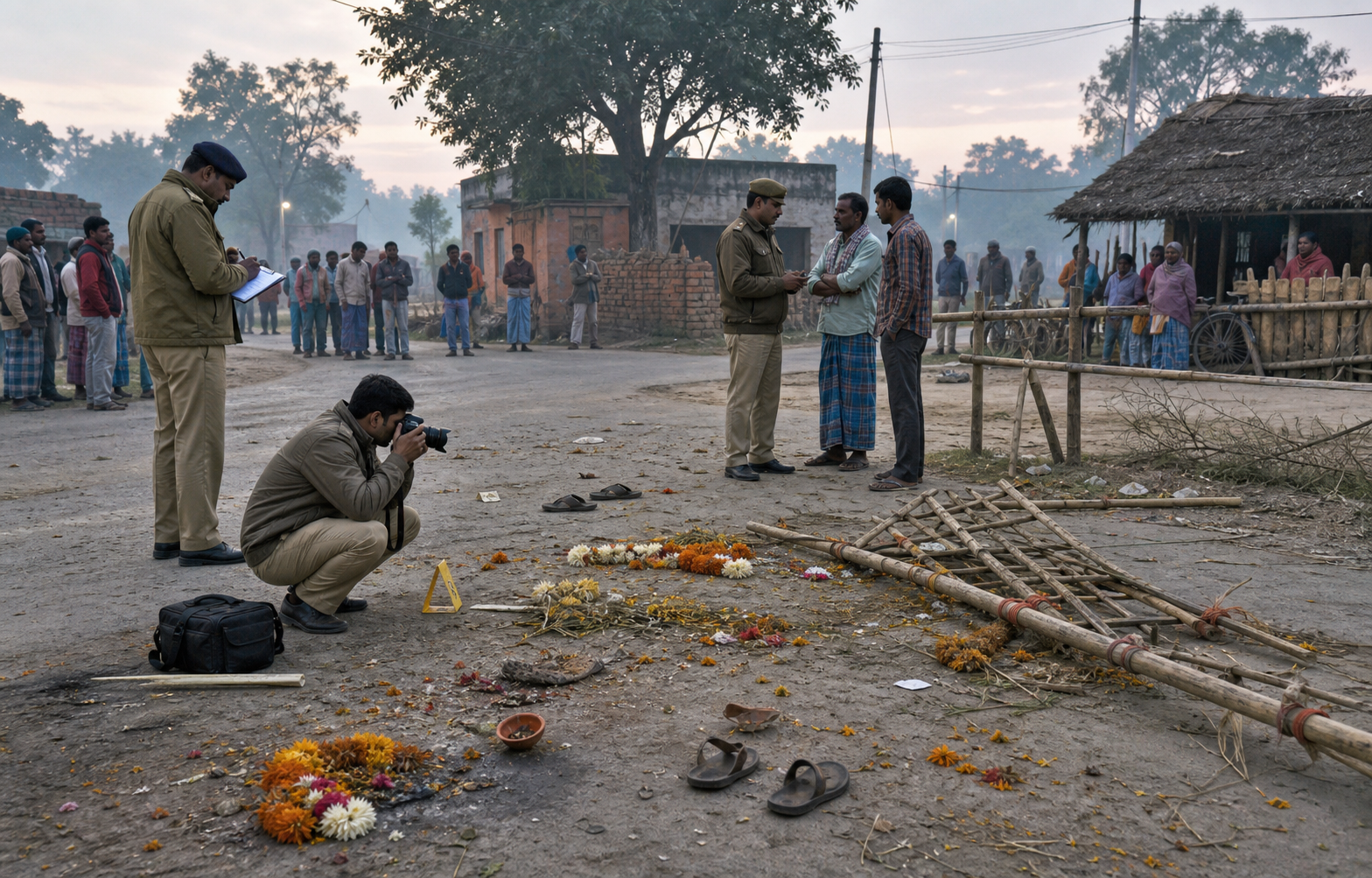
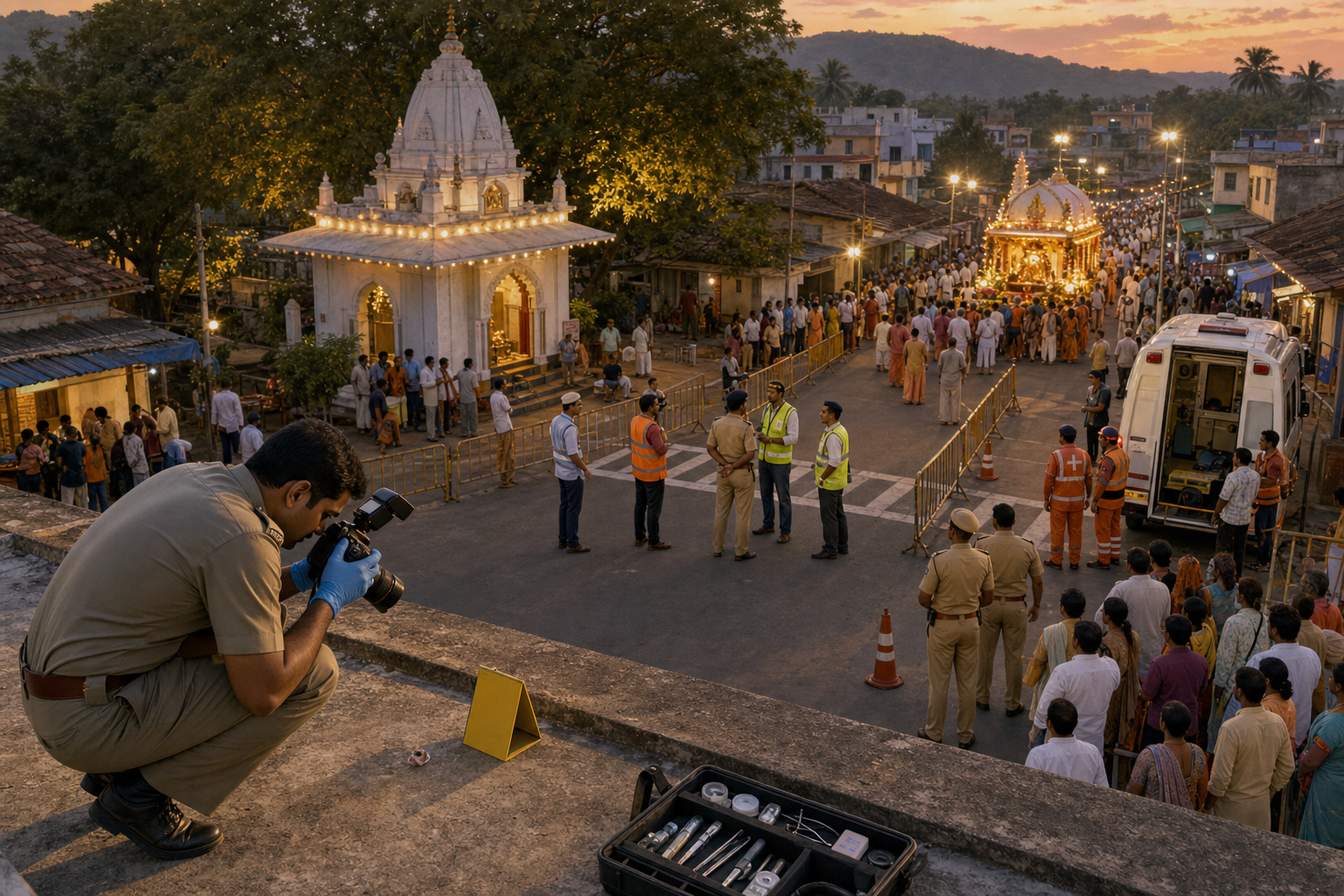
The DharmaRenaissance account of the Haveri incident, drawing on police statements and media reports, says a Kara Hunnime bull procession in Naregal village, Hangal taluk, became violent on 29 June 2026. An argument reportedly began after firecrackers were burst near a mosque and then widened into a clash. The article reports eight injuries, additional police deployment, medical treatment for those injured, criminal cases and 26 people booked in connection with the incident.
That account also records more serious public allegations, including claims that sharp weapons were used. It does not present every such claim as a completed police or judicial finding. Instead, it says investigators were examining CCTV footage, mobile-phone recordings and eyewitness accounts to determine the sequence of events and identify those responsible. This distinction is essential: an injury can be real and urgent even while the identity, conduct or motive of each participant remains under investigation.
The cultural setting adds significance but does not itself establish motive. Kara Hunnime is described in the source as an agrarian observance in which cattle are decorated and honoured, expressing gratitude for animals, labour, cultivation and seasonal life. Violence at such an event can therefore damage both physical safety and a community’s confidence in practising an inherited tradition. Yet cultural injury, however sincerely felt, cannot replace evidence about who initiated or escalated a confrontation.
The most defensible account is consequently narrower than the strongest claims circulating around an incident. It can acknowledge the reported clash, injuries and police action; identify allegations as allegations; and reserve conclusions about planning, targeting and religious motive for evidence capable of surviving legal scrutiny. That approach neither minimizes the violence nor assigns collective guilt to people who were not shown to have participated.
Evidence must travel from an incident to a pattern

The second source explains why a documented communal clash cannot automatically prove a national campaign of religious persecution. According to its analysis, India publishes extensive crime statistics through the National Crime Records Bureau, but lacks a publicly standardized national hate-crime dataset that consistently separates an underlying offence from an alleged bias motive. The absence of such a category does not mean that religiously motivated crimes do not occur. It means that broader claims are harder to test with comparable data.
A sound evidentiary ladder has several distinct levels. The first is the occurrence of harm: whether an assault, threat, act of vandalism or other offence took place. The second concerns attribution: who did what, in what sequence and with what available corroboration. The third concerns motive: whether religious hostility was demonstrated through words, preparation, selection of a target, repeated conduct or other admissible evidence. The fourth is pattern: whether similarly classified incidents occur with sufficient consistency across places and time to support a structural conclusion.
Skipping a level creates predictable errors. Different religious identities among an accused person and a victim do not, by themselves, prove a hate motive. Conversely, recording a case only under a general criminal offence can conceal a bias component that investigators failed to examine. Local political rivalry, land conflict, rumours, retaliation and religious hostility may also overlap, making a single-label explanation inadequate.
The source on India’s data gap further warns that viral videos and advocacy narratives can fix an incident’s public meaning before an initial police report, identity verification or judicial examination. Independent documentation can preserve material that official systems overlook, but it also requires published definitions, transparent inclusion rules, source verification, correction procedures and equal treatment of victims from different communities. Neither an official table nor a civil-society database becomes conclusive merely by being called data.
This framework also clarifies the proper use of grave terms. A clash, riot, hate crime, organized campaign and genocide are not interchangeable descriptions. Each carries a different factual and legal burden. Precision protects victims because it directs attention toward provable offences, while exaggeration can make legitimate evidence easier to dismiss. The same standard should apply whether the harmed person or institution is Hindu, Muslim, Christian, Sikh, Buddhist, Jain, tribal or associated with another tradition.
Public safety should be designed before a procession begins
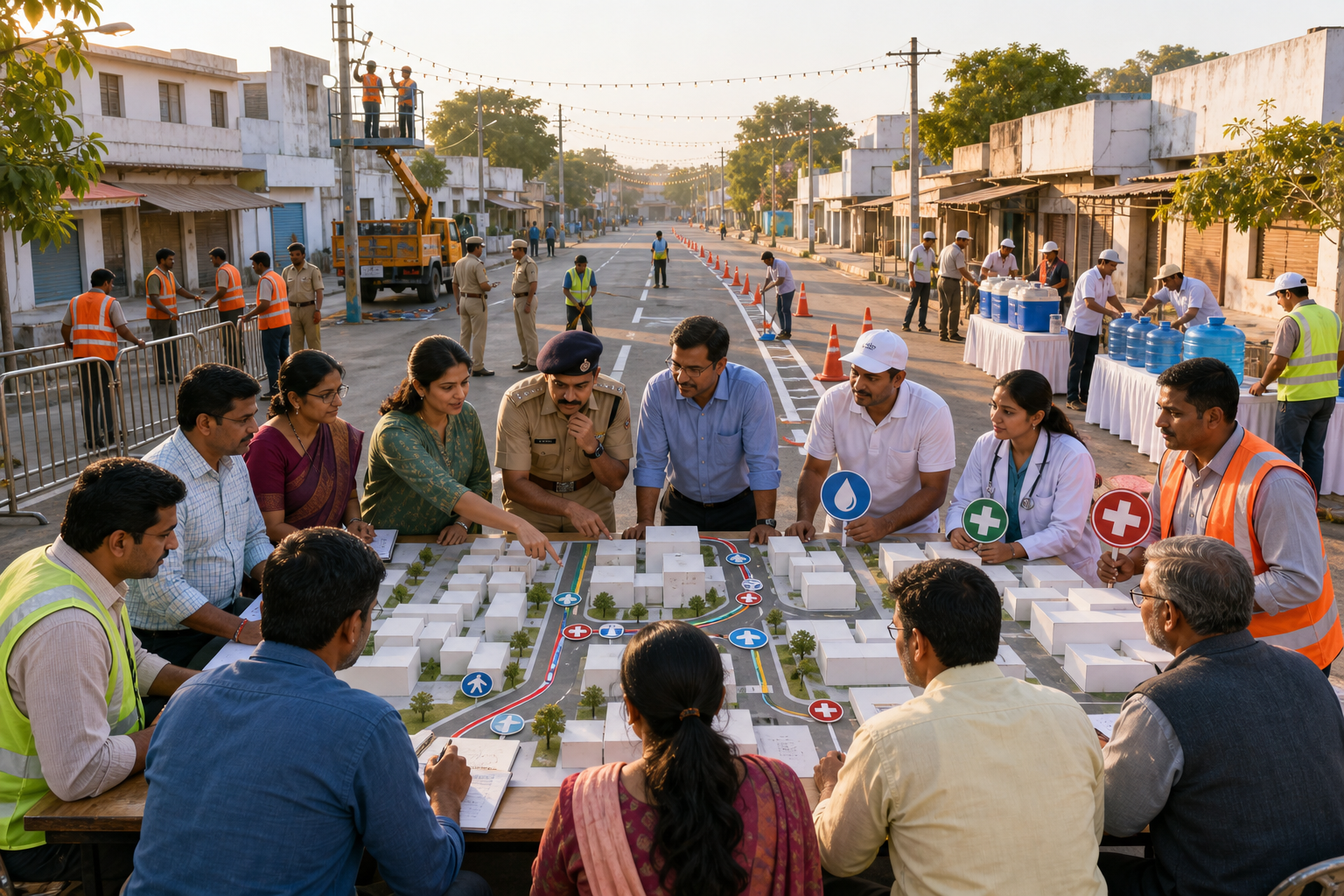
Evidence determines accountability after violence, but prevention depends on administrative design. The Haveri article notes that religious and cultural processions often pass through compact shared spaces containing homes, shops, farms and places of worship. Route planning, sound, firecrackers, crowd movement and police positioning are therefore operational safety questions, even when they also carry religious or political sensitivities.
A workable local protocol would begin with a recorded route and agreed timing, followed by clear and uniformly applied rules for firecrackers and amplified sound. Organizers and representatives of institutions along the route should know whom to contact when a dispute begins. Police personnel should be placed at foreseeable friction points, while a rapid-response team remains available to separate groups before a verbal argument expands. These precautions should protect the lawful procession and the security and dignity of every place of worship on its path.
Village peace committees can support this work only when they have defined responsibilities. Advance meetings should produce documented arrangements rather than ceremonial assurances. During an event, designated coordinators need a direct channel to police and organizers. After an incident, authorities should promptly preserve video, obtain witness accounts independently, document injuries and publish carefully limited updates that distinguish established facts from allegations under examination.
Uniformity matters as much as preparation. Restrictions imposed selectively can create resentment, while delayed or visibly partisan enforcement can encourage retaliation. The objective is not to remove religious expression from shared space. It is to make lawful expression predictable enough that disagreement does not become an invitation to violence.
Accountable narration is part of public protection
Police, journalists, political leaders and community advocates describe incidents for different audiences, but all can benefit from the same status labels. A fact may be confirmed by an official record; a claim may be attributed to a witness, injured party or political figure; a working theory may remain under investigation; and a charge may still await adjudication. Keeping those categories visible prevents repetition from being mistaken for verification.
Collective language is especially hazardous. Evidence against named participants should lead to individual accountability, not guilt assigned to an entire religious community. At the same time, warnings against generalization must not become an excuse to suppress credible complaints or avoid examining a possible bias motive. Restraint and seriousness are compatible: the state can pursue offenders firmly while declining to prejudge uninvolved neighbours.
The two source articles converge on this ethical balance. The Haveri account emphasizes the right of Hindu families to observe Kara Hunnime safely alongside the protection owed to places of worship. The data-gap analysis argues that compassion for victims and scepticism toward unsupported sweeping claims are not opposing positions. Truthfulness, nonviolence and accountability require attention to actual suffering as well as disciplined limits on what the available evidence can establish.
Key takeaways
- Confirm the underlying offence and injuries before debating the event’s wider political meaning.
- Keep reported allegations, investigative findings, criminal charges and judicial conclusions in separate categories.
- Require affirmative evidence of religious motive rather than inferring it solely from the identities of those involved.
- Do not convert one incident into a regional or national pattern without consistent definitions and comparable data.
- Plan procession routes, firecracker rules, communications and police deployment before foreseeable points of friction become crises.
- Apply the same evidentiary and protective standards to every community, participant and place of worship.
Better local protocols and more transparent bias-motive data would reinforce one another: prevention could be targeted more intelligently, genuine patterns could be identified earlier, and prosecutions could proceed without requiring communities to choose between public safety and factual restraint.
References
- DharmaRenaissance Blog — Kara Hunnime Violence in Haveri: Shocking Lessons on Faith and Public Safety
- DharmaRenaissance Blog — The Data Gap Behind Religious Hate Crime Claims: Why Evidence Must Lead