
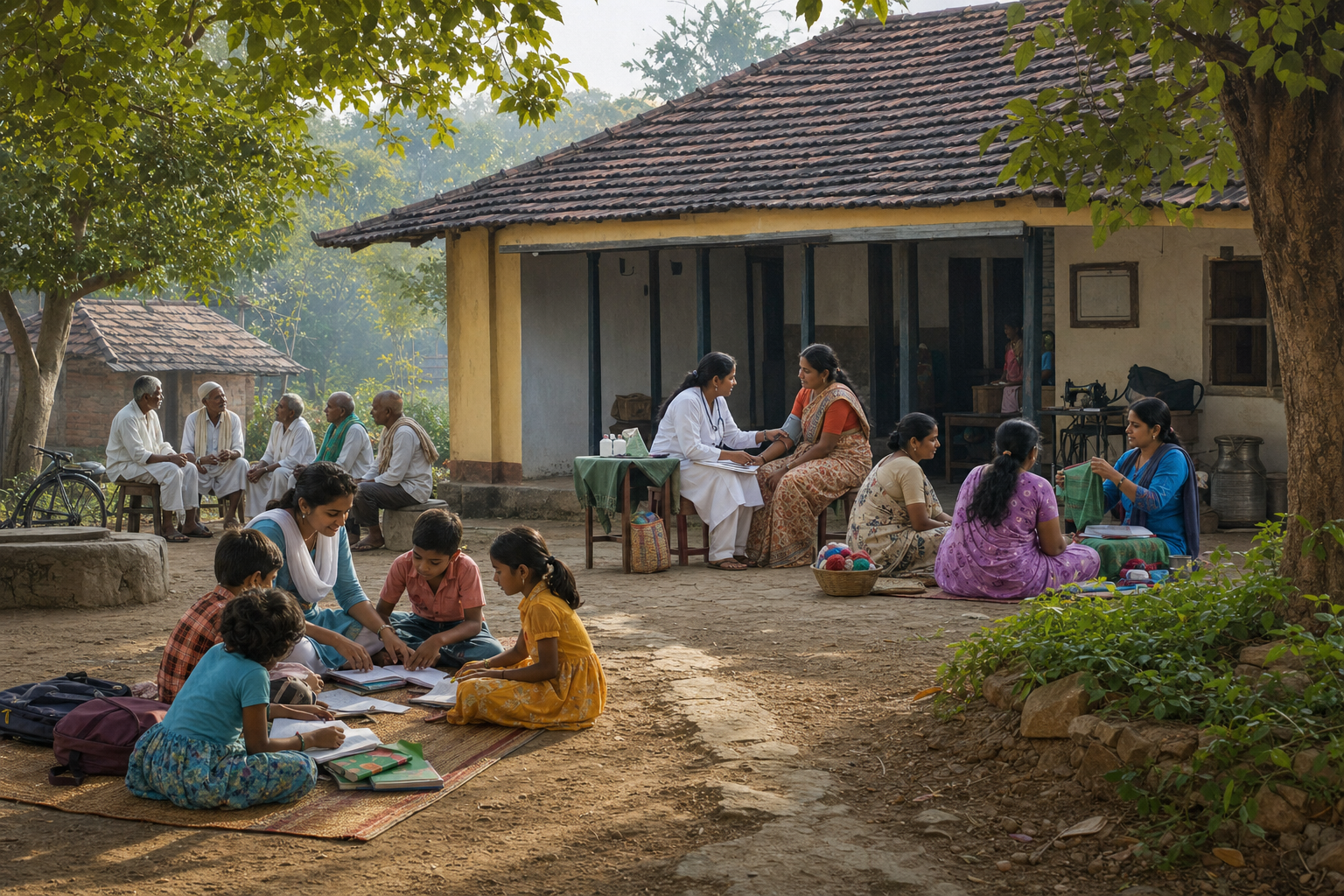
Grassroots seva becomes socially consequential when compassion is converted into a dependable place, a continuing relationship and practical routes out of vulnerability. The reported work of Karnataka social worker Dr. S. G. Susheelamma offers a case study in how that conversion can occur across education, health, livelihood and community care.
A DharmaRenaissance Blog profile reports that Dr. Susheelamma was honoured with the Padma Shri in 2026 after decades of work involving children, women, Vanvasi communities, senior citizens and economically weaker groups. Beyond the recognition itself, the account helps identify what makes locally rooted welfare more durable: connected services, institutional continuity, social trust and an emphasis on agency rather than dependence.
Welfare works as a connected system
The profile places Sumangali Seva Ashrama at the centre of Dr. Susheelamma’s work. It reports that she founded the institution in 1975 in Cholanayakanahalli, Bengaluru, and that its activities came to include shelter, education, healthcare, vocational preparation, assistance for women in distress, child welfare and outreach to rural and Vanvasi communities. Environmental conservation and support for senior citizens are also identified as parts of her wider service.
Viewed together, these activities express an important principle of social welfare: hardship seldom arrives in separate compartments. Interrupted schooling may be connected to unstable housing, poor health or inadequate household income. A woman seeking employment may simultaneously face limits on mobility, confidence and access to supportive institutions. A community health initiative may achieve little if families lack education, reliable livelihoods or sufficient trust in those delivering it.
An integrated institution can respond to an immediate need while also addressing conditions that reproduce it. Shelter can provide safety, but education and livelihood preparation can widen future choices. Health support can relieve suffering, while awareness and continuing local contact can strengthen prevention. This does not mean that every organisation must provide every service. It means that effective grassroots work should recognise connected needs and create workable pathways between forms of assistance.
Local trust turns services into lasting access
According to the profile, Dr. Susheelamma’s impulse toward service was visible during her school years, when she distributed textbooks to children who did not have them. That reported episode is modest in scale, yet it illustrates the characteristic starting point of grassroots seva: a visible need is met directly, without waiting for it to become an abstract programme category.
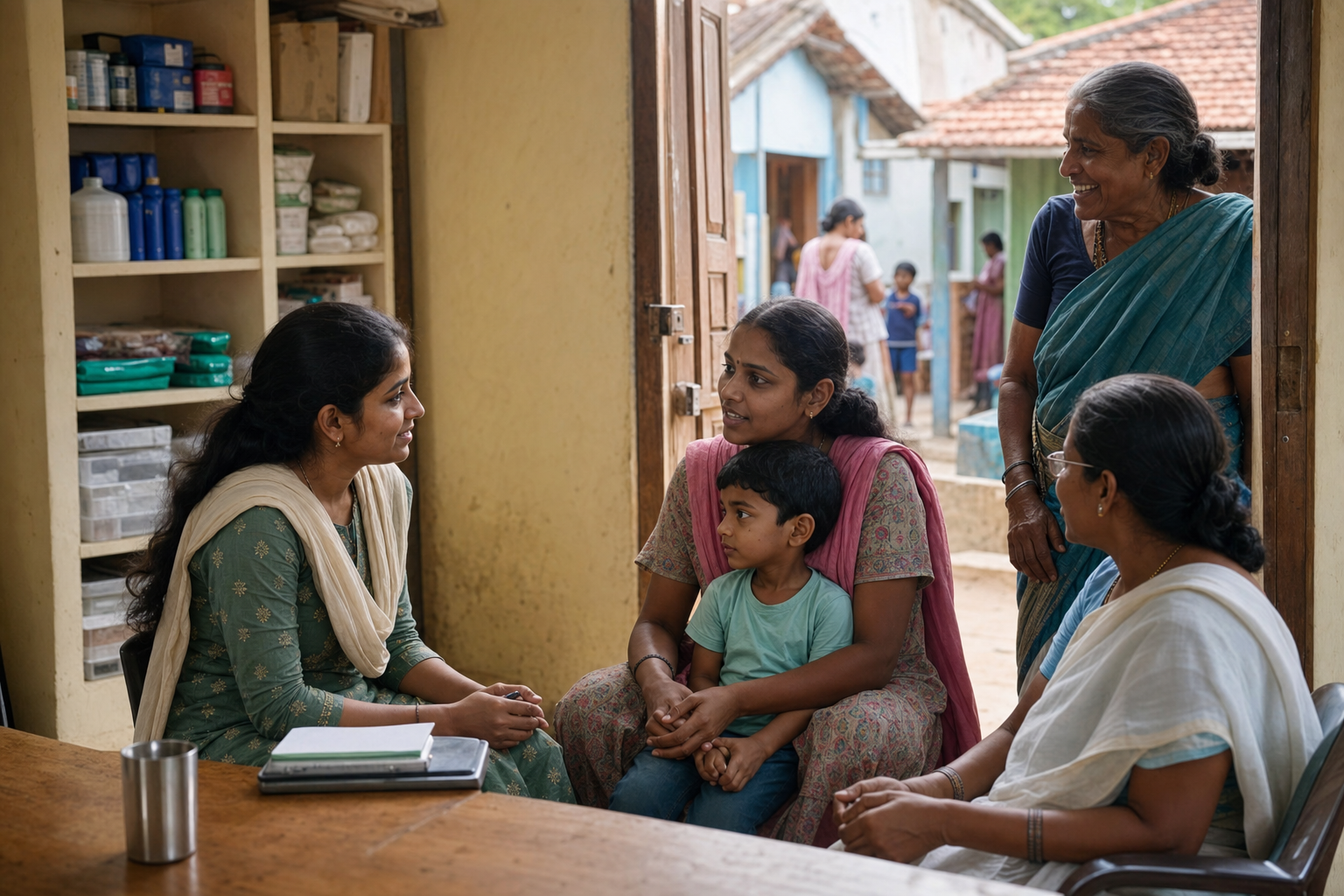
Direct help becomes durable, however, only when it is supported by continuity. The Ashrama’s reported development from a local initiative into a multi-service institution shows why organisation matters alongside goodwill. A stable institution can retain knowledge, build relationships, coordinate different forms of support and remain available when a family encounters another crisis. Its value lies not only in what it distributes, but also in whether people know where to return.
This local presence can complement large public systems. Government programmes may possess resources and reach, while community organisations can contribute familiarity with household circumstances, social barriers and local expectations. Their role is especially important at the last mile, where formal eligibility does not automatically become meaningful access. Trust can help people disclose needs, continue participating and accept initiatives that might otherwise appear distant or unfamiliar.
Dignity changes the purpose of assistance
The profile presents education as a major strand of Dr. Susheelamma’s service to children from disadvantaged backgrounds. Educational support has significance beyond classroom instruction: for a vulnerable child, dependable guidance can create routine, confidence and a credible sense of future possibility. The broader social return emerges when learning improves a person’s capacity to earn, participate in civic life and support the next generation.
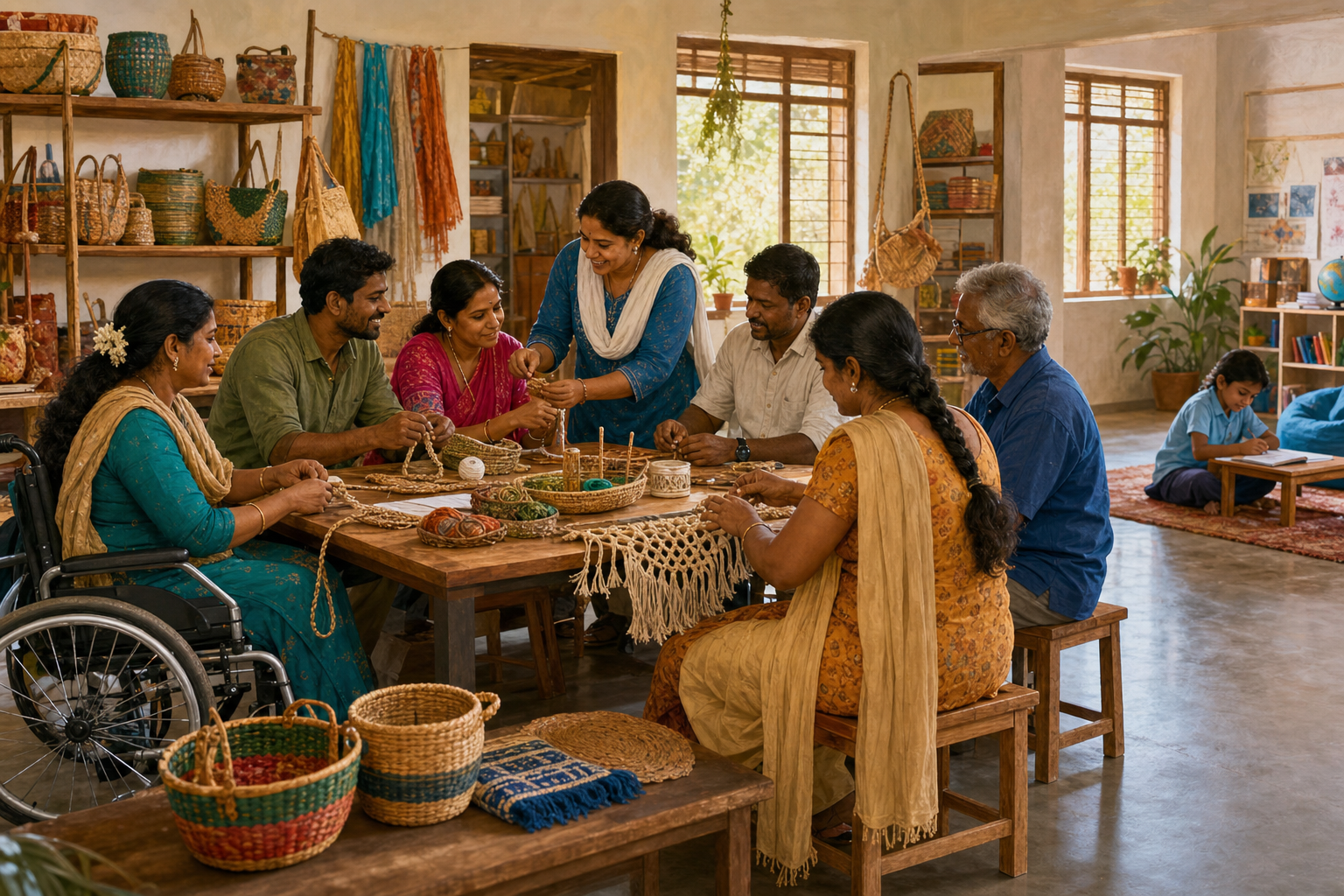
The same distinction between relief and agency appears in the profile’s account of work with women. It reports skill development and livelihood assistance, including training connected with auto-rickshaw driving. The significance of such an initiative is not confined to income. A skill involving public mobility can challenge restrictive assumptions about women’s work, enlarge participation in household decisions and make economic independence more attainable.
In this model, dignity is operational rather than ceremonial. It affects whether recipients are treated as passive beneficiaries or as people capable of making choices, acquiring skills and contributing to their communities. Immediate care remains necessary, particularly during distress, but it becomes more transformative when paired with opportunities that reduce dependence. The source associates this approach with Gandhian values; it can also be situated within the wider dharmic understanding of seva as responsibility expressed through practical care.
Key takeaways
- Grassroots seva becomes durable when individual acts of care develop into institutions that people can approach repeatedly.
- Education, health, shelter and livelihood should be understood as connected responses to overlapping forms of vulnerability.
- Dignity-centred welfare combines immediate relief with skills, confidence and greater capacity for independent choice.
- Local organisations add trust and contextual knowledge, but public recognition should also encourage careful documentation of their outcomes.
From recognition to accountable continuity
The source describes the Padma Shri as India’s fourth-highest civilian honour and interprets Dr. Susheelamma’s reported 2026 award as national recognition for a lifetime of social work. Such recognition can make quiet service visible, direct attention toward neglected communities and give grassroots institutions greater legitimacy in the public imagination.
An honour is not, however, the same as an independent assessment of impact. The supplied source is an appreciative profile, not a comparative evaluation of programmes. Its account therefore supports conclusions about the scope, philosophy and institutional pattern of the work, but it does not provide the outcome data needed to compare interventions or measure long-term effects.
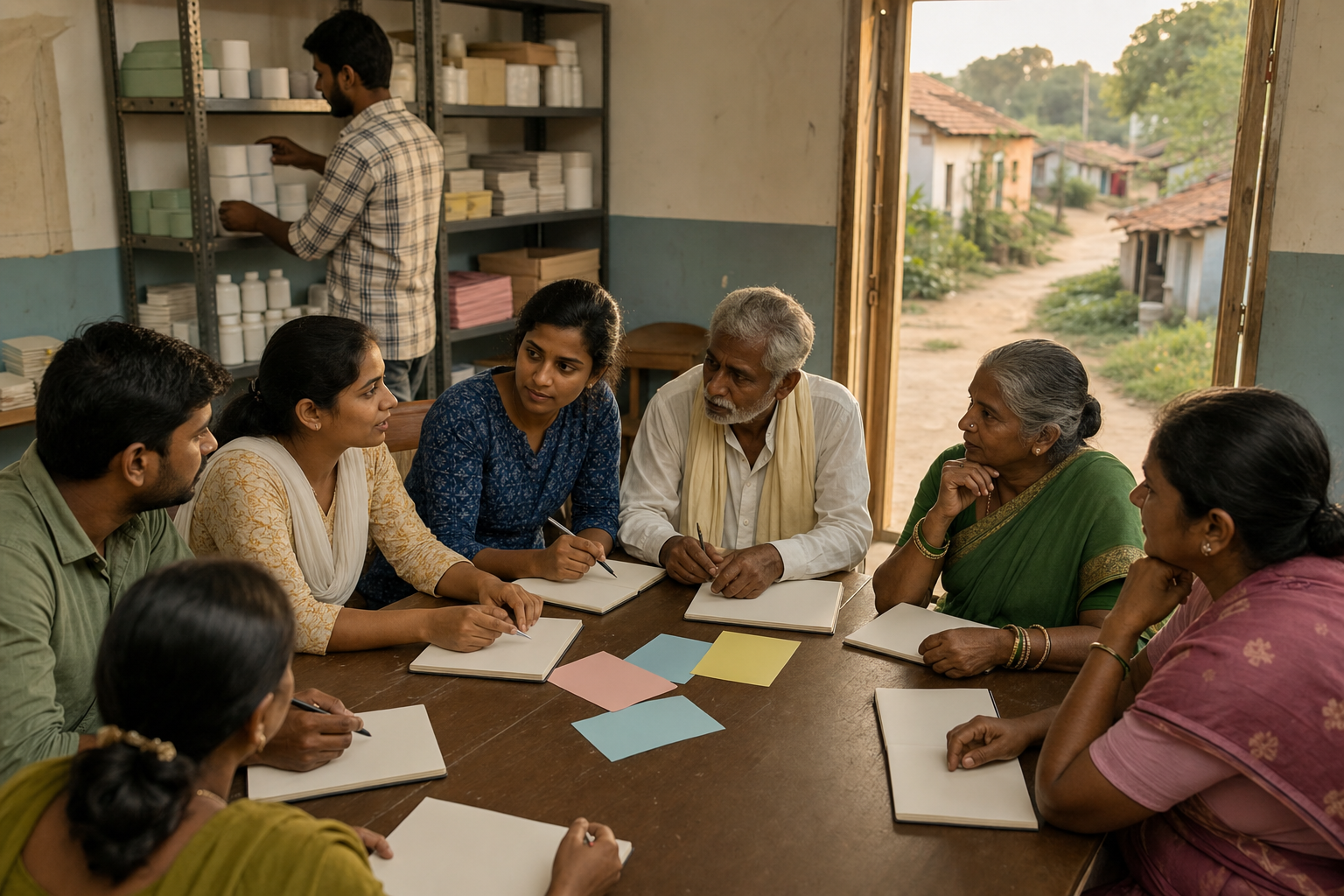
That distinction points toward a constructive agenda. Grassroots organisations can preserve their relational character while documenting whom they reach, whether participants remain engaged and how education or livelihood support affects later choices. Transparent evidence can help institutions learn, attract responsible partnerships and distinguish lasting change from activity alone. Evaluation should strengthen service rather than burden small organisations with reporting systems detached from local realities.
The future of seva-led welfare will depend on joining three qualities that Dr. Susheelamma’s reported journey brings into view: moral commitment, dependable local institutions and practical opportunities for agency. Sustaining that combination with thoughtful succession and credible evidence can help community service remain humane while becoming more resilient and effective.