
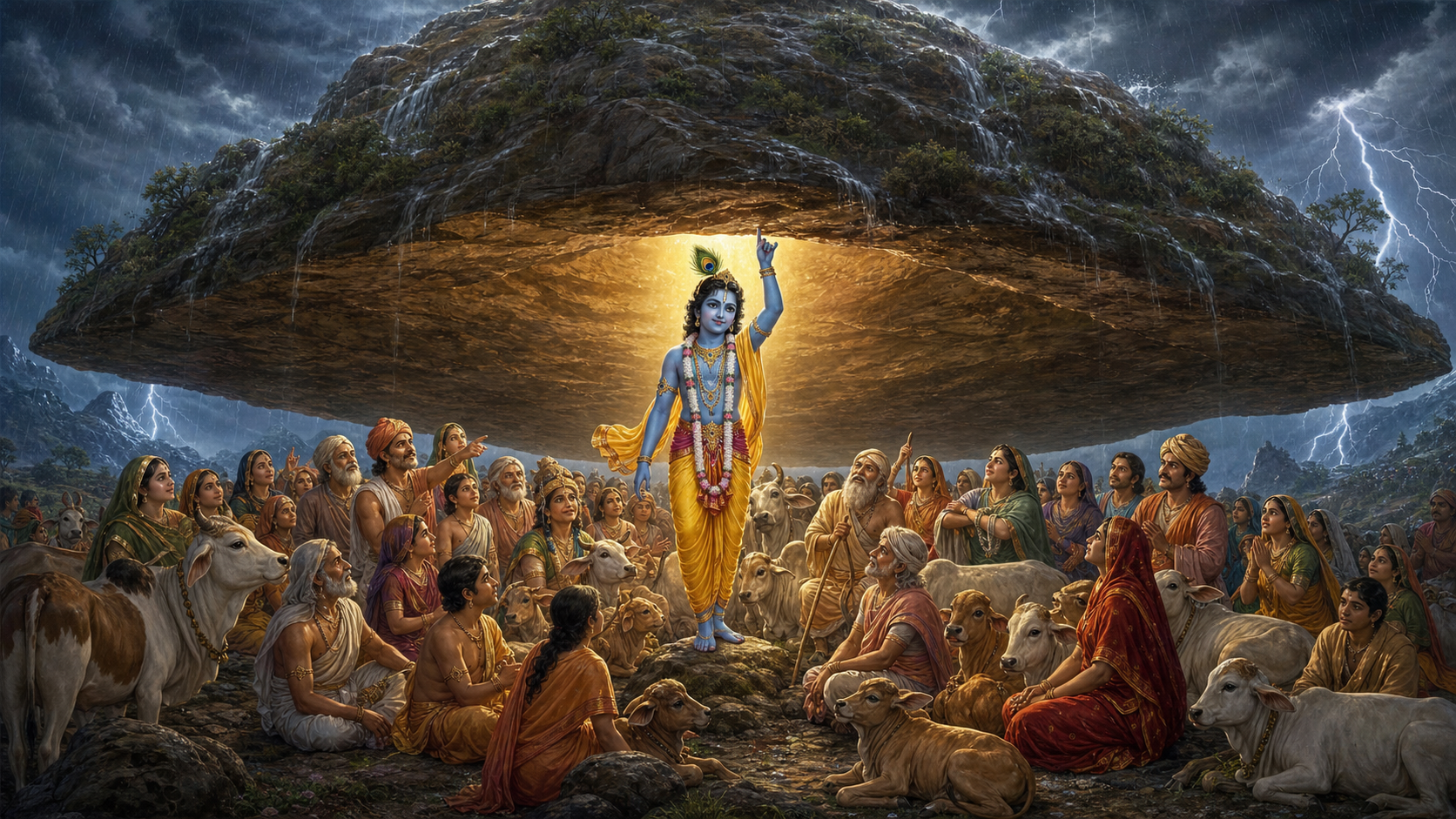
Bhagavad Gita 9.18 names Krishna as refuge; the Govardhan narrative gives that claim a visible form. One source approaches shelter through Krishna’s description of his relationship to all existence, while the other portrays an entire community protected beneath a sacred hill.
Read together, the two accounts show that refuge in Krishna is neither a momentary escape nor an isolated devotional feeling. It joins divine sovereignty with friendship, dependence with responsible action, and inward trust with the protection of a shared world.
The verse makes refuge part of a complete relationship
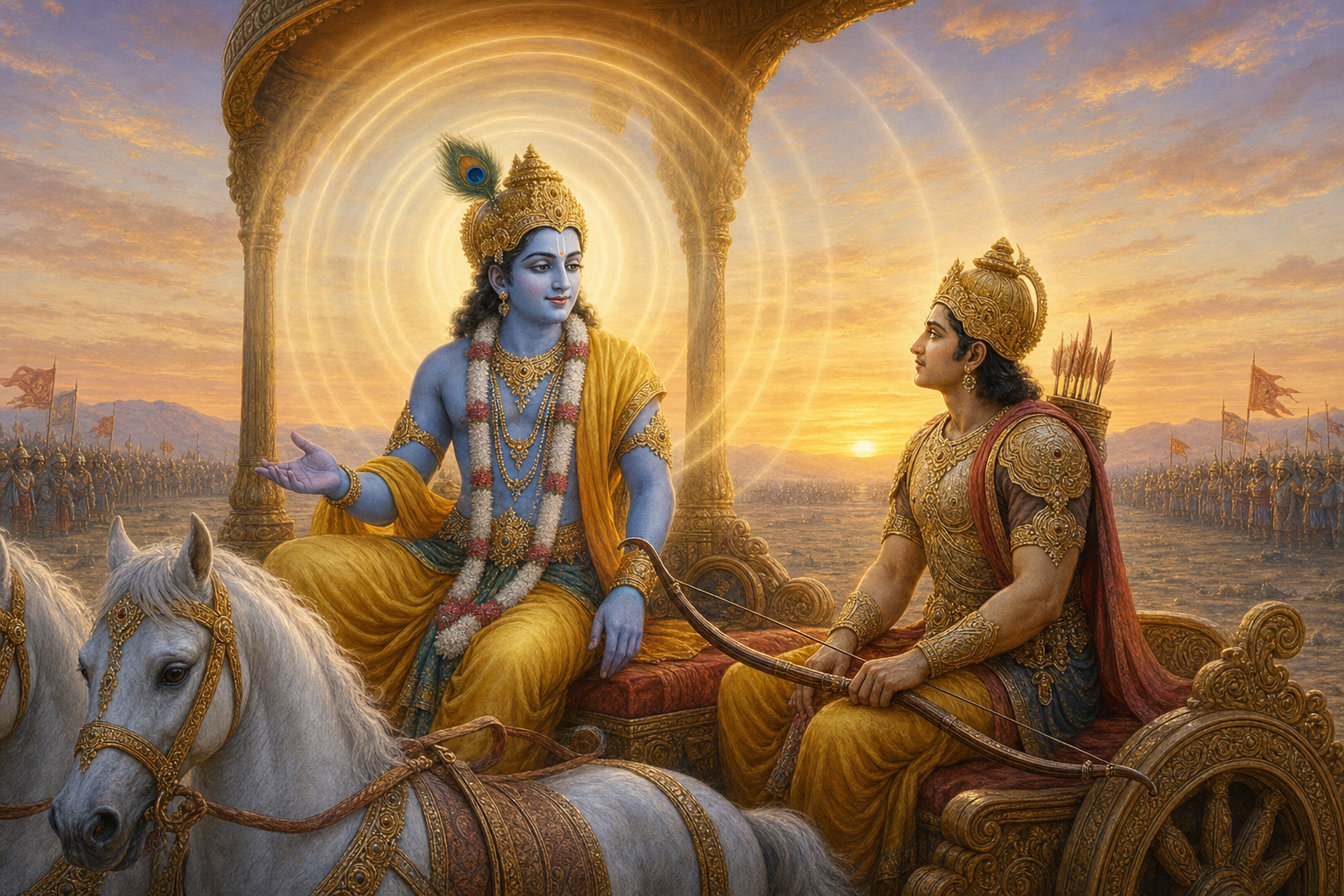
The article on Bhagavad Gita 9.18 reports a cumulative series of names: Krishna is the goal, sustainer, master, witness, abode, refuge, intimate friend, source, dissolution, foundation, resting place, and imperishable seed. Refuge, or śaraṇam, therefore does not stand alone. Its meaning is shaped by every identity surrounding it.
If Krishna were described only as master, surrender might appear to be submission to remote power. The verse also identifies him as suhṛt, the intimate well-wisher, and sākṣī, the witness who knows intention and struggle. Authority is thus joined to concern, while divine awareness makes spiritual life a matter of inward honesty rather than social performance.
The names bhartā, sustainer, and nivāsaḥ, abode, deepen the idea further. Shelter is not limited to rescue after danger has appeared. It includes the support by which life continues and the belonging in which consciousness can rest. The final terms of the verse widen that relationship to a cosmic scale: the same Krishna who offers personal refuge is described as the source, ground, resting place, and imperishable seed of changing existence.
This sequence answers several human needs at once. A person seeks direction, support, moral orientation, belonging, friendship, and security amid change. Bhagavad Gita 9.18 gathers those needs around one divine center rather than treating them as separate spiritual problems.
Govardhan turns an inward claim into public shelter
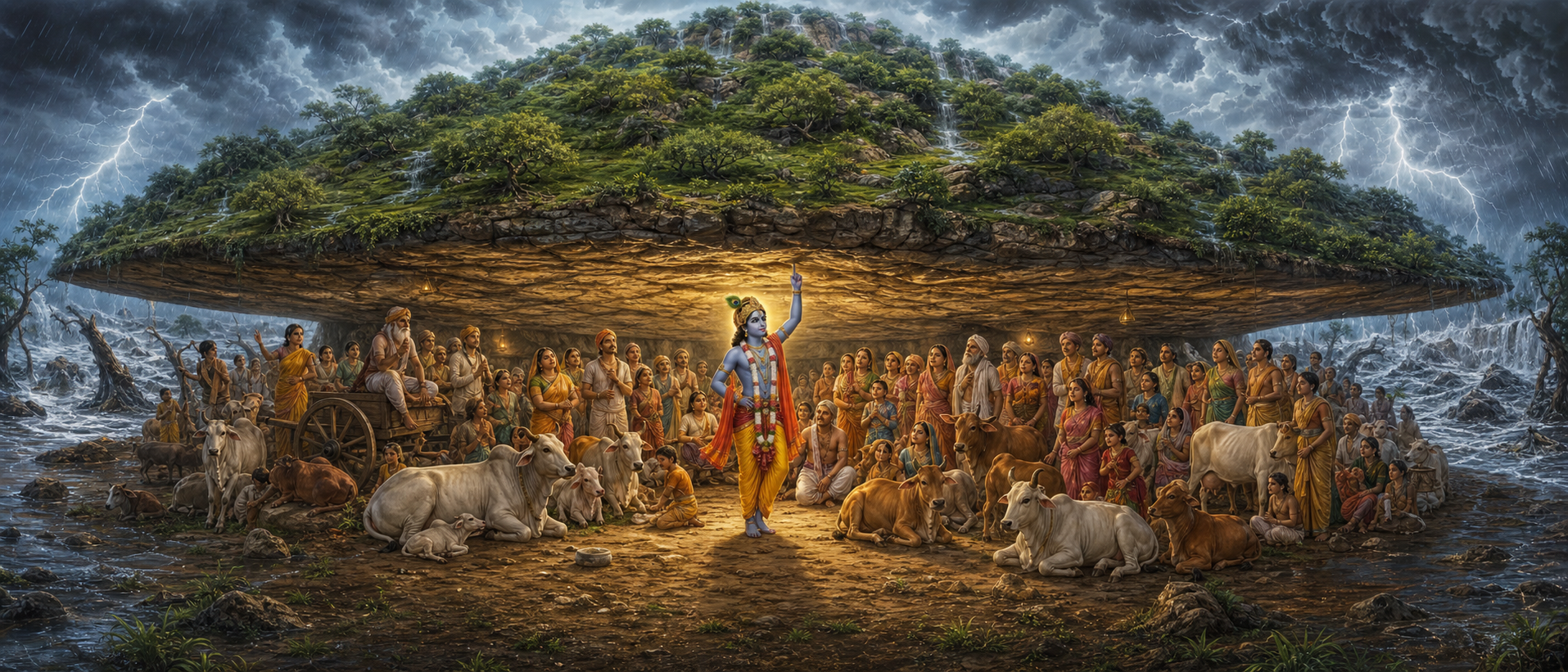
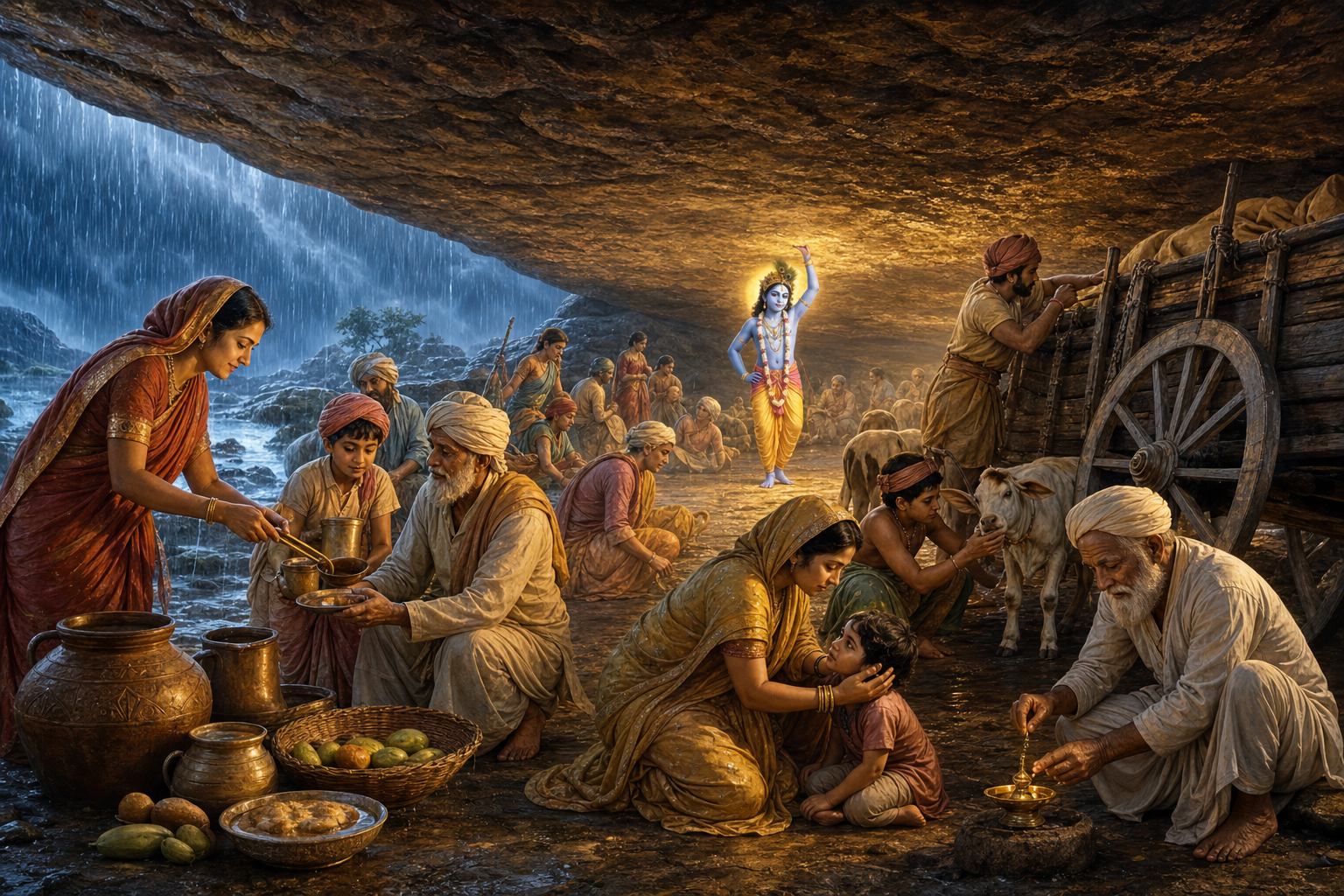
The Govardhan article presents the celebrated episode as a narrative enactment of refuge. It reports that Krishna redirects the people of Vraja from their planned worship of Indra toward Govardhan, the cows, the land, forests, and pastures sustaining their lives. When Indra responds with destructive rain, Krishna raises Govardhan on the little finger of his left hand and shelters the community beneath it for seven days.
The story translates the theological language of the Gita into relationships and space. Krishna as sustainer becomes the protector of people, animals, and the environment on which they depend. Krishna as abode is reflected in the protected space beneath the hill. Krishna as friend appears not as an abstract cosmic principle but as an intimately present figure standing among those who have taken shelter.
The scale of the protection is significant. The source describes cowherds, cows, elders, children, and families gathered under Govardhan. Refuge is consequently communal without becoming impersonal. Each life is protected within a shared shelter, suggesting that divine care does not require a choice between attention to the individual and concern for the whole community.
The episode also gives refuge an ethical setting. Indra’s anger is associated in the source with wounded pride, while Krishna redirects attention toward immediate sources of nourishment and support. The contrast is not simply between two objects of worship. It is between status-conscious power and grateful recognition of dependence.
The sacred hill connects protection with an unfinished promise
The Govardhan article adds a second narrative layer drawn from devotional tradition and oral memory associated with the Ramayana cycle. In that account, Govardhan is carried by a Vanara toward the construction of Rama Setu but must be set down after the bridge is completed. The hill’s desire to serve appears to have arrived too late.
According to the tradition as reported, Rama consoles Govardhan with a promise that the hill will receive intimate service and honor when he appears as Krishna in a later avatara. This account should be recognized as a devotional bridge between narrative cycles rather than treating every part of the tradition as though it came from a single textual setting. Its purpose is theological: it presents Rama and Krishna as continuous forms of divine fidelity while allowing each avatara a distinctive mood.
The later Govardhan episode then becomes more than deliverance from a storm. The hill that had hoped to support Rama’s passage is raised by Krishna and made the shelter of Vraja. Service is not merely postponed and reproduced in its original form; it is transformed. Govardhan’s unfulfilled readiness becomes the means through which an entire community experiences protection.
This layer adds time to the theology of refuge. Bhagavad Gita 9.18 describes Krishna as the witness who knows the heart, while the Govardhan tradition imagines divine remembrance extending across ages and avataras. Together they express the devotional conviction that sincere intention is seen even when its desired opportunity does not immediately materialize.
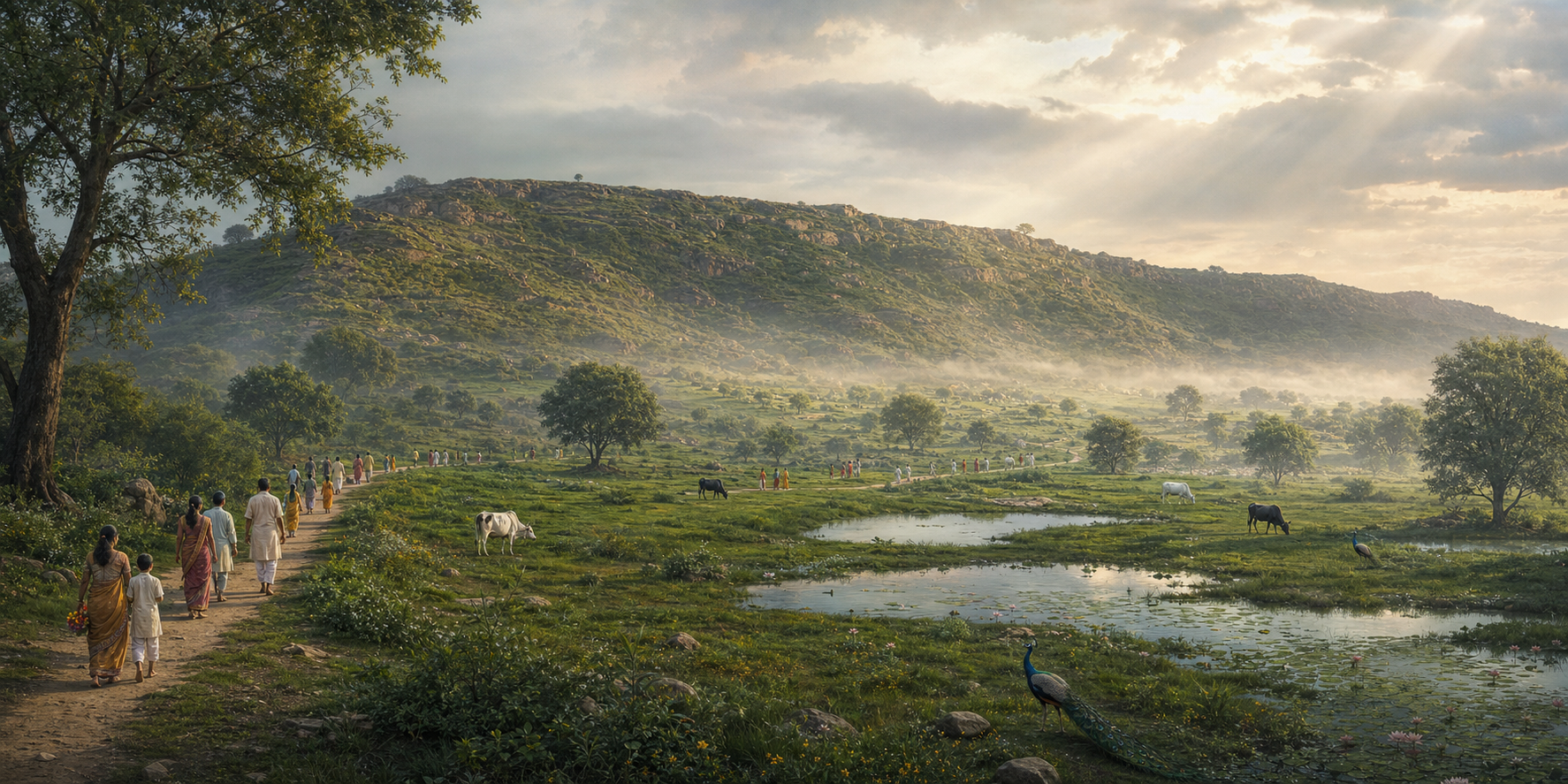
The same source connects this sacred personality of the hill with Govardhan Parikrama, Govardhan Puja, and Annakuta offerings. Walking around the hill and offering food make remembrance embodied. The protected landscape becomes a place of pilgrimage, while grain, milk, vegetables, sweets, and prepared dishes express gratitude for nourishment. Refuge is answered by reverence and reciprocity rather than consumption without acknowledgment.
Taking shelter restores agency rather than cancelling it
The Gita article explicitly distinguishes surrender from fatalistic passivity. Arjuna receives spiritual instruction in order to act with clearer understanding, not to avoid responsibility. Taking refuge means relinquishing the claim to absolute control while continuing to exercise judgment, courage, and duty.
Govardhan-lila makes the same principle concrete in a different register. The people of Vraja accept shelter, but the narrative does not celebrate helplessness as an ideal. It first reorients their gratitude toward the land, cows, and sustaining order around them. Divine protection and recognition of worldly dependence belong to one movement.
Three dimensions of refuge consequently converge across the sources. Metaphysically, Krishna is the ground and destination of existence. Relationally, he is witness and well-wisher rather than an inaccessible power. Ethically, trust in him supports action under pressure and a humbler understanding of human dependence.
This provides a useful test for interpretations of surrender. If an appeal to refuge encourages neglect of duty, indifference to others, or denial of material interdependence, it does not fit the pattern developed by these accounts. Krishna’s shelter gives the devotee a basis from which to act; it is not a theological permission to withdraw from every difficult obligation.
Key takeaways
- Bhagavad Gita 9.18 places refuge within a larger relationship in which Krishna is also goal, sustainer, witness, abode, friend, and cosmic ground.
- Govardhan-lila gives that theology a communal form: divine shelter embraces people, animals, livelihood, and landscape together.
- The Ramayana-linked devotional account interprets Krishna’s lifting of Govardhan as the transformed fulfillment of the hill’s earlier desire to serve Rama.
- Surrender is presented as freedom from the illusion of total control, not withdrawal from moral responsibility.
- Practices connected with Govardhan extend the narrative into embodied gratitude for nourishment, community, and the sustaining natural world.
Further reflection on Krishna as refuge can preserve the distinct settings of scripture, devotional retelling, pilgrimage, and ritual while allowing them to illuminate one another. That approach keeps textual differences visible and opens a more demanding question: not only where shelter is sought, but how receiving shelter changes the way duty, community, and the living world are regarded.
References
- DharmaRenaissance Blog — Govardhan’s Sacred Vow: The Powerful Link Between Rama, Krishna, and Dharma
- DharmaRenaissance Blog — Bhagavad Gita 9.18: A Powerful Guide to Shelter, Witness, and Divine Friendship