
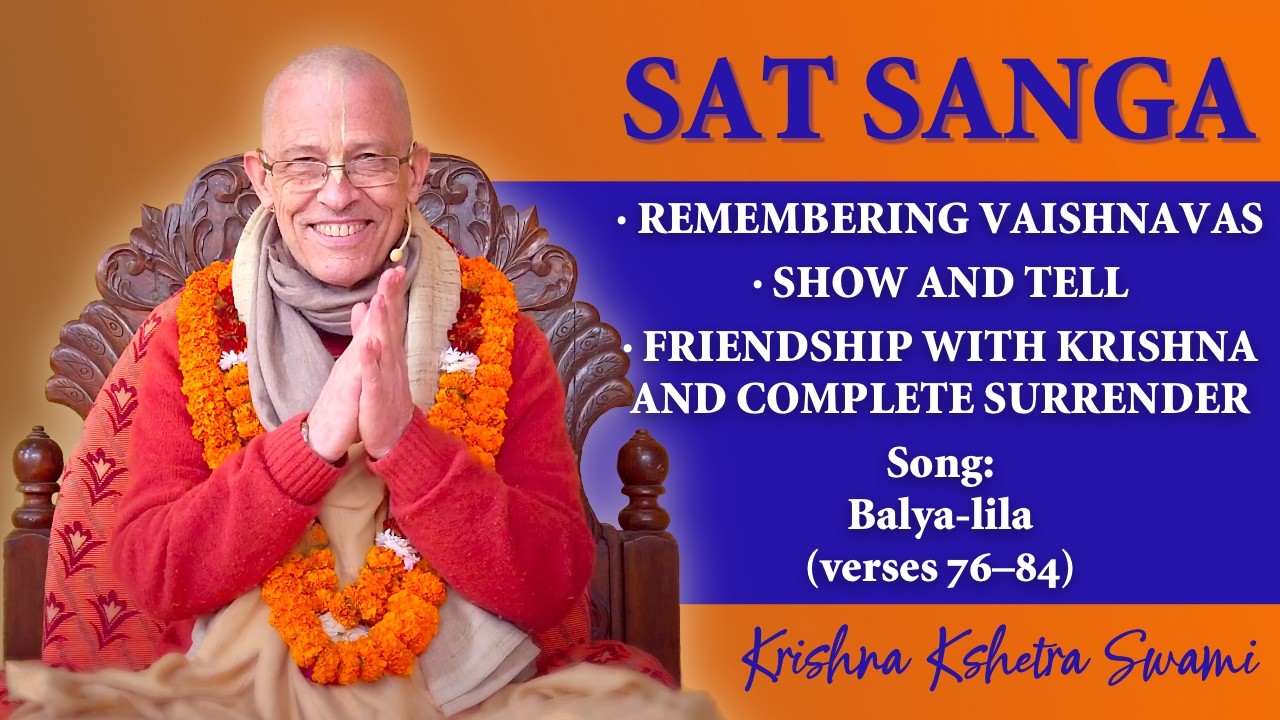
A devotional relationship can hold two movements at once: intimacy with Krishna and surrender to Krishna. A Sat Sanga listing from Dandavats brings these themes together in a video featuring HH Krishna Kshetra Swami.
Because the source provides a program outline rather than a transcript, this guide separates what the listing reports from broader reflections that can help viewers approach the discussion with attention and discernment.
What the Dandavats listing establishes
According to Dandavats, the Sat Sanga program covers remembering Vaishnavas, a show-and-tell segment, friendship with Krishna and complete surrender. The source identifies HH Krishna Kshetra Swami as the speaker and names his channel.
The listing also reports a song based on Balya-lila verses 76-84 from Srila Locana Dasa Thakura’s Sri Caitanya Mangala, a work centered on the loving pastimes of Sri Caitanya Mahaprabhu. It does not provide a transcript, explain the objects or stories in the show-and-tell portion, or summarize the speaker’s conclusions. Any detailed account of those elements would therefore go beyond the available source.
Why friendship and surrender can reinforce each other
Within Vaishnava bhakti, friendship with Krishna invites the devotee to approach the Divine personally, with trust, affection and attentiveness. Surrender adds direction to that intimacy. It asks whether affection is shaping conduct, loosening self-centeredness and deepening willingness to serve.
The two ideas need not be treated as opposites. Friendship without reverence can become casual projection, while surrender without relationship can be misunderstood as mere submission. Held together, they suggest a mature devotional posture: closeness without possession, confidence without entitlement and service without spiritual passivity. This is interpretive context for the announced theme, not a claim about the speaker’s exact formulation.
Remembrance turns spiritual company into a living inheritance
The announced remembrance of Vaishnavas places devotion within a community extending beyond the individual practitioner. Remembering teachers and devotees can preserve examples of discipline, compassion and service. Its healthiest purpose is not personality worship, but gratitude joined to learning: which qualities deserve imitation, and how can those qualities be carried into present responsibilities?
Satsanga, in its broad sense, is company oriented toward truth and spiritual growth. Parallel values appear across the dharmic family: Hindu sampradayas cultivate satsanga and guru-shishya learning; Buddhist communities emphasize sangha and spiritual friendship; Jain traditions honor teachers, disciplined fellowship and ethical self-restraint; Sikh tradition gives a central place to sangat and shared remembrance of the Divine. These parallels do not erase doctrinal distinctions. They reveal a common civilizational confidence that character is refined through worthy company, disciplined memory and service.
Sacred song joins teaching to memory
By naming a song from Sri Caitanya Mangala, the listing signals that the gathering includes more than abstract discussion. Sacred narrative carried through melody can unite study, emotion and communal participation. The source does not supply the lyrics or an explanation of the cited verses, so their specific meaning should be learned from the recording or an authoritative edition rather than guessed from the title alone.
Chanting, recitation and congregational song take different forms across Hindu, Buddhist, Jain and Sikh traditions. Their shared function is significant: dharmic knowledge is sustained not only through argument, but also through embodied practices that communities can remember together.
Key takeaways
- Dandavats presents friendship with Krishna and complete surrender as connected themes in HH Krishna Kshetra Swami’s Sat Sanga program.
- The program outline also includes remembrance of Vaishnavas, show and tell, and a song drawn from Sri Caitanya Mangala.
- The source is a brief listing, so it does not support detailed claims about the talk’s arguments or examples.
- The wider dharmic lesson is that spiritual companionship, remembrance and disciplined practice can strengthen distinct traditions while building civilizational unity.
From attentive listening to lived practice
A useful way to approach the recording is to listen for the practical relationship among memory, friendship and surrender. The enduring test comes afterward: whether satsanga produces greater humility, steadier service and deeper respect for the many authentic paths within the dharmic civilization. Such practice can reinforce unity without asking any sampradaya to abandon its distinctive teachings.
Inspired by this post on Dandavats.
