
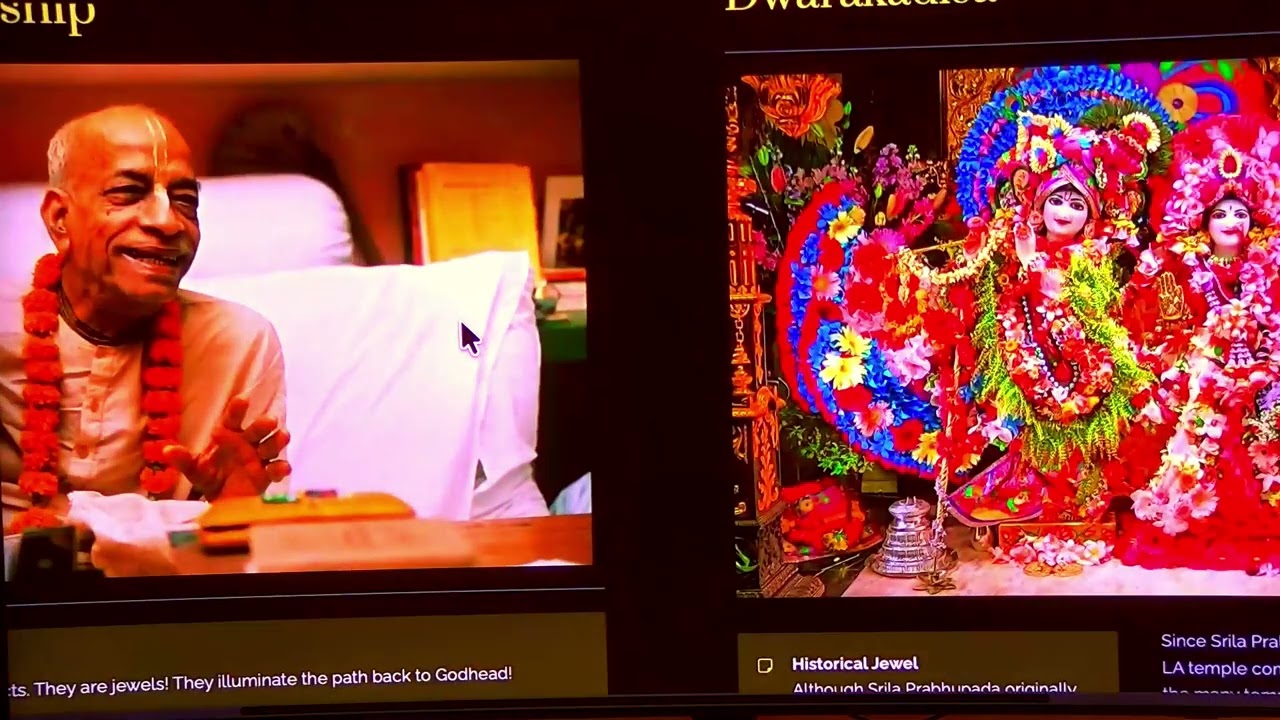
Dandavats presents a video naming Karuna-dharini Mataji and New Dwaraka deity worship as its subject. The listing identifies ISKCON Los Angeles as the channel and carries the date marker 7-16-26.
The source provides no transcript or written synopsis, so this article separates the few reported details from general context about deity worship, devotional service, and the wider Dharmic ethic they illuminate.
Key takeaways from the available listing
- Karuna-dharini Mataji is the person named in the video’s title.
- New Dwaraka deity worship is the stated subject.
- Dandavats identifies ISKCON Los Angeles as the channel.
- The supplied item is a video listing rather than a written teaching or transcript.
Deity worship as disciplined seva
In Vaishnava traditions, deity worship is commonly understood as seva, or reverential service, offered to a sacred form according to the theology and discipline of a particular sampradaya. It is not merely decorative activity. Attention, cleanliness, consistency, suitable offerings, mantra, and a service-minded disposition can all be important, although precise procedures vary by lineage and temple.
This framework helps explain why instruction about temple worship can matter beyond the performance of ritual. Repeated service trains steadiness, humility, responsibility, and awareness that sacred duties should not be governed solely by convenience. These are general features of devotional practice, not claims about the specific contents of Karuna-dharini Mataji’s video.
What the source does not establish
The Dandavats page does not supply an outline, quotations, biographical information, or a description of the practices discussed. It also does not explain whether 7-16-26 denotes the recording date, an event date, or another form of labeling. Any detailed summary of the speaker’s arguments or instructions would therefore be speculative.
Readers seeking practical guidance should treat the video itself as the primary material and distinguish its actual statements from broader assumptions about ISKCON worship. Temple-specific service should ordinarily be learned through the authorized standards and teachers of the relevant community.
A shared Dharmic ethic of reverent action
Gaudiya Vaishnava deity worship has its own theology and should not be flattened into a generic ritual category. Yet its emphasis on disciplined service reveals a wider Dharmic thread. Hindu sampradayas express sacred presence in varied ways, while Buddhist shrine care, Jain puja, and Sikh seva follow distinct teachings and are not equivalents of Vaishnava arcana. Across these differences, however, reverence is repeatedly joined to careful action, self-restraint, and responsibility toward a spiritual community.
This unity does not require uniformity. A strong Dharmic culture can honor the integrity of each path while recognizing their shared insistence that spiritual commitment must shape conduct. Temple service is one vivid Hindu expression of that civilizational principle.
Listening with attention and discernment
The most responsible way to approach this presentation is to listen for the speaker’s own distinctions: what is theological principle, what is temple procedure, and what is personal devotional counsel. That attentive approach preserves the integrity of the teaching and allows its emphasis on seva to strengthen a living culture of disciplined, confident, and mutually respectful Dharma.
Inspired by this post on Dandavats.
