

The Song of Grace is currently legible, on the available reporting, less as a documented narrative than as a cultural proposition. Its title, official-trailer format and announced UK premiere at Riverside Studios place devotion, artistic expression and collective viewing within the same frame.
The useful question is therefore not what the film supposedly contains, since the supplied material does not establish its plot, but what standards should guide an encounter with spiritual cinema. Reading the evidence carefully reveals both the promise of this form and the importance of distinguishing interpretation from confirmed detail.
What the available evidence actually supports

The available DharmaRenaissance report identifies an official trailer and connects the film with a UK premiere at Riverside Studios in Hammersmith, London. It offers no firm account of the story, characters, running time or critical reception. Any discussion of the work must consequently begin with restraint: the title and presentation can be interpreted, but they cannot substitute for knowledge of the completed film.
That limitation is not an obstacle to serious analysis. A trailer is a form of cinematic framing: an edited invitation assembled from image, music, dialogue, typography, rhythm and omission. It tells an audience what kind of attention a film seeks, even when it withholds the narrative context needed to judge the whole work. In the case of spiritual cinema, this distinction is especially important because atmosphere can suggest profundity without demonstrating that a film has explored its subject with depth.
A responsible first reading of The Song of Grace should therefore remain provisional. The language surrounding the film indicates a contemplative and devotional horizon; it does not yet prove how successfully the production embodies that horizon. This evidentiary boundary protects both the audience and the work from premature conclusions.
Grace across distinct Dharmic paths

The title brings together two unusually rich ideas. A song is voiced, repeated, heard and remembered through the body. Grace names a transformation that cannot be reduced to transaction or personal control. Joined together, the words suggest that inward change may arrive through receptivity as well as effort, and through sound as well as argument.
Within Hindu traditions, the source relates grace to such concepts as kripa, anugraha and prasada. It also places grace alongside sadhana, chanting, study, service and ethical cultivation rather than treating divine compassion as a replacement for discipline. This relationship is central to the title’s bhakti resonance: human practice prepares the heart, while transformation cannot simply be commanded by the practitioner.
Buddhist, Jain and Sikh perspectives widen the interpretive field without becoming interchangeable versions of the same theology. The source connects a Buddhist reading with compassion, mindfulness, interdependence and the conversion of suffering into wisdom. Its Jain frame emphasizes ahimsa, restraint, non-possessiveness and the reduction of the attachments and harmful habits that obscure clarity. Its Sikh discussion brings forward nadar, hukam, seva, remembrance of the Divine Name and the sung discipline of kirtan.
The soundest synthesis is analogical rather than doctrinal. These traditions do not define liberation, divine agency or the self in identical ways. What they can contribute to a shared reading is a set of related questions: How does pride loosen? What makes compassion durable? How do disciplined action and receptivity meet? When does music become practice rather than ornament? The title is culturally productive precisely because it can hold those questions without requiring their answers to be uniform.
The cinematic grammar of inward change

Spiritual cinema faces a formal challenge: its central movement is often interior, while cinema works through visible action and audible form. Explanatory dialogue can name repentance, surrender or awakening, but naming an experience is not the same as making it perceptible. The craft lies in giving inner change a cinematic shape without turning it into a slogan.
Pacing, silence and sound can do much of that work. A pause may reveal hesitation that dialogue would conceal. Repetition can suggest discipline or entrapment, depending on its context. Natural sound can return attention to immediate experience, while music can create a space for longing, memory or devotion. Because this film’s title foregrounds a song, its eventual use of sound deserves particular scrutiny: music should carry meaning within the work, not merely instruct viewers to feel reverent.
Visual motifs can perform a similar function. Roads, rivers, lamps, windows, stages and doorways commonly make transition visible; changes in distance, light or composition can register a character’s altered relationship to the world. These are possibilities for interpreting spiritual cinema generally, not claims about images confirmed in The Song of Grace. The distinction matters. A future assessment should ask what the film’s images and sounds actually accomplish in context rather than projecting a ready-made symbolic system onto them.
Restraint is the decisive standard. Mystery is not vagueness, and contemplative slowness is not automatically depth. Effective spiritual cinema gives silence dramatic and ethical purpose. It allows viewers to attend closely while still providing enough human consequence to make transformation intelligible.
A premiere as a shared cultural encounter
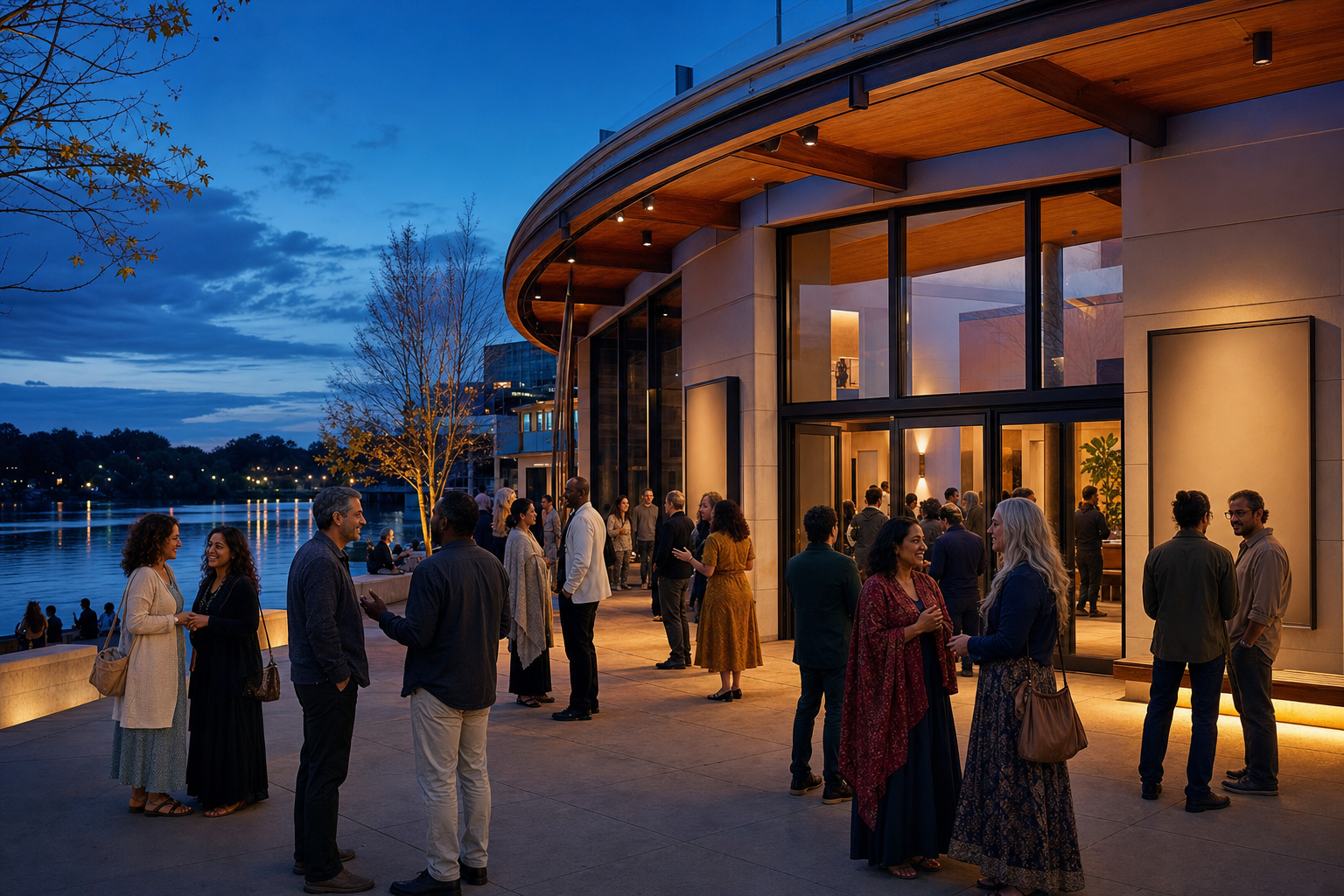
The reported premiere setting adds a public dimension to these artistic questions. According to the DharmaRenaissance article, Riverside Studios developed from a site associated with a Victorian ironworks into a film studio in 1933, later passed through a significant BBC period and became a multi-arts venue. That history gives the announced screening a cross-disciplinary cultural setting, although the venue’s prestige cannot by itself establish the film’s quality or reception.
A communal screening nevertheless changes the conditions in which spiritual art is encountered. Private viewing permits solitary reflection; a premiere places contemplation alongside conversation, ceremony and the awareness of other viewers. In a city where diaspora communities negotiate inheritance, identity and generational change, such an event can allow devotion, cinema and cultural memory to meet without assuming that every attendee approaches them in the same way.
Different audiences may bring different forms of attention. Some may recognize devotional vocabulary immediately, while others may enter through performance, music or curiosity about the interior life. The film’s cultural reach will depend on whether it can welcome these distinct starting points while preserving the specificity of the traditions it evokes. Accessibility is most valuable when it opens a door to difference rather than smoothing every tradition into a generic spirituality.
Key takeaways
- The confirmed frame is limited to an official trailer and a reported UK premiere at Riverside Studios; plot and reception claims would be premature.
- The title supports a cross-Dharmic inquiry into discipline, compassion, ethical purification, devotion and sacred sound, but not the claim that all traditions understand grace identically.
- Spiritual cinema succeeds through the purposeful use of image, music, pacing and silence, not through spiritual vocabulary alone.
- A public premiere can turn a film into an intergenerational cultural conversation, although the venue cannot guarantee the substance of the work.
As fuller material and audience responses become available, the most useful criticism will test the film against the questions its title raises: whether grace becomes dramatic experience rather than decoration, whether music carries spiritual meaning, and whether cultural openness is achieved without erasing doctrinal difference. That patient standard offers spiritual cinema room to disclose what promotion alone cannot.