
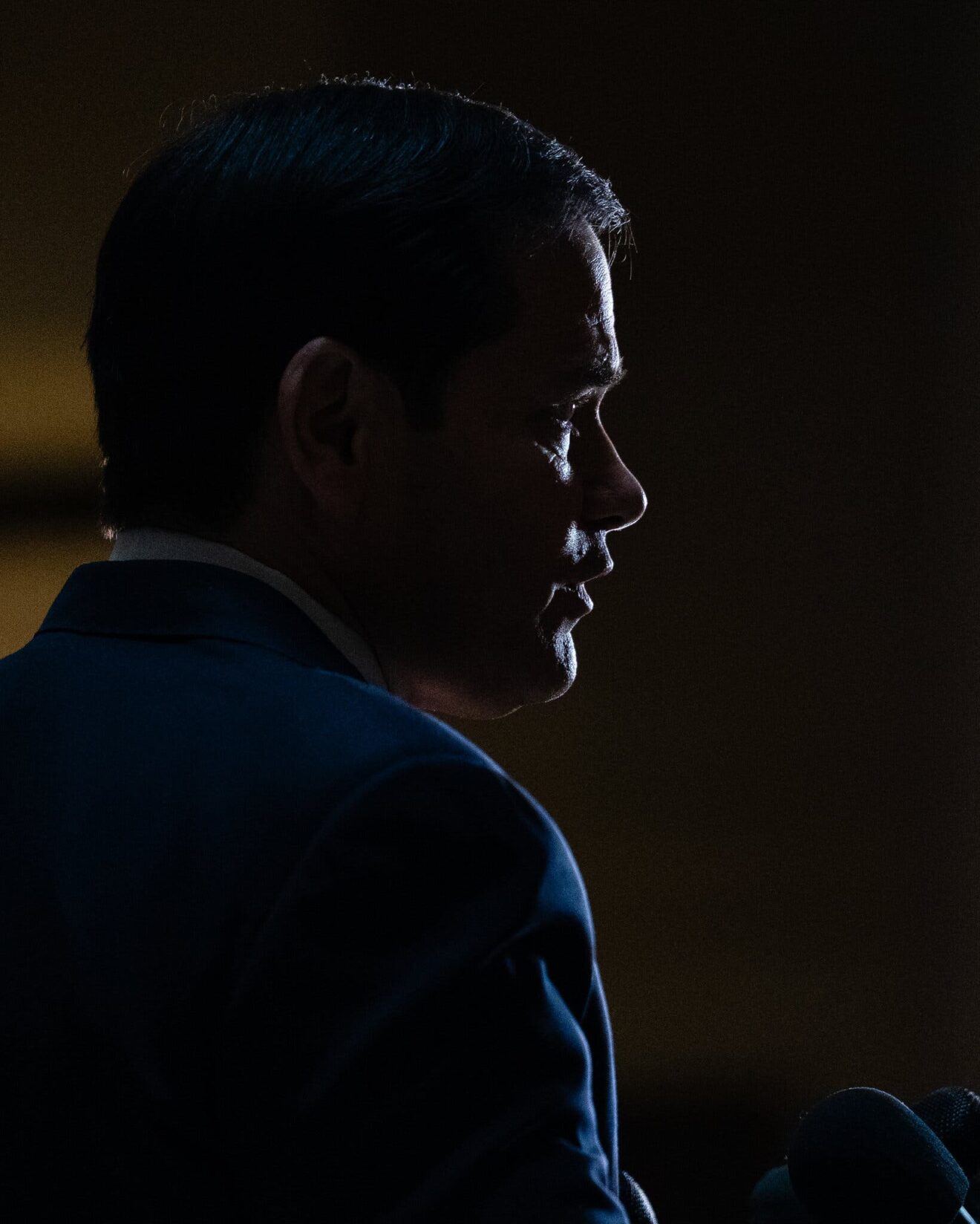
A brief Hindu Post item points to a striking account of American power in Venezuela: Secretary of State Marco Rubio is portrayed as exercising influence from Washington after a reported U.S. operation against Venezuelan President Nicolás Maduro. The available excerpt, however, provides only a narrow window into that claim.
A careful reading therefore requires two things at once: taking the reported episode seriously and refusing to treat a dramatic headline as proof of how Venezuela is actually being governed.
What the limited source material reports
Hindu Post reproduces part of a New York Times article dated July 11, 2026. In that quoted account, President Donald Trump was meeting Rubio in the Oval Office when he suggested sending the secretary of state permanently to Caracas and making him Venezuela’s next leader.
The passage says presidential aides characterized the suggestion as a joke. It also describes U.S. commandos as having captured Maduro and advances the broader idea that Rubio can direct affairs without relocating to Venezuela. These are reported claims from the excerpt, not independently established findings in the Hindu Post item.
Why the neo-colony label needs careful handling
Hindu Post’s headline calls Venezuela America’s latest “neo-colony.” That is an interpretive judgment rather than a condition demonstrated by the short excerpt. In general, neo-colonialism describes substantial external control over another country’s political or economic choices even when formal sovereignty remains intact.
If officials in one country were effectively selecting leaders or directing policy in another, the description would raise serious questions about consent, legitimacy and national self-rule. Yet answering whether that threshold has been crossed would require evidence about institutions, decision-making authority and Venezuelan participation that the supplied material does not contain.
Key takeaways
- Hindu Post is relaying a New York Times account, not presenting its own detailed investigation.
- The excerpt reports that Trump floated a Venezuelan leadership role for Rubio, while aides described the remark as joking.
- The passage also reports the capture of Maduro by U.S. commandos.
- The claim of remote American rule remains an interpretation that the excerpt alone cannot verify.
Sovereignty through a dharmic ethical lens
For readers shaped by Hindu, Buddhist, Jain and Sikh traditions, a shared dharmic concern is the ethical use of power. These traditions express political and moral duties differently, but each offers a vocabulary of restraint, responsibility, human dignity and accountability. Applied here, that lens asks whether power serves people or merely places them under a new center of command.
Such a perspective also guards against two errors: excusing intervention because it is presented as strategically useful, and declaring colonial control without sufficient evidence. Respect for truth and respect for self-determination should reinforce each other. A society’s political future should not be reduced to the ambitions or jokes of distant officials.
What responsible scrutiny should seek next
The decisive questions remain unanswered by the available text: who is exercising formal authority inside Venezuela, what role Venezuelan institutions and citizens have, what legal basis is claimed for U.S. actions, and which decisions Rubio is alleged to control. Evidence on those points would allow readers to distinguish diplomatic influence from direct administration.
Until such evidence is available, the episode is best treated as a consequential but thinly supported report. The enduring issue is whether Venezuelans retain meaningful agency over their state, a standard that should guide scrutiny of every powerful country and every claimed sphere of influence.
Inspired by this post on Hindu Post.
