

Religious freedom and public order are often presented as competing claims, but the harder civic task is to determine how they can operate together. Sacred observance may justify carefully defined accommodations, while allegations of religious misconduct require evidence and lawful investigation rather than collective retaliation.
Reports concerning the Ashadhi Yatra in Pandharpur and church-related tensions in West Bengal illuminate opposite sides of this challenge. One concerns a request for temporary restrictions intended to protect a pilgrimage environment; the other concerns alleged vandalism and intimidation amid suspicions about conversion. Read together, they offer a practical test for governance: protect conscience, regulate conduct proportionately, and prevent citizens from becoming judges and enforcers in their own cause.
Sacred accommodation and coercive conflict are not equivalent

The Pandharpur source reports that the Maharashtra Mandir Mahasangh asked the administration to prohibit meat and liquor sales from 22 to 29 July during the Ashadhi Yatra. It presents the proposal as a time-bound measure for a town transformed by the arrival of large numbers of Varkari devotees, whose pilgrimage involves walking, devotional singing, fasting, service, and personal restraint.
This is a request for prospective administrative action. It asks public authorities to decide whether commercial activity should be temporarily adjusted to the character and operational demands of a major pilgrimage. Adoption would still require a clear legal order, defined boundaries, advance notice, consistent enforcement, and consideration of residents and traders.
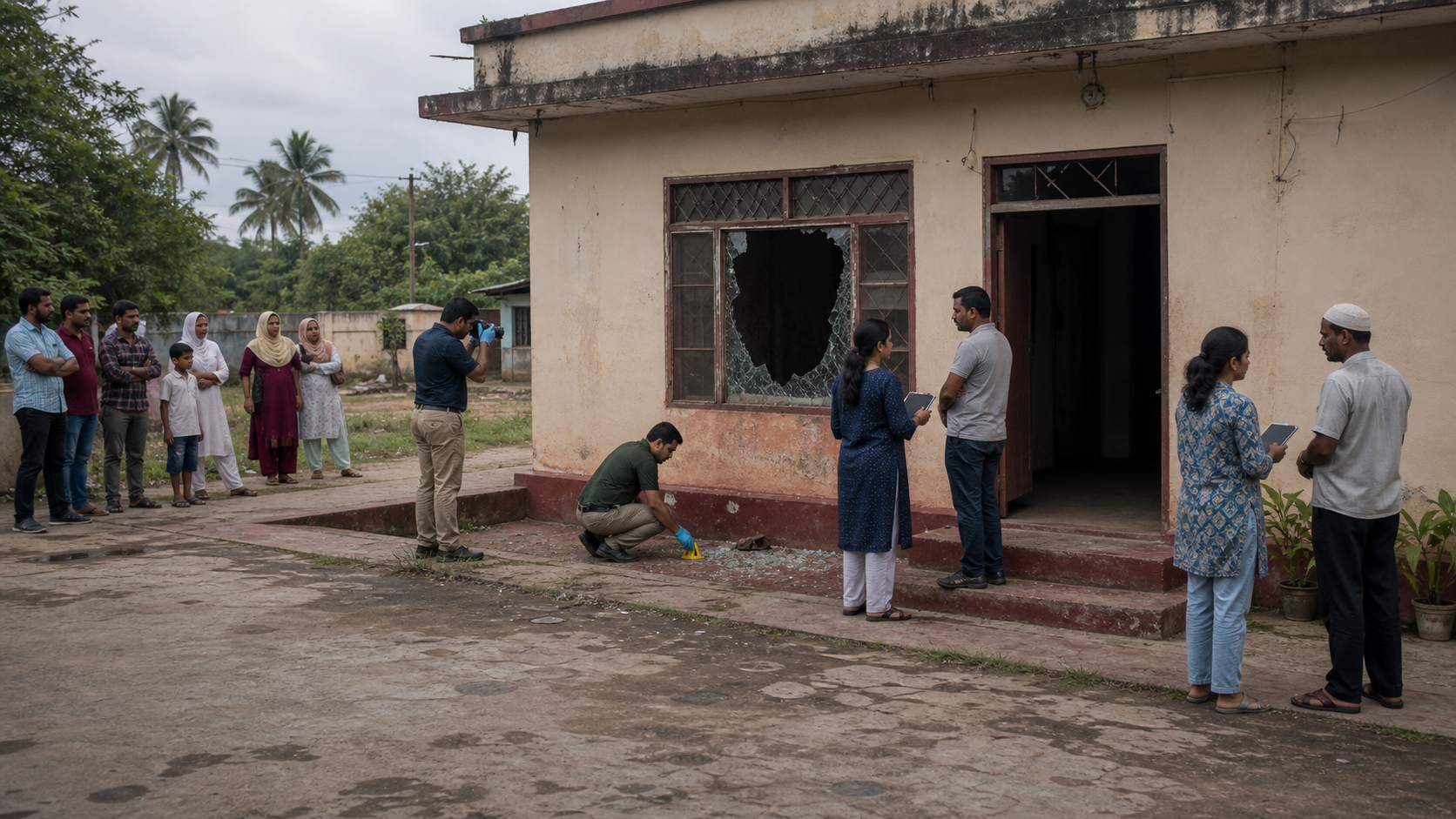
The West Bengal source describes a substantially different situation. Its July 9, 2026 account reports alleged damage at an under-construction church in Subhashgram, alleged pressure on a Christian widow in Murshidabad to renounce her faith and surrender property, and an alleged attack during worship at Grace Church in Purba Bardhaman. The article also records local suspicions that some church outreach may involve inducement, exploitative assistance, or faith-healing claims. Those accusations and the reported attacks remain source-reported allegations rather than independently established findings.
The distinction matters. A petition to the state for a temporary regulation can be examined, accepted, narrowed, or rejected through administrative procedure. Vandalism, forced renunciation, intimidation, and damage to a place of worship bypass that procedure entirely. Even a sincere belief that unlawful conversion is occurring does not give a crowd authority to determine guilt or impose punishment.
The legal boundary should follow conduct, not identity
As the West Bengal article notes, Article 25 of the Indian Constitution protects freedom of conscience and the right to profess, practise, and propagate religion, subject to public order, morality, and health. It also invokes Article 26, under which religious denominations may manage religious affairs and maintain institutions and property in accordance with law. These protections apply through a common civic order rather than through separate standards for majority and minority communities.
Several activities that are easily conflated must therefore remain distinct. Worship, voluntary teaching, and freely chosen religious association belong within protected religious life. Charitable work is not inherently coercive merely because it is motivated by faith. Conversely, fraud, threats, exploitation of vulnerability, or deceptive medical claims do not acquire immunity because they are presented in religious language. Nor can suspicion of such misconduct excuse assault, property damage, or interference with another person’s conscience.
The same conduct-based reasoning applies to festival regulation. The sacred importance of an occasion does not automatically validate every proposed restriction. Authorities must identify the lawful purpose of an order, the conduct it addresses, the people and area affected, and why a narrower measure would or would not be sufficient. Devotional sentiment deserves serious consideration, but administrative legitimacy depends on translating that sentiment into precise and reviewable rules.
Key takeaways
- Religious accommodation is most defensible when its duration, geographic reach, purpose, and enforcement method are clearly defined.
- Freedom to profess and propagate a faith does not protect coercion or fraud, while allegations of coercion or fraud do not authorize vigilantism.
- Restrictions on liquor and restrictions on meat may be requested together, but their stated civic rationales are different and should be assessed separately.
- Complaints about conversion, healing claims, property, or intimidation require documented evidence and impartial investigation.
- Equal protection of worshippers, residents, traders, and property is a practical foundation for public peace, not an obstacle to religious continuity.
A proportionate process for authorities and communities
Define the public purpose. In Pandharpur, the source connects a possible liquor restriction with disorder prevention and policing burdens, while presenting a meat-sale restriction primarily as protection of the pilgrimage’s sattvic atmosphere. These are different justifications. An administrative order should state which concern supports each provision instead of treating every requested restriction as interchangeable.
Match the measure to the evidence. A predictable surge of pilgrims can support advance planning for sanitation, traffic, crowd movement, food supply, and public behavior. A conversion complaint, by contrast, requires particular facts: what was allegedly offered or threatened, who was involved, whether consent was compromised, and what witnesses or records exist. General anxiety about demographic or cultural change cannot substitute for evidence of individual misconduct.
Use the narrowest workable scope. If the Pandharpur request were accepted, the source itself emphasizes the need to specify dates, area, affected goods, enforcement, and any exemptions. A temporary festival rule should not drift into an indefinite prohibition. Similarly, investigation of alleged wrongdoing by particular religious workers should not become suspicion of an entire congregation or collective interference with worship.
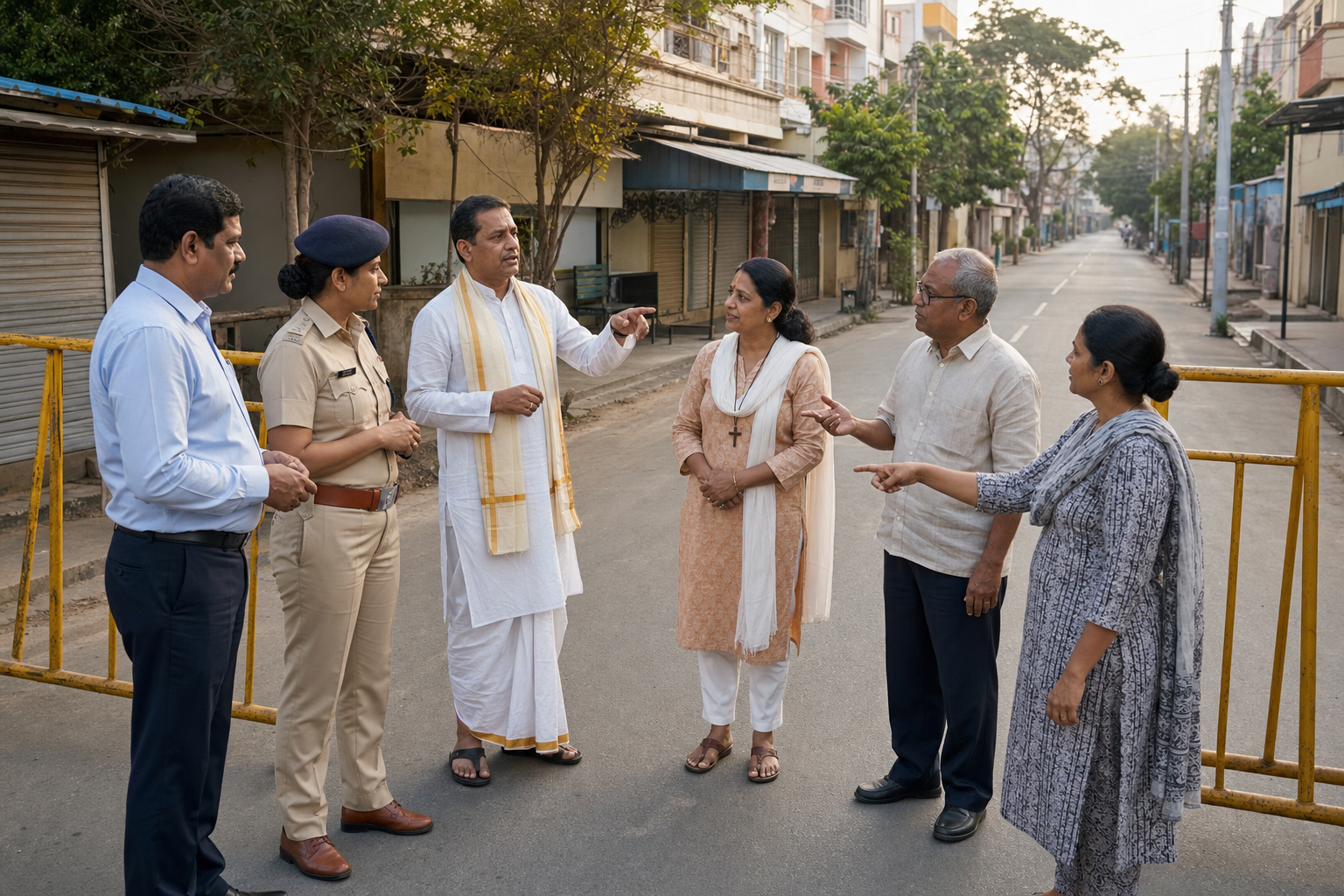
Separate protection from investigation. Police can protect a religious gathering while examining a credible complaint concerning activities associated with it. The West Bengal account reports that police were informed and that a pastor and congregation members were escorted to safety in the Purba Bardhaman incident. Protection does not prejudge allegations about outreach, just as investigating those allegations does not imply that worshippers have forfeited their rights.
Communicate before enforcement. Festival restrictions affect shopkeepers, vendors, hotels, residents, visitors, and pilgrims. Conversion-related inquiries can affect congregants, charitable recipients, neighborhood groups, and religious workers. Written rules, accessible complaint channels, timely police communication, and reasons for official decisions reduce the space in which rumor and selective enforcement flourish.
Reciprocal duties can build trust without false equivalence
Responsibility is shared, but it is not identical. Religious organizations conducting charitable or spiritual outreach can make consent, funding, eligibility, and service conditions transparent, especially where illness, poverty, grief, or isolation may create vulnerability. Such transparency does not presume wrongdoing; it makes ethical practice visible and enables specific complaints to be tested.
Community organizations seeking to defend inherited traditions can document concerns, support cultural education and service, assist complainants, and pursue administrative or judicial remedies. Their legitimacy weakens when evidence gives way to rumor or when protest becomes coercion. Protection of Hindu continuity and protection of a Christian worshipper from violence are not mutually exclusive obligations under a common law.
Authorities bear the decisive institutional duty. They must protect places of worship, investigate alleged offences without favoritism, apply valid festival rules consistently, and provide peaceful channels through which residents can challenge either religious misconduct or administrative overreach. Consultation is valuable, but it cannot replace enforcement where violence, threats, fraud, or property damage are credibly alleged.
A dharmic emphasis on self-restraint, truthfulness, ahimsa, and service adds an ethical dimension to this civic framework. Restraint does not require silence about coercion, nor does confidence in tradition require hostility toward another community. Future disputes will be less combustible when institutions act early, distinguish belief from conduct, and ensure that every claim passes through evidence and law before it becomes a public verdict.
References
- Hindu Janajagruti Samiti — Pandharpur Ashadhi Yatra: Powerful Call for Meat and Liquor Ban to Protect Sanctity
- Hindu Existence — West Bengal Church Tensions: Crucial Lessons for Faith, Law, and Civic Peace