
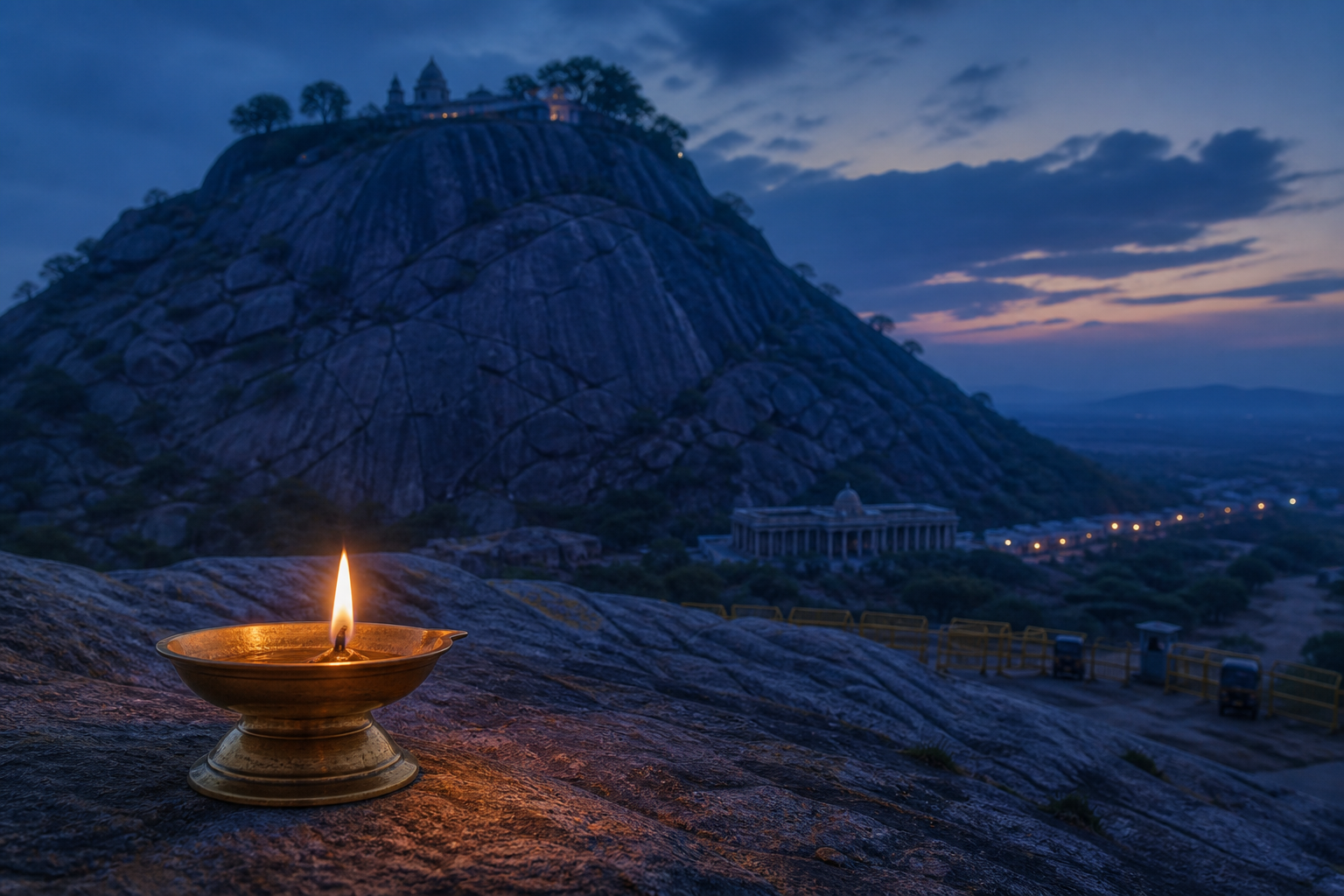
The Thirupparankundram controversy is often presented as a yes-or-no contest over whether a ceremonial lamp may be lit on the Madurai hill. The available account describes a narrower and more complicated dispute: a court-directed ritual with administrative safeguards has become entangled with an appeal, ideological criticism and allegations of communal provocation.
Understanding the dispute requires separating four questions: what the Madras High Court reportedly ordered, who was authorised to implement it, what the writers’ association actually said, and whether criticism of a judgment crossed into unlawful obstruction. The supplied reporting answers the first two more clearly than the last two.
The court ordered a controlled ritual, not open access
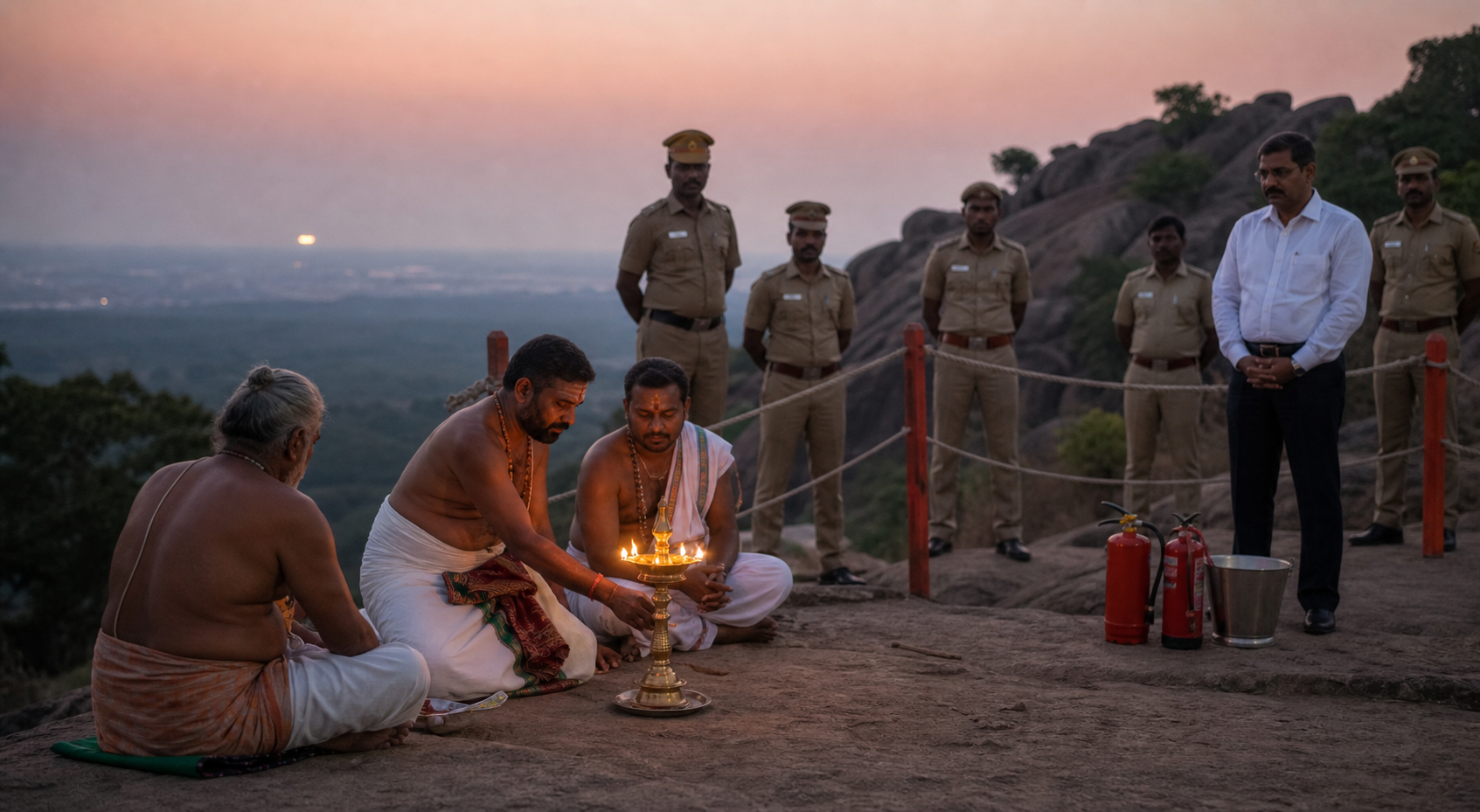
According to the source article, the immediate litigation concerned lighting the Karthigai Deepam at the Deepathoon, a stone lamp pillar on Thirupparankundram hill, in addition to the customary locations used by the Arulmigu Subramania Swamy Temple. A single judge of the Madurai Bench reportedly directed the temple management on 1 December 2025 to light the lamp at the Deepathoon as well as at the usual places.
The source reports that a Division Bench comprising Justices G. Jayachandran and K.K. Ramakrishnan retained that requirement in its common judgment of 6 January 2026. The bench considered earlier litigation involving different parts of the hill, the customary location of the lamp, access connected with the nearby dargah, archaeological protection and public-order concerns.
The safeguards are central to the ruling’s meaning. As reported, the Devasthanam was to perform the lighting through its own team, without members of the public accompanying it. The team’s size was to be settled in consultation with the Archaeological Survey of India and the police. The District Collector was assigned coordination and supervision, while the ASI could impose conditions needed to protect monuments and archaeological features.
The reported judgment therefore did not create an unrestricted entitlement for individuals or crowds to enter the hill and conduct the ceremony independently. It established a regulated division of responsibilities among the temple administration, heritage authorities, police and district administration. Arguments about religious practice cannot be evaluated accurately if those operational limits are omitted.
The July row rests on an unavailable primary document

The political controversy widened in July 2026 when Hindu Munnani demanded state action against the Tamil Nadu Progressive Writers’ and Artists’ Association. The source reports that the demand followed a resolution adopted by the association’s state executive committee opposing the High Court judgment. Hindu Munnani’s statement, issued on 8 July, characterised that opposition as disrespect for judicial authority and disregard for the religious aspirations of Murugan devotees.
Hindu Munnani also reportedly associated the resolution with a wider campaign involving the documentary Thirupparankundram Files, seminars critical of the ruling and protests concerning the judge who issued the original order. These were allegations reported from an interested party’s statement. The source did not establish the association’s precise institutional role in each event, so separate activities cannot responsibly be treated as parts of a proven coordinated effort without further evidence.
The largest evidentiary gap is the absence of the complete resolution. The source article did not reproduce its wording or provide the association’s legal reasoning and detailed response. That missing text prevents a reliable determination of whether the association criticised the ritual itself, disputed its location, challenged the judgment’s reasoning, supported an appeal or called for actual non-compliance.
That distinction matters. Opposition to a judgment is not, by itself, proof that an organisation has obstructed its implementation. Before considering punitive action, the government would need to identify the specific conduct under examination, the applicable law and evidence connecting the organisation to that conduct. Political characterisations cannot substitute for the primary document or a verified account of what followed from it.
An appeal keeps the legal issue open without deciding compliance
The dispute also has an appellate dimension. The source says the Tamil Nadu government reportedly filed a Supreme Court challenge to the January judgment on 11 June 2026, with that development disclosed during subsequent High Court proceedings. The material reviewed by the source did not identify a final Supreme Court determination.
As a general procedural matter, filing an appeal and obtaining a stay are different events. A challenged judgment does not cease to operate merely because a party seeks appellate review; its practical status depends on any subsequent order modifying, staying or reversing it. It is therefore possible to maintain that an operative direction must be followed while also arguing through lawful channels that the direction should be reconsidered.
This context makes the resolution’s exact wording even more important. A statement advocating appellate review belongs to a different category from one urging officials or participants to disregard a subsisting order. The available report does not supply enough primary evidence to place the association’s resolution confidently in either category.
Key takeaways for evaluating new claims
- Check the operative judicial text and any later stay or appellate order rather than relying on broad claims that the ritual was simply permitted or prohibited.
- Obtain the writers’ association’s complete resolution before deciding whether it expressed legal criticism, political opposition or a call for non-compliance.
- Verify participation in each documentary screening, seminar or protest separately instead of inferring institutional responsibility from ideological proximity.
- Measure implementation against the reported allocation of duties: the Devasthanam performs the ritual, while the Collector, police and ASI manage coordination, security and heritage protection.
What responsible administration would require
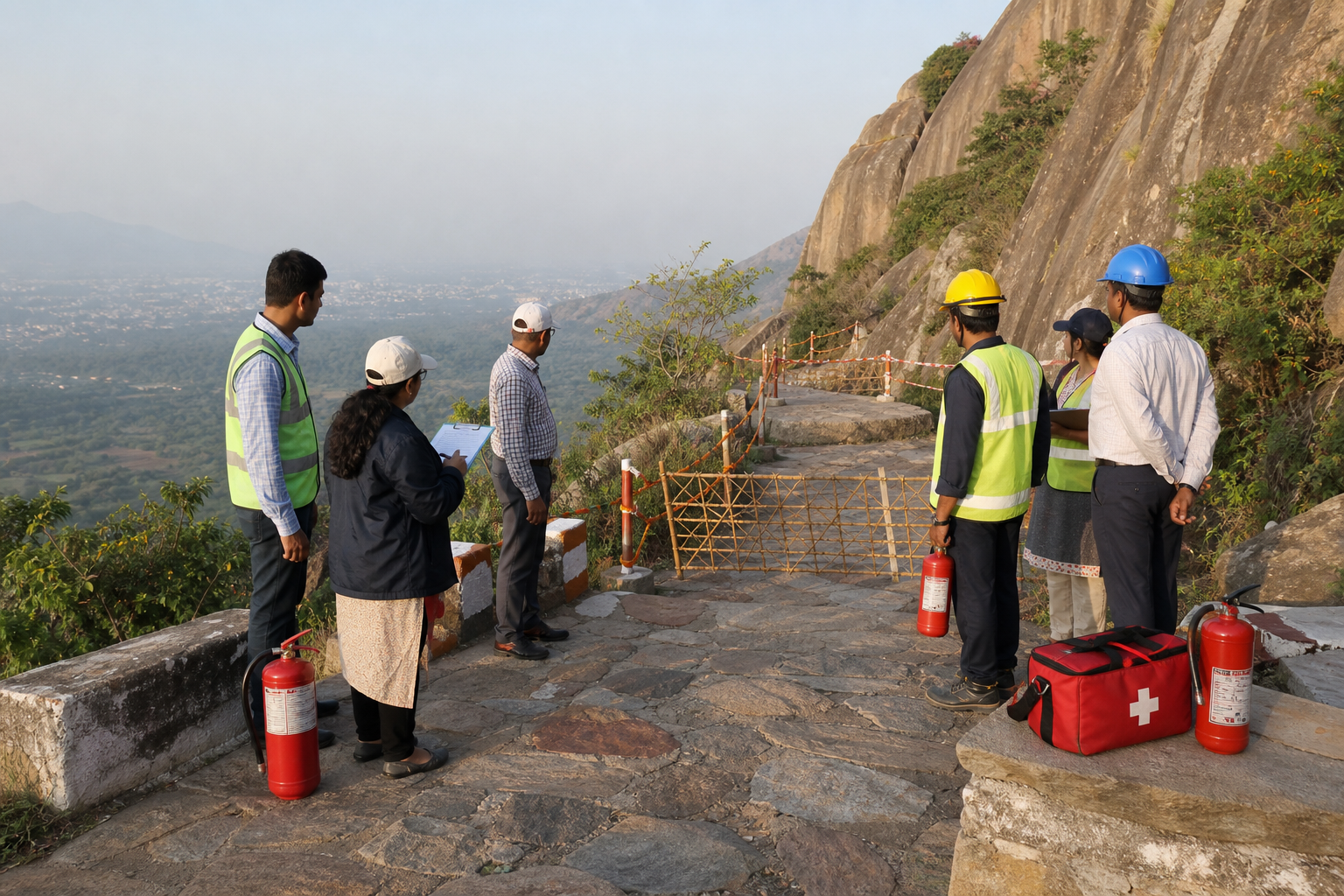
The state faces obligations that should not be collapsed into a single partisan choice. It must facilitate compliance with operative judicial directions and preserve public order, but it must also respect lawful speech, association, artistic activity and procedural fairness. A conduct-specific response can serve both aims; a response based mainly on ideological labels cannot.
Administrative transparency would reduce the space for competing narratives. Publication of the current operative directions, the conditions prescribed for the temple team, the status of the Supreme Court proceedings and the full text of the disputed resolution would allow the public to distinguish verified obligations from political claims. Clear communication that public access was restricted under the reported arrangement would also prevent a supervised temple ritual from being misrepresented as authorisation for mass mobilisation.
The next phase should turn on documents and observable conduct: the resolution’s actual language, any appellate order and the authorities’ implementation record. Those materials, rather than accusations about motive, will show whether the dispute remains one of lawful disagreement or develops into obstruction of a binding direction.