The Padma Shri conferred on Sangyusang S. Pongener in 2026 brought national attention to a cultural mission reportedly sustained for more than six decades. Its significance extends beyond one artist or one award: his career illustrates how an oral tradition can be carried from elders to young learners without being reduced to a museum object.
The available DharmaRenaissance account connects several dimensions of that mission: community-based learning, performance, original composition, theatre, mentorship and institution-building. Considered together, they offer a practical model for keeping Ao Naga heritage active under changing social conditions.
Preserving a cultural system, not a collection of songs
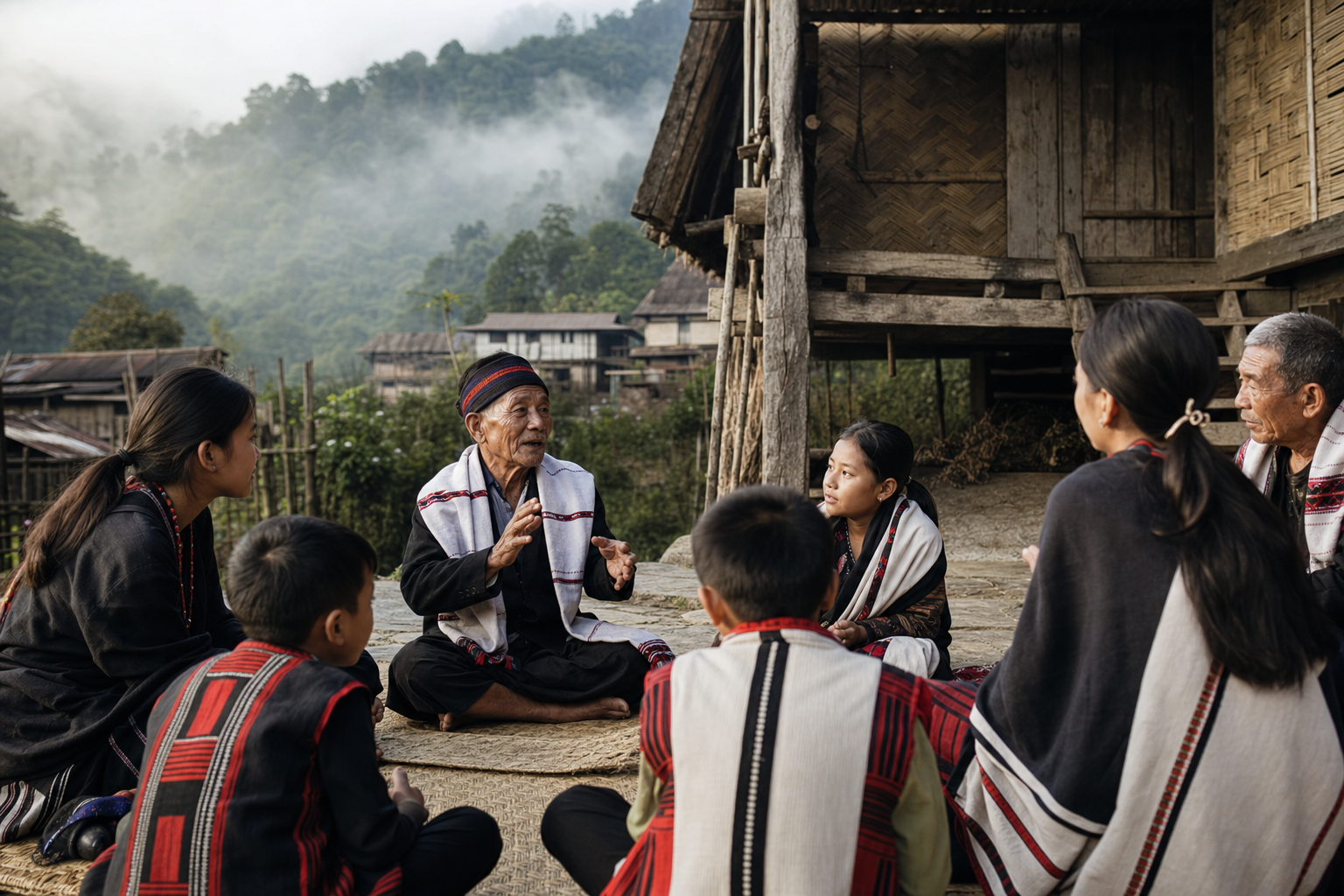
DharmaRenaissance reports that Pongener was born on 23 March 1945 in Ungma, in Nagaland’s Mokokchung district. Described in the article as one of the oldest Ao Naga settlements, Ungma exposed him to songs, dances, festivals, stories, customary practices and the communal settings that gave performances their meaning.
That background matters because intangible heritage rarely consists of detachable works. A song may depend on pronunciation, vocal inflection, rhythm, occasion and collective memory. A dance can encompass formation, gesture, clothing and social etiquette. Theatre can bring narrative, moral reflection, historical memory and embodied interaction together. Preserving only lyrics or choreography may therefore retain an outline while losing much of the cultural grammar that makes the form intelligible.
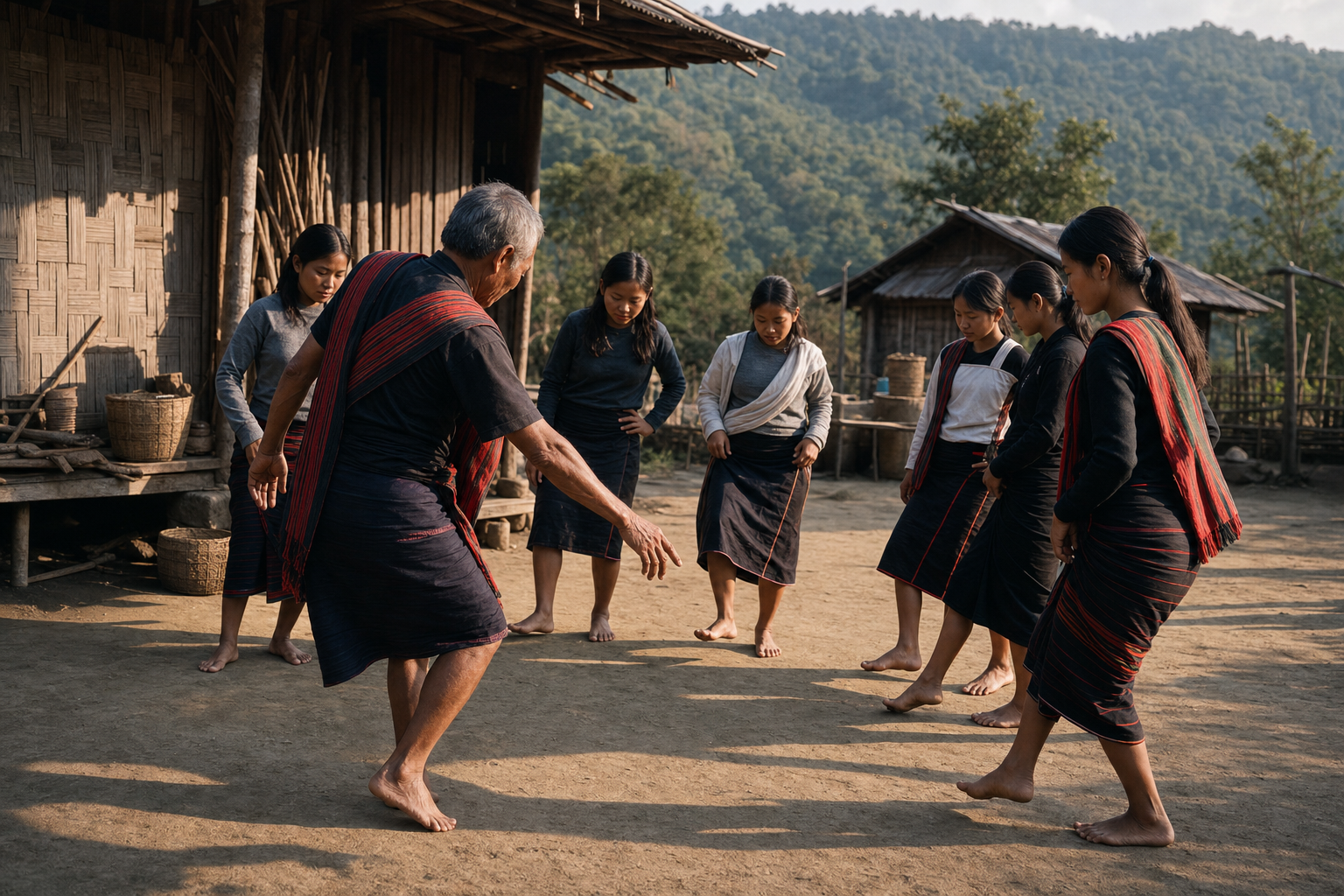
The source describes Pongener’s formative education as a disciplined process of listening to elders, observing performers, repeating material and accepting correction. This places knowledgeable people and relationships at the centre of preservation. A recording can store sound and a written account can document sequence, but neither automatically transmits judgement about how, why or when a cultural form should be practised.
Deliberate teaching replaces disappearing everyday exposure
The article associates changing patterns of transmission with formal education, migration, urbanisation, new occupations, recorded entertainment and altered forms of community gathering. It does not present those developments simply as enemies of tradition. Instead, Pongener’s response was reportedly to make cultural instruction more intentional when younger people could no longer be expected to acquire it through ordinary village life alone.
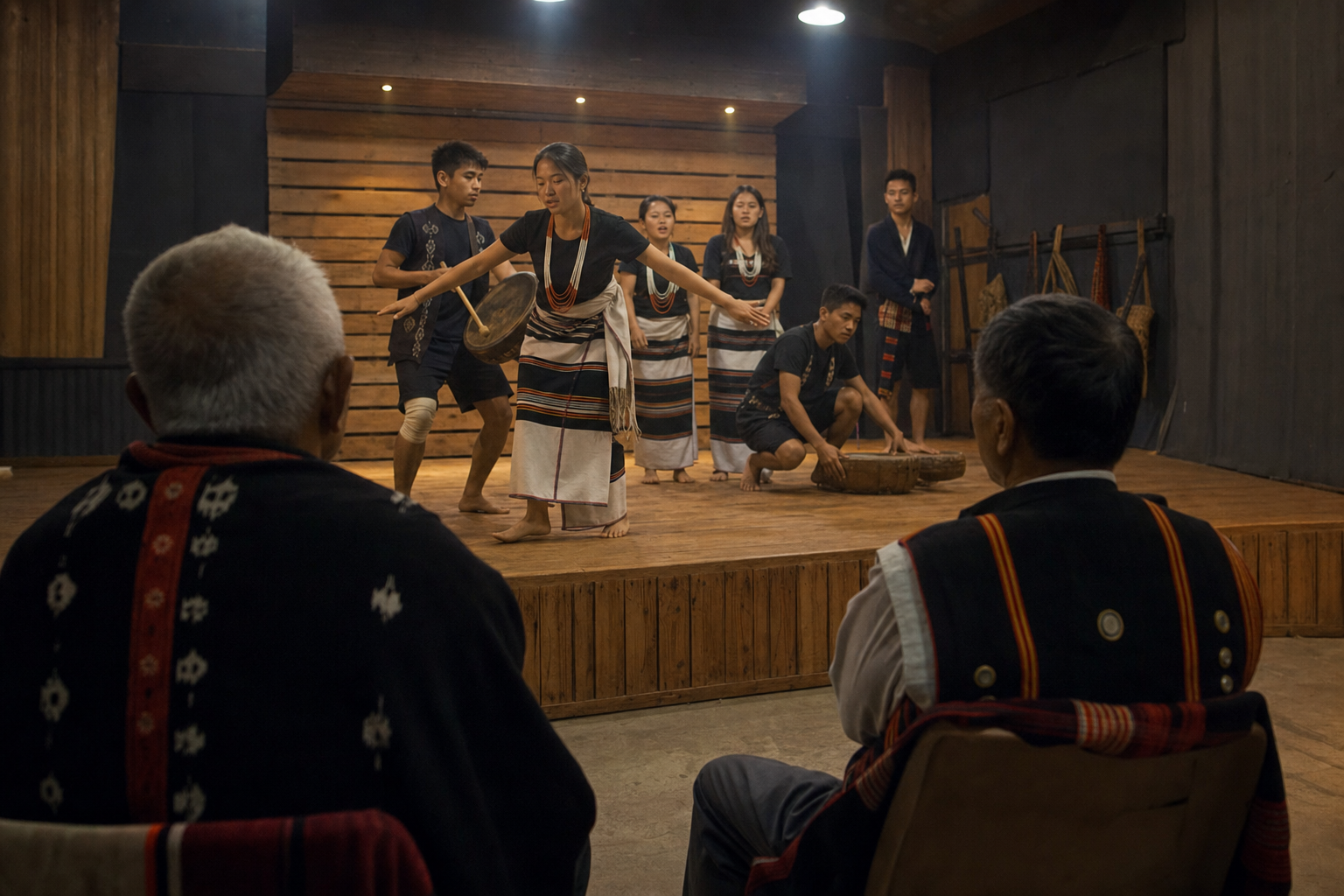
His work consequently crossed several roles. The source portrays him as a performer, composer, actor, director, teacher, organiser and custodian of oral material. That breadth created multiple entry points for learners: some could encounter heritage through song and dance, others through theatre, rehearsal, public programmes or apprenticeship.
Published biographical accounts cited by DharmaRenaissance attribute approximately 60 original cultural songs to Pongener. This creative activity is an important part of the preservation model. Continuity does not necessarily require mechanically repeating a sealed repertoire; new work can extend a tradition when it remains grounded in inherited language, aesthetics, memory and community standards. In that sense, composition is not separate from conservation but one way of demonstrating that the tradition still supports meaningful creation.
Institution-building turns personal knowledge into shared capacity
A major step reported by the source was Pongener’s co-founding of the Naga Wadir Welfare Cultural Club in 1982. According to the article, he has served as its General Secretary since its inception, using the organisation to support folk music, dance, training, community events and cultural preservation.
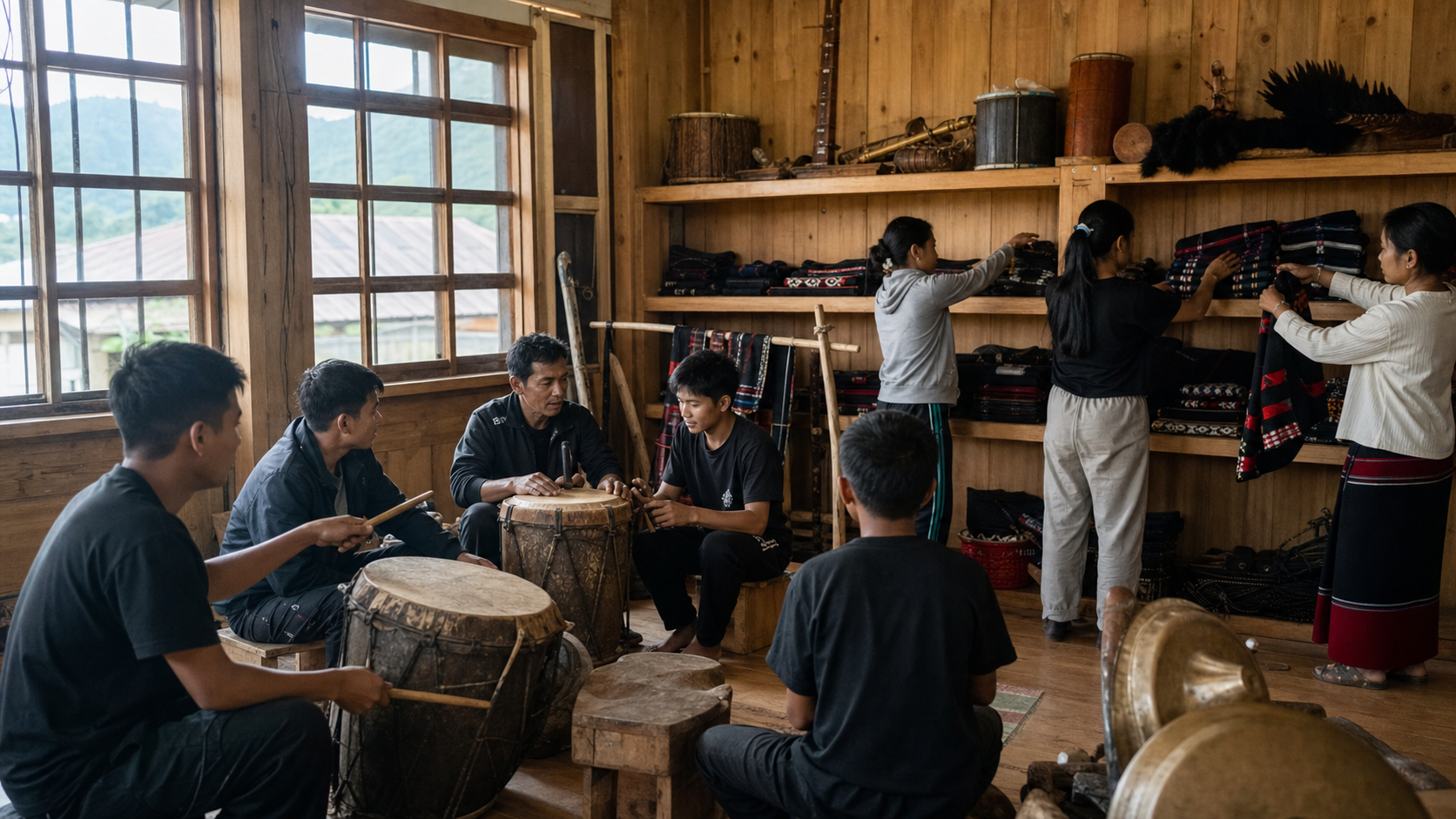
The club changes the scale and resilience of the work. An individual teacher can transmit knowledge directly, but an organisation can maintain rehearsal routines, connect teachers and learners, coordinate performances, preserve records and distribute responsibility. It also provides continuity when the availability of any one cultural bearer changes.
DharmaRenaissance says the official 2026 Padma awardee profile credited Pongener’s leadership with training more than 2,000 young artists and mentoring over 100 apprentices. The same profile reportedly noted that his compositions had reached local, national and international platforms. These figures, as relayed by the source, shift attention from the number of performances completed to the number of people prepared to perform, interpret and potentially teach the material themselves.
This institutional perspective also qualifies the familiar story of a lone individual saving a culture. Pongener’s leadership appears central, but the reported chain of transmission includes the elders who taught him, colleagues who developed the club, families and audiences that sustained participation, and learners who carried the knowledge onward. Cultural stewardship is personal in commitment but collective in operation.
What the Padma Shri recognition makes visible
According to DharmaRenaissance, President Droupadi Murmu conferred the Padma Shri on Pongener on 23 June 2026 during the second Civil Investiture Ceremony at Rashtrapati Bhavan. The honour was presented in the field of Art, and the official Padma Awards announcement identified him as an awardee from Nagaland.
The ceremony was a point of national recognition rather than the origin of his contribution. The source situates it after decades of performance, teaching, composition, rehearsal and community organisation, including a reported decision to leave stable employment for cultural work despite limited financial support. That sequence highlights a recurring feature of heritage preservation: public honours may arrive only after the less visible infrastructure of transmission has been built.
The award can therefore be understood in two ways. It recognises Pongener’s artistic and educational record, while also directing attention toward the community processes that make intangible heritage durable. Its lasting value will depend less on ceremonial visibility than on whether that visibility strengthens learning, documentation, mentorship and opportunities for informed practice.
Key takeaways
- Living heritage is preserved most fully when social context, language, movement, etiquette and meaning travel with the artistic form.
- Deliberate mentorship becomes essential when cultural knowledge is no longer absorbed routinely through everyday community life.
- New composition can support continuity when creativity remains accountable to inherited aesthetics and community knowledge.
- Organisations make transmission more resilient by distributing teaching, rehearsal, documentation and coordination across a wider network.
- National recognition has its greatest cultural effect when it draws attention and support toward the learners and institutions carrying the work forward.
The forward-looking measure of Pongener’s legacy will be the capacity created beyond his own performances: learners able to understand the forms they inherit, practitioners confident enough to teach them responsibly, and community institutions capable of sustaining that exchange across generations.