

ISKCON’s institutional continuity depends on more than preserving books or organizing occasional events. It requires a living educational chain in which scripture is interpreted carefully, inherited memory is made meaningful, teachers are prepared, learners participate, and each generation leaves usable resources for the next.
The two supplied sources illuminate different parts of that chain. One surveys a collection of scriptural, historical, educational, and anniversary materials; the other examines a Pan-American Ministry of Education broadcast. Read together, they show how curriculum, community, technology, and documentation must reinforce one another if learning is to outlast a particular speaker or event.
Continuity is a chain, not a single institution
The July 14, 2026 resource archive reports a collection of 14 items: six centered on passages from the Srimad-Bhagavatam, four preserving aspects of Srila Bhaktivinoda Thakura’s life and teachings, and four documenting educational or anniversary activity in the international ISKCON community. Its arrangement presents continuity as movement among scripture, exemplary lives, teaching, and communal remembrance.
The Viplavah guide approaches the same challenge through educational infrastructure. It identifies the 2026 program with ISKCON’s Ministry of Education, a Pan-American frame, and a live-stream format, while cautioning that the available listing does not establish its speakers, participating countries, session titles, schedule, or precise learning objectives. This distinction between confirmed information and interpretation is itself part of responsible institutional memory.
The guide also reports that ISKCON was founded in New York in 1966 by A. C. Bhaktivedanta Swami Prabhupada, while the resource archive frames current educational activity in relation to the movement’s seventh decade. That historical horizon makes succession unavoidable: knowledge once transmitted through founding personalities and close personal association must increasingly be carried through curricula, trained educators, local communities, recordings, and reliable archives.
These sources therefore describe complementary assets. The archive reveals what a tradition considers worth transmitting; the broadcast guide shows how transmission can cross geographic distance. Neither asset is sufficient by itself. Content without capable carriers can become inaccessible, while communications infrastructure without rigorous content can amplify material that learners cannot properly evaluate or apply.
Curriculum must connect textual knowledge with formation

The scriptural materials summarized in the archive are not merely six unrelated lectures. As presented there, they trace a formative sequence: obscured spiritual knowledge must be restored; the intentions behind worship must be examined; possessiveness must yield to contentment; devotional remembrance must be cultivated; anger must be separated from ego and bodily identification; and intense divine love must not be confused with ordinary passion or imitable conduct.
This sequence suggests a curriculum organized around changes in understanding and character rather than coverage alone. The Viplavah guide supports that reading by describing religious education in three connected dimensions: knowledge of texts and history, disciplined spiritual practice, and ethical application. Both sources thus portray education as transformative, although neither supplies outcome data demonstrating how particular programs affect learners.
The archive’s treatment of Srimad-Bhagavatam 11.3.25 offers a useful example. It relates contentment and reduced possessiveness to continued constructive association with Vaishnavas, rather than treating detachment as neglect or unhealthy isolation. Its discussion of 8.19.13 similarly distinguishes release from corrosive hostility from the abandonment of accountability, boundaries, or protection from harm. In each case, interpretation connects a theological claim to a disciplined way of living without reducing the text to a slogan.
Such formation requires explicit source discipline. The archive warns that some feed cards contain little more than a title and thumbnail, making it improper to assign detailed arguments to an untranscribed speaker. The Viplavah guide likewise recommends distinguishing scripture, later commentary, institutional policy, and personal testimony. Together, these cautions point toward a repeatable teaching method: establish what the source actually says, identify the interpretive voice, explain the practical implication, and disclose what the available evidence cannot establish.
That method protects both devotion and intellectual credibility. It allows questions without treating inquiry as disloyalty, and it prevents personal impressions from quietly acquiring the authority of scripture or policy. Over time, this clarity also makes teacher succession easier because later educators can understand not only a conclusion but the reasoning and sources behind it.
Digital reach becomes durable only when events become resources

The Viplavah source treats the broadcast itself as part of the learning environment. It reports that audio clarity, readable graphics, pacing, moderation, transitions, and synchronization can affect whether viewers understand presentations containing Sanskrit vocabulary, textual citations, or historical arguments. It also notes that captions can assist deaf and hard-of-hearing viewers, second-language learners, and people in noisy surroundings, while automated captioning may mishandle specialized terms.
None of those accessibility features is confirmed for the particular Viplavah stream by the supplied listing. The guide explicitly directs viewers to the video page for current information about timing, replay availability, captions, and event details. That limitation matters: institutional evaluation should distinguish a recommended production standard from a feature known to have been delivered.
A Pan-American format also magnifies the importance of asynchronous access. The guide observes that the Americas span multiple time zones and may encompass different languages, migration histories, local cultures, and levels of access to temples, although the listing does not identify which countries are represented. A replay can therefore be educationally significant only if viewers can find, understand, and navigate it after the live moment has passed.
This is where the two sources intersect most clearly. The resource archive demonstrates the value of gathering dispersed classes, commemorations, and institutional events, but its warning about thin feed metadata exposes a weakness common to event-based education. The Viplavah guide proposes the elements that make an archived recording reusable: a descriptive title, accurate summary, speaker information, chapters, references, and corrected captions. In synthesis, these elements form an event-to-library pipeline rather than an optional layer of promotion.
Live chat belongs in the same educational system. According to the guide, digital participation can build immediacy but can also generate distraction, repetition, conflict, or questions disconnected from the presentation. Moderation and published expectations can preserve room for sincere inquiry. The institutional lesson is broader than chat management: access must be paired with stewardship whenever teaching moves from a bounded classroom into a persistent public medium.
Institutional memory must preserve authority without freezing it
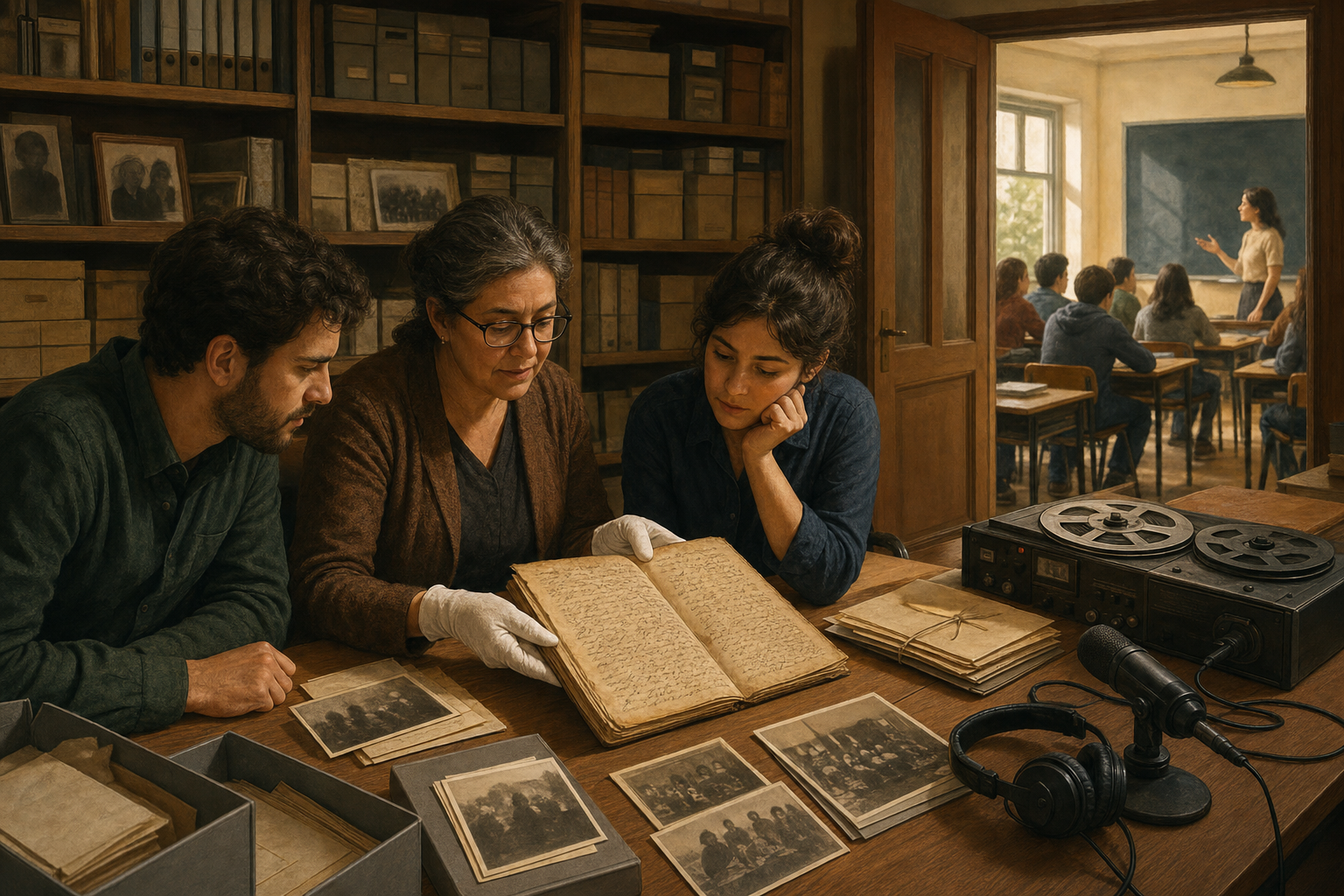
The archive’s Bhaktivinoda Thakura materials reportedly include images of handwriting, a biographical survey, a memorial lecture, and attention to his literary legacy. These formats preserve different dimensions of memory. A manuscript conveys material proximity to an earlier intellectual world; biography supplies narrative context; a lecture interprets significance for a present audience. Their combination shows why preservation and education should not be treated as separate departments.
Legacy becomes institutionally active when learners can trace how inherited teachings inform present questions. Commemoration alone may preserve reverence, but education adds historical context, textual access, interpretive discipline, and opportunities for practice. Conversely, a contemporary program detached from lineage and source history may be accessible without giving participants a stable account of why its teachings carry authority.
The sources do not report a specific system for teacher certification, curriculum review, archival governance, or institutional accountability. Any proposed model in those areas is therefore an inference rather than a description of an existing ISKCON-wide arrangement. Even so, the educational principles reported by both sources support practical evaluation criteria: accuracy of citation, clarity about interpretive authority, preparation of teachers, meaningful learner participation, ethical application, accessibility, and the quality of the record preserved afterward.
This approach also keeps institutional continuity from becoming mere organizational survival. The scriptural themes highlighted in the archive concern memory, intention, contentment, anger, association, and self-giving love. If those teachings are central to the curriculum, their ethical force should shape how educational communities handle disagreement, responsibility, and care. Textual transmission and institutional culture cannot remain entirely separate without weakening the credibility of both.
Key takeaways
- Continuity requires an unbroken chain among authoritative sources, prepared teachers, active learners, communities of practice, and accessible records.
- Scriptural education becomes formative when it joins accurate interpretation to disciplined practice and ethical application.
- A live stream becomes a durable educational asset through reliable metadata, navigation, references, accessibility, and responsible moderation.
- Historical remembrance serves the future when manuscripts, biographies, lectures, and commemorations are integrated into a teachable account of lineage and authority.
The next stage of continuity is therefore practical: every class, commemoration, and broadcast can be designed as one part of a shared learning system. When its sources are clear, its teaching is accountable, and its record remains usable, a temporary program can become part of the tradition’s long institutional memory.
References
- DharmaRenaissance Blog / Dandavats.com – 14 Essential Vaishnava Resources from July 2026: Scripture, Legacy, and ISKCON’s Future
- ISKCON MoE on YouTube – Viplavah PAN America 2026: Essential Guide to ISKCON’s Education Broadcast