
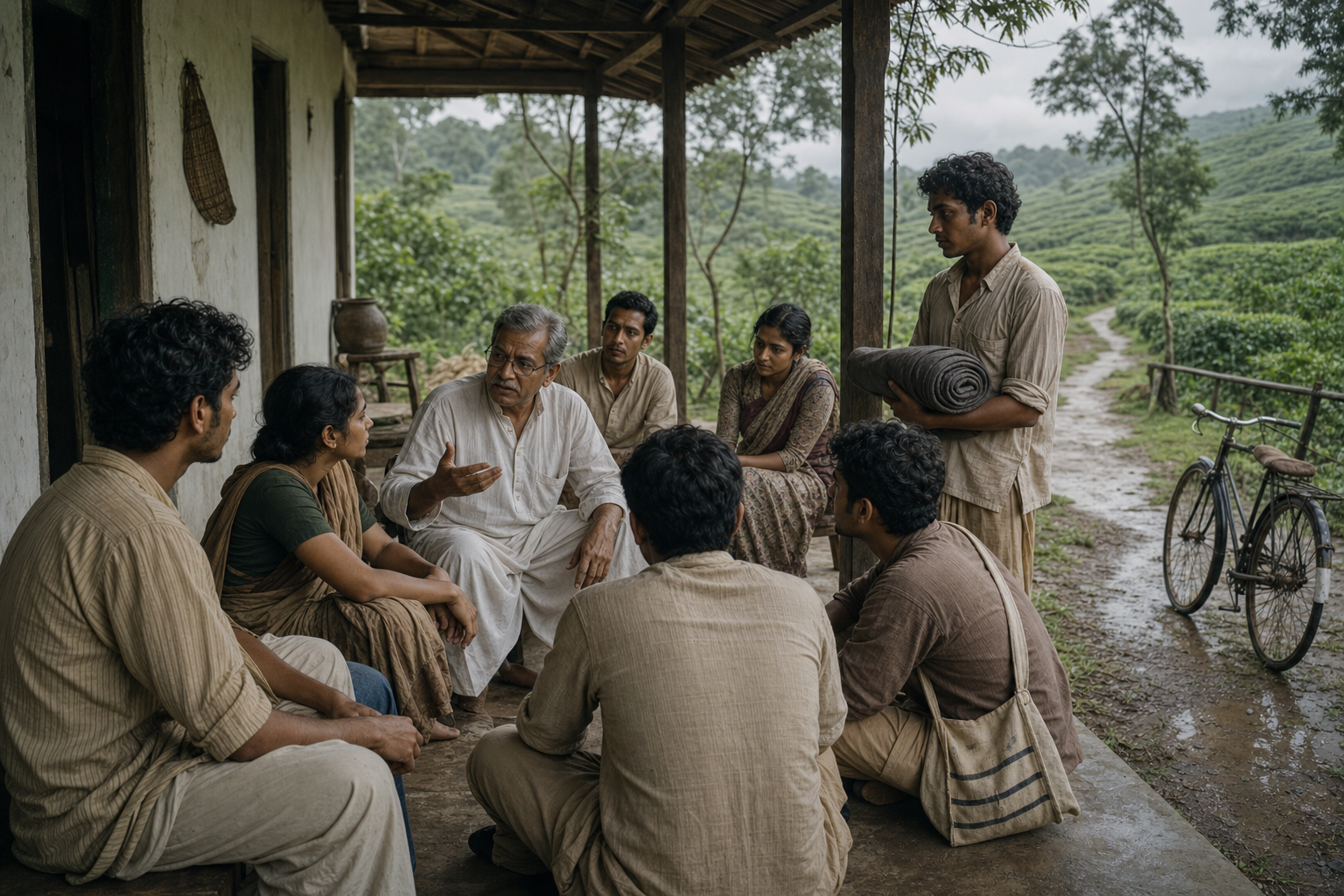
Panu Babu’s story is best understood not as a conventional battlefield biography, but as a case study of the civilian organising that enabled armed resistance. The available profile portrays Dhirendra Datta Chowdhury of Noagaon village, Sreemangal, as a political activist who mobilised volunteers, encouraged prospective fighters and connected local people with wider resistance networks during the 1971 Liberation War.
His case also poses a difficult question about historical recognition. Community and family memory identify him as a wartime contributor, yet the profile reports that he was never entered in the state’s official register of freedom fighters. Understanding that gap requires attention both to what he reportedly did and to the limits of the surviving evidence.
The wartime role the profile actually describes
The DharmaRenaissance profile places Panu Babu’s principal wartime activity in March and April 1971. It reports that he helped recruit local volunteers and arrange elementary preparation for people intending to join the resistance. The account also associates him with activists from the National Awami Party, the Awami League and the Student Union, suggesting that his work crossed party boundaries at a moment when liberation had become a shared objective.
This description supports a specific interpretation of his contribution. It does not establish that he held a formal military rank, commanded a recognised unit or operated a formal training school. Rather, it presents him as a local organiser: someone who identified willing participants, built confidence, maintained political connections and helped move people toward more active involvement. The profile further places part of his activity within networks extending to camps in India, although the supplied account does not provide enough operational detail to reconstruct that phase.
Such distinctions matter. Recruitment, communication, shelter, morale and introductory preparation can make resistance possible without resembling combat service. Because these activities often depend on personal trust and informal relationships, they may leave fewer administrative traces than enlistment, command or deployment. Panu Babu’s reported role therefore illustrates both the importance and the documentary vulnerability of local wartime mobilisation.
The political experience behind local mobilisation
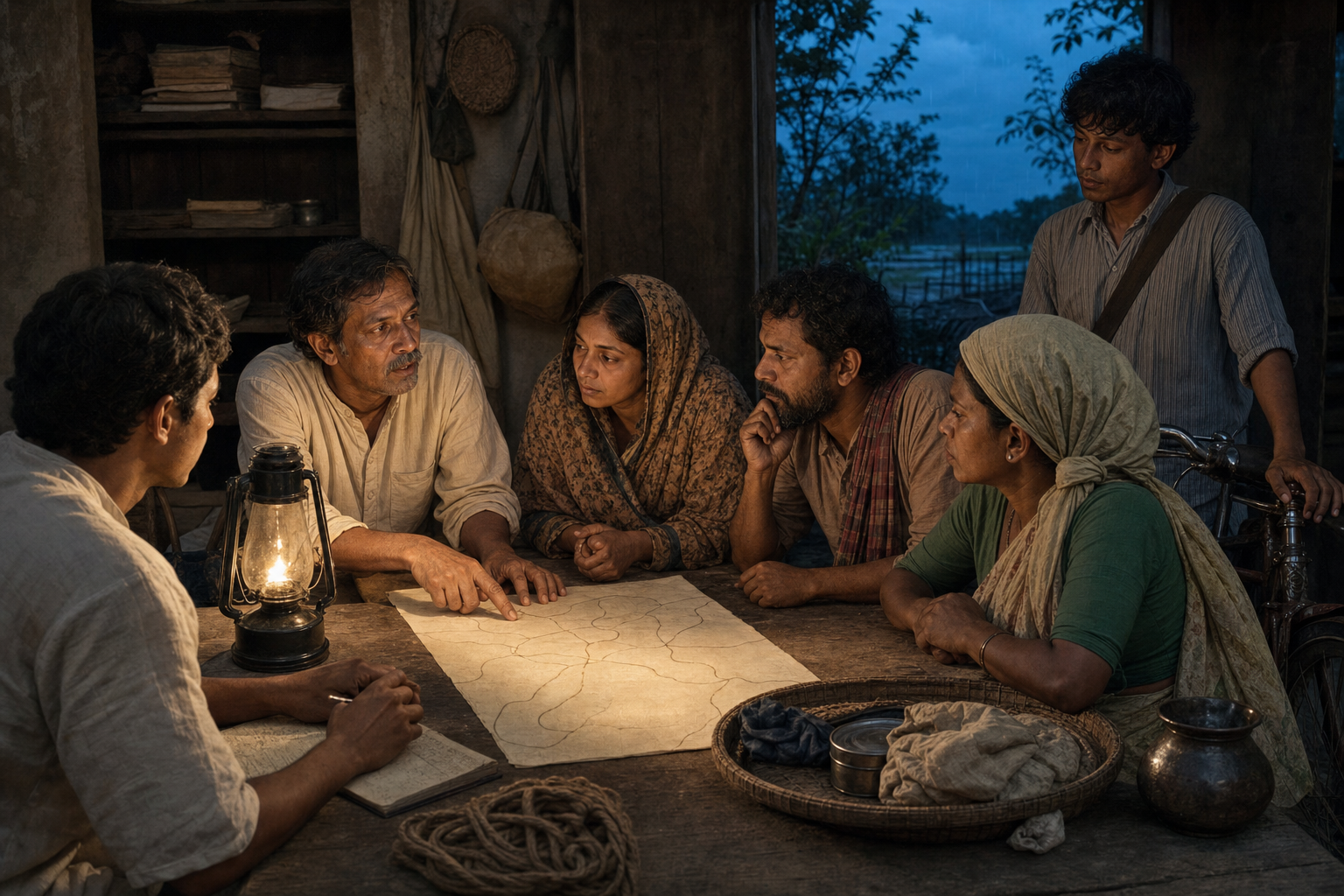
The profile connects Panu Babu’s wartime activity to a longer family tradition of public life. It reports that his father, Jatindramohan Datta Chowdhury, was a local Indian National Congress leader during British rule and became one of the first elected members of the local council after the Union Parishad system was introduced in 1960. This background would have placed village leadership, electoral responsibility and community disputes close to Panu Babu’s early life.
According to the same account, Panu Babu studied first in Noagaon and at Sreemangal Victoria High School, later completing his Intermediate studies in Kailashahar, Tripura. He subsequently returned to East Pakistan rather than remain in India. These details do not by themselves prove a later wartime role, but they help explain the combination of local standing, cross-border familiarity and political experience attributed to him.
The profile also recounts a serious episode of repression before the liberation struggle. Based on family testimony, it says local informants disclosed his presence to the Pakistani military, after which he was detained at Comilla Cantonment and subjected to torture, including electric shocks. The source does not specify the date, formal accusation, duration of detention or circumstances of release, and it does not cite detention or medical records. The allegation must therefore remain explicitly attributed rather than treated as independently established.
What the profile emphasises is his subsequent return to political activity through the National Awami Party associated with Professor Muzaffar Ahmed. If the sequence preserved by the family is accurate, his organising in 1971 was not an isolated response to the outbreak of war; it continued an earlier commitment that had reportedly persisted despite detention and its lasting effects.
Memory, documentation and the recognition gap

Two historical questions must be kept separate. The first is whether Panu Babu was remembered locally as someone who assisted the liberation struggle. The profile answers that question through family testimony and community recollection. The second is whether surviving documents establish service under the categories used for official recognition. On the material presented, that question remains unresolved.
The source says its biographical record relies primarily on family testimony, local memory and a testimonial reportedly issued by Professor Muzaffar Ahmed. Those forms of evidence are valuable, especially when they preserve names, relationships and experiences omitted from formal archives. They are also different from contemporaneous rosters, orders, camp records or government files. A reported testimonial could become significant evidence, but its original text, date, provenance and precise claims would need to be examined.
The absence of official recognition does not, by itself, disprove community testimony. Equally, sincere and persistent memory cannot automatically establish a formal status. The responsible position is to preserve the testimony, identify its evidentiary limits and continue searching for independent records. That approach neither dismisses Panu Babu nor converts an incomplete archive into certainty.
Only one biographical source article was included in the material available for this synthesis. There is consequently no basis here for claiming that independent publications corroborate or dispute its specific allegations. The strongest conclusions concern what that profile reports and what it openly acknowledges it cannot yet demonstrate.
Key takeaways
- The available profile identifies Panu Babu as a local political organiser and recruiter, not as the documented commander of a formal military unit.
- His reported cooperation with NAP, Awami League and Student Union activists shows how local liberation work could operate across partisan boundaries.
- Family testimony about detention and torture is historically relevant but remains uncorroborated by records cited in the profile.
- His exclusion from the official register and his survival in community memory represent different kinds of evidence, neither of which should be allowed to erase the other.
What a stronger historical record would require
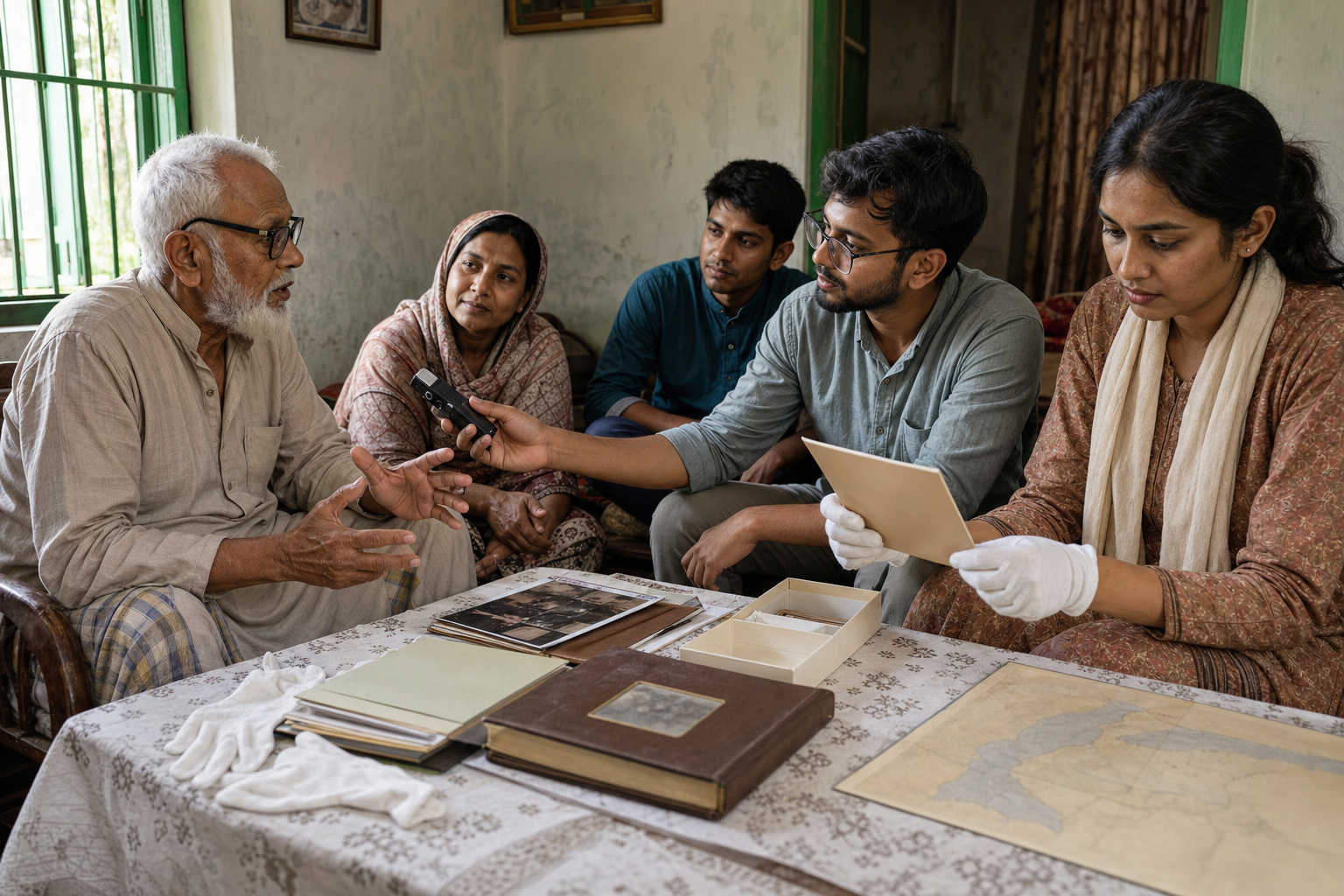
A fuller inquiry would begin by preserving the reported Muzaffar Ahmed testimonial in a verifiable form and recording its provenance. Researchers could then look for contemporaneous political correspondence, volunteer or camp records, local administrative material and testimony from people able to describe particular events. Oral histories would be most useful if they recorded the witness’s relationship to Panu Babu, the basis of each recollection and the difference between direct observation and information heard from others.
This work would serve a purpose larger than one recognition claim. It could help recover the local infrastructure through which the Liberation War was sustained while establishing a clearer boundary between remembrance, reasonable inference and documented fact. Panu Babu’s legacy will be better protected by careful preservation and open verification than by either uncritical celebration or archival silence.