
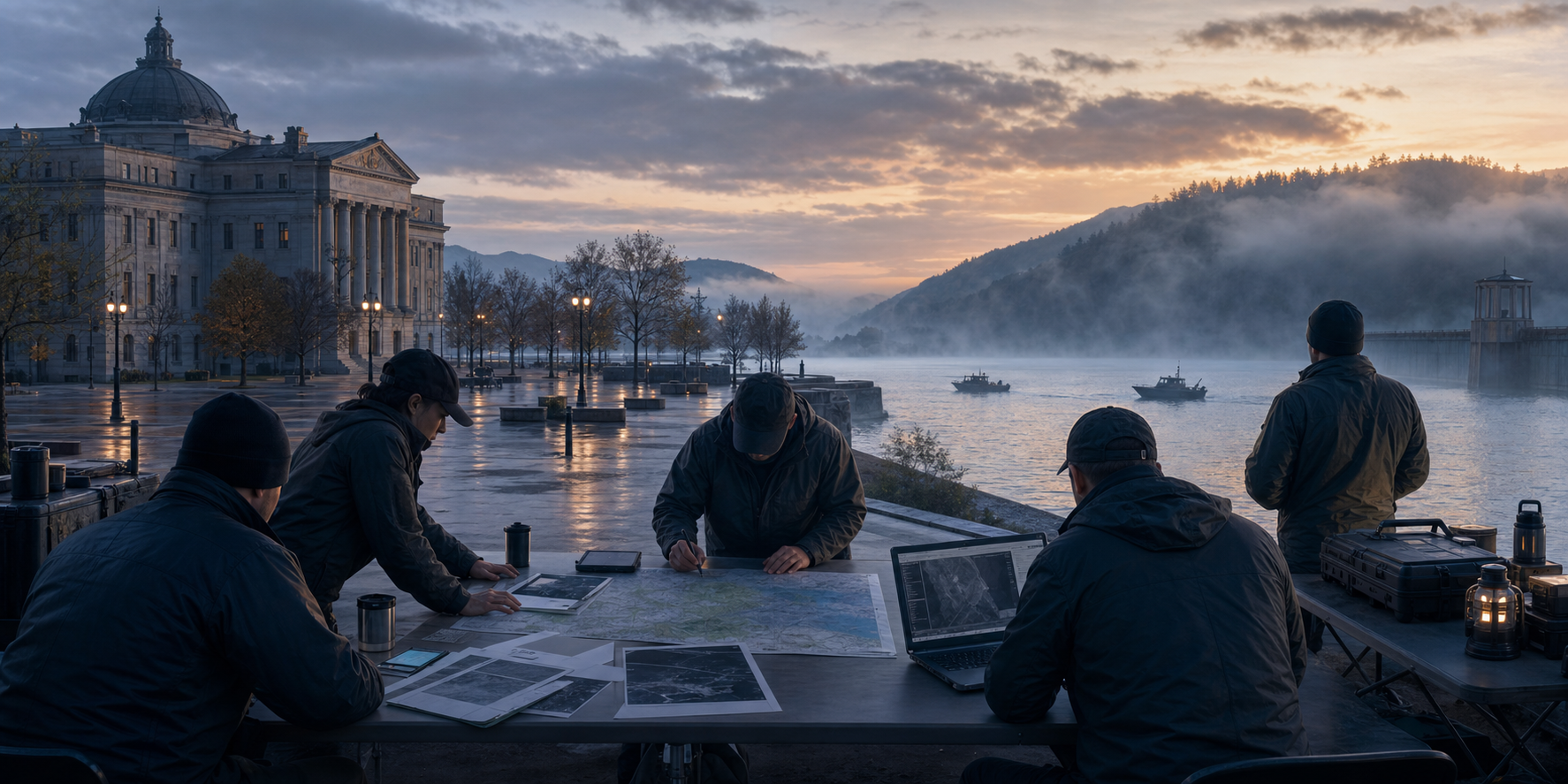
Two reported security developments illustrate how preparedness can fail if authorities and the public confuse an alarming claim with a verified operational threat. One concerns alleged threats and reconnaissance directed at a public activist in Ahilyanagar; the other concerns intelligence-based reporting about possible Lashkar-e-Taiba waterborne training around Mangla Dam in Pakistan-occupied Jammu and Kashmir (PoJK).
The cases are not presented by the sources as connected, and neither report corroborates the other. Their value in combination is analytical: they show how security institutions can evaluate reported threats at different scales while protecting potential targets, preserving evidence, communicating uncertainty and avoiding collective blame.
Two threat pictures, one preparedness challenge
The Ahilyanagar article places the reported threat to Sagar Ashok Beg and his brother Akash Beg in the unsettled environment following the December 30, 2025 killing of Aslam Shabbir Sheikh, also known as Bunty Jahagirdar. According to that source, Jahagirdar was shot near Borawake College Road in Shrirampur by attackers on a motorcycle. The article subsequently attributes public threats against the Beg brothers to a syndicate allegedly associated with Pakistan-based gangster Shahzad Bhatti. It also reports an allegation that reconnaissance occurred near Sagar Beg’s residence and was captured on CCTV.
The Mangla Dam article examines a different type of warning. It cites a July 2026 TV9 Hindi report, itself based on Indian security inputs, alleging that Lashkar-e-Taiba was preparing cadres for operations involving water. The report attributed statements to commander Haris Dar about recruits completing a 10-day basic course before advanced training and linked the activity rhetorically to the water dispute between India and Pakistan. The source stresses that publicly available information did not independently establish the programme’s scale, all its participants, its precise locations or an approved attack plan.
The contrast is important. Ahilyanagar presents a potentially targeted threat involving communications, alleged local facilitation and possible surveillance of a residence. Mangla presents a reported capability-building programme involving a designated terrorist organisation, a strategic reservoir environment and cross-border consequences. One may require immediate protective decisions around identifiable people; the other calls for broader intelligence collection, infrastructure vigilance and assessment of whether training has progressed toward a selected target.
Both sources nevertheless identify the same central problem: a threat can be serious enough to justify precaution without being sufficiently proven to justify public accusations or conclusions of guilt.
The assessment ladder: signal, capability, preparation and imminence

Threat assessment becomes more reliable when each reported fact is assigned to the stage it actually supports. A hostile message may reveal intent or intimidation, but it does not by itself establish operational capacity. Training can establish capability, but not necessarily a chosen target. Reconnaissance may suggest preparation, but only after the material is authenticated and connected to the suspected actors. Imminence requires additional indicators showing that an operation may be approaching execution.
| Assessment question | Ahilyanagar reporting | Mangla reporting | Preparedness implication |
|---|---|---|---|
| What is the initial signal? | Reported public threats against Sagar and Akash Beg, attributed to a syndicate associated with Shahzad Bhatti. | Intelligence-based media reporting alleging Lashkar-e-Taiba training accompanied by militant rhetoric about water. | Preserve the original material, document its provenance and avoid treating repetition as verification. |
| What capability is indicated? | The source alleges access to local reconnaissance and possible external direction, but does not publicly establish the complete network. | The source points to reported current training and Lashkar’s previously demonstrated marine capability. | Use established capability to set prudent safeguards, not to declare that a particular operation has been approved. |
| What suggests operational preparation? | Alleged CCTV evidence of activity around Beg’s residence could be significant if its recording, timing and subjects are authenticated. | The reported course and proposed advanced training suggest capability development, while the source says no specific attack plan is publicly demonstrated. | Seek independent confirmation through lawful technical, financial, location and human-source evidence. |
| What is established in a formal record? | The source says circulating allegations about several local figures were not accompanied by an official police statement, FIR number, charge sheet or judicial finding in the supplied material. | The source distinguishes NIA filings concerning the Pahalgam attack from separate media claims about particular figures allegedly present at Mangla. | Map every assertion to its evidentiary status: reported claim, authenticated exhibit, investigative allegation, formal charge or adjudicated finding. |
The historical precedent discussed in the Mangla article illustrates why these stages must remain separate. Its account of the Ajmal Kasab court record says Lashkar provided specialised marine instruction, navigation, sailing and GPS training before the November 2008 Mumbai attacks. The source notes, however, that the court record locates the final marine phase near Karachi, while later reporting has associated some preparation with Mangla. The organisation’s past capability therefore informs present risk assessment, but it does not independently authenticate the new Mangla allegations.
Key takeaways
- An online threat, circulating appeal or intelligence-based news report should begin an inquiry, not conclude one.
- Authenticated reconnaissance can elevate concern from general hostility toward possible preparation, but it still requires attribution and corroboration.
- A terrorist organisation’s demonstrated historical capability justifies precaution without proving that a current training report corresponds to an imminent attack.
- Effective readiness combines target protection, evidence preservation, inter-agency analysis and disciplined public communication.
Preparedness must operate at three connected levels
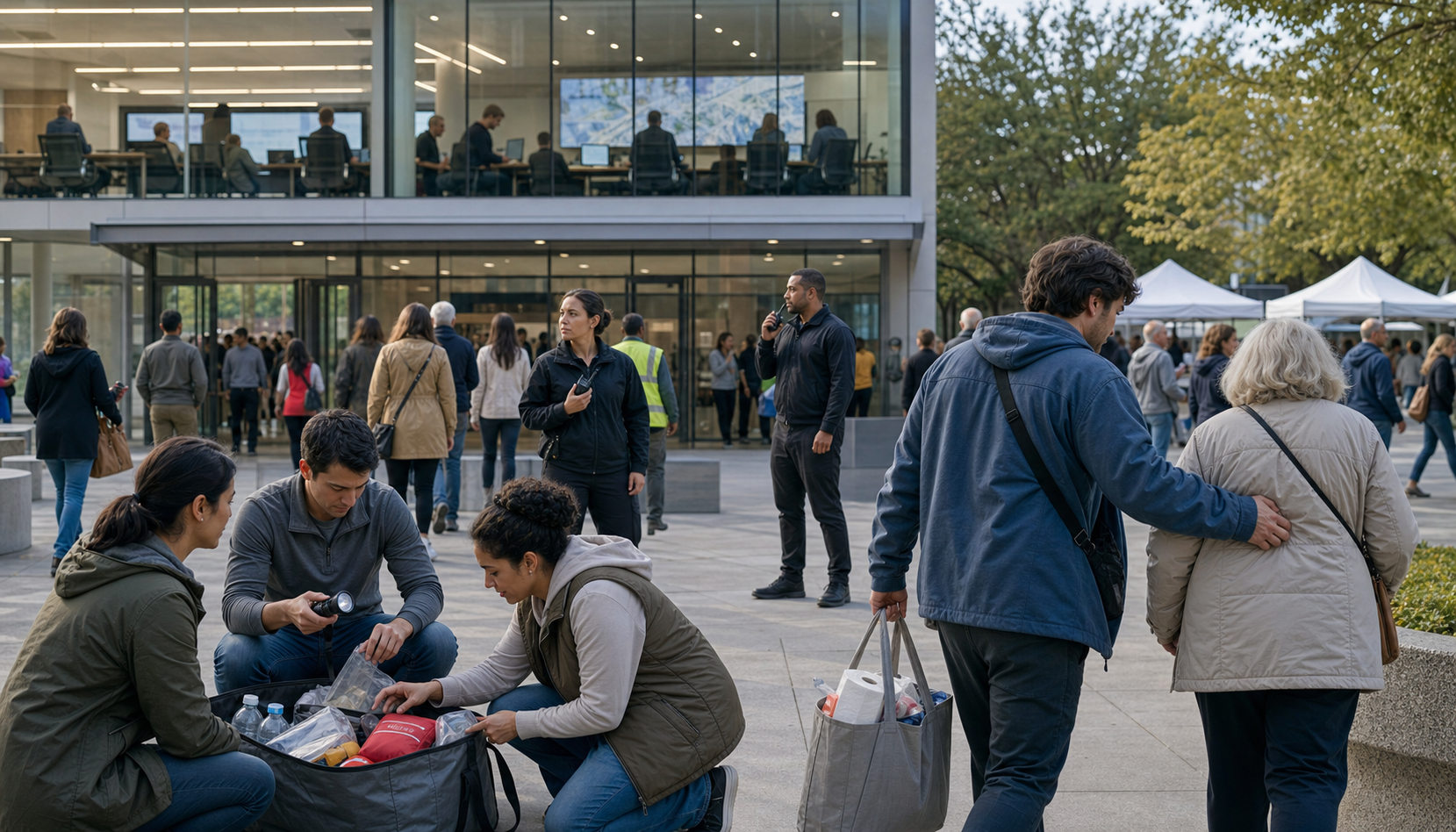
Protection of identifiable people
The duty to protect a person does not depend on agreement with that person’s politics or on the absence of other legal proceedings. The Ahilyanagar source reports that Sagar Beg is a controversial activist and that he and his brothers were named as accused in a conspiracy connected with Jahagirdar’s killing. It correctly treats those matters as legally independent: being accused does not establish guilt, while facing an investigation does not remove the right to life.
A proportionate protective assessment would examine the specificity of the threat, the credibility of its attributed source, any history of attempts, indications of surveillance and the suspected network’s access to local support. If CCTV is relevant, investigators need original recordings, reliable timestamps, camera-location information and an intact chain of custody. Corroborating cameras, witness accounts, vehicle records and lawfully obtained device data can help distinguish hostile reconnaissance from coincidental presence.
Security around infrastructure and public spaces
The Mangla report widens the preparedness problem from an individual target to water environments, critical infrastructure and movement routes. A reservoir may be relevant to navigation training, but physical suitability alone does not prove militant activity. Security planning should therefore distinguish routine use, suspicious training patterns and indicators of an operation directed at a particular asset or population.
The source also places the allegation after the April 22, 2025 attack near Baisaran meadow in Pahalgam, which it says killed 25 tourists and one local civilian. That context underscores a wider preparedness requirement: attacks on visitors can harm lives, public confidence and communities dependent on pilgrimage or tourism. General readiness around such environments includes coordinated situational awareness, emergency communication, continuity planning and the ability to share validated warnings without disclosing sensitive operational information.
Institutional evidence and coordination
Both cases depend on combining evidence that may sit with different institutions. Digital investigators may assess account control and device artefacts; local police may hold CCTV, witness and vehicle information; financial analysis may identify payments; and intelligence agencies may evaluate cross-border handlers or training networks. No single screenshot, association or historical accusation should carry the full weight of attribution.
Encrypted communications make attribution more difficult, not conceptually different. Investigators still need to establish who controlled an account, whether a message was altered, how it relates to a device and whether its timing corresponds with movements, payments or other conduct. A conclusion becomes stronger when independent evidence converges on the same explanation.
Lawful readiness protects both security and social trust

Premature naming can damage an investigation as well as the people accused. The Ahilyanagar source describes a circulating appeal that named local individuals and asserted political, family or organisational links, while noting the absence of publicly supplied official corroboration for the alleged meeting. Association, kinship, religion and political proximity cannot substitute for proof of participation in a criminal plan.
The same restraint applies to militant language. The Mangla article treats water jihad as reported Lashkar rhetoric rather than a neutral category or a description of Muslims generally. Responsibility for terrorism belongs to the organisation, operatives, facilitators and sponsors supported by evidence. Collective attribution can spread fear, obscure the actual network and turn a security inquiry into communal accusation.
Public communication should clearly separate what has been confirmed, what a named source has alleged, what remains unknown and what protective action can be disclosed. Authorities need not wait for courtroom proof before taking reversible precautions, but coercive measures and public allegations require stronger legal foundations. This calibrated approach supports both immediate safety and the credibility of any eventual prosecution.
The most useful next developments would be authenticated evidence, clearly attributed official updates and visible preparedness proportionate to the assessed risk. That combination would make it harder for genuine threats to be dismissed and equally difficult for unverified claims to become verdicts by repetition.
References
- DharmaRenaissance Blog — Ahilyanagar on Alert: Sagar Beg Threat Claims Test Security and the Rule of Law
- DharmaRenaissance Blog — Lashkar’s Reported ‘Water Jihad’: Mangla Dam and the Indus Treaty Crisis Explained