

A widely shared video captures a thoughtful and good-humored exchange between actor Ian Somerhalderrecognised by many for his portrayal of Damon Salvatore in The Vampire Diariesand Sadhguru (Jaggi Vasudev), the Indian yogi and head of the Isha Foundation. Their conversation explores soil health, regenerative agriculture, and sustainability, culminating in a blind taste test designed to probe whether farming practices can be sensed on the palate.
This unexpected crossover bridges popular culture and ecological stewardship, drawing attention to how everyday food choices connect to deeper environmental systems. In a time when climate resilience and food security are front-of-mind concerns, their dialogue offers a relatable entry point into technical questions about soil organic matter, nutrient density, and the practical meaning of sustainable agriculture.
The video’s tone is lightly comedic yet purposeful. Somerhalder opens their tasting with, “We’re going to try two separate types of food, some from a local farm and some from a commercial supermarket,” to which Sadhguru replies with an instructive correction: “No food comes from a supermarket. Both are from farms. One is organically rich, and another is fertiliser-rich.” The exchange reframes the debate from “where food is bought” to “how food is grown,” drawing a clear line to soil processes that shape quality and resilience.
The tasting includes blueberries, tomatoes, strawberries, and carrots. Sadhguruadhering to a personal dietary disciplinedeclines cucumber after sunset, a moment that underscores how food ethics and timing practices vary across dharmic traditions and contemporary wellness routines. The conversation closes playfully with Somerhalder joking about a McDonald’s “date” and Sadhguru’s quip about a “whiskey factory,” signaling that serious topics can coexist with levity.
Somerhalder summarises the encounter succinctly: “Turns out Sadhguru knows a thing or two. Got to sit down with him and talk life, soil, regenerative agriculture and real solutions to one of the largest crises we’re about to face.” That “crisis” is not abstract; it refers to measurable declines in soil health, biodiversity, and water retentionfactors that directly affect harvest stability, farmer livelihoods, and the nutritional profiles consumers ultimately experience.
Technically, soil health is an aggregate of physical, chemical, and biological properties that enable land to function as a living ecosystem. A key indicator is soil organic matter (SOM)carbon-rich residues of decomposed plants and microbes. SOM improves structure (aggregate stability), water infiltration and holding capacity, cation exchange capacity (nutrient buffering), and biological activity. Many temperate agricultural soils range from roughly 1% to 6% SOM, though local baselines vary by soil type, climate, and management history. As Sadhguru notes in the clip, “So organic matters that define the health of soil.” While a single percentage point does not predetermine flavor, higher SOM typically correlates with improved root-zone function and nutrient cyclingfundamentals that can, over time, influence crop quality and resilience.
Regenerative agriculture seeks to rebuild these functions by emphasizing practices such as minimal soil disturbance, continuous cover (mulches and cover crops), diverse rotations (including perennials where feasible), integration of organic amendments (composts, manures), thoughtful grazing, and attention to microbial habitat. When applied consistently and contextually, these practices can increase soil organic carbon, reduce erosion, enhance water infiltration rates, and bolster on-farm biodiversity. Such outcomes contribute not only to climate adaptation (e.g., drought resilience) but also to climate mitigation via carbon sequestration in soils.
The tasting exercise highlights a related consumer question: does organic or regenerative management consistently change flavor or nutrition? Peer-reviewed literature suggests mixed but encouraging signals. Meta-analyses often find lower pesticide residues in organic produce and, in some cases, modestly higher levels of certain phytochemicals (e.g., phenolics) linked to flavor and antioxidant capacity. At the same time, differences in varietal genetics, ripeness at harvest, post-harvest handling, storage duration, and transport conditions can overshadow farming-method effects in any single bite. In short, farming method matters, but so do cultivar selection and supply-chain practices.
From a sensory science perspective, a small, informal blind taste test is an engaging demonstration rather than a definitive study. Robust conclusions about flavor differences require replicated sampling, standardized ripeness indices, blinding, randomization, and sufficient panel sizes. Still, the video’s format performs a valuable function: it converts abstract discussions of “soil health” into a tangible, human-scale questionwhat feels and tastes different, and why?
The moment in which Sadhguru declines cucumber after sunset also resonates with dharmic food sensibilities that encourage mindful eating, seasonal alignment, and personal discipline. Across Hindu, Buddhist, Jain, and Sikh traditions, diverse dietary practices exist, yet a shared ethic of restraint, gratitude, and non-harm often guides food choices. This plural and respectful approachcaptured in the civilizational ethos of Vasudhaiva Kutumbakamsupports ecological stewardship by aligning inner discipline with outer sustainability.
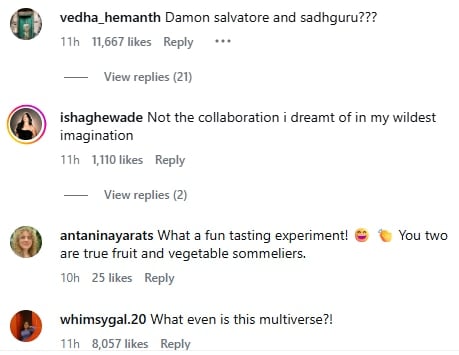
Social media reactionsranging from amused surprise to genuine curiosityshow how cultural crossovers can broaden the audience for technical topics like soil organic matter and regenerative agriculture. When public figures convene across domains, they create entryways for people who might not otherwise explore how farming practices shape nutrition, taste, and ecological resilience.
Important clarifications help ground the conversation. First, soil organic matter does not map one-to-one onto “better taste” or “more nutrients,” but it is a well-established foundation for agronomic function that can enable higher-quality outcomes. Second, “organic,” “regenerative,” and “conventional” are not monolithsthere is heterogeneity within each approach, and many farmers blend practices pragmatically to fit climate, soil type, and market realities. Third, consumer perceptions of quality frequently reflect a combination of production method, genetic variety, freshness, and post-harvest care.
For readers seeking practical takeaways, a few evidence-aligned steps stand out. Supporting growers who maintain living roots, minimize tillage, and build SOM can, over time, strengthen local food resilience. Asking about harvest timing and varieties can be as consequential as the organic label for immediate flavor. Where possible, shorter supply chains and seasonal purchasing tend to reduce post-harvest losses of delicate volatiles that carry aroma and taste. These choices align personal well-being with ecological recoveryprecisely the synthesis spotlighted in Somerhalder and Sadhguru’s conversation.
Viewed through the lens of dharmic ecology, the video affirms a unifying message: care for soil is care for society. Strengthening the life of the landthrough regenerative agriculture, conscious consumption, and respect for diverse food practicesadvances health, livelihoods, and harmony. The episode’s light banter and accessible format make the science memorable, while its underlying theme remains rigorously practical: resilient soils grow resilient communities.
Inspired by this post on Hindu Human Rights Blog.
