
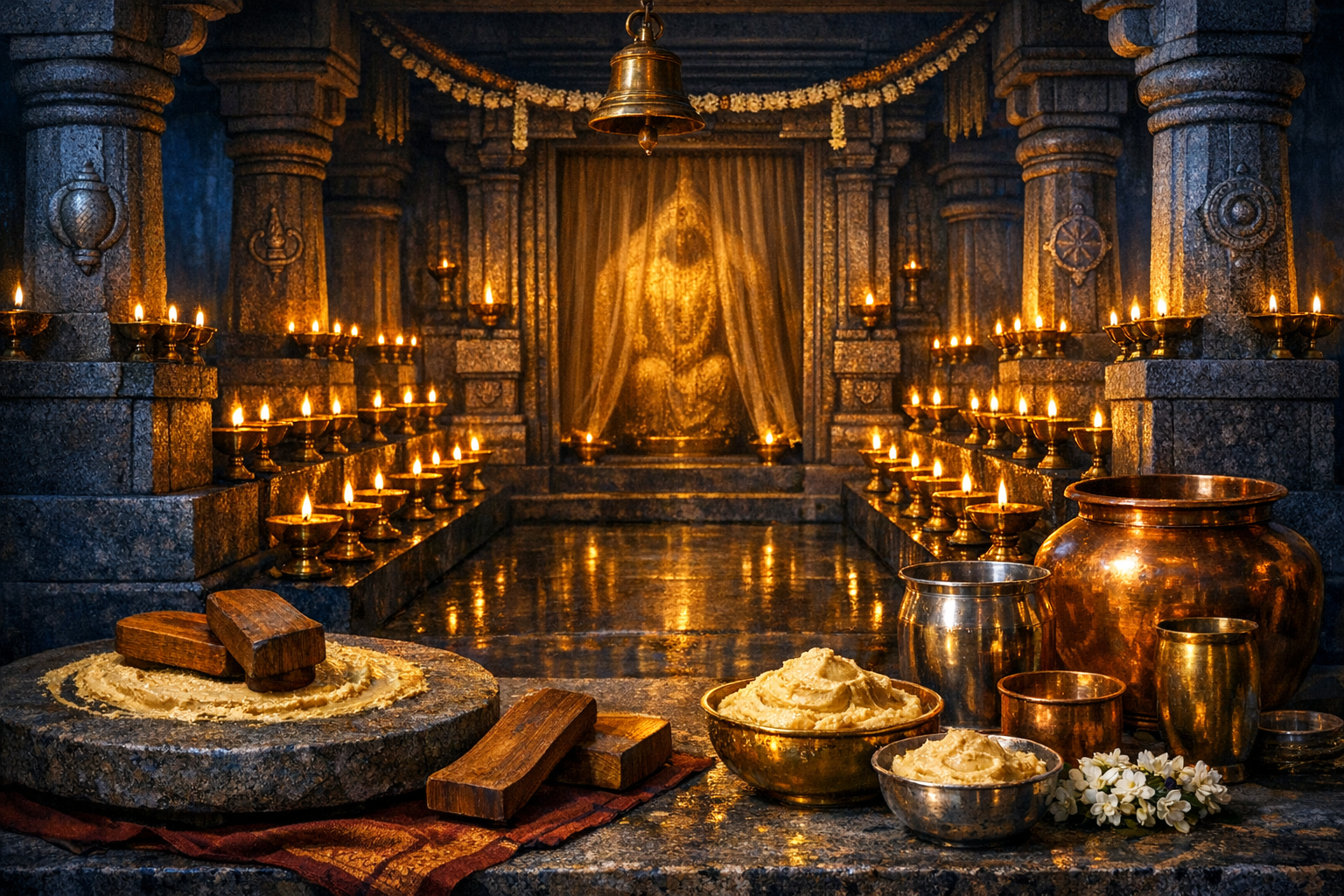
Gandham Amavasya is a distinctive observance at the Simhachalam Varaha Lakshmi Narasimhaswamy Temple near Visakhapatnam in Andhra Pradesh. In 2026, Gandham Amavasya falls on 17 April, aligning with Chaitra Amavasya in the Hindu calendar. The observance occurs precisely three days before Akshaya Tritiya, setting the sacred tone for the renowned Chandanotsavam and the rare Nijaroopa Darshanam, when Simhachalam Appanna (Varaha Lakshmi Narasimha Swamy) grants darshan in his Nijaroopa (original form).
Simhachalam holds an eminent place among Vaishnava kshetras. The presiding deity, venerated as Varaha Lakshmi Narasimha Swamy and affectionately known as Simhachalam Appanna, is customarily adorned with an extensive layer of sandalwood paste (gandham/chandanam) for most of the year. This continuous anointment is both theologicalsymbolically pacifying the Ugra aspect of Narasimhaand seasonal, providing a cooling, sattvic medium in the heat of the coastal Andhra summer.
Akshaya Tritiya is the axis of the temple’s ritual calendar. On this day, the temple conducts Chandanotsavam with extraordinary precision. The sandalwood covering is ceremonially removed to reveal Nijaroopa Darshanam, an event drawing devotees from across India. Following this rare darshan, the deity is reverentially bathed and once again anointed with freshly prepared sandal paste, renewing the protective and devotional mantle for the year ahead.
Gandham Amavasya functions as the sacred prelude to these events. Traditionally, this new moon day in Chaitra marks the formal initiation of temple preparations for Chandanotsavam. Within the temple’s established liturgical framework, priests undertake sankalpa (ritual intent), sanctum purification, and material readiness for the forthcoming anointment. Preparatory processessuch as cleaning silver and copper vessels, organizing sandalwood, and rehearsing the sevas and alankarasensure that the transition from Amavasya contemplation to Akshaya Tritiya abundance is seamless and ritually complete.
The calendrical placement on Chaitra Amavasya is theologically resonant. Amavasya, the lunar phase of inwardness and renewal, invites contemplation and resolve (sankalpa). As the first lunar month in many regional calendars draws to a close, this darkness of the moon symbolically absorbs residual agitation, making space for the auspicious expansions associated with Akshaya Tritiya. In temple praxis, this movement from inner stillness to outer celebration frames Gandham Amavasya as a hinge between introspective devotion and expansive grace.
Central to the observance is gandham (sandalwood), long extolled in ritual texts and Ayurveda for its sheeta (cooling), pavitra (purifying), and sattvic (serene) qualities. In Vaishnava worship, gandham distills devotion into touch, fragrance, and form, calming fiery energies while honoring Vishnu’s all-pervasive presence. At Simhachalam, this symbolism finds a particularly potent expression, as the cooling application is integrally linked to the theological understanding of Narasimha’s compassionate containment of his Ugra shakti.
Gandham Amavasya also marks an experiential shift in the temple’s atmosphere. From this day onward, the campus takes on a hushed intensity as volunteers, archakas, and administrators converge around a single, complex goal: enabling a darshan that devotees may witness only once each year. The build-upaccompanied by disciplined sevas, Vedic recitations, and the steady cadence of temple bellsbecomes a collective meditation, drawing the community into shared purpose and reverence.
Given the significance of the period from Gandham Amavasya through Akshaya Tritiya, footfall and logistical demands increase substantially. Temple administrations typically announce detailed schedules, crowd-management advisories, and darshan arrangements to accommodate the surge of pilgrims. Devotees are well advised to consult official communications for timings, queue protocols, and any special entry arrangements, respecting local guidelines and preserving the sanctity of the rituals in progress.
Historically and culturally, Simhachalam’s cycle of gandha-seva, Nijaroopa Darshanam, and Chandanotsavam exemplifies the continuity of Indic temple traditions. Inscriptions, oral memory, and regional literature all attest to an unbroken chain of practice, in which ritual precision, community cohesion, and aesthetic devotion converge. Gandham Amavasya, as the quiet threshold in this continuum, demonstrates how calendrical nuance and theological insight shape living heritage.
The broader dharmic resonance of sandalwood deepens this significance. Across Hindu, Buddhist, and Jain traditions, sandalwood has been valued in diverse waysas paste for sacred images or devotees, as incense in contemplative spaces, and as an emblem of purity and inner stillness. While each tradition articulates distinct theological frameworks, the shared esteem for gandham as a purifier and pacifier underlines a civilizational ethos of compassion, non-violence, and contemplative clarityprinciples that encourage harmony and mutual respect among dharmic paths.
For those unable to visit Simhachalam, Chaitra Amavasya can be observed at home with simple, tradition-aligned practices. Quiet japa of Narasimha stotras or the revered mantra “ugram viram mahavishnum” (as per one’s sampradaya guidance), offering of sandal paste to Vishnu’s image or saligrama, and acts of dana (charity) and maitri (kindness) align the household observance with the temple’s spirit. Such practices, performed with shraddha and adherence to one’s family or guru-guided customs, mirror the festival’s inward poise and outward benevolence.
It is also helpful to distinguish Gandham Amavasya from the better-known Chandanotsavam. Gandham Amavasya is the preparatory new moon observance in Chaitra that initiates spiritual and logistical readiness. Chandanotsavam takes place on Akshaya Tritiya and centers on the removal of the year-long sandal paste for Nijaroopa Darshanam, followed by a renewed, ceremonial anointment. The three-day interval embodies a carefully maintained ritual cadencefrom intention and purification to revelation and renewal.
From a Hindu calendar perspective, Gandham Amavasya underscores the precision with which tithi, season, and ritual intent align. Chaitra’s concluding Amavasya facilitates karmic closure and the setting of pure sankalpas, while Akshaya Tritiya, with its association with inexhaustible merit and auspicious beginnings, manifests those intentions in embodied celebration. This scriptural and calendrical logic illuminates why Simhachalam situates the start of Chandanotsavam preparations on the new moon and culminates them in the Nijaroopa Darshanam on Akshaya Tritiya.
Ultimately, Gandham Amavasya invites a contemplative appreciation of devotion as a disciplined artbalancing emotion with order, fervor with cooling restraint, and public celebration with private resolve. Its placement, purpose, and practice reveal how a single lunar day can tune an entire community to a shared sacred aim. As devotees gather at Simhachalam and households across the world align their prayers with this observance, the ethos of unity-in-diversitycentral to India’s dharmic traditionsfinds eloquent expression in fragrance, light, and darshan.
Inspired by this post on Hindu Pad.
