
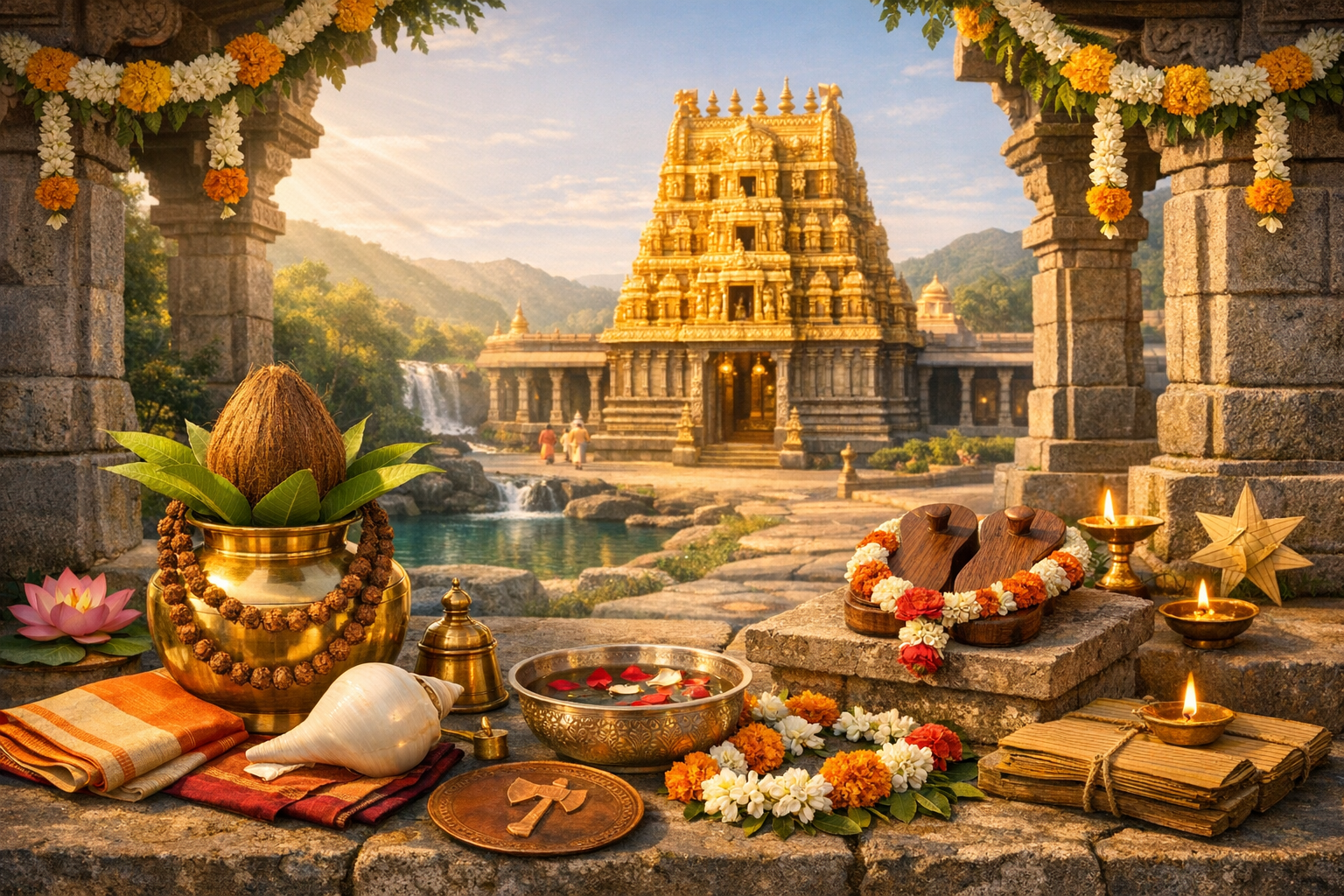
April in Tirumala unfolds as a spiritually charged month when Tirumala Tirupati Devasthanam (TTD) curates an arc of utsavams that bridge seasonal renewal with timeless Vaishnava traditions. In April 2026, three anchor dates structure the festive calendar: April 1 (Conclusion of Srivari Vasanthotsavams and Tumburu Theertha Mukkoti), April 13 (Commencement of Sribhashyakara Utsavams), and April 20 (Akshaya Tritiya, Parashurama Jayanti, Bhrigu Maharshi Varsha Thiru Nakshatram, and Srinivasa Dikshitulu Varsha Thiru Nakshatram). Each observance is rooted in the lunar panchang (Chaitra–Vaishakha), and together they create a continuum of devotion, learning, and seva that draws pilgrims, scholars, and families alike to the sacred hills.
Because festival scheduling at Tirumala follows tithi and nakshatra rather than only civil dates, pilgrims are advised to treat the dates as tied to muhurta windows that can vary with sunrise and local panchang computations. TTD typically announces operational specifics (timings, traffic plans, and special arrangements) closer to each event; verification through official channels before travel ensures smooth darshan planning.
Srivari Vasanthotsavams culminate on April 1, marking the ceremonial close of Tirumala’s spring celebration for Sri Malayappa Swamy with Sridevi and Bhudevi. The rite emphasizes renewal, auspiciousness, and the gentle aesthetics of the seasonqualities that resonate across dharmic cultures as metaphors for clarity, compassion, and fresh resolve.
Central to Vasanthotsavams is snapana tirumanjanam (ritual abhishekam) to the utsava murtis at the Vasantha Mandapam, where fragrant dravyas, floral garlands, and Vedic chants create an atmosphere of repose and sanctity. The concluding day typically features processional glories on the mada streets, with Malayappa Swamy’s darshan becoming the focal aspiration of assembled devotees.
Pilgrims often describe the concluding day as uniquely serene: the cadence of recitation, the cool touch of sandalwater during abhishekam, and the visual abundance of flowers invite sustained contemplation. For families, these observances are also an accessible way to introduce children to temple etiquette, the cadence of Vedic mantras, and the living continuity of Vaishnava worship.
Those seeking darshan on the Vasanthotsavams finale should allow extra time for queues and consider early morning arrivals. Observing the dress code and carrying minimal personal items speeds entry. For individuals with mobility needs, arriving before peak hours and using designated assistance points is advisable.
Also on April 1, Tumburu Theertha Mukkoti transforms Tirumala’s sacred topography into a pilgrimage of resolve and renewal. The phrase “Mukkoti” (literally “three crores”) poetically evokes the confluence of countless tirthas believed to sanctify the waters on this day, with Tumburu Theerthamensconced within the Tirumala forestreceiving a surge of yatris for holy snanam and prayer.
In traditional lore, the theertham is linked to celestial musicianship and penance, and its waters are revered as potent for inner purification. The trek from the main hill township to Tumburu Theertham is typically an undulating forest path (often approximated at 7–8 km each way), opened and supervised by authorities during daylight hours for the Mukkoti. The walk invites ecological sensitivity, quiet attention, and mutual care among co-pilgrims.
Practical guidance for Tumburu Theertha Mukkoti includes starting early, carrying sufficient water, wearing sturdy footwear, avoiding plastic, and strictly adhering to forest and TTD directives. Families with young children or elders may plan shorter participation near access points if undertaking the full trek is not feasible. Weather in April suggests heat management (caps, sunscreen) and mindful pacing.
For many, Tumburu Theertham complements temple-centric darshan by foregrounding sacred geographyan integral dimension of Sanatana Dharma where nature, rishi memory, and worship cohere. The day’s ethostruthfulness, restraint, and gratituderesonates across Hindu, Buddhist, Jain, and Sikh sensibilities that venerate simplicity, self-discipline, and seva.
On April 13, Sribhashyakara Utsavams commence, honoring Sri Ramanujacharyavenerated here as Sri Bhashyakarulufor his theological clarity, social inclusivity, and the systematization of Vishishtadvaita through the Sri Bhashya. The festival is anchored in his thirunakshatram (Ardra) and in Tirumala’s reverent memory of his reforms and compassionate pedagogy.
At Tirumala, the utsavams center on Sri Bhashyakarula Sannidhi on North Mada Street, with daily aradhana, prabandha parayana, and processions of the acharya’s utsava murti. Devotees witness acharya-paduka veneration, archakas offering nivedana, and scholars expounding on Ramanuja’s contributionsfrom temple liturgy to the philosophical reconciliation of devotion and reason.
Sribhashyakara Utsavams also underscore an ecumenical ethic. Ramanuja’s emphasis on compassionate access to worship and scriptural education opens a bridge across the dharmic family. The shared values of dana (generosity), karuna (compassion), ahimsa, and guru-bhakti inspire visitors from diverse lineages to recognize common ground in ethical living and contemplative practice.
Pilgrim tips for this period include selecting vantage points on the mada streets well before procession time, keeping to designated pathways, and maintaining a meditative decorum during recitations. Those interested in philosophical sessions or parayanam should track temple notices for timings and seating norms.
April 20 layers multiple observances, the most widely known being Akshaya Tritiya. The term “Akshaya” signifies the imperishable or inexhaustible, and tradition regards this day as especially auspicious for initiating dharmic vows, studying scriptures, supporting annadanam, and embarking on constructive endeavors aligned with lokasangraha (the welfare of all).
At Tirumala, pilgrims typically prioritize early darshan on Akshaya Tritiya and undertake vratas or sankalpas oriented to self-restraint, charity, and study. Such practices echo ethical motifs shared across Hinduism, Buddhism (dana, shila), Jainism (ahimsa, aparigraha), and Sikhism (seva, simran), reaffirming the unity-in-diversity ideal at the heart of Indian spiritual life.
Parashurama Jayanti, also observed on April 20, honors the sixth avatara of Vishnu. Parashurama is iconically associated with tapas, the discipline of kshatra guided by dharma, and the restoration of moral order. Devotees may undertake recitations such as Vishnu Sahasranama or meditate on the synthesis of strength and compassion championed by the avatara’s narrative.
The same date also marks Bhrigu Maharshi Varsha Thiru Nakshatram, a commemoration aligned to the annual star observance of Sage Bhrigu. In the Tirumala context, rishi-thirunakshatrams underscore the living memory of the rishi-parampara, encouraging study, humility, and gratitude toward the seers whose insights shape the scriptural and ritual ecosystem of the temple.
In addition, Srinivasa Dikshitulu Varsha Thiru Nakshatram is observed as an homage to the learned archaka lineage and teachers associated with Tirumala’s ritual and scholarly life. Such commemorations spotlight the institutional continuity of temple worship and learning, where tradition is transmitted through study, service, and ethical conduct.
Tirumala’s April calendar thus weaves together deity-centric utsavams, sage commemorations, and acharya memorials. The net effect for devotees is a fuller horizon of devotion: worship (puja), learning (svadhyaya), charity (dana/annadanam), and discipline (vrata) converge into an integrated practice relevant to contemporary life.
Darshan planning benefits from understanding TTD’s access modes. Options typically include Special Entry Darshan (Rs 300), Sarva Darshan (free), Slotted Sarva Darshan (SSD), and Divya Darshan (on completing the footpath pilgrimage via Alipiri or Srivari Mettu). Quotas, release windows, and verification procedures are periodically updated; consulting official notices well in advance is recommended.
Accommodation around festival dates is highly sought after. Pilgrims may combine TTD-run lodging with alternative arrangements in Tirupati city, using early bookings to secure proximity and reduce intra-day travel. Planning for buffer time before and after key dates (April 1, 13, and 20) helps manage crowd surges.
TTD’s Tarigonda Vengamamba Annaprasadam Complex sustains the annadanam tradition daily, a living embodiment of the Akshaya Tritiya ethos of unexhausted compassion. Partaking in annadanam or volunteering in allied services is a practical way to align personal vows with community welfare.
Adherence to dress code enhances both sanctity and ease of entry. Traditional attiresuch as dhoti/pyjama with upper cloth for men and saree/salwar with dupatta for womenis standard for many sevas and helps maintain the respectful visual culture of the temple.
Security and decorum norms include limiting valuables, observing queue etiquette, and noting that mobile phones and cameras may be restricted in inner zones. Families often assign a group lead to handle tokens and IDs while others manage essentials like water and shawls.
Within Tirumala, the free bus service connects major points throughout the day. On dense festival mornings and evenings, pilgrims can reduce transit time by walking between adjacent hubs on the hill, while reserving vehicle use for elders or those with mobility requirements.
April weather suggests hydration, light cottons, and mid-day shade. Early morning and late evening are the most comfortable for processions, while mid-day is ideal for study, satsang, or quiet contemplation at sub-shrines and mandapams.
Environmental stewardship is integral to the Tirumala experience. Avoiding single-use plastics, using designated waste points, and maintaining silence in forested or sanctum-adjacent areas are simple practices that honor both nature and co-pilgrims.
Calendrical note: the April 2026 observances span late Chaitra and early Vaishakha phases. Because tithis can straddle civil dates, local sunrise and panchang differences may result in regional variations. TTD’s operational circulars should be treated as final for temple logistics and timings.
In sum, April at Tirumala offers a concentrated syllabus of devotion and learning: Srivari Vasanthotsavams closes with floral serenity; Tumburu Theertha Mukkoti opens the forest as a sanctum; Sribhashyakara Utsavams deepens scriptural appreciation; and Akshaya Tritiya with allied observances empowers vows of service and study. The month models a dharmic integration that is meaningful across Hindu, Buddhist, Jain, and Sikh pathswhere compassion, discipline, remembrance, and shared welfare remain inexhaustible.
Note: Dates providedApril 1 (Vasanthotsavams conclusion; Tumburu Theertha Mukkoti), April 13 (Sribhashyakara Utsavams start), and April 20 (Akshaya Tritiya, Parashurama Jayanti, Bhrigu Maharshi Varsha Thiru Nakshatram, Srinivasa Dikshitulu Varsha Thiru Nakshatram)reflect the temple’s April 2026 plan. Final schedules, crowd-management advisories, and access modalities are subject to official TTD notifications.
Inspired by this post on Hindu Pad.
