
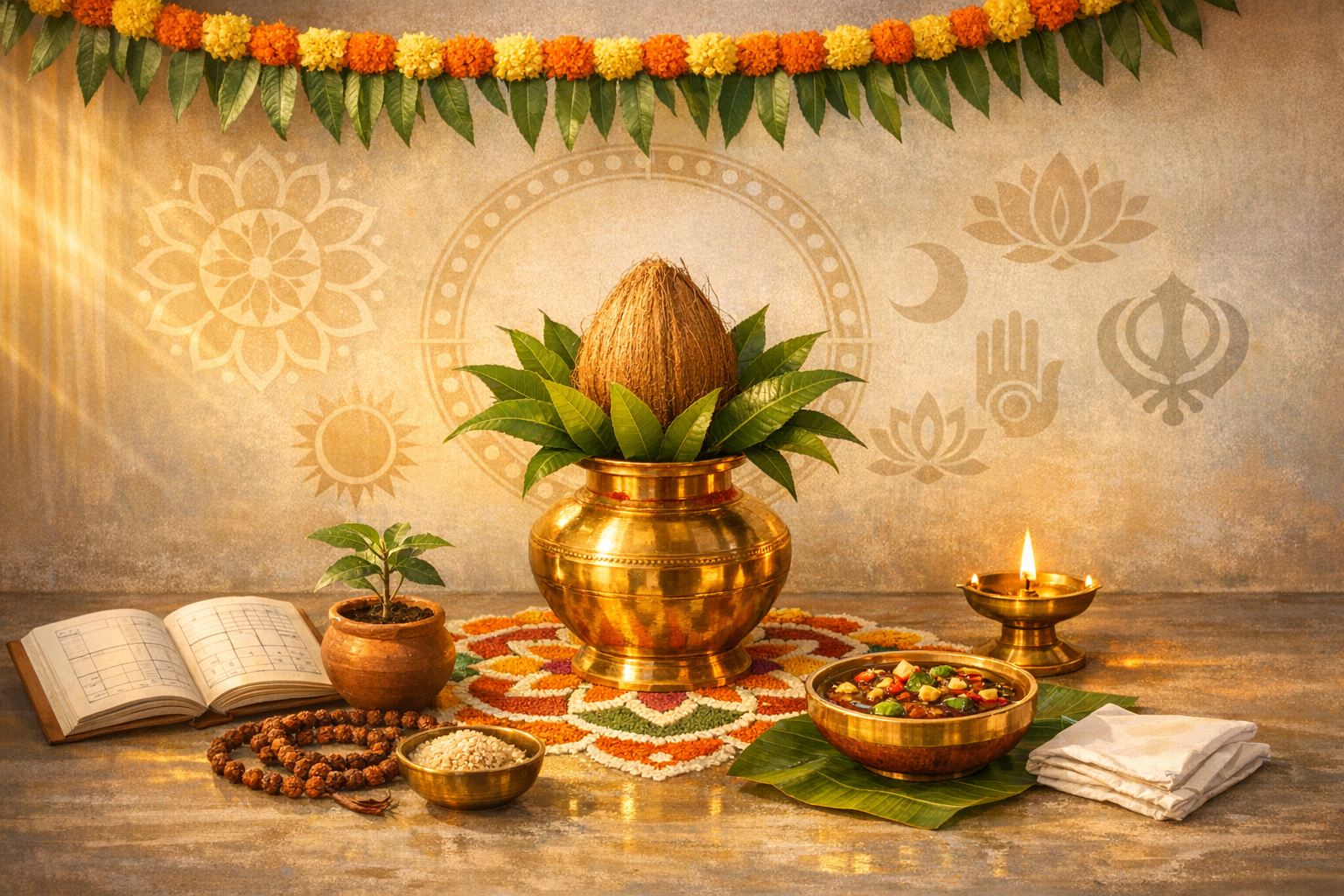
Ugadi 2026 will be observed on Thursday, 19 March, marking the advent of the Parabhava Nama Samvatsaram in the 60-year Hindu calendar cycle followed in Telugu and Kannada traditions. In many regions, this new year also centers the Panchang (almanac) for household and community guidance, setting the tone for spiritual practice, ethical living, and civic harmony across the year.
The 60-year Samvatsara cycle, preserved in the Hindu calendar and Panchang, is not merely a chronological convention; it is a cultural framework that encodes seasonal rhythms, ritual patterns, and social duties. Parabhavaoften glossed as “setback” or “overcoming adversity”is traditionally understood as an invitation to cultivate humility, steadiness, and strategic effort, rather than a prediction of defeat. Read through this lens, Parabhava Nama Samvatsaram encourages resilience-building remedies that transform potential headwinds into momentum for growth.
On Ugadi, communities commonly gather for Panchanga Shravanam (the annual almanac reading). This event offers an overview of the year’s Tithi (lunar day), Vāra (weekday), Nakshatra (lunar mansion), Yoga, and Karaṇa patterns, along with a broad “Aaya–Vyaya” (income–expenditure) outlook used in regional almanacs. While these indicators provide a collective orientation, personalized guidance is always refined by one’s Rashi and Nakshatra and by locally observed Panchang computations.
A meaningful Ugadi begins with a clear Sankalpa (intention). Many households incorporate the phrase “Parābhava-nāma samvatsare” within the Sankalpa, aligning personal effort with the year’s symbolic learning. The essence is practical: choose a small set of remedies that can be sustained through the year, and tie them to daily and fortnightly rhythms already embedded in the Hindu calendar.
Aaya–Vyaya 2026–2027 is discussed in many almanacs as a broad social indicator, yet tradition cautions against fatalism. The classical response is twofold: prudent planning and purposeful giving. Households can mirror the Aaya–Vyaya lens by committing to simple budgets, ring-fencing savings for education and health, and earmarking a portion of income for dāna (charity), annadāna (food relief), and community seva, thereby translating ritual into tangible social welfare.
Remedies (upāyas) in Parabhava Nama Samvatsaram can be organized into eight interlocking streams: mantra (japa and stotra), pūjā (including simple home worship), dāna (ethical giving), vrata (periodic fasts), niyama (disciplines), seva (service), svādhyāya (scriptural study), and yoga (breath, posture, and contemplation). Together they create a practical, sustainable routine that supports mental clarity, ethical strength, and communal harmony.
Dharmic unity is intrinsic to these remedies. Hindu, Buddhist, Jain, and Sikh traditions converge on dana/seva (compassion in action), disciplined practice, and remembrance of the sacred through japa/simran. Metta (loving-kindness) in Buddhism, pratikraman and samayik in Jainism, and seva and simran in Sikhism embody the same ethical current found in Hindu vrata, japa, and annadāna. During Parabhava, aligning with this shared dharmic core fosters inner stability and inter-community goodwill.
Ugadi observances typically begin with abhyanga snana (auspicious bath), doorway toranas, and worship of Ganesha followed by home or temple pūjā. In Telugu and Kannada homes, Ugadi pachadi or bevu-bella symbolizes acceptance of life’s mixed flavorssweet, bitter, pungent, and souran apt metaphor for Parabhava’s call to equanimity. Many communities also conclude with Panchanga Shravanam and annadāna.
A simple Ugadi morning sequence may include lighting a lamp, reciting Ganesha stotra, brief Navagraha salutations, and a personal Sankalpa such as: “asmin Parābhava-nāma samvatsare, sarva-śubha-phala-prāpty-artham, dharmārtha-kāma-mokṣa-siddhy-artham, imam niyama-sevām kariṣye.” This establishes an intention to uphold dharma, serve society, and maintain consistent practice across the new year.
In Vedic astrology, year-long remedies often invoke the Navagraha not as determinism but as a grammar for self-cultivation. The most reliable approach emphasizes daily steadiness over spectacle: brief mantra japa, a weekly fast or vrata, monthly annadāna, and periodic temple visits synchronized to one’s local Panchang are time-tested and accessible.
For Surya (Sun), offer arghya at sunrise with quiet gratitude, chant the Aditya Hridayam or the simple mantra “Om Suryaya Namah,” and practice Surya Namaskar. These acts fortify clarity, purpose, and vitalityqualities that steady leadership under potential Parabhava headwinds.
For Chandra (Moon), Monday observances benefit mental balance: Shiva worship, offering milk or white rice as charity, and recitation of “Om Somaya Namah.” Quiet evening walks under moonlight, reducing overstimulation after sunset, and keeping a reflective journal are contemplative companions to these remedies.
For Mangala (Mars), Tuesday remedies emphasize disciplined energy: Hanuman worship, Hanuman Chalisa, donation of red lentils (masoor dal), and constructive physical work that channels assertiveness into protection and service.
For Budha (Mercury), Wednesday cultivates intellect and speech: Vishnu Sahasranama recitation, green gram (moong dal) charity, and mindful communication practices. Students and professionals alike benefit from a weekly hour of sustained study without digital distraction.
For Guru (Jupiter), Thursday is for learning and benevolence: “Om Gurave Namah” japa, yellow gram or turmeric charity, and satsanga or svādhyāya. Supporting a child’s education, sponsoring books, or mentoring aligns deeply with Guru’s restorative arc.
For Shukra (Venus), Friday honors beauty, care, and gratitude: Lakshmi–Narayana pūjā, white sweets or clothing donation, and small acts of refinement in one’s home environment. Supporting arts education and dignifying women’s welfare are enduring Shukra-aligned dānas.
For Shani (Saturn), Saturday remedies focus on duty and compassion: lighting a sesame-oil lamp, feeding crows, assisting the elderly or the physically challenged, and chanting Shani stotras. Keeping promises and honoring time-bound commitments are practical Shani observances.
For Rahu and Ketu, tradition emphasizes Devi and Skanda. Durga Saptashati/Devi Mahatmyam recitation, Skanda Shashti observances, and Ganesha worship are classical. Cultivating discernment in media intake and ending gossip are modern equivalents of Rahu–Ketu hygiene.
Temple-based Navagraha Shanti, Abhishekam to Shiva or Vishnu, and periodic Archana sustain collective well-being. Simple circumambulations and quiet seated contemplation after darshan help integrate the ritual into an anchored inner state.
Vrata rhythms offer a reliable scaffold. Observing Ekadashi (with sattvic diet and japa), Pradosha for Shiva, Sankashti Chaturthi for Ganesha, Purnima/Amavasya for introspection and tarpana traditions, and weekly guruvar or somvar fasts, when suitable, creates a balanced spiritual cadence aligned to the Panchang.
Homa and yajna, when available locally, can be integrated without grand expense. Agnihotra at sunrise and sunset, performed properly, is a compact fire-offering practice tied to daily cycles. When performed in community spaces, it doubles as eco-sensitive ritual and shared fellowship.
Dāna is a central Parabhava remedy because it transforms latent anxiety into compassionate action. Annadāna, educational sponsorship, medical aid, support for monks, sadhus, bhikkhus, sadhvis, and sevādārs, and contributions to community kitchens exemplify dharmic giving. Sikh langar, Buddhist dana, Jain ahimsa-informed relief, and Hindu annadāna all converge on the same ethical axis.
Environmental seva aligns seamlessly with Parabhava’s call to steadiness: planting native trees, protecting water bodies, reducing single-use plastic, and participating in periodic cleanliness drives. Performing these acts on Amavasya or Purnima, after simple prayers for all beings, embeds ecology within spiritual routine.
Ayurvedic wisdom recommends aligning with ṛtu-charya. In Vasanta (spring) around Ugadi, favor light, warm foods, regular movement, and gentle detox (with guidance for one’s constitution). In Grishma (summer), emphasize hydration, cooling foods, and moderated exertion, preserving energy for high-priority duties.
Yoga and breath practices steady the nervous system through Parabhava. A brief daily sequencenadi-shodhana pranayama, a few asanas suited to one’s body, and five minutes of mantra japaoften outperforms sporadic intensity. Evidence-based breath training calms the vagus-mediated stress response, making other remedies more effective.
Household rites that reinforce cohesionlighting a lamp at dusk, a shared reading from the Bhagavad Gita, Dhammapada, Jain Agamas, or passages from Guru Granth Sahib, and a moment of gratitude before mealsconvert homes into learning circles. Small, repeated signals of sanctity change the social climate of a family.
Business and professional life benefit from Parabhava’s humility ethic. Begin initiatives after a brief Ganesha and Lakshmi–Narayana prayer, consult Abhijit Muhurta when feasible, and build “buffers” in schedules and finances. Ethical clarity in contracts and transparent communication are the modern equivalents of ritual protection.
Students can convert Parabhava into a year of deep focus. A daily 45–60 minute distraction-free study block, weekly revision, Saraswati remembrance on Thursdays, and device-free mornings yield measurable improvements. The Panchang’s discipline becomes a study plan.
Travelers and migrants can observe a compact safety protocol: Hanuman remembrance before departure, keeping a small japa session during long waits, and committing to one meaningful act of help during the journey. Inner steadiness travels better than luggage.
Inter-community fellowship is a living remedy. Joint food relief (langar/annadāna), shared tree-planting, and interfaith reading circles anchored in dharmic texts showcase unity in spiritual diversity. When communities practice together, fear yields to friendship.
Seasonal waypoints help maintain momentum. In Vasanta, set intentions and declutter; in Grishma, conserve energy and refine routines; in Varsha (monsoon), stabilize immunity and increase svādhyāya; in Sharad, deepen japa and study; in Hemanta and Shishira, consolidate learnings and invest in community welfare projects.
Those who keep a formal Sankalpa may include language such as “Parābhava-nāma samvatsare, śrī-guru-śaraṇam, sarva-bhūta-hita, śānti–samṛddhi–kṣemāya”linking the year’s effort to refuge in wisdom, welfare of all beings, and the pursuit of peace and prosperity.
Ethical disciplines (yama–niyama) are the master remedies behind all others: ahimsa (non-violence), satya (truthfulness), asteya (non-stealing), brahmacharya (right use of energy), aparigraha (non-hoarding), along with śauca (purity), santoṣa (contentment), tapas (discipline), svādhyāya (study), and Īśvarapraṇidhāna (devotion). Parabhava becomes a year-long workshop in living these values consistently.
Because personal charts vary, individuals may further refine remedies by Rashi and Nakshatra under the guidance of a competent acharya, monk, or spiritual mentor. Local Panchang detailsincluding Rahu Kalam and Abhijit Muhurtashould be consulted before undertaking major life events.
In essence, Parabhava Nama Samvatsaram is not a forecast of loss but a curriculum for inner victory. Ugadi 2026 provides the launchpad: set a few grounded practices, anchor them to the Hindu calendar, and express them as service to society. Across Hinduism, Buddhism, Jainism, and Sikhism, this shared dharmic rhythm turns remedies into relationships and ritual into resilience.
Inspired by this post on Hindu Pad.
