
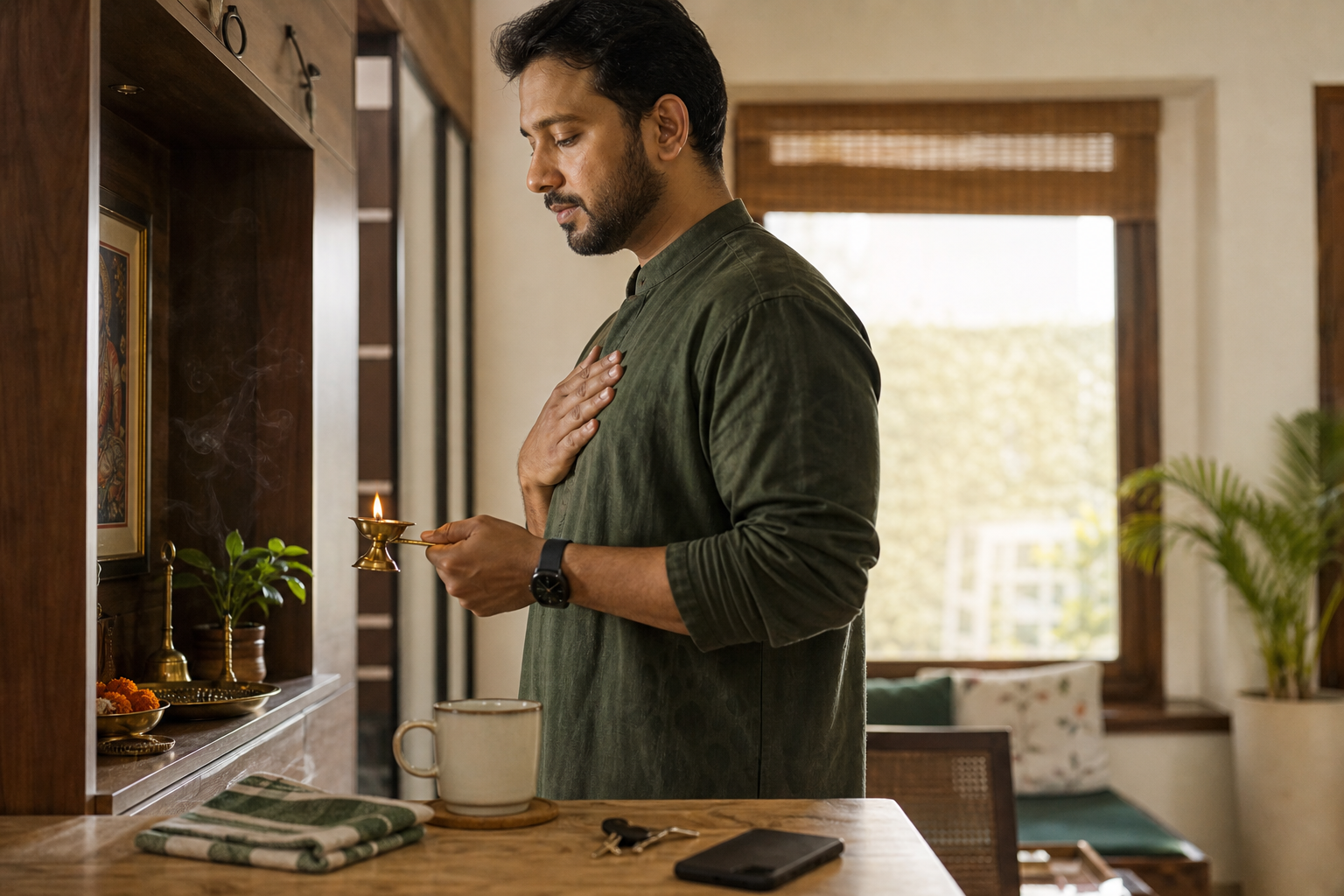
Your hands may be washing dishes, answering a message, or preparing for puja while your mind rehearses an old conversation or tries to control a future result. You are physically here, but your attention is living somewhere else.
Hindu practice does not require you to empty the mind or withdraw from ordinary responsibilities. It gives you a way to return: gather your attention, observe thought without automatically obeying it, identify the dharma of the moment, act wholeheartedly, and loosen your claim on the result. The aim is not uninterrupted calm. It is the ability to come back without turning every distraction into another struggle.
Presence begins with dharma, not with feeling calm
If you wait to feel peaceful before living attentively, work, family, uncertainty, and emotion will keep postponing your practice. Dharma brings attention back to the life that is actually asking something of you.
When the mind starts racing, do not begin with, “How can I stop thinking?” That question can become more thinking. Use dharma as a practical inquiry instead:
- What is actually in front of me?
- What action belongs to my role, relationship, or responsibility here?
- What part of this situation can I influence through conduct?
- What am I trying to control that no action can settle right now?
Then perform the next responsible action. If you are listening, listen instead of composing your reply. If you are working, complete the task that is present instead of mentally living in its reception. If an apology, decision, or boundary is due, presence means addressing it; it does not mean using serenity to avoid discomfort.
This also gives you a useful test for overthinking. Reflection produces a clearer decision, a concrete action, or a conscious acceptance that nothing more can be done yet. A mental loop merely revisits the wish for certainty. When another round of thought would not change your next action, return to the action itself.
Practise karma yoga by separating effort from outcome
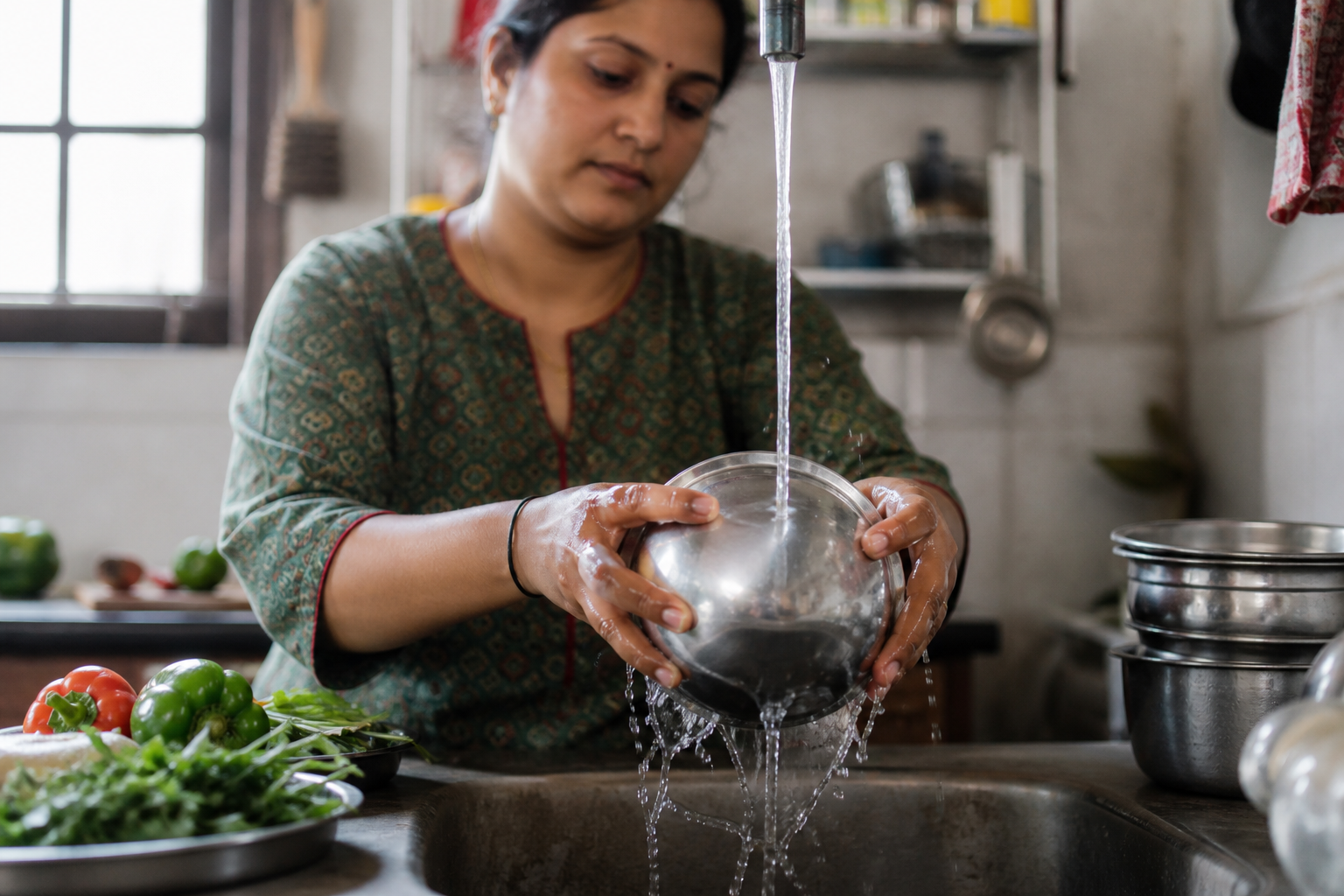
Much of our absence from the present is result-fixation. The body performs the task while the mind imagines praise, rejection, success, embarrassment, or every possible consequence. Karma yoga interrupts that split by asking you to act wholeheartedly without making inner steadiness depend on the outcome.
Non-attachment is not indifference. It does not lower the standard of your work, erase consequences, or excuse careless conduct. It separates two things that anxiety tends to fuse: responsibility for action and ownership of everything that follows from action.
- Define the duty. Decide what honesty, care, preparation, or courage requires from you in this situation.
- Give the action your attention. Work with the information and ability available now rather than repeatedly imagining how the result will feel.
- Notice the claim on the future. When the mind demands a guaranteed response, distinguish what your conduct can influence from what it cannot command.
- Complete and review. Learn from your choices, correct what is yours to correct, and release what no longer belongs to action.
Suppose you are preparing for an important conversation. Your field of action includes speaking carefully, listening, and correcting a misunderstanding. It does not include forcing another person to agree. At work, your field includes sound effort and responsible communication. It does not include controlling every judgment made about that effort.
This distinction prevents two opposite errors. Attachment says, “Unless I obtain this result, my effort has failed.” Passivity says, “The result is not mine, so the quality of my conduct does not matter.” Karma yoga accepts neither. You owe the moment your best rightful action; you do not own the whole chain of consequences.
Use witnessing awareness when thought and emotion take over
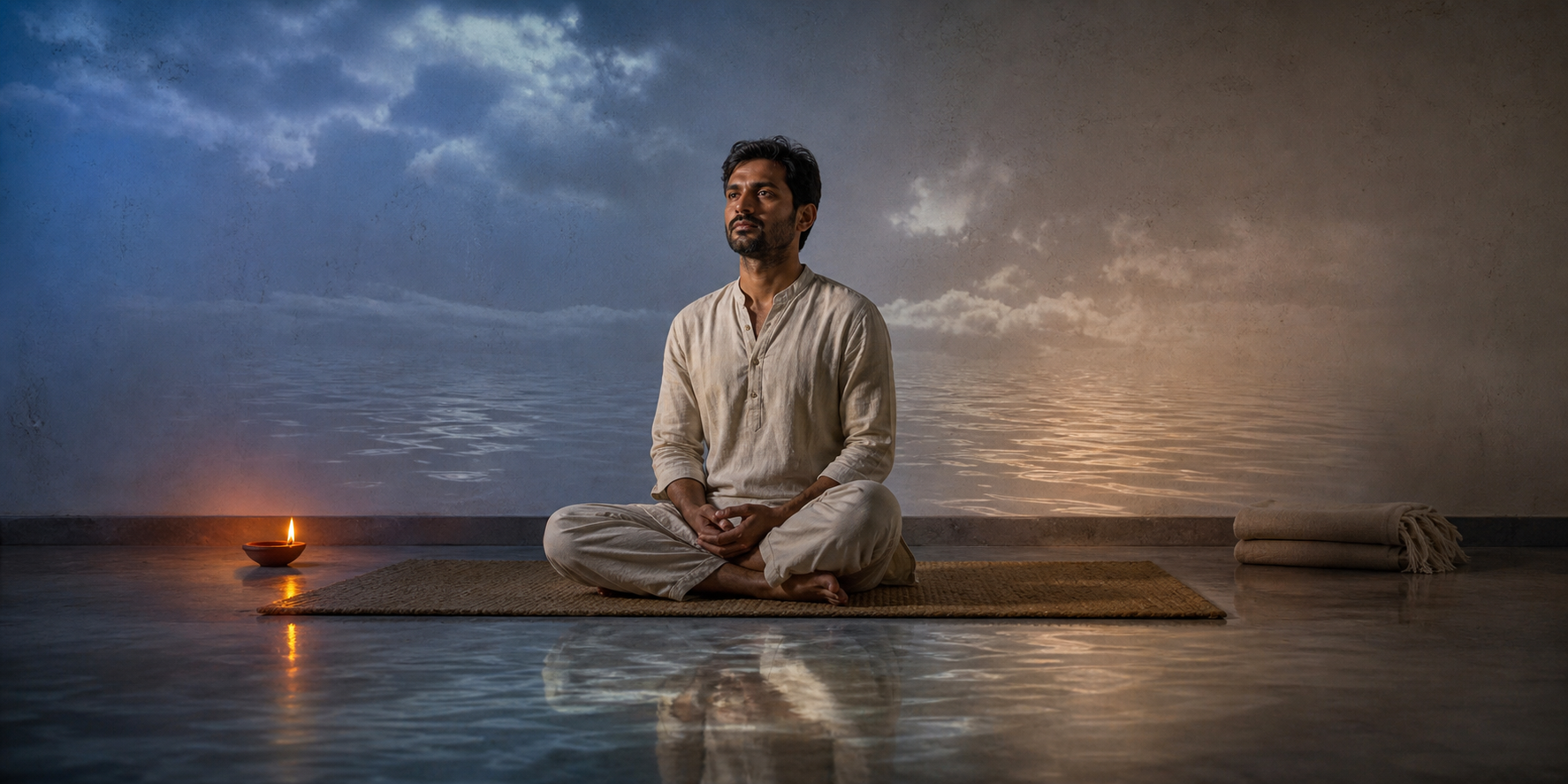
Pratyahara gathers attention from its outward scattering. Dhyana steadies attention in meditation. Sakshi-bhava, witnessing awareness, lets you observe a thought or feeling without immediately treating it as an instruction, a verdict, or your entire identity. Together, these practices refine thought by making room between experience and reaction.
When you notice that you have been carried away, use this sequence:
- Pause the additional story. Do not argue with the thought or build a case around it.
- Rest attention on the breath. Let breathing give the mind a present event to notice.
- Allow what is here. Joy, grief, uncertainty, and fear do not need an immediate spiritual label.
- Witness without surrendering agency. A thought can be present without becoming your next action.
- Return to dharma. Ask whether anything responsible must be done now. If so, do it. If not, return to the person, prayer, or duty before you.
The witness is not a cold spectator. It creates enough inner space for compassionate discernment. You can acknowledge anger without making anger the speaker, feel uncertainty without demanding a premature answer, and experience joy without grasping at its continuation.
Do not measure this practice by whether thoughts disappear. Hindu disciplines of attention do not require the destruction of thought; they train thought to serve awareness and right action. The meaningful sign is that you notice more quickly, react less blindly, and return more willingly.
If repetitive thoughts are causing severe distress or preventing ordinary functioning, these disciplines can remain part of your spiritual life, but they should not replace qualified mental-health care.
Build the practice into transitions you already have
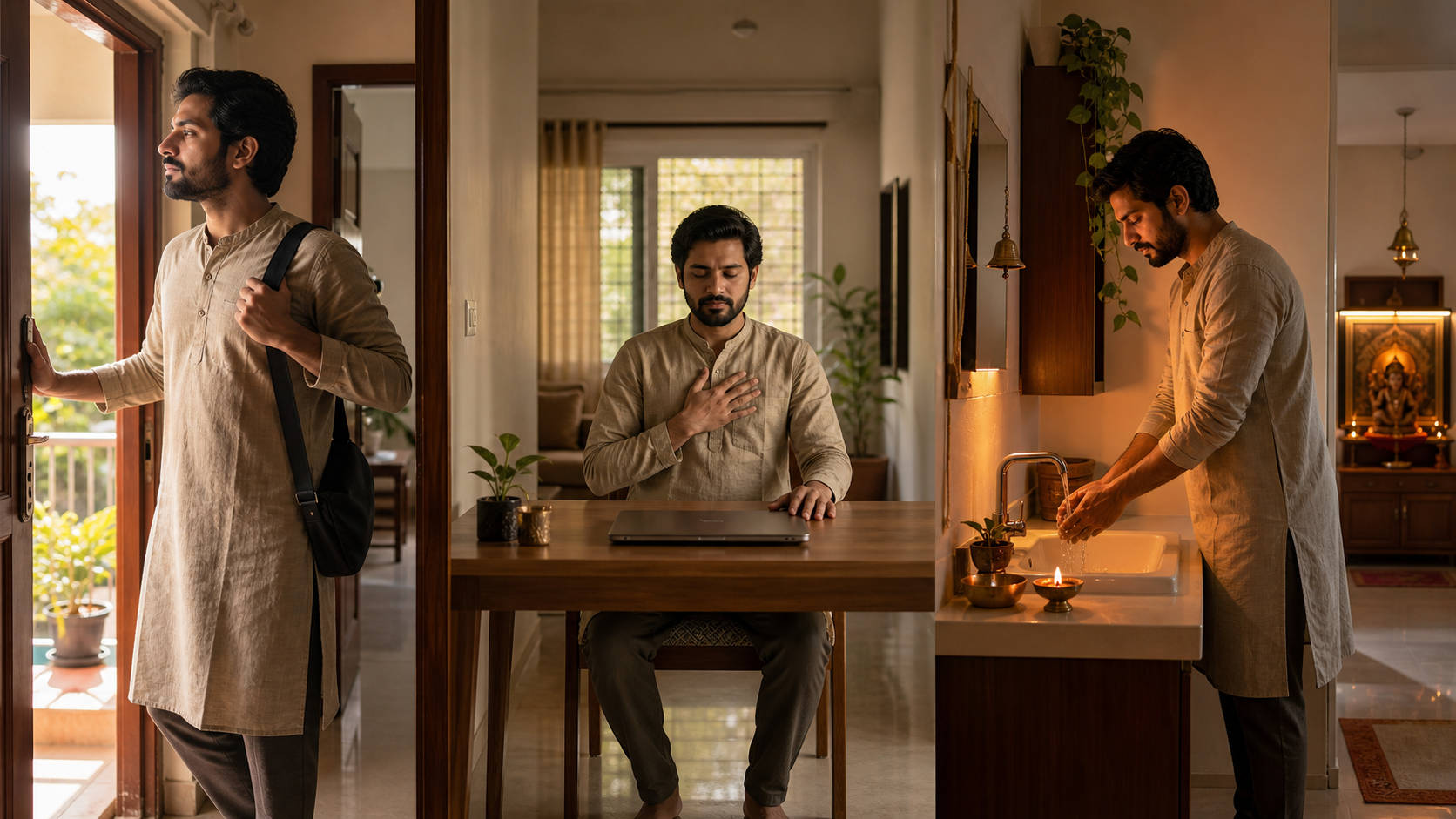
Presence becomes dependable through repetition, not through an occasional intense experience. Natural transitions are useful because they already interrupt the flow of the day. Instead of waiting for ideal conditions, attach a small act of recollection to moments that already occur.
- At the beginning of the day: name something you have received with gratitude. Read a brief passage from the Bhagavad Gita or an Upanishad slowly enough to carry a practical instruction into the day.
- Before beginning a duty: settle the breath and state what the task requires from you. Let that requirement, rather than the imagined reward, organize your attention.
- Between activities: release the previous result before entering the next responsibility. This is a simple form of pratyahara: gathering attention that is still scattered across what just happened.
- During a charged conversation: notice whether you are hearing the other person or rehearsing your defence. Return to listening, then respond in a way that serves both dharma and the relationship.
- When joy, grief, or uncertainty appears: permit the feeling to be present before converting it into a judgment about your whole life.
- At the close of the day: notice where you acted with attention and where attachment carried you away. Let the review guide the next practice rather than becoming self-punishment.
Presence also needs an outward test. A practice that makes you less available to duty, less compassionate, or more absorbed in your own spiritual state has lost its balance. Seva restores that balance by turning attention toward useful action without making recognition the reward. Aparigraha applies inwardly as well: you can release the urge to possess every answer before you are willing to live.
The wider Dharmic family illuminates the same discipline from complementary angles. Buddhist mindfulness emphasizes moment-to-moment awareness. Jain aparigraha loosens grasping, while anekantavada cautions against treating a partial view as the whole truth. Sikh simran and seva join remembrance to selfless service. The practical convergence is important: presence should make your conduct clearer, less grasping, and more compassionate, not merely make you feel relaxed.
If your routine becomes another performance metric, simplify it. Keep the smallest anchor that reliably brings you back. A quiet breath followed by the question, “What is mine to do now?” is more useful than an elaborate discipline you continually postpone.
Key takeaways
- Use dharma to move from mental looping to the next responsible action.
- Practise karma yoga by giving full effort while releasing the demand to control every result.
- Use pratyahara, dhyana, and sakshi-bhava to gather attention and observe thoughts without automatically following them.
- Allow emotion to be present, then let compassionate discernment determine your conduct.
- Attach breath, gratitude, study, and recollection to transitions that already occur in ordinary life.
- Judge presence by its fruit in duty, relationships, and seva, not by how spiritually calm you appear.
Choose the next transition in your day and use it deliberately. Gather the attention, identify the duty, perform it fully, and leave the uncontrollable remainder where it belongs. The present moment does not ask you to solve your entire life. It asks you to meet the life that is here.
References
