
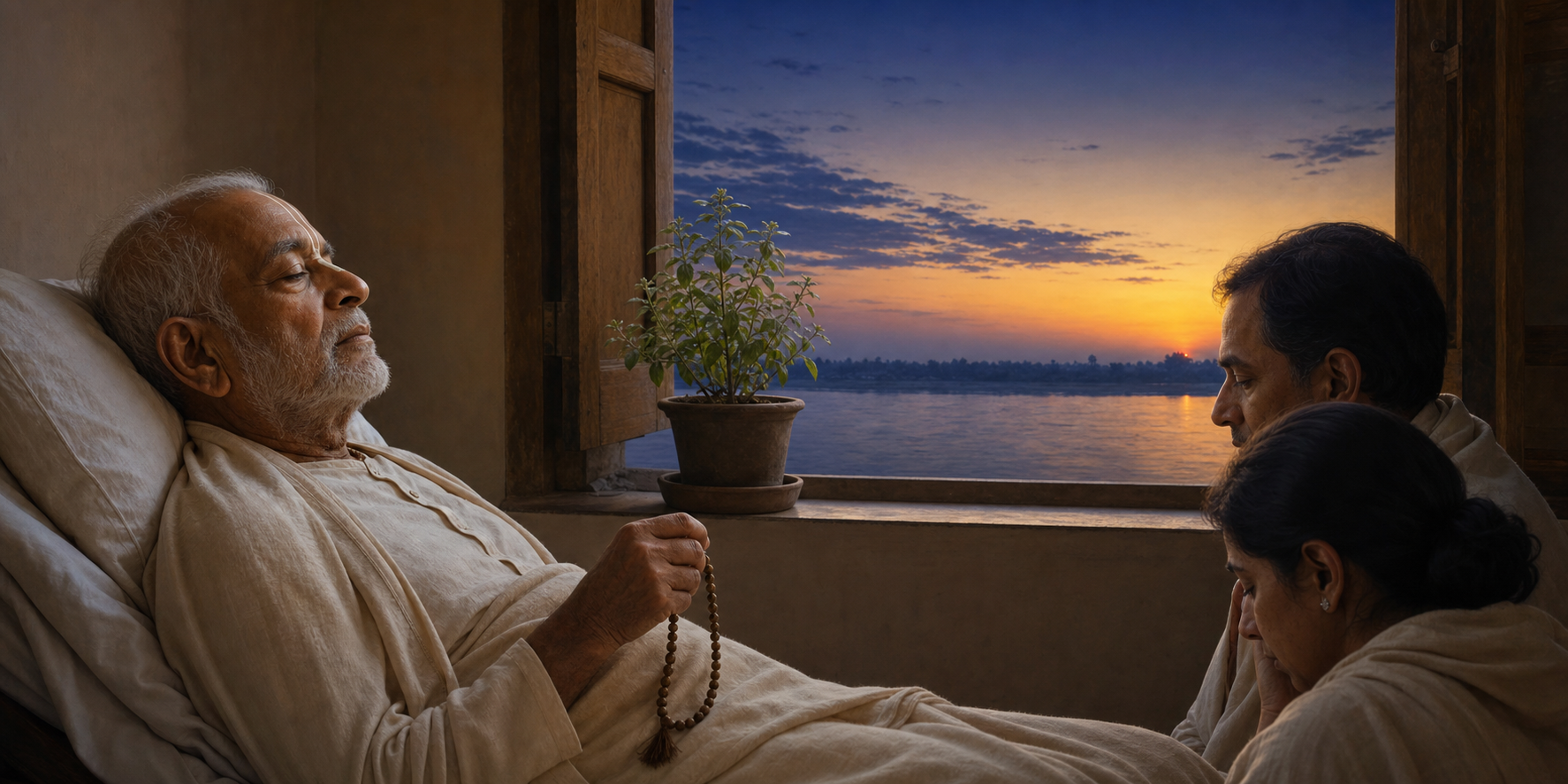
Vaishnava remembrance at the end of life brings several responsibilities together: grief must be given room, the departed person must not be reduced to the body, and devotion must not become a license for embellishing an incomplete biography. Two accounts about different devotees illuminate how communities can meet those responsibilities under very different evidentiary conditions.
The notice concerning Tranakarta Das Ognibene is notably brief, while the remembrance of Dhirasanta Gosvami Maharaja describes choices reportedly made during his final months. Read together, they show that a meaningful tribute depends not on the quantity of available detail but on the disciplined relationship between truth, spiritual interpretation, and care for the living.
Two remembrances with different evidentiary limits
The account of Tranakarta Das Ognibene begins with a narrow factual foundation. It says that a Facebook post attributed to Swarup Hebel identified Tranakarta Das as a godbrother and announced that he had left his body. The article explicitly notes that the supplied material did not establish a date or place of departure, family information, temple affiliations, or particular services. Its central editorial decision was therefore restraint: explain the devotional significance of the announcement without filling the biographical silence with assumptions.
The account of Dhirasanta Gosvami Maharaja offers a more developed narrative. It reports reflections on the final three months of his life, including a medical recommendation for chemotherapy and radiation, his decision to leave the hospital after signing release documents, and his return to an apartment in Kaunas where devotees and Deities were present. It interprets those decisions through a distinction between devotional acts experienced as obligations and those embraced through inward desire.
These accounts complement one another, but they should not be treated as independent corroboration of the same event: they concern different devotees and provide different kinds of testimony. The first demonstrates how little a tribute may responsibly claim when documentation is sparse. The second shows how a fuller narrative can support theological reflection, while its reported details still remain attributable to that source rather than independently verified facts.
What ‘leaving the body’ affirms without erasing grief
In the Vaishnava vocabulary explained by the Tranakarta Das account, saying that someone has ‘left the body’ expresses a distinction between the enduring spiritual self and the temporary embodied condition. The phrase changes the frame of death, but it does not require the community to deny loss. Friends and fellow practitioners still experience the absence of a visible relationship; philosophy gives that separation meaning rather than making it unreal.
This distinction also changes what is considered worthy of remembrance. An initiated name ending in ‘Das,’ meaning servant, points toward an identity organized around service rather than status. The same source cautiously interprets the notation ‘ACBSP’ in connection with the disciplic family of A. C. Bhaktivedanta Swami Prabhupada, while avoiding unsupported claims about Tranakarta Das’s personal history. It also explains ‘godbrother’ as spiritual kinship formed through shared shelter in guru, discipline, sacred learning, and service.
Such language can hold mourning and hope together. The body is acknowledged as the place in which relationships and service became visible, but it is not treated as the whole person. Consequently, remembrance may include chanting, prayer, gratitude for association, and reflection on seva. The theological claim does not cancel grief; it guides how grief is carried.
Devotional agency amid the demands of the body
The remembrance of Dhirasanta Gosvami Maharaja explores a different end-of-life question: how a practitioner may exercise agency when medical institutions, bodily needs, and spiritual priorities make competing demands. According to that account, treatment was presented to him as necessary, but he identified dependence on God as another alternative. The source records his position in the brief declaration, “It is to depend on God.”
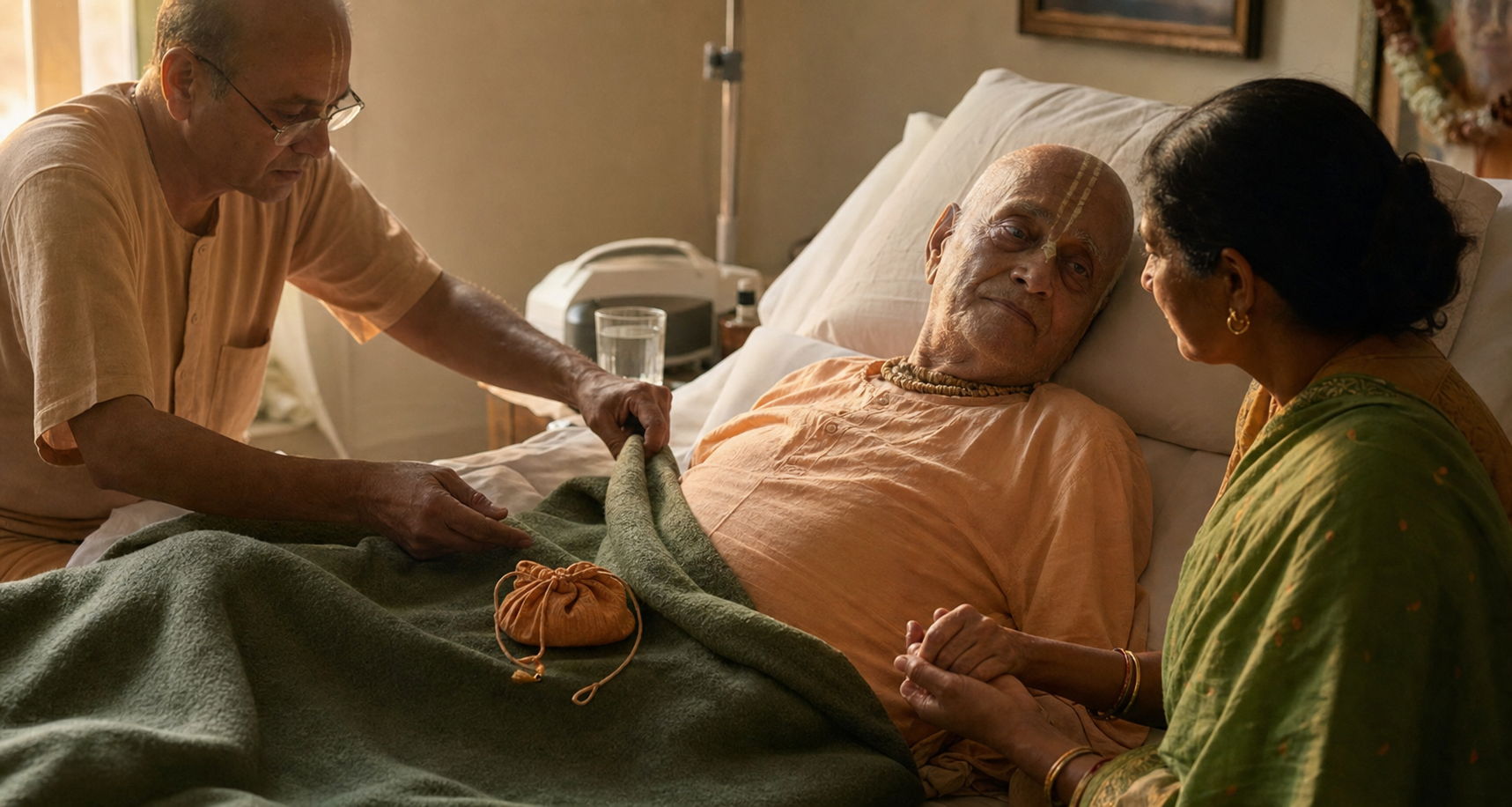
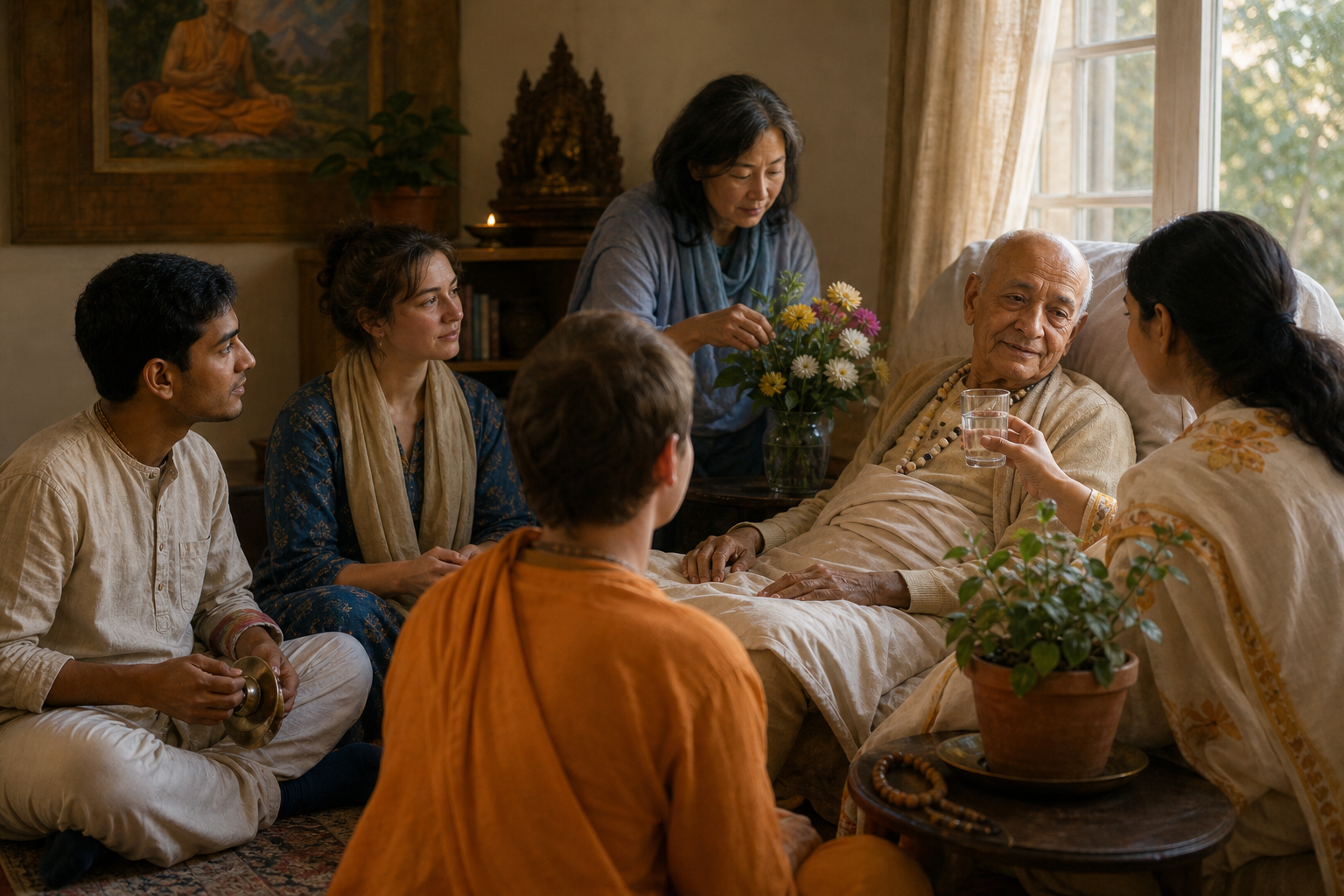
The account interprets his departure from the hospital not as passive resignation but as a deliberate choice about the atmosphere of his remaining life. His return to an apartment with devotees and Deities placed association, worship, discussion of Krishna, and affectionate care at the center. Within the source’s argument, the significant change was from doing what circumstances seemed to require to choosing what the heart had been trained to desire.
That interpretation requires an important boundary. A single devotee’s reported decision is not a general rule against medical treatment, and the source itself says that his response should not mean bodily care is meaningless for everyone. Vaishnava teaching regards the body as temporary, but also as an instrument of service. Decisions about treatment therefore cannot be reduced to a contest between faith and medicine. The account is most responsibly read as testimony about one practitioner’s priorities, not as clinical guidance or a universal test of surrender.
The deeper point is that the location and manner of care can affect consciousness. Clinical competence, symptom relief, devotee association, sacred sound, worship, and personal agency need not be treated as inherently incompatible. The reported experience of Dhirasanta Gosvami Maharaja highlights why spiritual wishes should be heard clearly: end-of-life care concerns not only how long the body continues, but also how a person understands and uses the time that remains.
Key takeaways for responsible Vaishnava remembrance
- Separate fact from interpretation. State what a source actually reports, then identify the devotional meaning being drawn from it.
- Let uncertainty remain visible. Missing dates, services, affiliations, and family details should invite verified testimony, not imaginative reconstruction.
- Honor both the soul and the mourners. The conviction that the self survives bodily death does not invalidate sorrow over lost association.
- Treat final choices as personal, not prescriptive. A devotee’s decision about medical care may express mature agency without becoming a rule for others.
- Make remembrance practical. Chanting, prayer, truthful recollection, reconciliation, and attentive companionship allow tribute to become continuing service.
Memory as preparation for those who remain
Both accounts turn attention from public prominence to the formation of consciousness. The Tranakarta Das remembrance observes that much devotional service may survive only in the hearts of people who received friendship, correction, encouragement, or practical help. The Dhirasanta Gosvami remembrance asks whether regulated practice has matured into genuine desire for Krishna. One protects the truth of a life from invention; the other examines the inner orientation with which a life approaches its end.
This synthesis suggests a demanding standard for community memory. Accuracy is not separate from devotion, because a tribute built on speculation cannot honor the person it seeks to praise. Nor is theology separate from care, because teachings about the soul become credible through the way devotees accompany the ill, comfort the grieving, preserve trustworthy memories, and respect conscientious choices.
Future remembrances can serve the departed and the living by gathering verified testimony early, recording spiritual wishes with care, and strengthening relationships before illness makes every conversation urgent. In that form, memory does more than preserve a name: it helps a community learn how to remain truthful, present, and devoted at life’s most vulnerable threshold.


References
- DharmaRenaissance Blog — Remembering Tranakarta Das Ognibene: A Powerful Vaishnava Tribute of Devotion
- DharmaRenaissance Blog — Powerful Tribute to Dhirasanta Gosvami: Choosing Devotion Over Obligation