
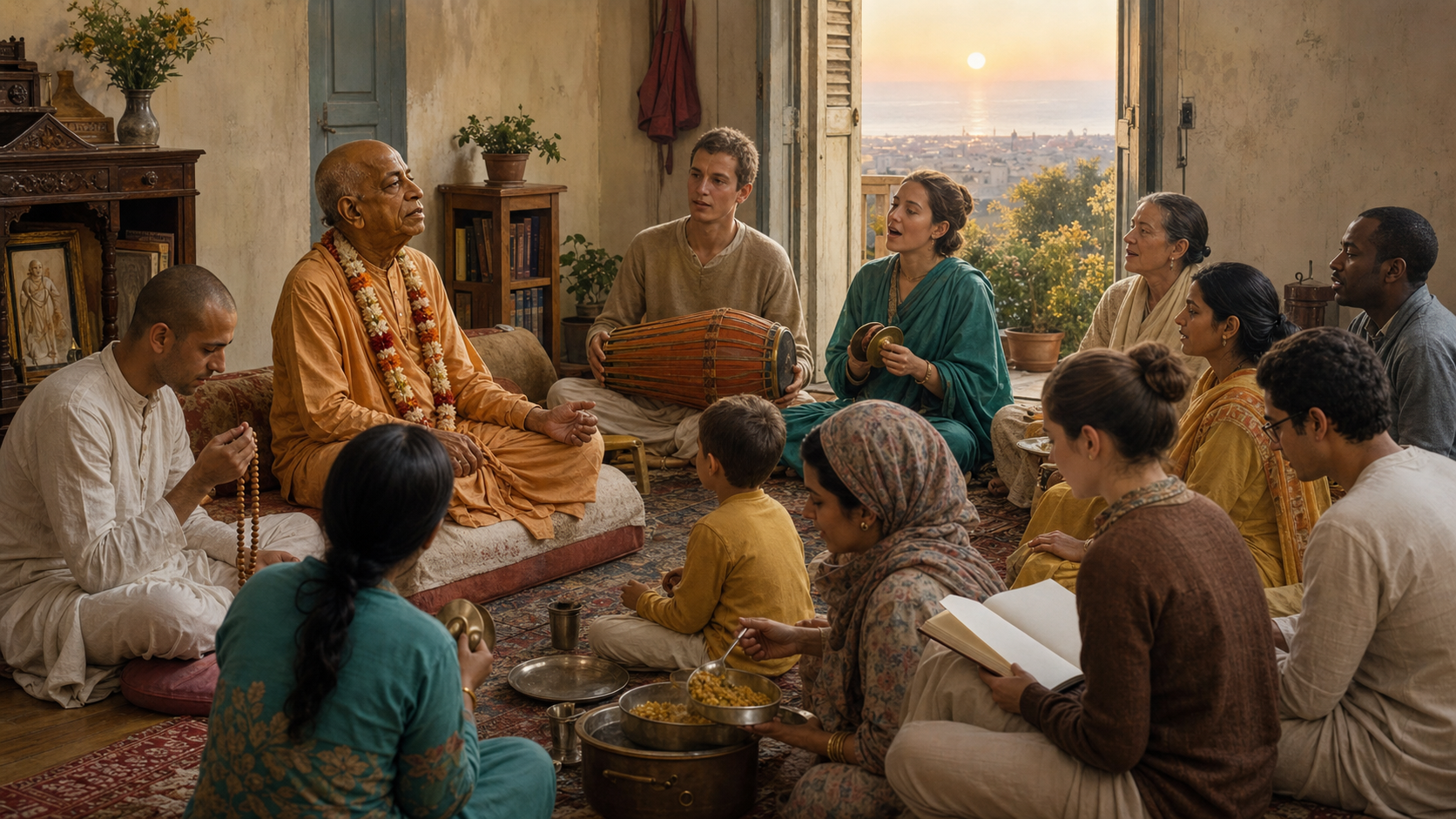
If you know Srila Prabhupada’s name but still wonder why his legacy matters beyond ISKCON commemorations, look at the kind of spiritual life his mission made possible. He did not present bhakti merely as an inherited identity or an inspiring philosophy. He presented it as something you could practise, study, test through your conduct, and sustain with others.
That distinction explains why a voyage begun in the previous century still matters. Srila Prabhupada’s global significance rests not only on where Vedic teachings travelled, but on the repeatable pattern through which people could receive them without first being born into an Indian religious environment.
The legacy is a method, not merely a memory
On September 17, 1965, A.C. Bhaktivedanta Swami Srila Prabhupada entered the port of New York City. The arrival attracted little notice. Its importance emerged through what followed: a sustained effort to bring Vedic philosophy into conversation with life in mainstream America.
It is tempting to tell this history as a dramatic contrast between one unnoticed arrival and a later global movement. That is memorable, but it can hide the mechanism that made the change possible. A journey becomes a legacy only when other people can continue what the traveller began.
Srila Prabhupada joined accessible spiritual practice to rigorous exposition. Each side protected the other. Practice prevented philosophy from becoming an intellectual ornament. Scriptural explanation prevented devotion from collapsing into mood, personality worship, or vague spiritual enthusiasm.
You can use that balance to evaluate any attempt to carry his work forward. If a programme offers emotion without study, it preserves only part of the method. If it offers concepts without devotional discipline, it also preserves only part. The characteristic strength lies in bringing understanding and practice together.
Bhakti became portable because it became practicable

Bhakti is devotion expressed as a living relationship with the Divine. For it to cross cultural boundaries, people need more than a definition. They need a way to place devotion inside an ordinary day.
Srila Prabhupada’s practical framework emphasized daily sādhana, scripture-based study, ethical living, compassion, service, and self-discipline. Sādhana means regular spiritual practice undertaken with steadiness rather than waiting for inspiration. It gives devotion a place in your schedule. Study gives it intellectual depth. Ethical conduct tests whether it is changing you. Service directs it beyond private experience.
This is why the framework can remain meaningful in very different settings. A person may live far from Bharat, speak another language, or lack a large inherited religious network. The central questions remain available: Are you returning to practice? Are you learning from scripture? Is your conduct becoming more truthful and disciplined? Are you serving anyone besides yourself?
Those questions also protect the meaning of adaptation. A tradition does not become universal by making every demand optional. It becomes accessible when the path into its disciplines is clear. Accessibility concerns how a person enters. Fidelity concerns what the person is being invited to enter. Srila Prabhupada’s legacy depends on holding both together.
What the New York arrival changed

The arrival in New York mattered because it began a durable engagement between Vedic teaching and contemporary Western life. The resulting mission catalyzed a global movement identified with the International Society for Krishna Consciousness, or ISKCON. Yet it is useful to distinguish the institution from the full reach of the legacy.
ISKCON gives the movement an organizational identity. Srila Prabhupada’s broader influence can also be noticed wherever people encounter bhakti as a disciplined, scripture-grounded way of life rather than as an exotic cultural object. The distinction is not a reason to separate the legacy from its institutional history. It is a way to see how spiritual influence travels through several layers at once.
First, teachings must become intelligible to people outside their original social setting. Then they must become habits rather than occasional interests. Finally, those habits need communities capable of sustaining study, service, and memory. If any layer disappears, transmission becomes fragile: ideas may circulate without practice, private practice may fade without fellowship, and institutions may remain while their spiritual purpose weakens.
This gives you a sharper way to assess claims about global spiritual influence. Do not ask only whether a teacher’s name is internationally recognized. Ask whether people can understand the teaching, embody it regularly, and pass it on without stripping away its foundations. Recognition is visibility. Transmission is continuity.
Phoenix shows how a tradition becomes local without becoming rootless
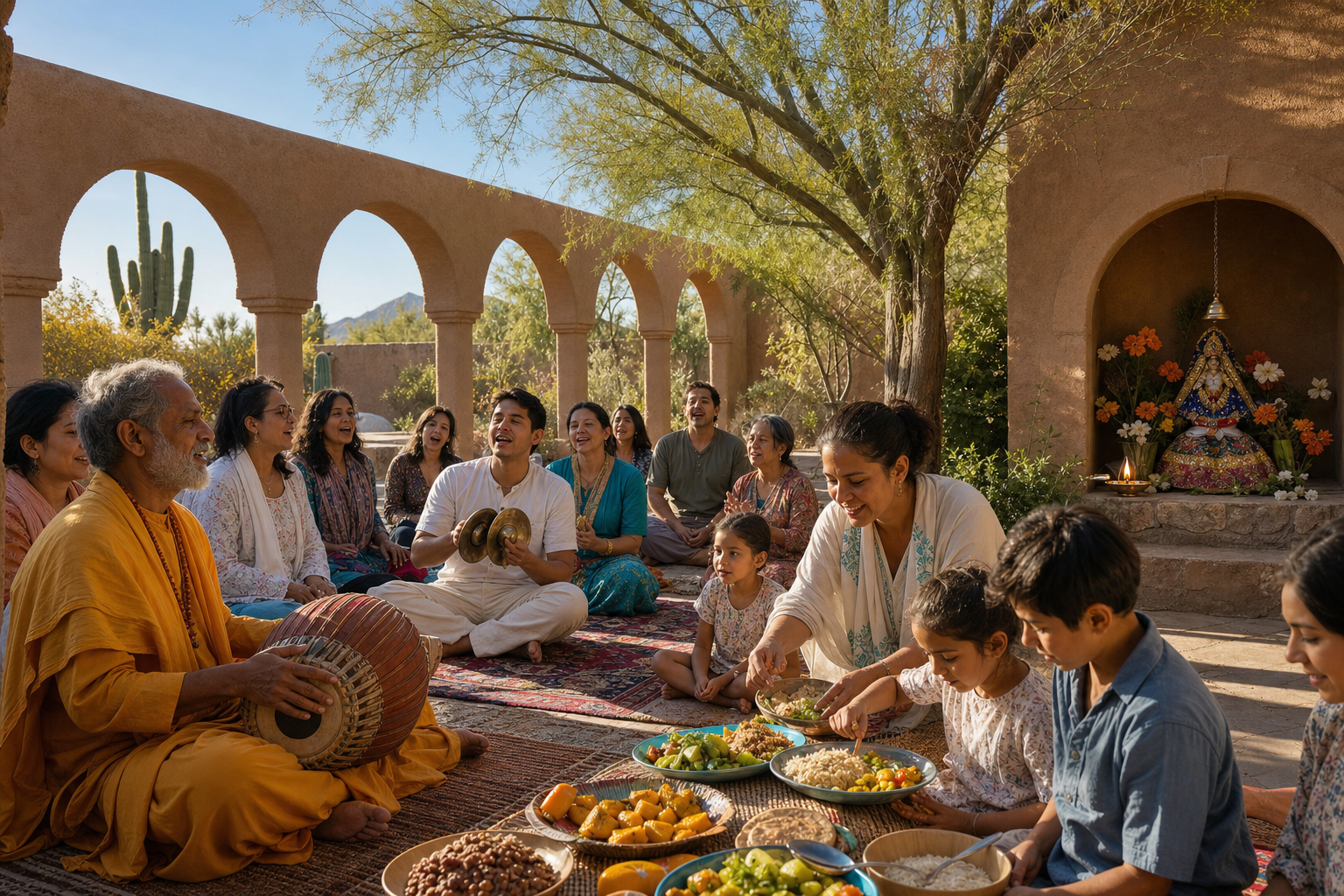
A commemoration at NJP dham in Phoenix, South Africa, illustrates what continuity can look like far from the port where the mission began. In a diaspora setting, remembrance does more than preserve a biographical date. It helps a community reconnect inherited culture, present-day spiritual practice, and responsibility to the next generation.
Phoenix also corrects an overly simple picture of globalisation. Dharma does not move in a straight line from Bharat to one undifferentiated “West.” It enters particular communities with their own histories and cultural networks. A living tradition therefore needs both memory and local participation. Memory protects its roots. Participation prevents it from becoming a museum display.
If you are organizing a commemoration, this distinction should shape the programme. A chronology of Srila Prabhupada’s life can orient the audience, but chronology alone does not transmit bhakti. Connect the remembered event to a present practice, a scriptural question, an ethical commitment, or a form of service. Give participants something they can continue after the gathering ends.
The same test applies to diaspora families. Cultural pride is valuable, but it cannot substitute for spiritual formation. Children and newcomers need to know not only that Srila Prabhupada was important, but why disciplined devotion, learning, compassion, and service deserve a place in their own lives. Heritage tells them where something came from. Practice lets them discover what it does.
Inter-dharmic respect does not require false sameness
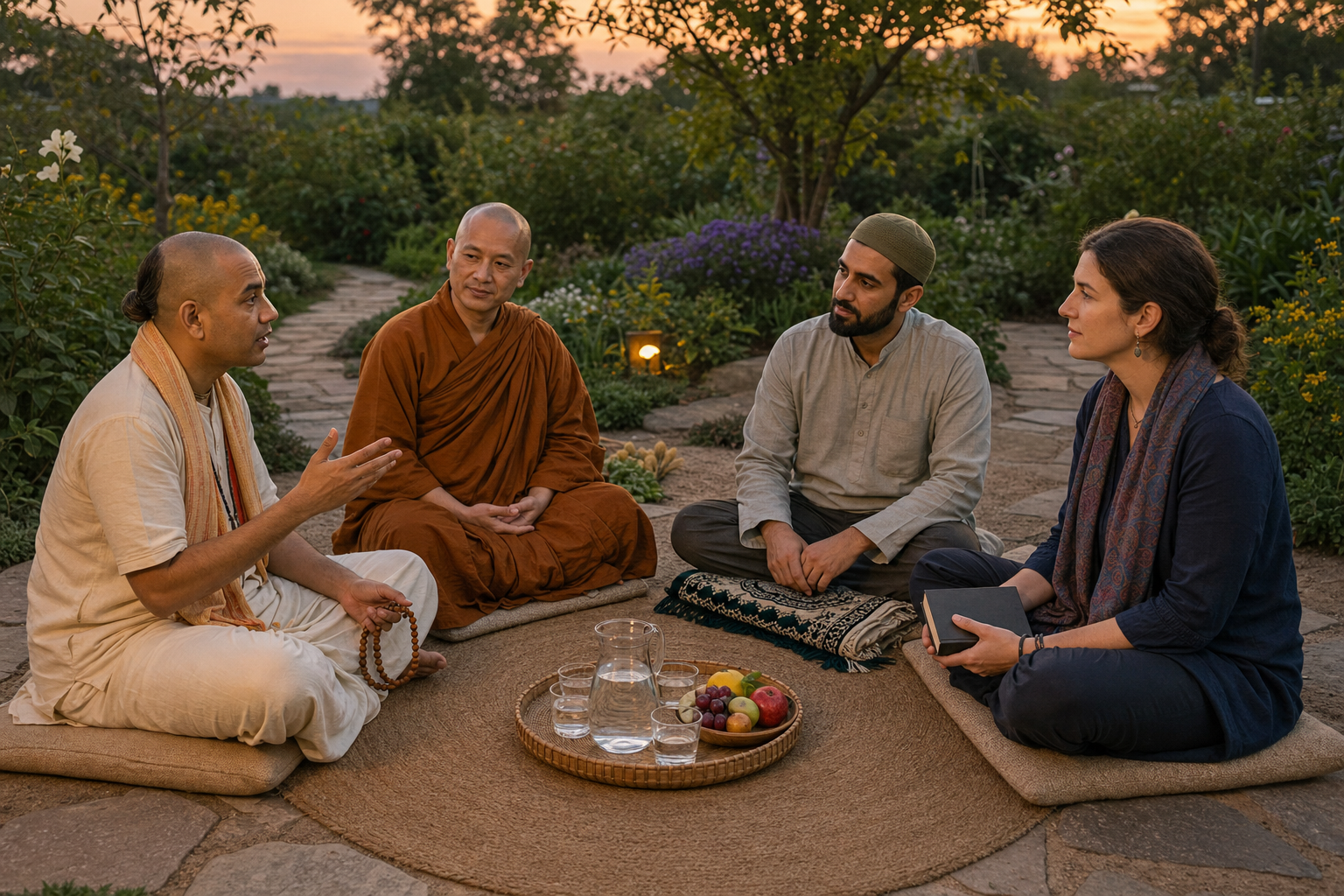
Srila Prabhupada’s work belonged to a specific bhakti tradition rooted in Vedic scripture. Respecting that specificity is essential. A global legacy becomes harder to understand, not easier, when every religious difference is dissolved into the claim that all paths teach exactly the same thing.
At the same time, rootedness does not prevent dialogue. Hindu, Buddhist, Jain, and Sikh communities can recognize meaningful ethical meeting points in nonviolence, truthfulness, and mutual respect. These shared values create room for cooperation without requiring agreement on every doctrine, scripture, conception of the Divine, or spiritual discipline.
When you speak about Srila Prabhupada in an inter-dharmic setting, name his devotional commitments accurately. Then identify the ethical concern that others can genuinely share. This approach avoids two common failures: presenting one tradition so vaguely that it loses its substance, or presenting it so defensively that conversation becomes impossible.
The resulting unity is disciplined rather than sentimental. It allows traditions to meet through truthfulness about their differences and respect for the moral work they can undertake together. Srila Prabhupada’s combination of scriptural fidelity and an open invitation to inquiry offers a useful model for that encounter.
Turn commemoration into a repeatable practice
Srila Prabhupada passed away on November 14, 1977. Remembering that date can express gratitude, but gratitude becomes spiritually consequential when it changes what you do. You do not need to reproduce someone else’s circumstances. You need to carry forward the relationship between devotion, learning, conduct, and service.
- Choose a stable point for sādhana. Attach your practice to a part of the day you can protect. Consistency matters because a devotional life cannot be built entirely from occasional intensity.
- Pair practice with scriptural study. Do not use reading merely to collect quotations. Ask what the passage teaches, what assumption it challenges, and what change in conduct it requires.
- Select an ethical test. Truthfulness, nonviolence, compassion, and self-discipline become real in decisions. Notice where convenience, anger, appetite, or social pressure pulls you away from the principle you affirm.
- Make service concrete. Identify a need in your temple, family, or community and accept a task that can actually be completed. Devotion matures when it is expressed through responsibility.
- Practise in community without surrendering discernment. Fellowship can sustain effort, while sincere inquiry protects practice from becoming mechanical. A healthy devotional setting should make room for both commitment and serious learning.
This framework is deliberately more demanding than admiration. Admiration can remain passive. Practice exposes where your understanding is shallow, where your discipline fails, and where service is still selective. That exposure is useful: it turns legacy from a story about the past into a standard for the present.
Key takeaways
- Srila Prabhupada’s 1965 arrival matters because it began a sustained mission, not because the arrival itself was publicly celebrated.
- His global method joined accessible devotional practice with rigorous, scripture-based explanation.
- Daily sādhana, ethical living, study, compassion, self-discipline, and service made bhakti practicable across cultural settings.
- Diaspora communities preserve the legacy best when remembrance leads participants back to living practice.
- Inter-dharmic cooperation works through honestly shared ethical values, not by pretending that Hindu, Buddhist, Jain, and Sikh teachings are identical.
- The most faithful tribute is continuity: understand the teaching, practise it steadily, and help a community transmit it without losing its roots.
Choose one place in your ordinary life where devotion can become regular: a protected practice, a passage studied carefully, an ethical commitment, or a needed act of service. Keep it realistic enough to continue and serious enough to affect your conduct. That is where Srila Prabhupada’s global legacy stops being someone else’s history and becomes a responsibility you can carry.
References
