
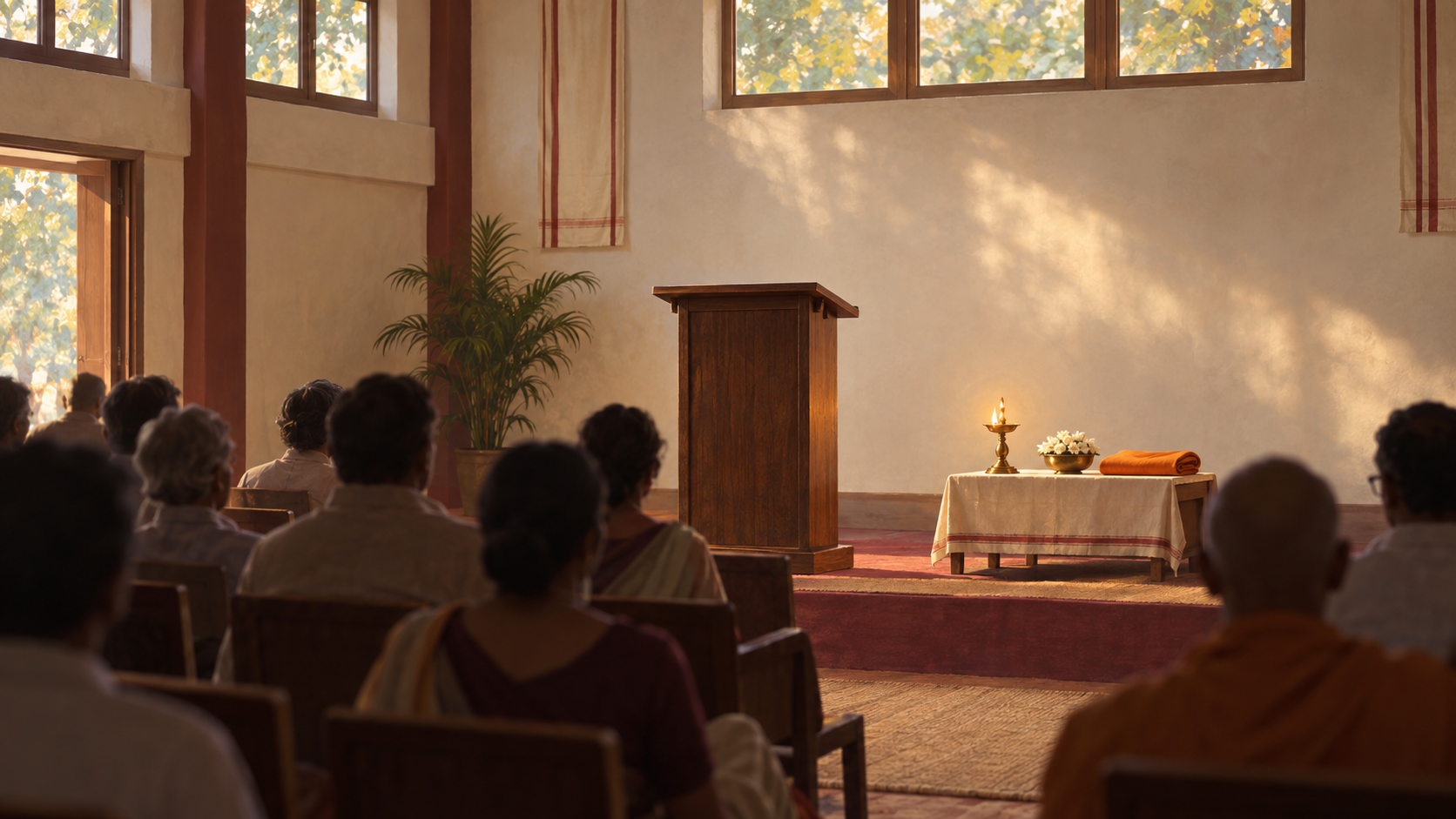
If you came looking for a complete biography of Hladini Devi Dasi, resist the temptation to fill gaps with devotional-sounding guesses. What can be established is narrower: a memorial lecture for H.G. Hladini Devi Dasi was presented by H.G. Vrajalila Devi Dasi on 10 September 2026. That gives us the occasion, the speaker, and the person being remembered. It does not give us permission to invent the rest of her life.
The honest way to receive such a lecture is to listen on three levels: what is factually established, what the speaker remembers from her own position, and what you will do differently after hearing it. Keeping those levels distinct protects the devotee’s memory while allowing that memory to shape living service.
Start with the facts and protect what remains unknown

Devotional respect does not require you to suspend ordinary care with facts. In fact, care is part of respect. Adding an undocumented relationship, achievement, teaching, or episode may feel harmless when the intention is praise, but repetition can soon turn an assumption into an accepted biography.
Use three headings when you take notes: Fact, Testimony, and Response. Under Fact, place only what can be established directly: the person’s name, the nature of the event, the speaker, and the date. Under Testimony, record recollections given during the lecture and preserve who supplied them. Under Response, write the quality or practice that you want to carry into your own life.
Do not collapse the three columns. A personal recollection can be spiritually valuable without serving as a comprehensive biography. Your response can be sincere without becoming something Hladini Devi Dasi herself explicitly instructed. This simple separation prevents two common mistakes: upgrading one memory into a universal claim and attributing your own interpretation to the departed devotee.
If you later share notes, keep the same distinctions. Write that Vrajalila Devi Dasi remembered or emphasized something when that is what occurred. Do not replace a situated recollection with phrases such as “everyone knew” or “she always taught” unless those broader claims are independently established. Warmth loses nothing when attribution remains precise.
Listen for the transferable pattern behind the praise
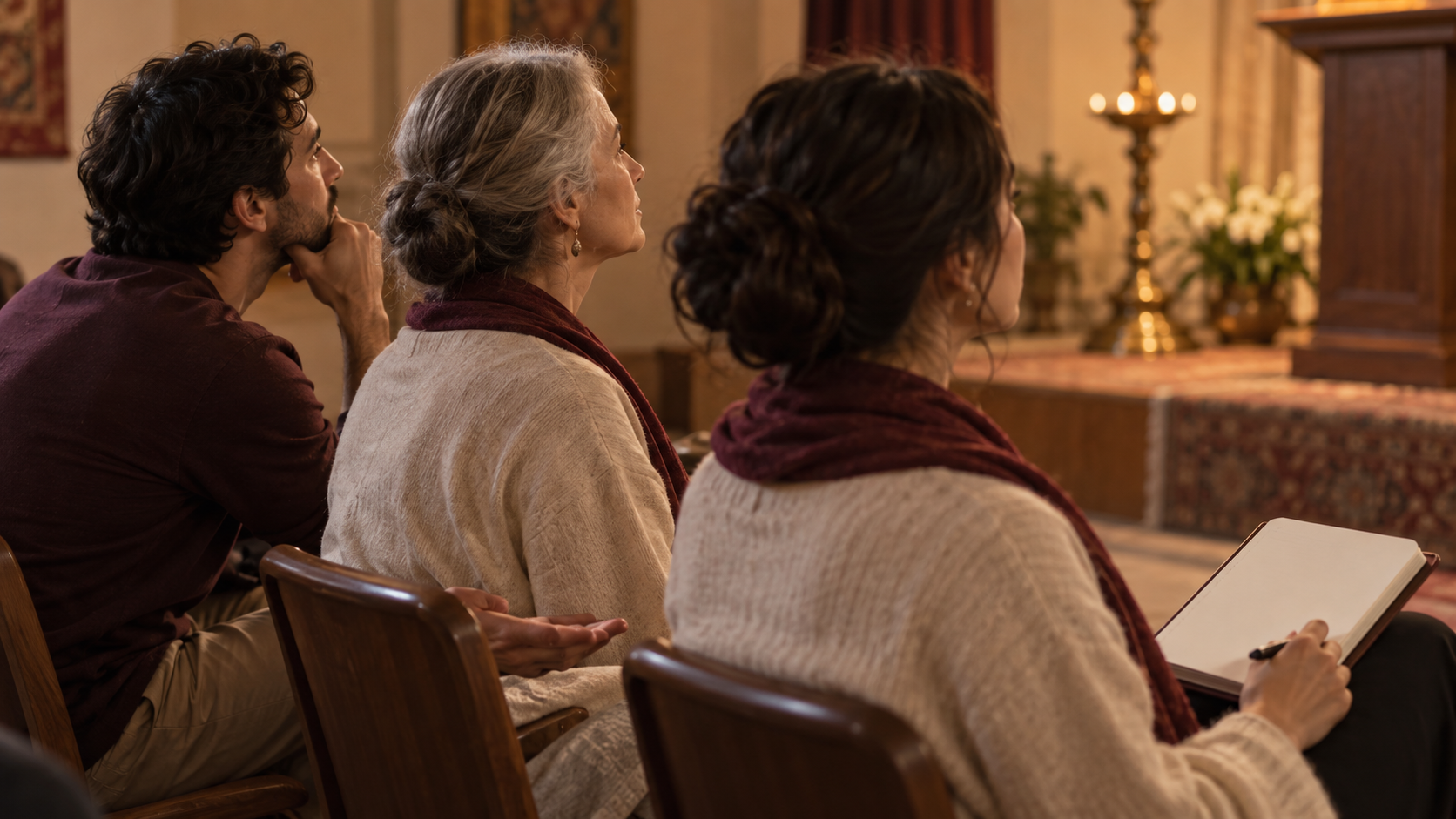
A memorial lecture will naturally contain appreciation. Yet an adjective alone rarely tells you how to live. Words such as steady, compassionate, humble, or devoted become useful only when you identify the conduct that made the quality visible.
As you listen, translate each important description into a question about action:
- If she is remembered as steady, what practice or responsibility did she continue when circumstances were inconvenient?
- If compassion is emphasized, who was included, noticed, or served, and what did that care require?
- If humility is praised, how did it appear in speech, correction, cooperation, or the acceptance of unrecognized work?
- If dedication to seva is central, what work was actually done, especially when status or public attention was absent?
- If faith during difficulty is remembered, what concrete decision expressed that faith?
This is not an attempt to reduce devotion to technique. It is a way of preventing inspiration from evaporating into vague admiration. The more precisely you can connect a quality to an observed act and its circumstances, the more honestly you can consider whether that principle belongs in your own conduct.
A compact note can use four fields: quality, observed act, circumstance, next act. The first three preserve the recollection. The last makes you responsible for your response. If the lecture does not supply enough detail for one of those fields, leave it blank. An honest blank is better than an embellished memory.
Turn remembrance into a disciplined act of seva

The emotional force of a memorial can be genuine and still be temporary. A practice lasts only when it has a setting, a trigger, and a visible form. Instead of leaving with the broad intention to “be more devoted,” choose one quality and give it a place in your existing responsibilities.
- Name the quality. Use a plain word that you can recognize in conduct, such as attentiveness, reliability, hospitality, restraint, or steadiness.
- Choose the recurring situation. Connect the quality to something already present in your life: preparing for worship, welcoming people, completing community work, listening during disagreement, or caring for a shared space.
- Define the visible act. “Be attentive” is too loose. Putting away your phone before someone speaks, arriving prepared for an assigned service, or finishing an unnoticed task gives the intention a form.
- Choose a review point. At the next natural pause in your routine, ask whether the act occurred and what interfered. Review behavior rather than trying to recreate the emotion of the memorial.
- Renew without display. Let the remembrance deepen service. Do not use the departed devotee’s name to draw attention to your own resolve.
Imitate the principle, not an imagined version of the person’s role. The circumstances, abilities, relationships, and responsibilities of Hladini Devi Dasi were her own. You do not need to reproduce an unknown biography in order to honor a quality made visible through remembrance. You need an honest act suited to the duty already in front of you.
This distinction also protects you from spiritual comparison. A memorial is not a demand to manufacture someone else’s temperament. If patience is what reaches you, practice patience where you are habitually abrupt. If reliability reaches you, complete the service you have already accepted. The tribute becomes real at the point where admiration changes conduct.
Preserve testimony without turning memory into mythology

Communities need affectionate memory, but affection can flatten a person into a collection of perfect qualities. That kind of retelling may sound reverent while making the remembrance less human, less verifiable, and less useful. A devotee’s dignity does not depend on claiming that every remembered act was flawless or that one speaker’s perspective exhausts an entire life.
When you repeat something from the memorial lecture, apply a few practical safeguards:
- Keep the speaker attached to a personal recollection rather than converting it into an anonymous community-wide claim.
- Use quotation marks only when you have preserved the exact words. Otherwise, paraphrase and identify the recollection as a paraphrase.
- Do not circulate a private detail merely because it was mentioned in a devotional setting. Consider whether sharing it serves remembrance or only curiosity.
- Do not recruit the departed devotee’s name into a present disagreement that she cannot clarify.
- Correct names, dates, and attribution gently when errors appear. Accuracy protects memory; it does not diminish devotion.
Also notice what a memorial lecture cannot do by itself. It cannot settle every question about a life, prove that one recollection was universally shared, or supply the departed person’s opinion on matters never addressed. Receiving testimony within those limits is not cold skepticism. It is disciplined listening.
If further recollections emerge, preserve them with the same care: who remembered the event, whether that person witnessed it directly, what was actually said, and which part is interpretation. Over time, these details allow a community to build a trustworthy memory rather than a chain of unattributed retellings.
Key takeaways
- The established event details are specific: Hladini Devi Dasi was remembered in a memorial lecture presented by Vrajalila Devi Dasi on 10 September 2026.
- Keep confirmed facts, the speaker’s testimony, and your personal response in separate notes.
- Translate praise into observable conduct by asking what action made a remembered quality visible.
- Choose one act of seva connected to a responsibility already present in your life.
- Preserve the speaker’s vantage point, avoid invented quotations, and leave genuine gaps unfilled.
- Let remembrance produce quieter, steadier service rather than claims of intimacy or borrowed spiritual standing.
When you return to the Hladini Devi Dasi memorial lecture, carry a page divided into Fact, Testimony, and Response. Leave with one honest act that you can perform in the duty already before you. That gives remembrance a living future without pretending to know what has not been established.
References

Leave a Reply
You must be logged in to post a comment.