
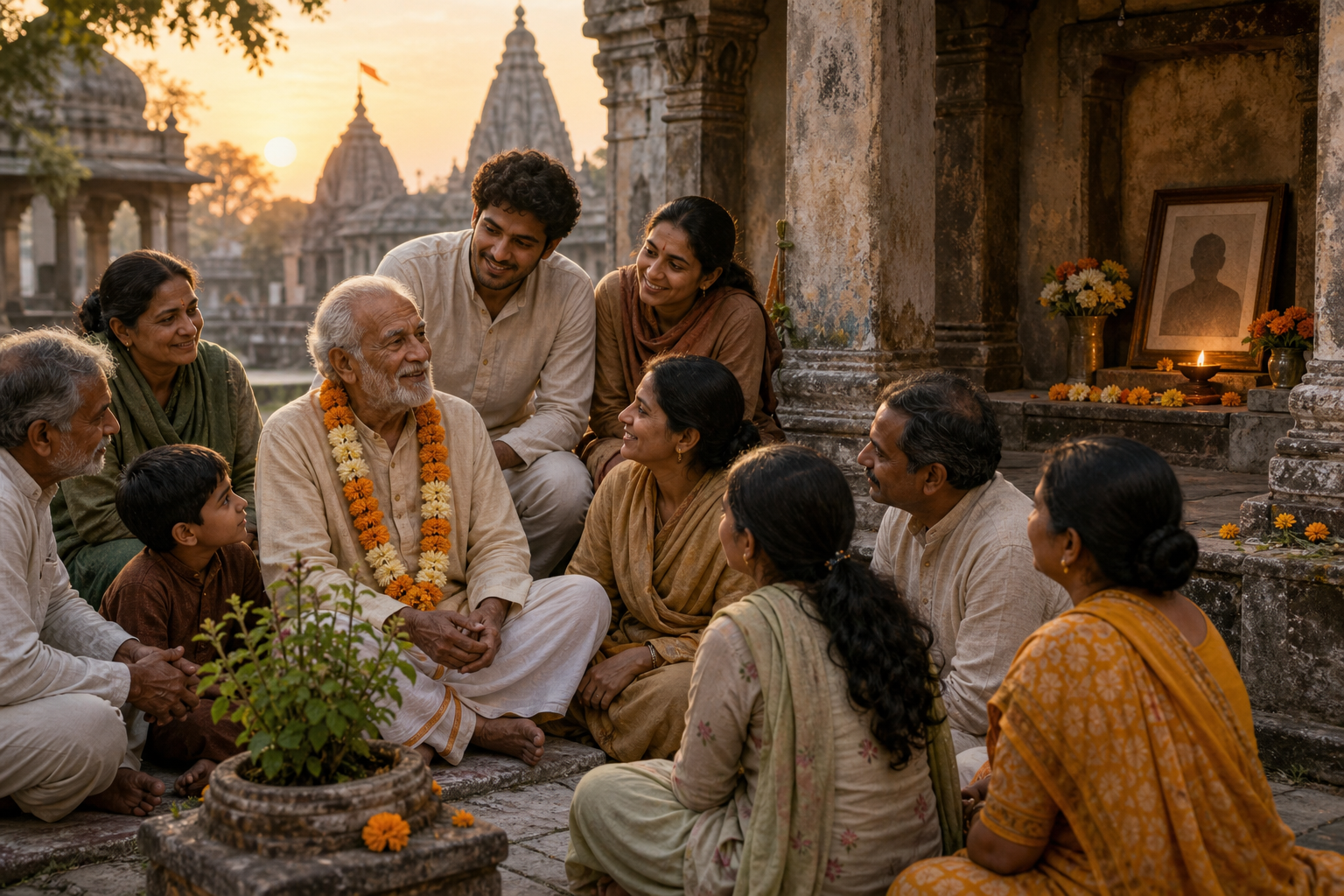
You may have sat through a moving remembrance and realized that the departed devotee probably never heard half of what was said about them. That discomfort points to a practical duty: do not reserve your clearest gratitude for a person who can no longer receive it.
Bhakti asks for a finer balance than indiscriminate praise. The goal is not to build personalities or certify anyone’s spiritual status. It is to recognize service truthfully, strengthen qualities worth imitating, and let remembrance of the departed improve how we treat the living.
Praise the living before memory does all the talking
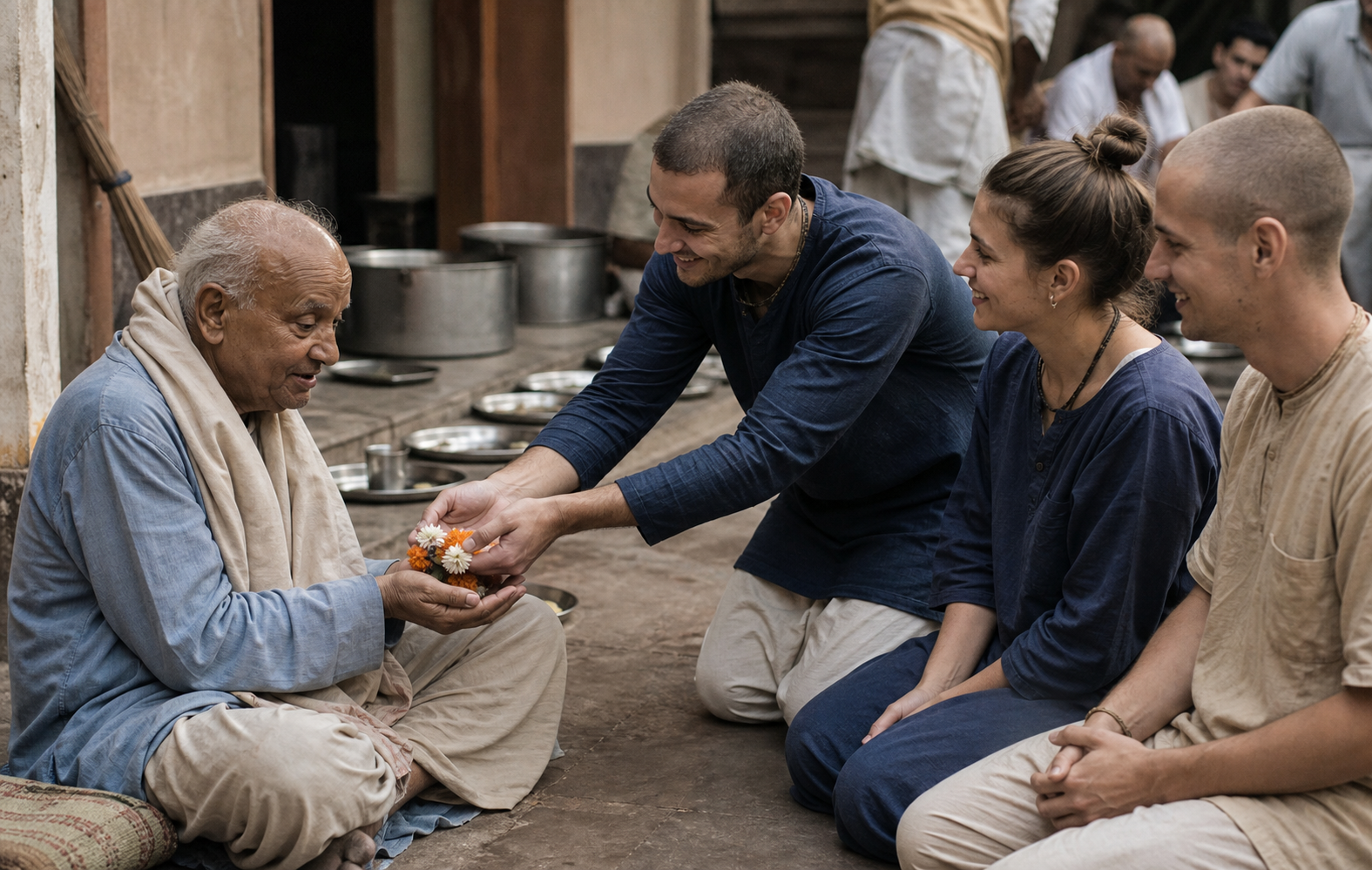
After a devotee leaves the body, old irritations often lose their force. Years of quiet service come into view. People finally say what they admired, what they learned, and how they were helped. The tenderness is valuable; the delay is not. Timely recognition turns appreciation into a living practice that encourages the person serving and teaches the community what it values.
This does not require turning every satsanga into an awards ceremony. It means refusing to let dependable service become invisible merely because it is dependable. The person who welcomes newcomers, prepares a worship space, teaches patiently, cares for an elder, cleans after everyone leaves, or continues a practice without display should not have to die before the community finds precise words for their contribution.
Build appreciation into ordinary moments:
- At the close of a gathering, acknowledge a service that directly supported the gathering rather than praising a personality in general.
- When an elder, teacher, relative, or fellow practitioner changes how you understand sadhana, tell them while the memory is still specific.
- Thank visible leaders publicly when the service was public, but do not overlook the people whose work happened before others arrived or after they left.
- Use a private message when public attention would embarrass the recipient or make the appreciation look like a contest for status.
- Let younger participants hear adults honor steadiness, kindness, restraint, and seva rather than only charisma, learning, wealth, or prominence.
Siksastakam 3 gives the needed posture: offer respect to others without expecting it in return. That instruction governs both sides of the exchange. The giver does not praise in order to gain access, favor, or reflected prestige. The recipient does not make recognition the price of continued service.
Use the act-quality-fruit test instead of flattery
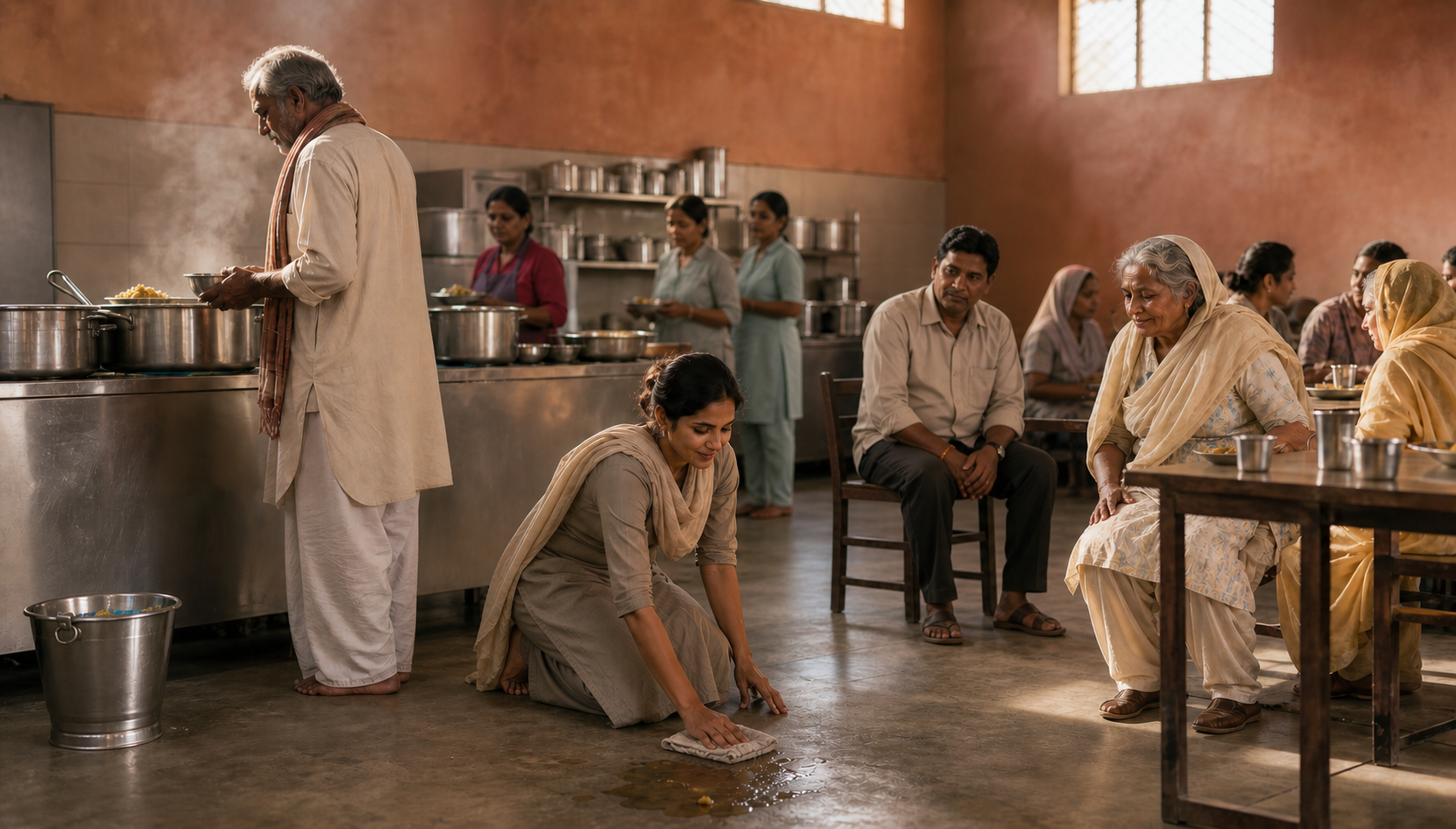
Good appreciation is concrete enough to be examined. Flattery is usually expansive, vague, and difficult to question. You can keep praise sober by naming three things: the act you observed, the dharmic quality it expressed, and the fruit it produced.
- Name the act. Say what the person actually did. “You stayed to help a newcomer understand the practice” is stronger than “You are an amazing devotee.”
- Name the quality. Connect the act to patience, steadiness, hospitality, compassion, truthful speech, scriptural care, humility, or another relevant virtue.
- Name the fruit. Explain who was served or what you learned. Keep this within what you know: “Your patience helped me ask questions without embarrassment” is testimony; “You transform everyone you meet” is speculation.
A complete acknowledgment might sound like this: “You continued explaining the teaching after the gathering had ended. That patience showed me that sharing knowledge is also seva, and it made the space easier for a newcomer to enter.” The sentence honors the person without placing them on a pedestal. It also gives everyone listening a quality they can practice.
Avoid declarations such as “purest devotee,” “never thinks of themselves,” “incapable of wrongdoing,” or “the greatest servant here.” You usually cannot know another person’s inner state, and admiration does not make you an authority on their final spiritual standing. Absolute language also creates a practical problem: if misconduct later comes to light, people may feel pressured to protect the image they helped construct.
Respect and accountability therefore belong together. A generous act deserves truthful recognition, but it does not cancel a harmful act. Seniority, learning, sacrifice, or devotional emotion should not be used to silence a legitimate concern. The discipline of humility restrains reflexive praise as well as reflexive criticism; it asks us to witness qualities carefully without reducing an entire person to either a halo or a fault.
If you are receiving appreciation, you do not need to reject it theatrically. Denying an obvious contribution can embarrass the giver and make humility itself into a performance. A simple response is enough: “Thank you. I received help from others, and I hope the service continues.” You accept the gratitude, acknowledge dependence, and return attention to seva.
Let memorials preserve truth and produce practice
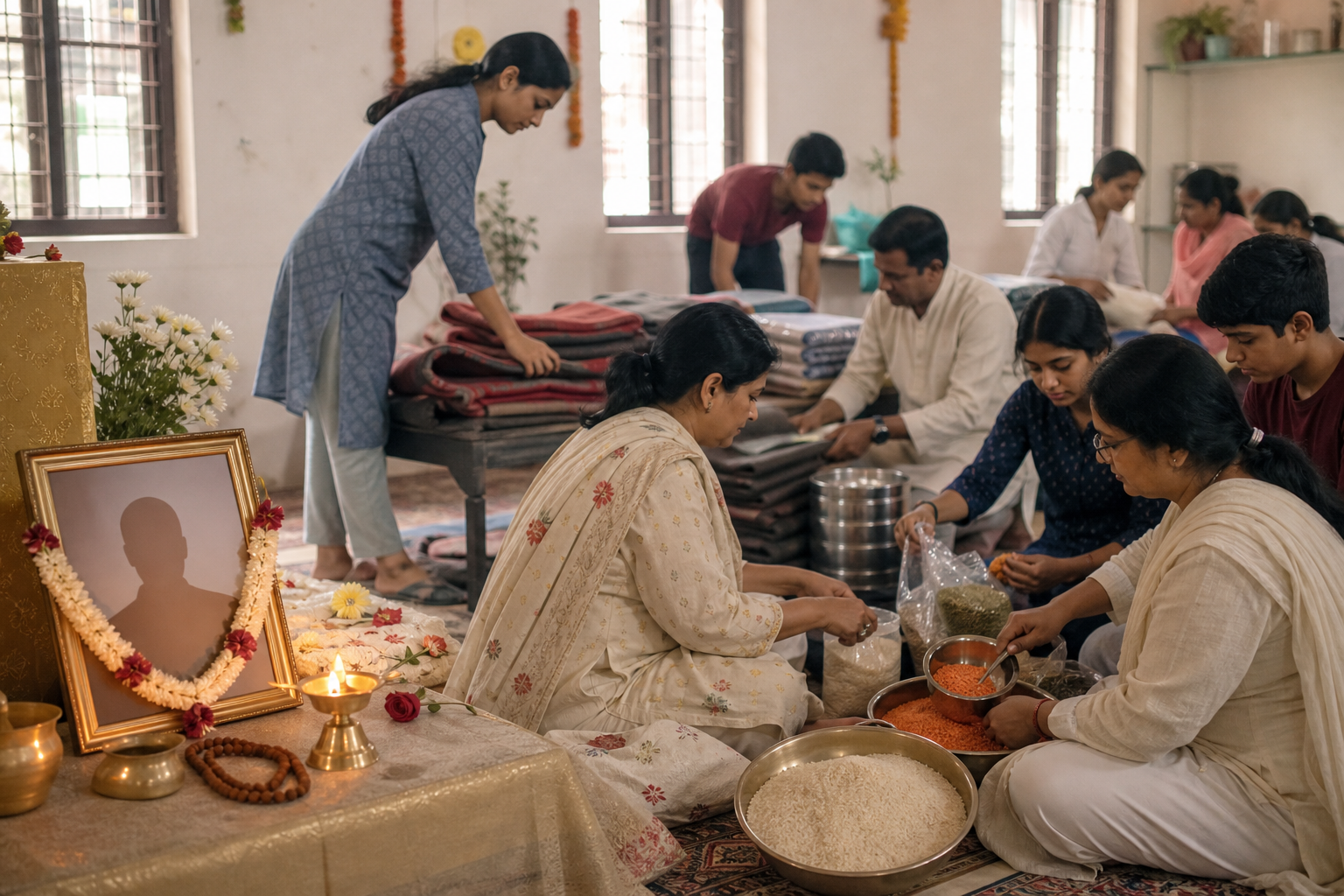
Honoring a devotee after death has a different responsibility. The person can no longer clarify an incident, correct a date, distinguish a private remark from a settled teaching, or refuse an exaggerated title. Grief can beautify memory until testimony quietly becomes mythology. A memorial should be generous, but generosity does not require invention.
Shape a remembrance around four movements:
- Establish what is known. Describe a service, teaching, habit, or encounter that can be stated honestly. Distinguish what you witnessed from what you heard from someone else.
- Identify the quality. Explain whether the memory reveals devotion, restraint, courage, compassion, hospitality, scriptural attention, or constancy in practice.
- Describe the effect proportionately. Say “this helped our congregation” or “this changed my practice” when that is what you know. Do not enlarge a local effect into a universal claim.
- Continue something worthy. Choose a form of study, kirtan, japa, care, teaching, or community service that reflects the person’s actual priorities.
This structure protects both affection and truth. It also keeps a memorial from ending when the speeches end. If a devotee was known for welcoming people, improve how your community receives newcomers. If they taught carefully, establish a regular opportunity to study. If they served without display, take responsibility for an overlooked task rather than merely praising their sacrifice.
Remembrance of Sri Gadadhara Goswami points toward a contemplative mood: kirtan, japa, study of Gaudiya teachings, and simple seva can honor a saint remembered for humility, scriptural depth, compassion, and devotion without ostentation. The form of observance matters less than its fidelity to the exemplar’s spiritual mood. Spectacle is a poor substitute for practice.
When preparing a written or spoken tribute, use language that shows the boundary of your knowledge. “She regularly made time for those who felt unnoticed” is more trustworthy than “She never overlooked anyone.” “In our congregation, we saw his steadiness during difficulty” is more responsible than “Everyone knew that nothing could disturb him.” Precision does not weaken a tribute. It gives the listener something real to remember.
Honor shared Dharma without flattening distinct paths
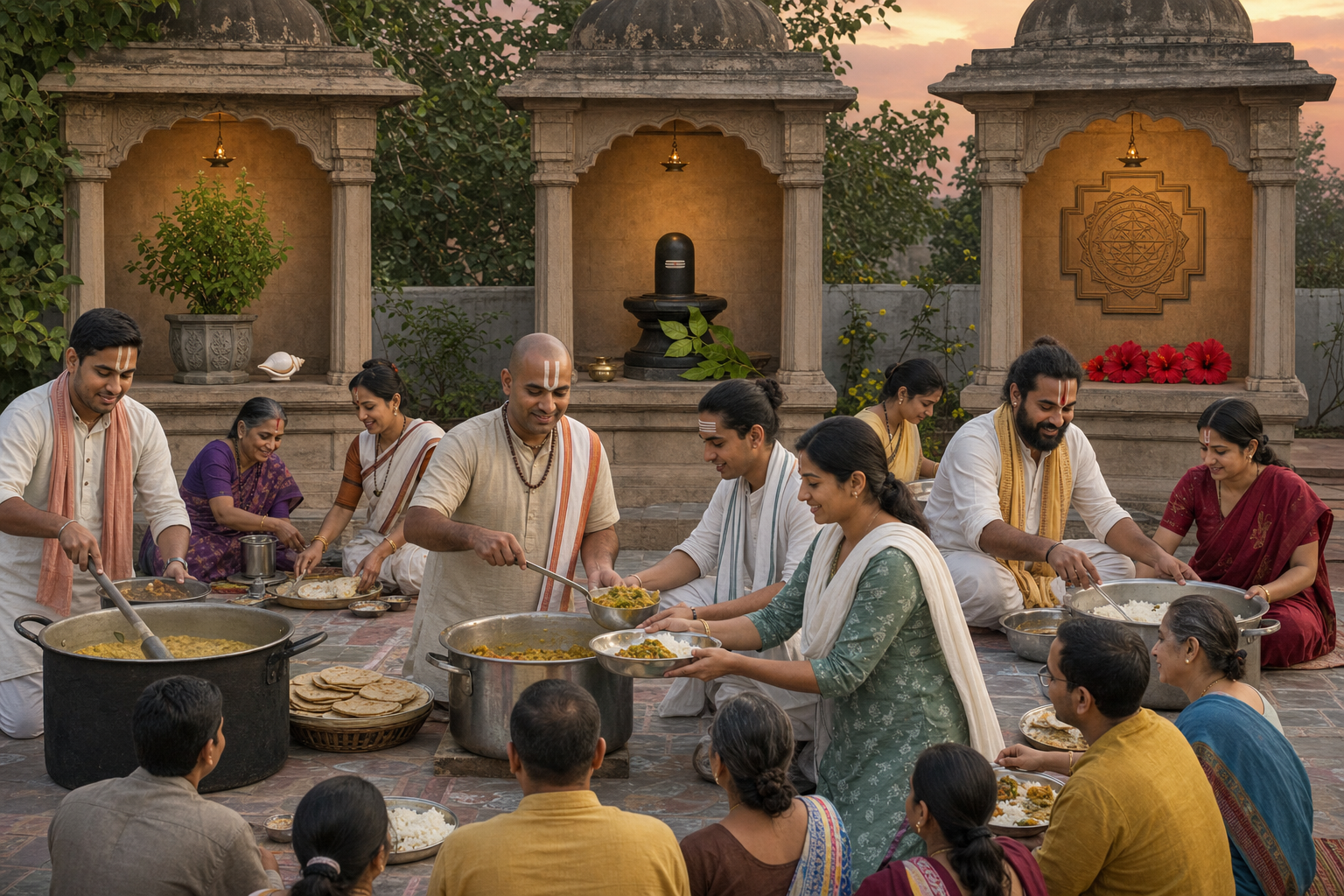
Bhakti communities do not practice in a civilizational vacuum. Hindu, Buddhist, Jain, and Sikh traditions have distinct theologies, authorities, disciplines, and vocabularies, yet their practitioners can recognize resonant ethical qualities in one another. Vaishnava humility, Buddhist mudita, Jain aparigraha and samayik, and Sikh seva and nimrata each offer ways to resist self-importance and respond constructively to virtue.
The resemblance should create respect, not careless equivalence. Mudita is not simply another name for bhakti. Seva has a particular place within Sikh life even when selfless service is honored elsewhere. Jain non-grasping should not be detached from the discipline that gives it meaning. Dharmic unity becomes credible when we learn enough about a tradition to honor it in its own terms.
In an inter-traditional gathering, proceed in that order: name the person’s tradition, describe the practice or service accurately, and only then identify the shared value. Do not borrow a lineage-specific spiritual title merely to make the tribute sound grander. Do not imply that doctrinal differences disappear because several traditions esteem compassion or humility. A bridge is strongest when both banks remain visible.
This approach also helps a mixed family or community honor someone without turning the remembrance into a debate about whose vocabulary should dominate. You can say exactly how the person worshipped, served, studied, or practiced, then invite others to carry forward the virtue in a form faithful to their own path.
Key takeaways
- Do not wait for a funeral or disappearance observance to articulate gratitude that can strengthen a living devotee.
- Anchor praise in an observable act, the quality it expressed, and a proportionate account of its effect.
- Treat appreciation as testimony, not as certification of someone’s inner purity or final spiritual status.
- Keep respect compatible with accountability; genuine service does not make every action unquestionable.
- Make memorials factual enough to trust and practical enough to change what the community does next.
- When honoring exemplars across Dharmic traditions, acknowledge shared values without treating distinct teachings as interchangeable.
At your next gathering, notice the contribution everyone relies on and no one names. Tell the person what they did, which quality it revealed, and what it made possible. If the person has already departed, continue one practice that carries their service forward. That is how reverence moves from speech into sadhana.
References
- DharmaRenaissance Blog — Praise the Living, Not Just the Departed: Humility, Bhakti, and Dharmic Unity
- DharmaRenaissance Blog — Radiant Departure of Sri Gadadhara Goswami: Luminous Bhakti, Compassion, and Unity
