
Dhirasanta Dasa Goswami’s devotional legacy is best understood through the connections among seemingly different parts of his life: hearing the Mahamantra through modern media, working on the land, introducing Krishna consciousness in unfamiliar cultures, guiding disciples, and moving through successive ashramas.
The available tribute presents these not as disconnected achievements but as expressions of one principle: bhakti can give spiritual purpose to ordinary work, public teaching, family responsibility, renunciation, and the final passage from this world.
Key takeaways
- The tribute traces Dhirasanta Dasa Goswami’s spiritual awakening to hearing devotees chant the Mahamantra on British television when he was young.
- His agricultural work and later spiritual leadership illustrate a form of bhakti measured by intention and constancy rather than status.
- His reported service in Sweden, Finland, rural England, and West Bengal joined cross-cultural outreach to the historical roots of Gaudiya Vaishnavism.
- His experience of brahmacari, grhastha, vanaprastha, and sannyasi life gave his guidance relevance across different stages of devotional responsibility.
- His remembrance places grief beside the Vaishnava conviction that the self is eternal and service offered to Krishna retains spiritual meaning.
From an unexpected hearing to a life shaped by the holy name

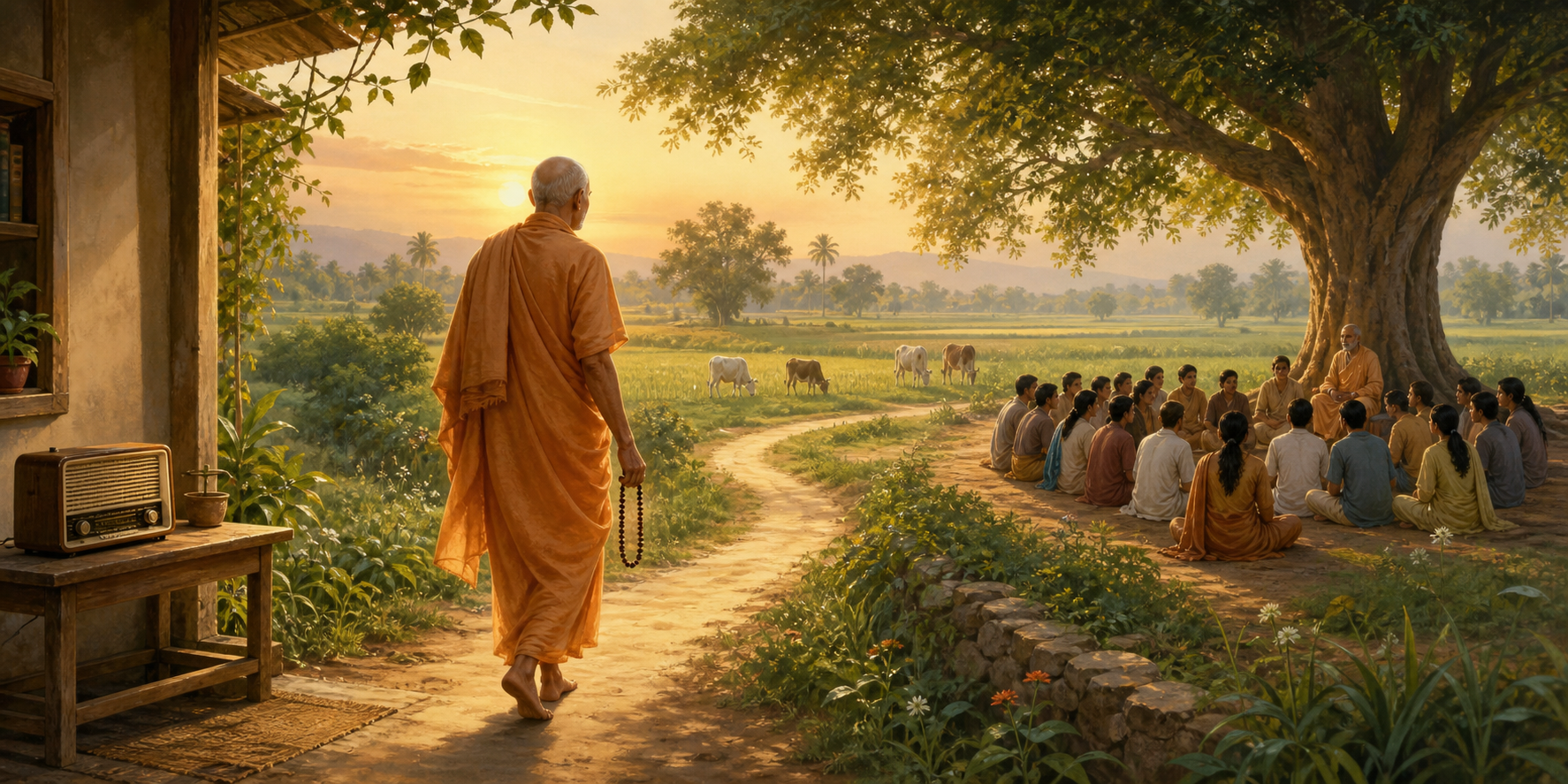
The DharmaRenaissance tribute identifies a brief television encounter as the beginning of Dhirasanta Dasa Goswami’s spiritual journey: as a young person in Britain, he reportedly heard devotees chanting the Mahamantra. The significance of this detail lies less in the medium than in what followed. A sound received incidentally became, according to the account, the axis of a life dedicated to Krishna consciousness and service to A. C. Bhaktivedanta Swami Prabhupada’s mission.
Within Gaudiya Vaishnava practice, the holy name is approached as a means of remembrance and purification rather than merely as religious music or cultural display. Dhirasanta Dasa Goswami’s reported trajectory therefore offers a practical lesson about outreach: the immediate effect of a broadcast, public kirtan, book, or personal encounter may be impossible to measure. A moment that appears minor to the person offering it can become formative for the person receiving it.
His story also connects two dimensions of modern devotional transmission. Television carried sacred sound into a British home, while subsequent discipline transformed that first impression into sustained practice. Media could provide contact, but commitment required hearing, study, service, association, and the gradual reorientation of daily life.
Bhakti expressed through the land, work, and leadership
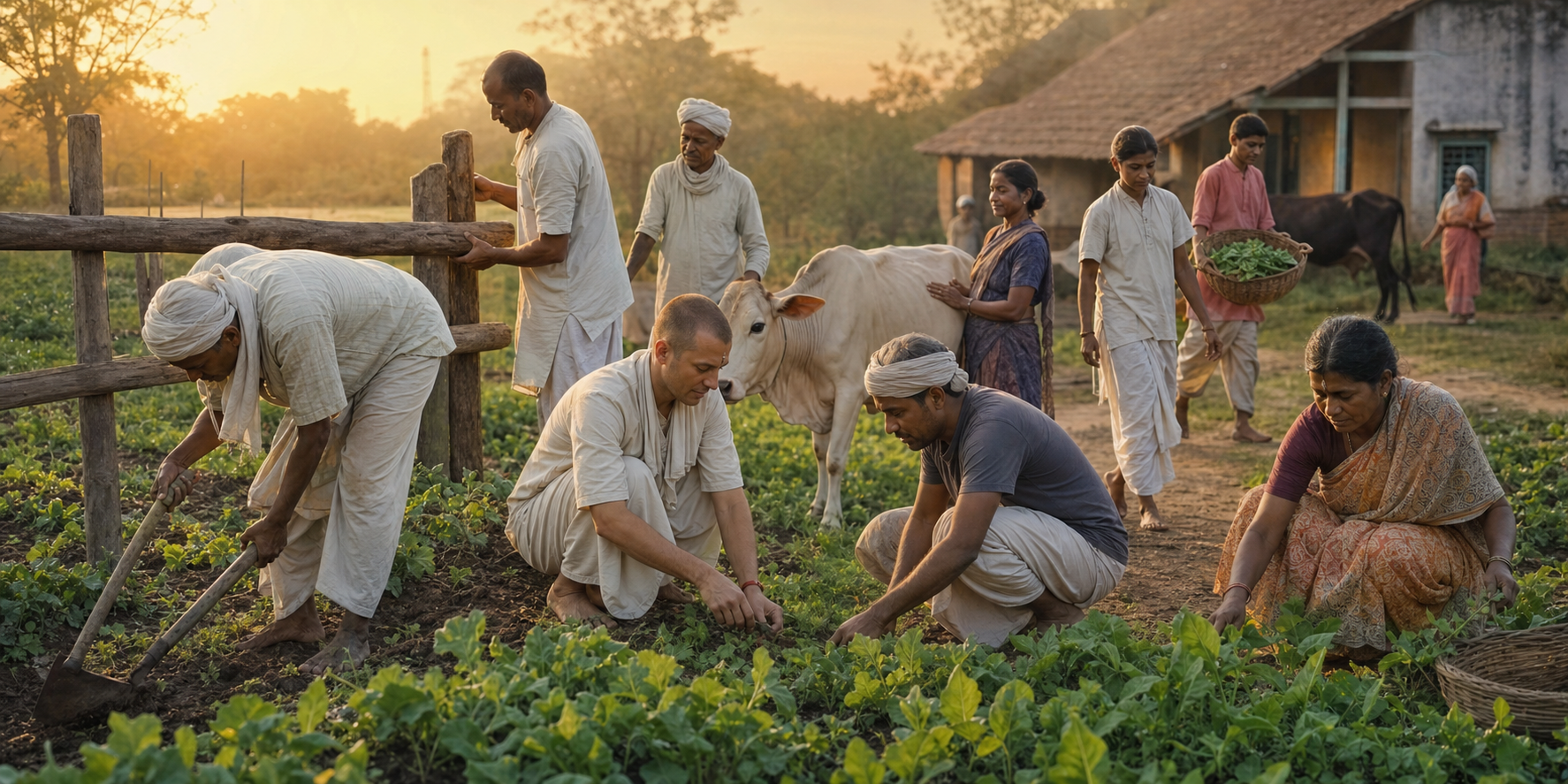
The tribute emphasizes the range of Dhirasanta Dasa Goswami’s service, particularly the movement from practical agricultural labor to spiritual leadership. Read together, these roles challenge the assumption that devotional importance corresponds to visibility. Farming and teaching require different abilities, yet both can become bhakti when undertaken in a spirit of service.
His reported work as a farmer also situates him within the rural aspirations of early ISKCON communities. The source connects those communities with Prabhupada’s emphasis on simple living, cow protection, land-based culture, and restraint in consumption. Agricultural service thus represented more than food production. It brought spiritual commitments into contact with soil, labor, cooperation, patience, and the material conditions of community life.
This aspect of his legacy is especially useful because it prevents remembrance from becoming a catalogue of titles. The continuity between physical work and later guidance suggests that leadership was grounded in a broader education in service. The farmer’s patience, the community member’s cooperation, and the teacher’s responsibility can be understood as related disciplines rather than separate careers.
A bridge between cultures and stages of life
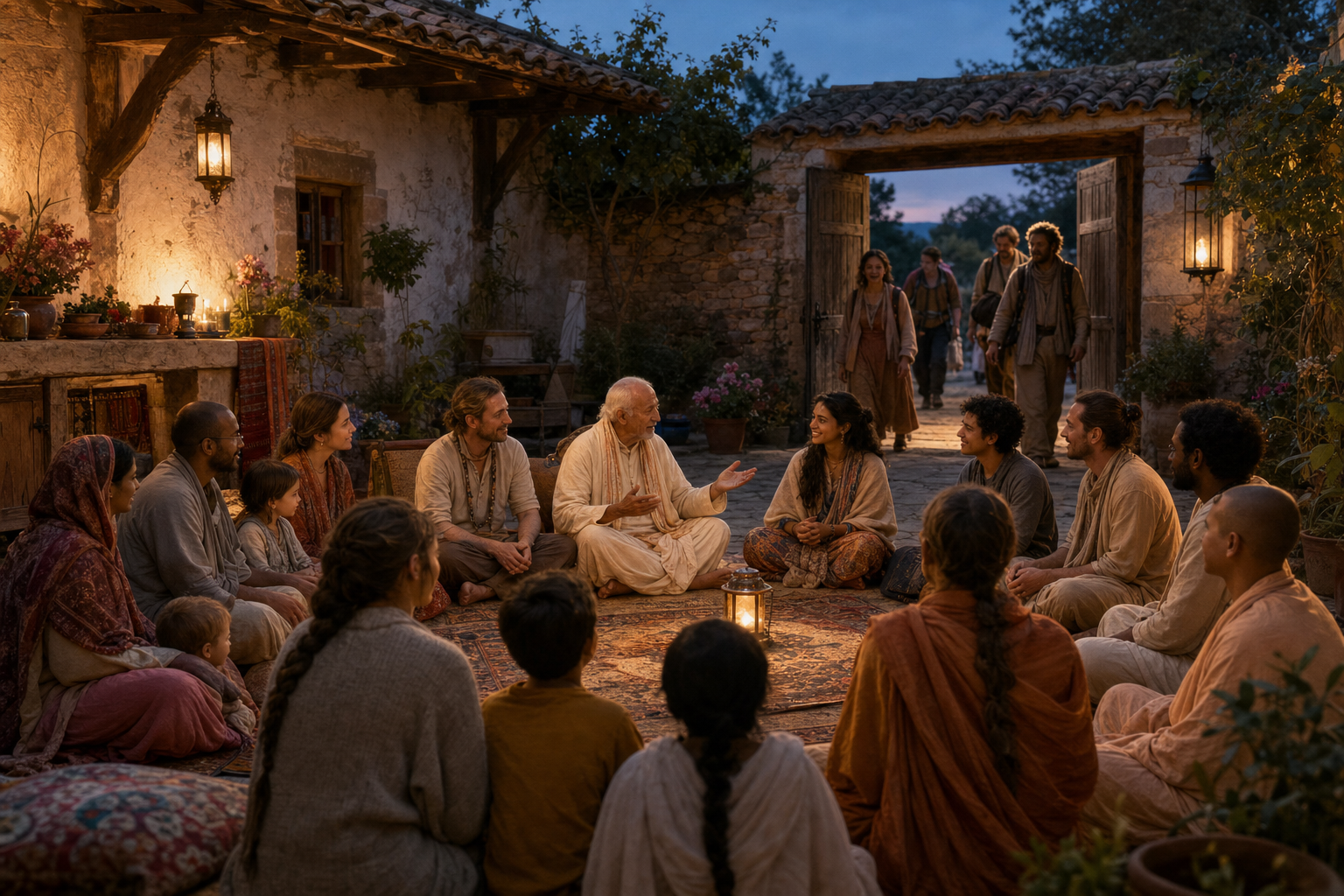
According to the tribute, Dhirasanta Dasa Goswami was among the early devotees who helped bring Krishna consciousness to Sweden, Finland, and rural England, and his service later extended to West Bengal. Such a geographical range points to the interpretive work required of early devotional outreach. Sanskrit vocabulary, temple worship, vegetarian prasadam, japa, and kirtan had to be introduced to people formed by different religious and social assumptions.
The source presents sincerity, personal example, clarity, endurance, and adaptation as essential to this work. That framing matters: cross-cultural transmission is not simply the repetition of inherited terminology. It requires making a tradition intelligible without emptying it of its theological center. In this account, the shared practices of chanting, hearing, worship, study, and service created participation across national backgrounds.
West Bengal adds another dimension to this arc. The tribute notes the region’s historical association with Gaudiya Vaishnavism and Sri Caitanya Mahaprabhu. A spiritual life stirred by the Mahamantra in Britain and later expressed in Bengal symbolically joins the global circulation of Krishna consciousness with one of the tradition’s formative landscapes.
His passage through brahmacari, grhastha, vanaprastha, and sannyasi life created a second kind of bridge. The source portrays these stages as disciplines involving, respectively, training and service; family and livelihood; gradual withdrawal and counsel; and renunciation for the welfare of others. Experience across all four could enable a teacher to recognize the distinct obligations faced by students, householders, elders, and renunciants.
Remembering a teacher by continuing the work

The tribute places Dhirasanta Dasa Goswami’s departure within both personal grief and Vaishnava philosophy. It offers condolences to his disciples and admirers and gives particular attention to his son, Govinda Kishore Das. This distinction is important: a community may share bereavement, but a son’s loss retains its own intimate weight.
The account reports that he departed while devotees sincerely chanted Krishna’s holy names. Within the theological frame presented by the source, such association is considered auspicious because remembrance of Krishna at life’s end carries profound importance. This belief does not cancel sorrow. It gives sorrow a devotional setting in which affection, separation, prayer, and confidence in the eternality of the self can coexist.
His legacy consequently cannot be reduced to where he traveled or which formal roles he held. Its more durable elements are patterns that others can continue: taking apparently modest service seriously, integrating spiritual commitments with work and family duty, communicating faithfully across cultures, and ensuring that the holy name remains accessible beyond established devotional circles.
The future of that legacy will depend on whether remembrance becomes practice. Communities that carry forward patient service, thoughtful teaching, care for the land, and compassionate support for disciples and family will preserve more than a biography; they will keep its devotional purpose active.