
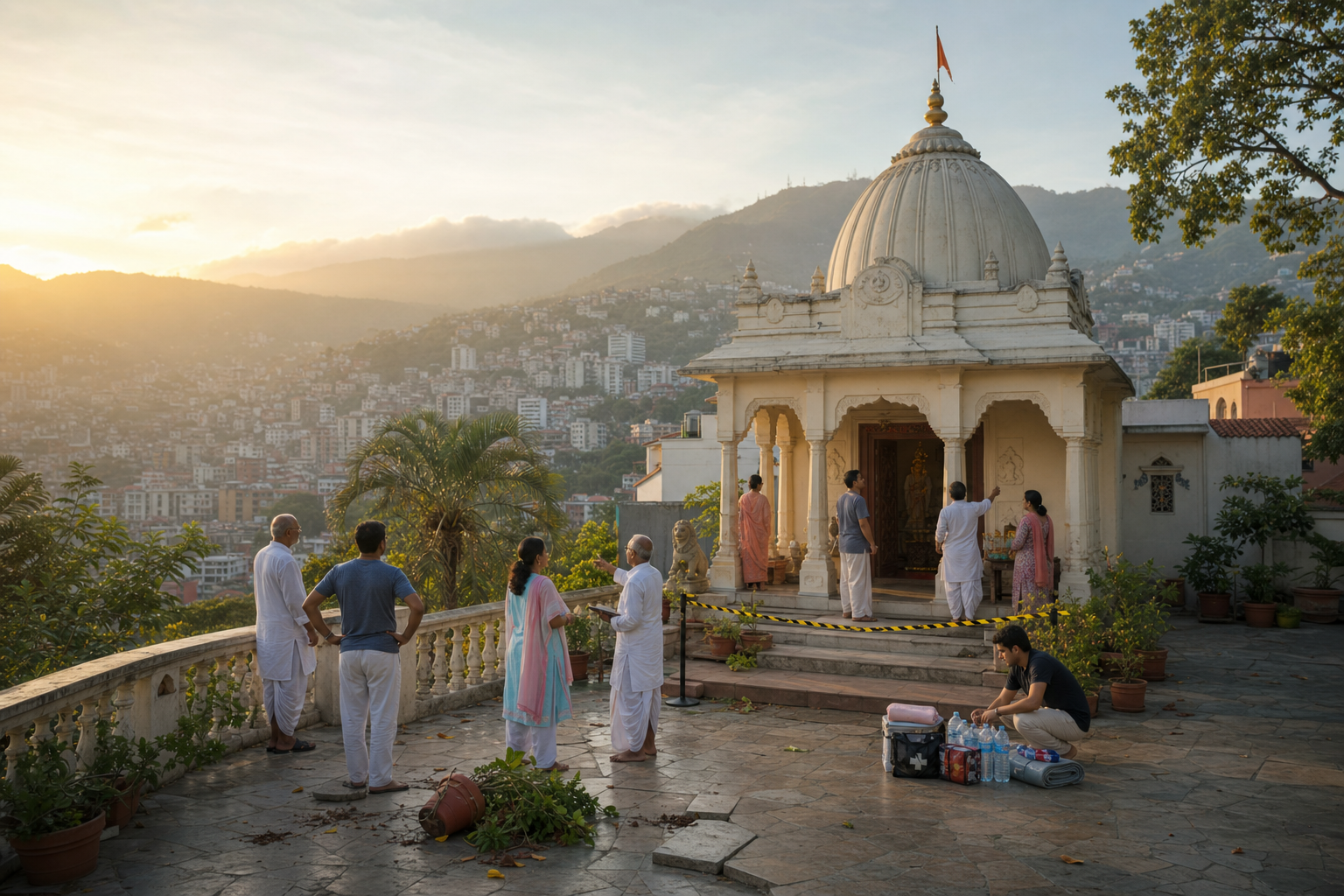
The reported survival of ISKCON Venezuela’s devotees, Deities, and Caracas temple is welcome news, but a standing building is only the first measure of resilience. The account becomes more useful when read as a case study in three connected responsibilities: verifying safety, preserving community capacity, and turning devotional gratitude into careful service.
It is also a preliminary and narrowly sourced account. It offers a significant view from one Vaishnava community, not an independently corroborated assessment of the earthquake or its wider human impact.
What the Caracas account establishes – and what remains unknown
The DharmaRenaissance Blog report attributes the central update to Lilanandi-Subhadra Devi Dasi of the ISKCON Venezuela Temple in Caracas: "The devotees, Deities, and temple are safe thanks to Krishna." The same article reports that a building diagonally across from the temple collapsed completely and that other neighborhoods were severely affected.
Those details establish two points within the limits of the source. First, the temple community reported that its people, sacred forms, and premises had survived the immediate event. Second, the nearby collapse indicates serious localized damage rather than a minor disturbance. The stark difference between structures on the same block is therefore central to the story.
The report does not provide an independent structural inspection, a comprehensive neighborhood assessment, or enough technical evidence to explain why one building remained standing while another failed. Earthquake damage can vary with structural design, construction quality, maintenance, ground conditions, building alterations, and the way shaking affects a particular site. These are general risk factors, however, and none should be presented as the demonstrated cause of the Caracas contrast without engineering evidence.
Survival is the beginning of resilience, not its endpoint
A post-earthquake statement that a temple is safe can carry several meanings that should not be confused. People may have escaped injury; the main structure may appear intact; and worship or community services may eventually continue. Each is encouraging, but an initial visual impression is not equivalent to professional structural clearance.
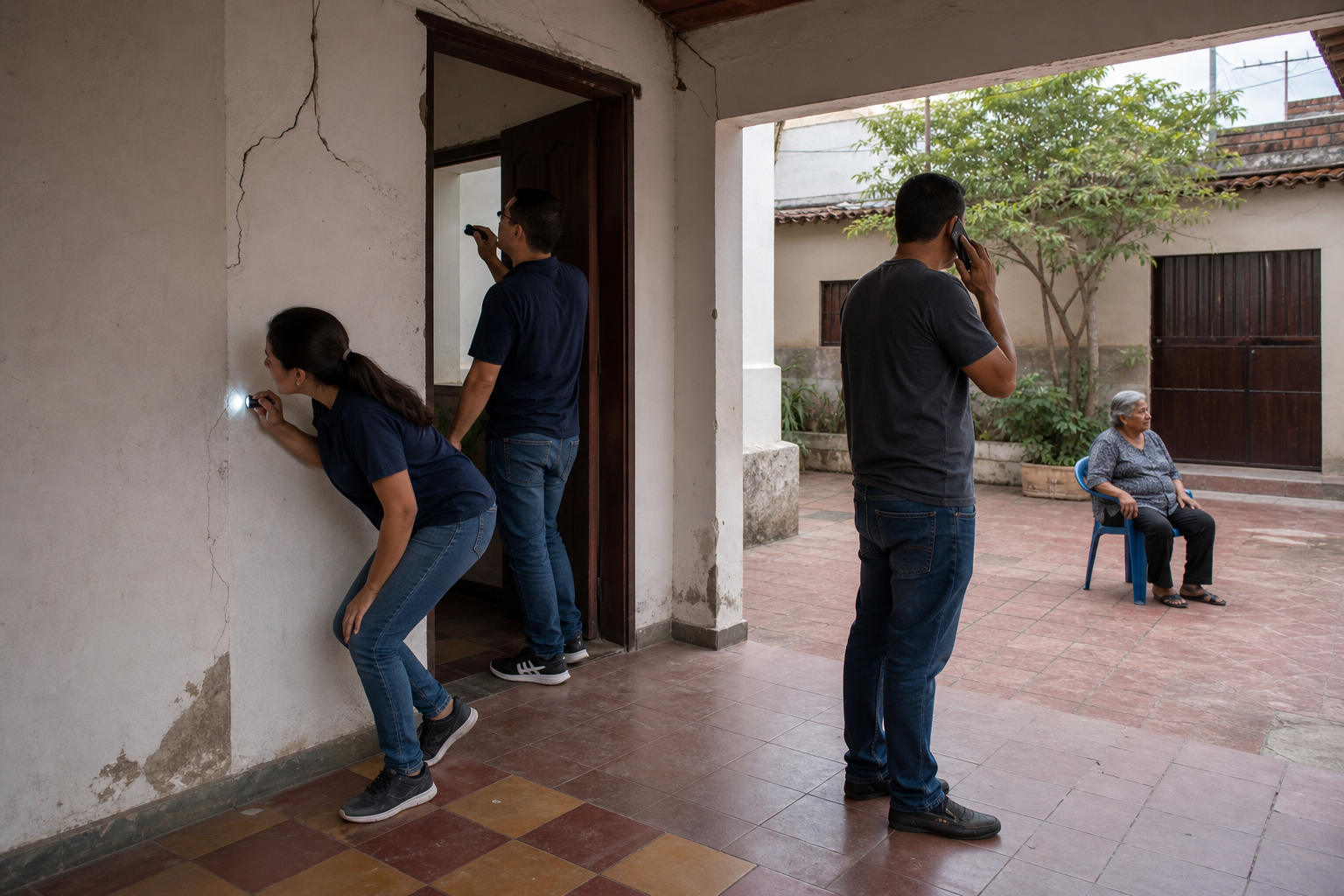
This distinction matters when a nearby building has collapsed. After strong shaking, concealed structural damage, loose masonry, displaced fixtures, damaged utilities, and unstable contents can remain hazardous. Aftershocks can place additional stress on already weakened elements. General emergency practice therefore supports restricting access when warning signs are present and having qualified personnel assess the premises before normal gatherings resume.
For a temple, nonstructural safety deserves particular attention. Bookcases, sound equipment, kitchen appliances, lamps, suspended objects, storage racks, and items used in worship can injure people or obstruct evacuation even when the primary structure survives. Securing such objects is not separate from spiritual stewardship; it protects worshippers, volunteers, sacred objects, and the continuity of service.
How devotional life can become practical community capacity
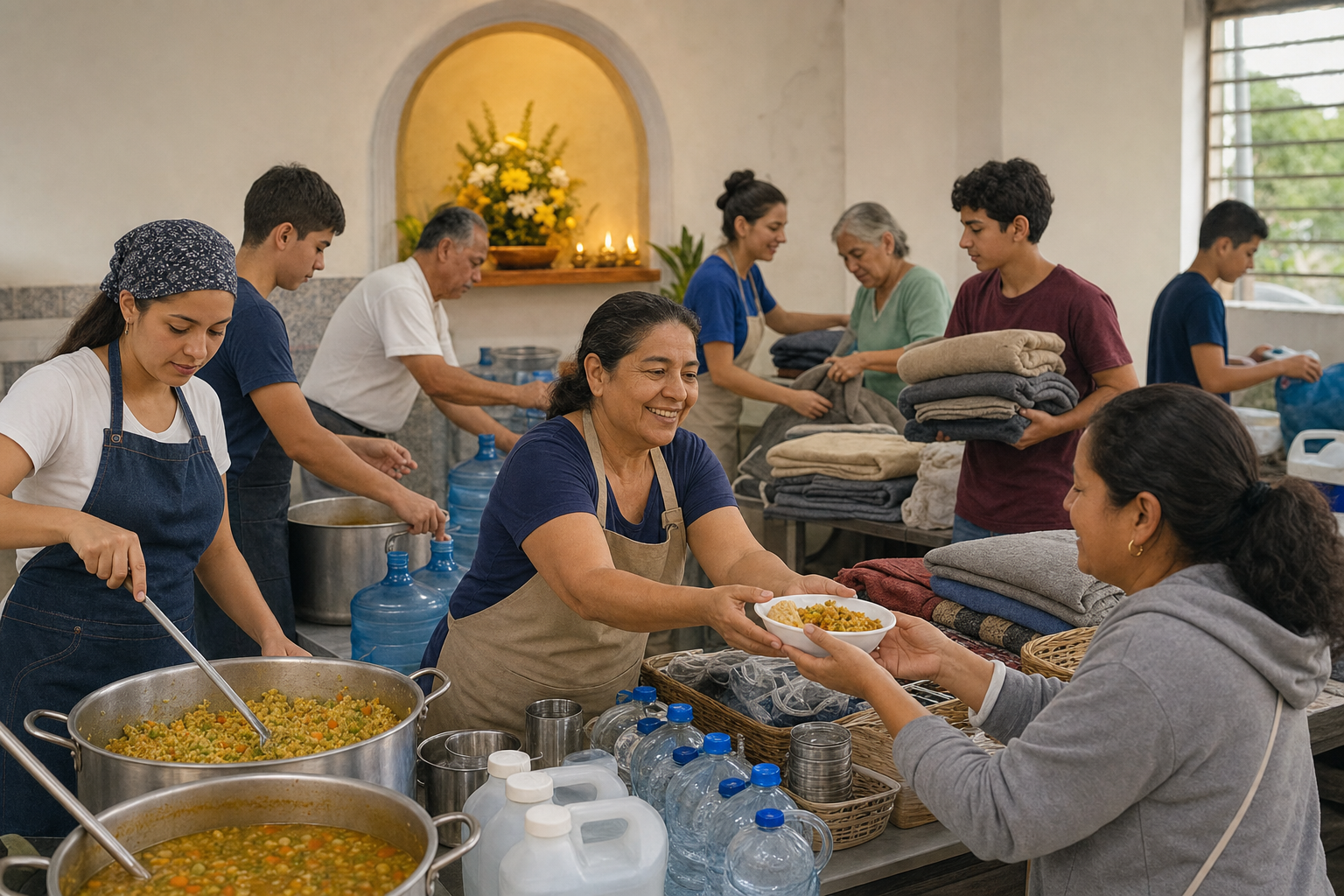
The Caracas report frames survival through gratitude to Krishna and also records appreciation for devotees around the world who offered prayers and help. Together, those elements show two dimensions of religious resilience: an interpretive framework that helps people face uncertainty, and a social network capable of mobilizing concern across distance.
Temple communities may also possess organizational habits that become valuable during disruption. Regular schedules, volunteer relationships, kitchens, congregational contacts, and established lines of responsibility can support welfare checks, reliable communication, food preparation, and care for vulnerable people. These capacities do not automatically produce an effective emergency response, but preparedness can convert familiar devotional routines into dependable civic resources.
Faith and technical caution serve different but compatible purposes. Prayer, kirtan, and shared devotional language may provide emotional steadiness; trained assessment, emergency instructions, and controlled access address physical danger. Treating either one as a substitute for the other would weaken resilience. Their constructive relationship is clearest when gratitude encourages responsibility rather than premature confidence.
The surrounding community must remain part of that responsibility. The temple’s reported safety stands beside the collapse across the street and reports of severe damage elsewhere. A dharmic response cannot stop at relief that one institution survived; seva reaches its fuller meaning when concern extends to neighbors without regard to religious affiliation.
Key takeaways
- The available account reports that the Caracas devotees, Deities, and temple were safe, while a building diagonally opposite had collapsed.
- The contrast demonstrates localized severity but does not, by itself, establish why the temple survived.
- An initial safety report should not be mistaken for a professional inspection or a complete account of regional damage.
- Temple routines and international devotional networks can support resilience when joined to preparation, verified communication, and competent emergency practice.
- Gratitude for survival is most responsibly expressed through caution and service to the wider affected community.
A preparedness agenda shaped by the Caracas experience
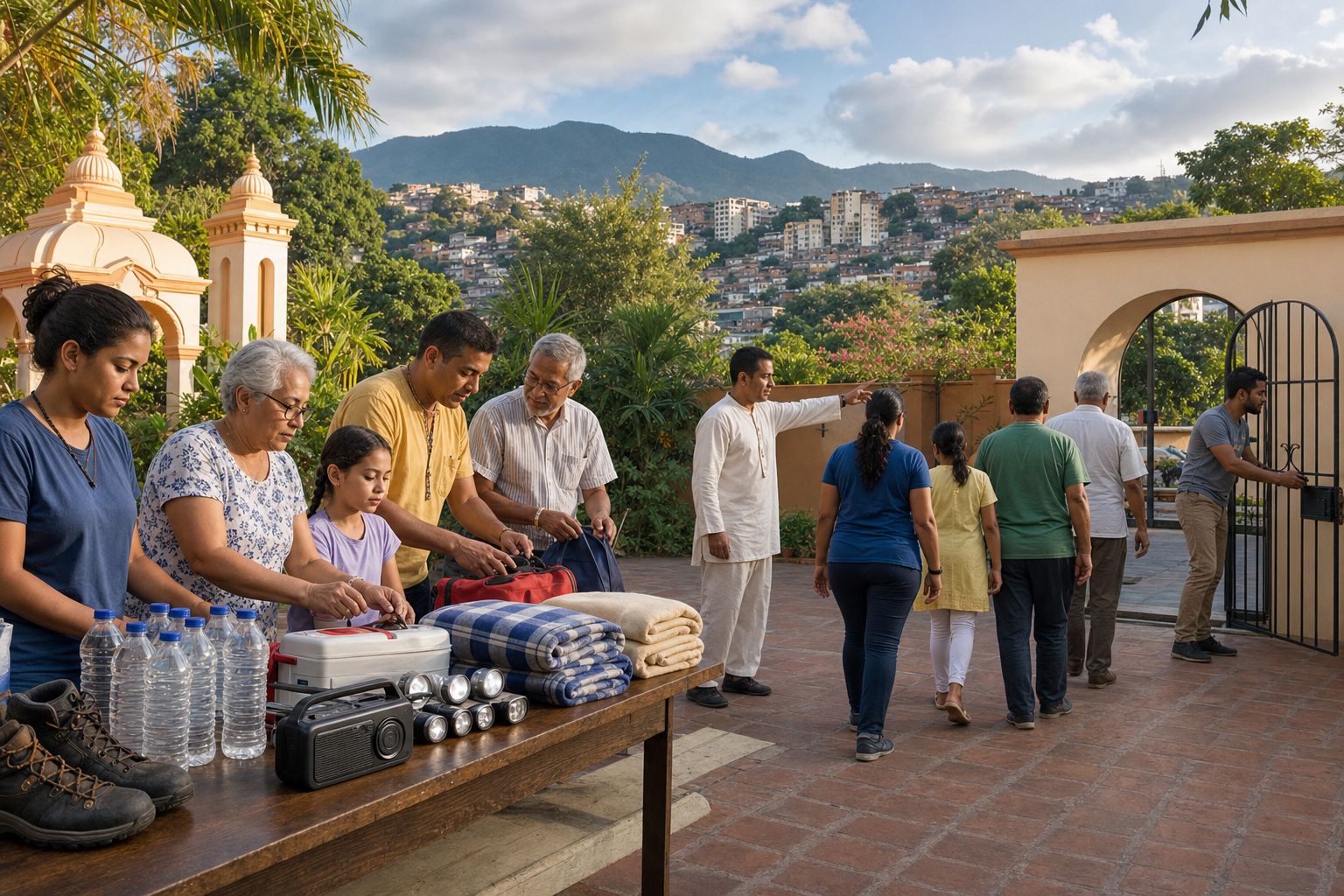
The report points toward a practical standard for temples in earthquake-prone settings. Before an emergency, leadership can identify evacuation routes and assembly areas, maintain contact procedures and first-aid supplies, secure heavy or elevated contents, and assign responsibility for children, older people, and visitors. Plans should account for interruptions to electricity, water, communications, and access.
Immediately after shaking, the priority is accounting for people and avoiding damaged areas, exposed wiring, suspected gas leaks, falling hazards, and visibly unstable structures. Public updates should distinguish confirmed information from assumption. If the temple is eventually cleared for use, its kitchen, volunteer network, and gathering capacity may then support carefully coordinated relief without creating unsafe crowding.
The enduring value of the Caracas account will depend on what follows the first message of survival. Documented inspections, rehearsed emergency procedures, transparent updates, and inclusive neighborhood service can transform a fortunate outcome into stronger preparation for the next crisis.