

If you are trying to understand the Meenakshi Temple land case, start by separating the serious allegation from the conclusion that must still be proved. That distinction protects both temple interests and the credibility of those who speak for them.
The immediate task is not to generate more outrage. It is to identify the land precisely, establish lawful ownership, test the allegation against records and ensure that any property proved to have been taken is protected and restored through lawful action.
What has actually been alleged in Madurai

Madurai’s Central Crime Branch has registered an FIR against 19 people over the alleged grabbing of 1.79 acres belonging to a trust linked to the Meenakshi Temple, with the property valued at around ₹60 crore. These details establish the scale and institutional setting of the accusation. They do not establish criminal guilt, final ownership or recovery of the land.
An FIR begins a criminal investigation; it is not a judgment. The accused remain accused unless a court determines otherwise. Likewise, the registration of a case does not by itself transfer possession, settle a title dispute or return property to its lawful owner.
There is another important qualification. The available description is not simply land inside the temple complex. It is land belonging to a trust linked to the temple. You should preserve that wording when discussing the case. Temple property, trust property and property connected to a religious institution may be spoken of loosely as the same thing, but legal accountability depends on the exact owner and the instrument under which the property is held.
Key takeaways for reading the case accurately
- Describe the matter as an alleged grabbing of trust-linked land, not as a crime already proved in court.
- The FIR concerns 19 people and 1.79 acres; neither figure tells you what role each accused allegedly played.
- The figure of around ₹60 crore is an approximate valuation attached to the property. It is not a reported amount of cash stolen, a court-awarded loss or a recovery already made.
- The land area indicates scale, but survey identifiers and boundary records are still needed to identify the parcel conclusively.
- A meaningful follow-up should contain primary records or a verifiable police or court development, not merely repeat the original accusation.
The three distinctions that prevent a false conclusion

An FIR is not proof of guilt
The registration of an FIR matters because police have formally taken up an accusation. It creates a path for investigation and possible prosecution. But it does not tell you whether every allegation will be supported, whether all 19 accused are alleged to have acted in the same way or whether the case will result in charges and convictions.
This is not a reason to dismiss the case. It is a reason to demand a sound investigation. Calling the accused guilty before the evidence is tested can create legal risk, spread misinformation and make serious temple advocacy easier to discredit.
A valuation is not a recovery
The reported value of around ₹60 crore communicates why the allegation deserves attention. It should not be treated as a precise, judicially settled figure unless later records identify the valuation method and relevant date. Land values can depend on location, permitted use, access, existing occupation and the basis used by the valuer.
More importantly, a large valuation can dominate public discussion while the essential question goes unanswered: who lawfully owns and controls the parcel? Keep the focus on title, possession and restoration rather than turning the round figure into the whole story.
Temple-linked does not automatically mean temple-owned
The distinction between a temple and a linked trust is not a technical nuisance. It determines which records matter, who has authority to act and which institution would receive the property if recovery is ordered. The trust’s exact name, governing instrument, trustees and title documents are therefore central questions, not peripheral details.
Until those particulars are public, avoid inventing a relationship between the land and temple rituals, revenue or administration. The case is serious enough without adding claims that have not been established.
The evidence chain citizens should now look for

First, identify the property
A land case becomes verifiable when the parcel can be matched across records. Look for survey numbers, the registration description, the relevant locality, measured boundaries and a map or survey record. The statement that 1.79 acres is involved gives the total area, but it cannot substitute for parcel-level identification.
If future coverage omits the land identifiers, treat any confident claim about a particular building, occupant or boundary cautiously. A photograph of a site is not proof that it is the parcel named in the FIR.
Second, establish title and the trust’s authority
The next link is the ownership record. Useful documentation would identify how the trust acquired the land, how the parcel is described in its records and who is authorised to protect it. A trustworthy account should also distinguish evidence of title from evidence that someone merely occupied, managed or paid charges associated with the property.
You do not need to resolve conflicting documents on social media. If the records are contested, that is precisely where police investigation, land administration and legal proceedings must do their work.
Third, connect each accused person to an alleged act
A count of 19 accused does not reveal whether the allegation concerns occupation, document creation, transfer, construction, assistance or some other conduct. Responsible follow-up should explain the alleged role of each person or category of persons without presenting the allegation as proven.
This matters because collective labels can hide weak links in a case. Strong temple protection requires evidence against the responsible actors, not indiscriminate accusation against everyone whose name appears in an FIR.
Finally, distinguish investigation from restoration
Even a well-supported criminal case does not automatically tell you whether the property has been secured. Watch separately for changes in possession, restrictions on further transfer or construction, official measurement, removal of an unlawful occupation and restoration to the lawful owner. Do not report the land as recovered unless a verifiable order or completed action establishes that result.
How you can support accountability without prejudging the case
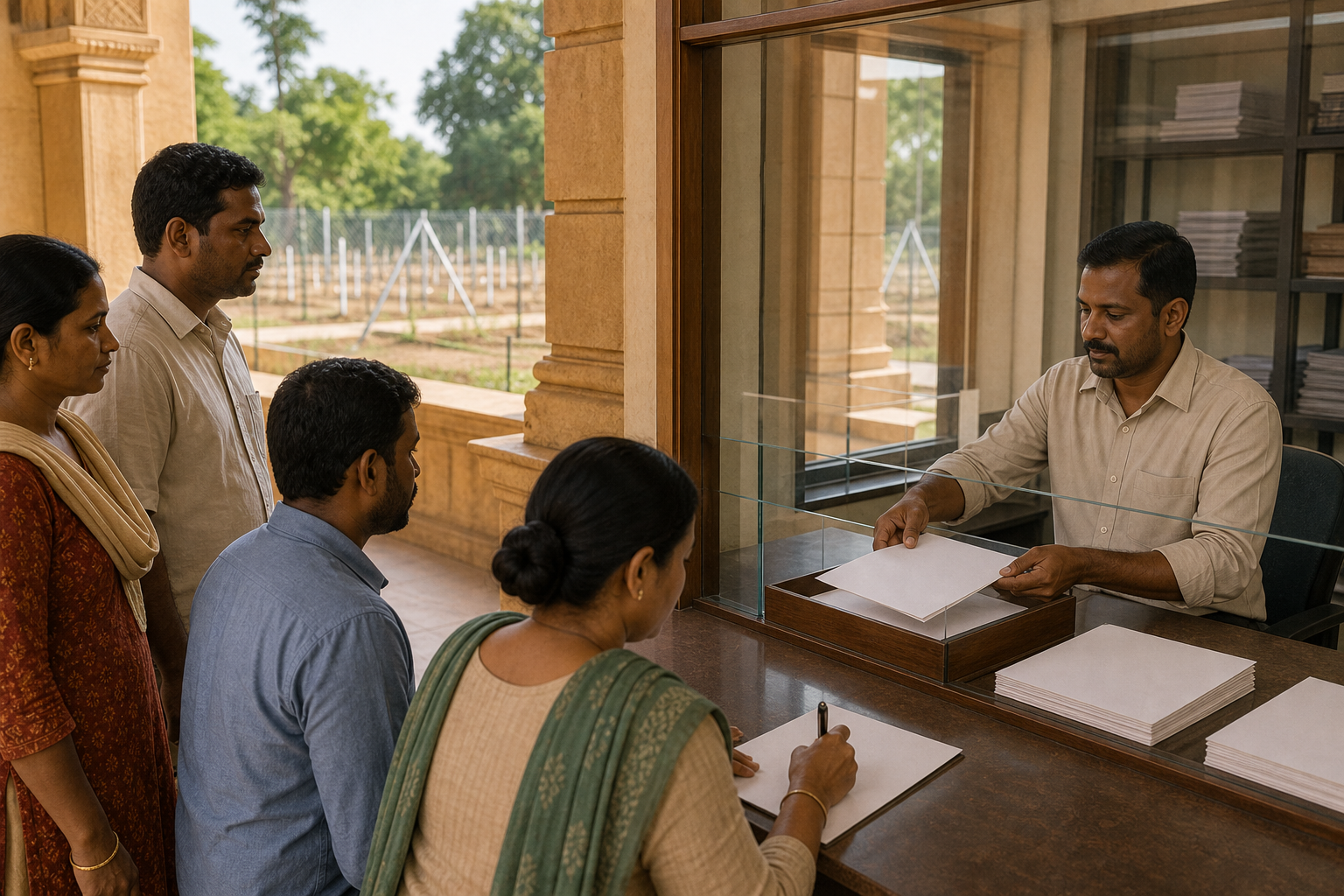
Your most useful contribution is disciplined attention. Save the original factual claim and then maintain a dated record of later police statements, court orders, survey documents and official property actions. This prevents an early allegation from being repeatedly republished as though every repetition were a new development.
When asking journalists, public representatives or temple advocates for an update, use concrete questions: Has the parcel been identified by survey number? What record establishes the trust’s title? What conduct is attributed to the accused? Has any authority taken a documented step to protect or restore the land? These questions are harder to evade than a general demand to save temple property.
Do not enter the disputed property, confront occupants or publish private addresses. Those actions can create safety and legal problems while doing nothing to establish ownership. If you intend to file a legal proceeding or make a formal allegation against a named person, consult a lawyer familiar with Tamil Nadu property and criminal procedure rather than treating a news claim as sufficient proof.
Apply the same discipline when sharing the case. Use alleged where guilt has not been determined. Say around ₹60 crore rather than converting an approximate value into an exact loss. Say trust linked to the Meenakshi Temple unless later records establish a more precise legal relationship. Correct wording is part of accountability because it keeps advocacy anchored to facts that can survive scrutiny.
Temple protection must end in documented custody
For a Dharmic community, protecting sacred institutions includes protecting the property held for their lawful purposes. But durable protection comes from accurate inventories, clear title records, regular boundary verification, accountable trusteeship and prompt legal action when control is challenged. Public attention can help initiate that work; it cannot replace it.
The standard to apply in Madurai is therefore concrete: identify the land, prove the title, establish each alleged act, protect the parcel and document any restoration. Keep asking for those five outcomes. They will tell you whether the case is producing institutional accountability rather than merely another cycle of outrage.
References
