
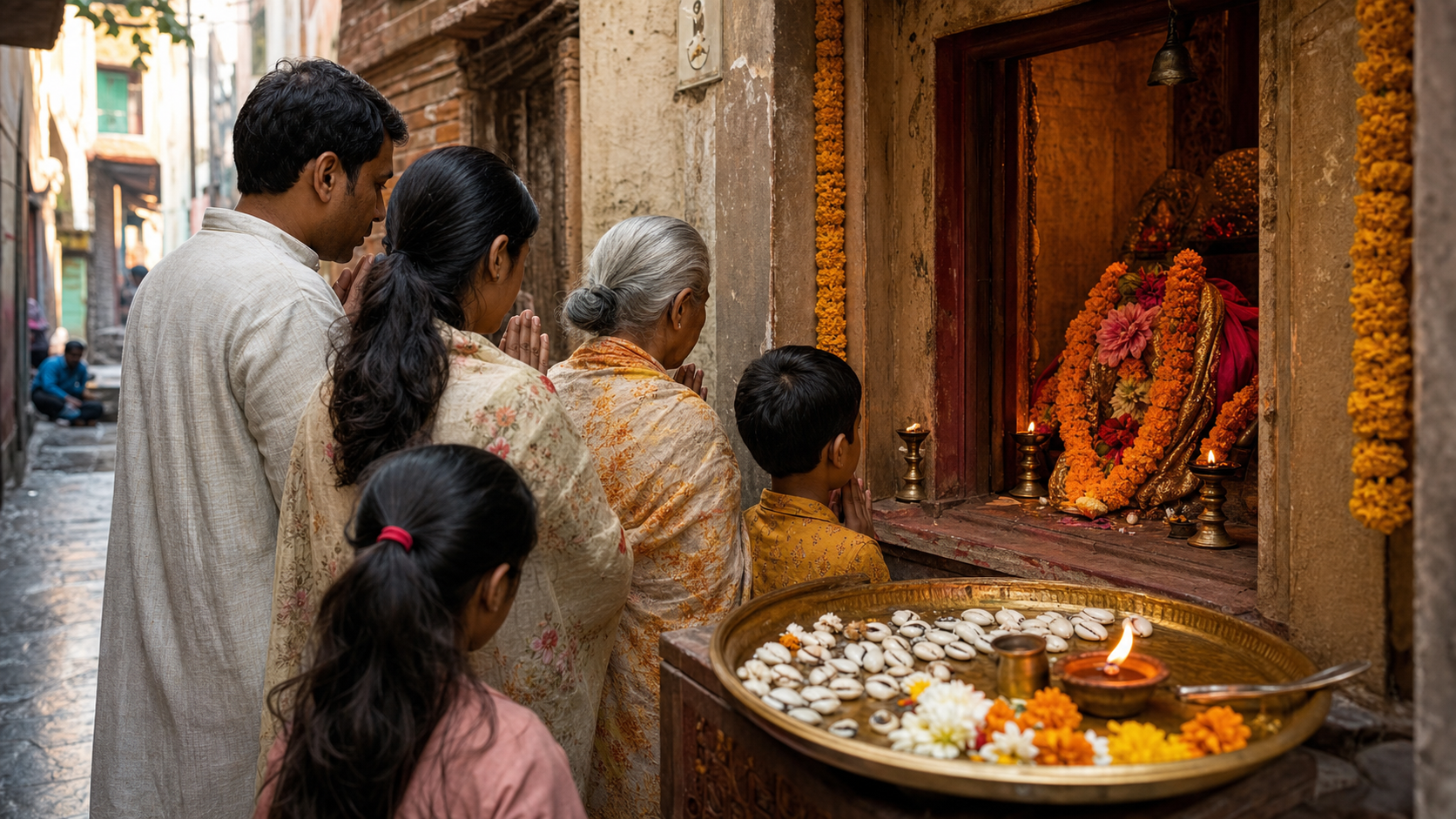
Your Kashi plan may already include Ganga-snan, Kashi Vishvanath, Annapurna Devi, Vishalakshi and Kalabhairava. Then a family elder or a southern yatra booklet tells you that the pilgrimage is not complete without Kaudi Mata. You are left with a practical question: is this darshan essential, and how should you include it?
For many South Indian families, Kaudi Mata is the intimate final presence in Kashi’s sacred circuit: not a substitute for the great temples, but a compassionate sister whose blessing gives the journey a sense of wholeness. If the visit belongs to your family vrata or inherited paddhati, make room for it deliberately. If it does not, you may still approach her without anxiety or elaborate preparation.
What “completing” the Kashi Yatra means here
Many South Indian pilgrims regard Kaudi Mata’s darshan as necessary for a well-rounded Kashi Yatra. That does not establish one universally binding checklist for every Hindu pilgrim. Her place is carried chiefly through oral memory, family observances, regional yatra booklets and local practice rather than through a single inscriptional or canonical command.
The distinction matters. A customary obligation can be deeply authoritative within a family or sampradaya without becoming a test by which everyone else’s pilgrimage is judged. If your parents, acharya or family paddhati prescribes the visit, treat it as part of your sankalpa. If you have no such instruction, receive the darshan as an invitation, not as a reason to fear that every other act in Kashi will somehow be invalid.
Kaudi Mata also does not compete with Annapurna or Vishalakshi. Kashi’s sacred geography works through relationship: Shiva and Shakti, guardian and pilgrim, great temple and neighbourhood shrine. Kaudi Mata extends that network through the language of kinship. Devotees address her with the domestic closeness of Amma or Akka—mother or elder sister—rather than approaching her as a distant power.
The Kashi Khanda of the Skanda Purana gives Shakti a central place in the sacred life of Kashi, especially through Devi presences such as Annapurna. That larger theological setting helps explain why a pilgrimage centred on Shiva can still feel incomplete when its local forms of Shakti are ignored. It does not, by itself, prove a specific monumental history for Kaudi Mata. Her authority rests in living remembrance and repeated worship.
Why South Indian itineraries remember Kaudi Mata
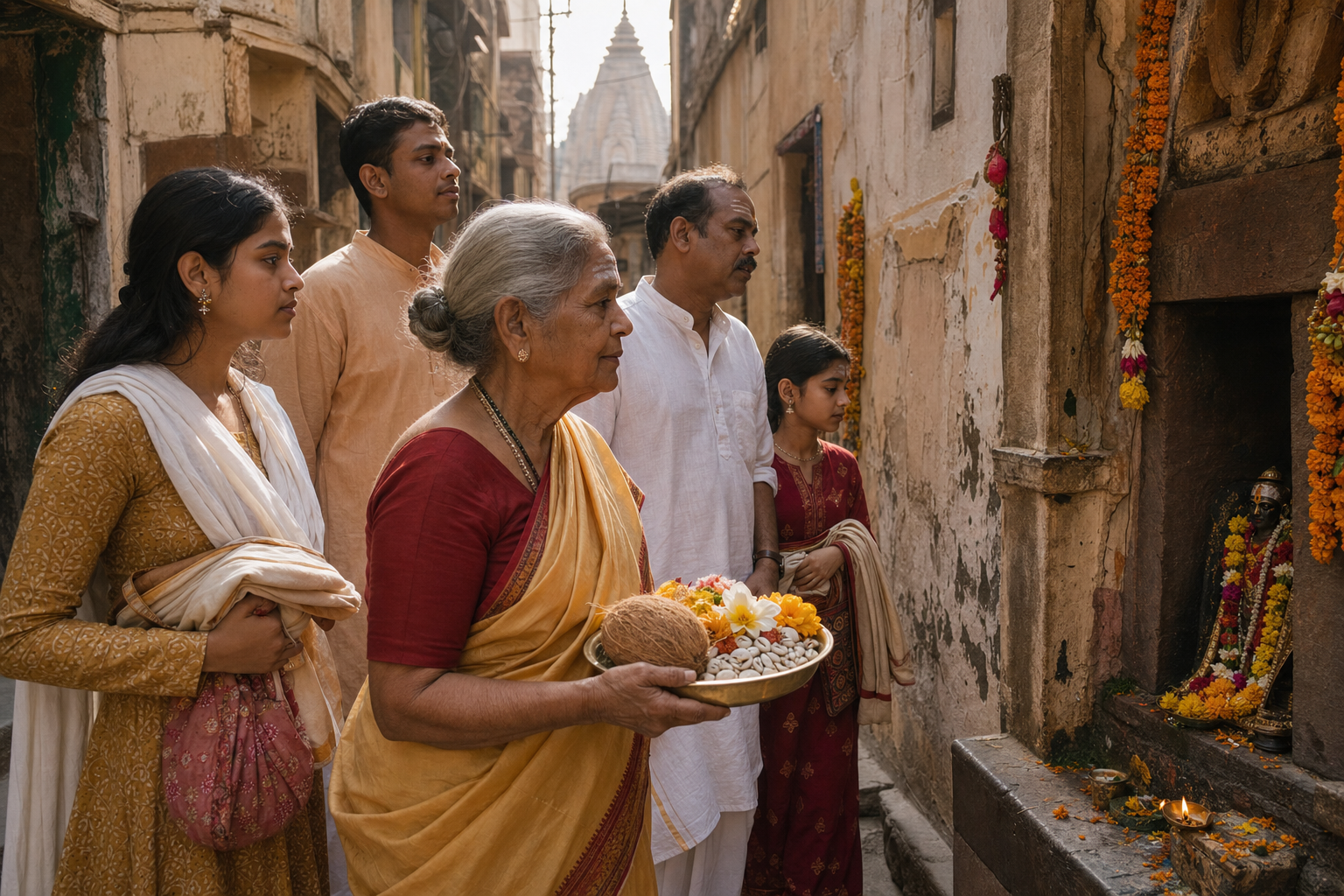
Kaudi Mata is not presented as a deity for South Indians alone. Her special visibility in southern itineraries grew through several overlapping habits of pilgrimage.
Smarta and panchayatana sensibilities encourage the pilgrim to honour Shiva, Vishnu, Shakti, Surya and Ganesha within an integrated devotional world. Longstanding South Indian mathas and choultries in Kashi helped families preserve routes that included smaller Devi shrines alongside the city’s more prominent temples. Tamil, Telugu, Kannada and Malayalam family traditions also carried vratas involving kumkum, turmeric, simple food offerings and prayers for motherly grace.
This history gives you three questions to settle before travelling. Does your family maintain a particular Kashi sequence? Was an offering or promise made on your behalf? Does your matha, acharya or yatra organiser follow a regional paddhati that names Kaudi Mata? Ask those questions at home, where the relevant memory lives. Waiting until you are in a crowded Kashi lane can turn a meaningful observance into guesswork.
The name “Kaudi” evokes the cowry, once used as small-denomination currency and also familiar in domestic rituals, protective objects and divinatory practices. In this shrine’s devotional language, the cowry points toward modest abundance: something materially small that can nevertheless pass through every hand. A few cowries, a flower or a pinch of kumkum therefore suits the shrine better than conspicuous display. The offering’s smallness is part of its meaning; it says that no pilgrim and no sincere gesture is beneath the Mother’s regard.
How to place the shrine in your Kashi route
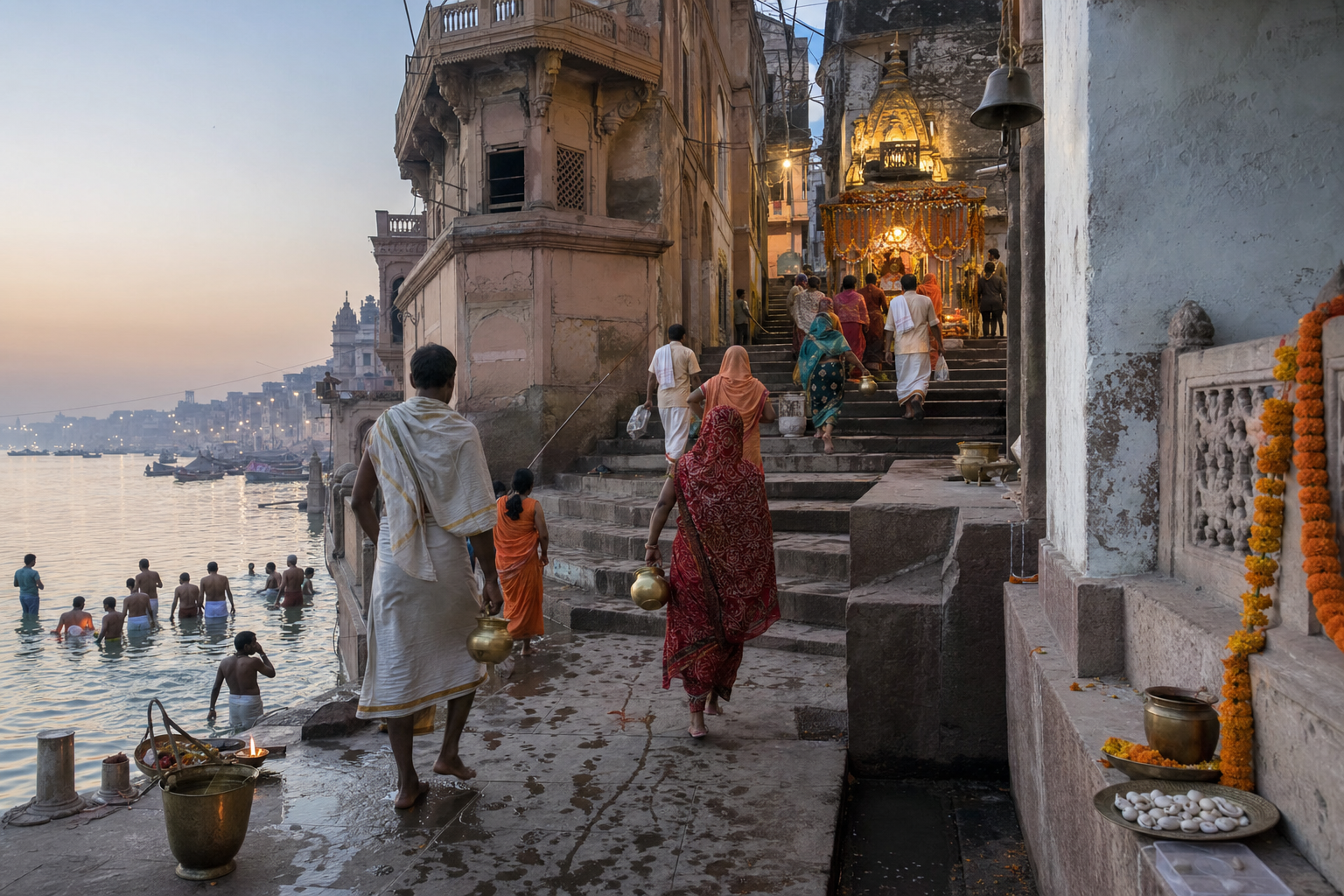
There is no need to force every Kashi observance into one rigid timetable. A commonly remembered southern sequence can nevertheless serve as a useful starting point:
- Begin with Ganga-snan at dawn if it forms part of your observance.
- Take darshan of Kashi Vishvanath, placing the yatra under Shiva’s presence.
- Offer pranam to Annapurna Devi and remember the sacred duty of nourishment, including anna-dana where that belongs to your practice.
- Pay respects to Kalabhairava, revered as Kashi’s kotwal or guardian.
- Visit Vishalakshi and the other Shakti sthalas included in your family route.
- Approach Kaudi Mata as a quiet concluding darshan—a personal acknowledgement of the compassionate, accessible face of Shakti.
This is a living itinerary, not a universal rule. Follow any specific order given by your lineage. If crowd conditions, temple timings or the needs of an elderly companion require a different route, preserve the intention rather than turning the sequence into an ordeal.
The shrine is modest and can be missed among Kashi’s narrow gallis. Confirm the route before setting out. A local priest, trusted yatra organiser, or South Indian matha or choultry familiar with your itinerary is a better point of orientation than the size or fame of the building. If someone in your party has limited mobility, ask about the walking distance and suitable approach before entering the lanes.
Carry only what you can offer respectfully. Kumkum, turmeric, flowers, a coconut or a few cowries are consistent with the shrine’s simple devotional character. Keep the offerings biodegradable, avoid plastic and ask locally before presenting anything unfamiliar. The purpose is darshan, not the performance of abundance.
A simple darshan that makes equality concrete
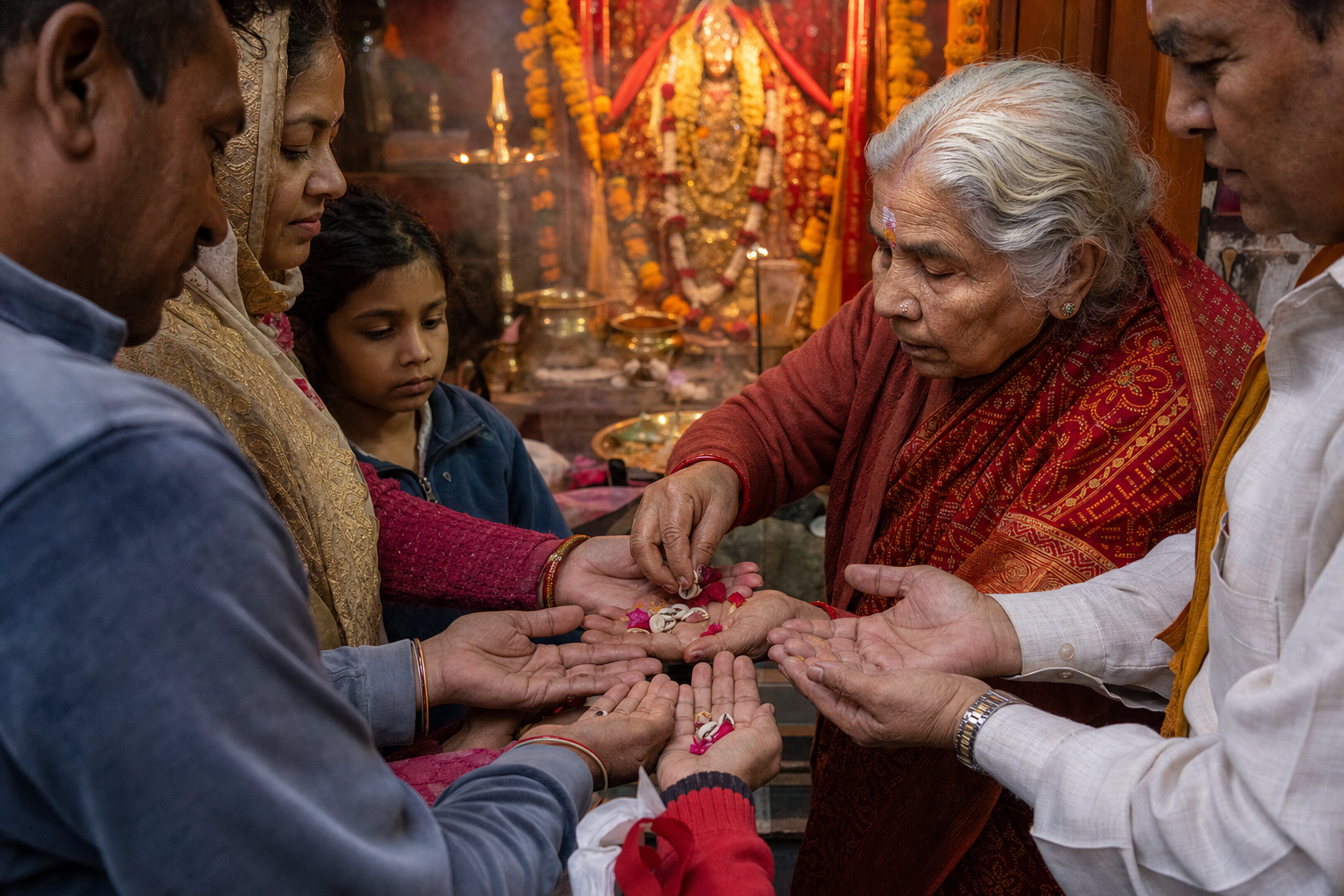
You do not need to invent an elaborate ritual for Kaudi Mata. Unless your family has prescribed a particular vrata or archana, a brief and attentive visit is sufficient:
- Pause at the entrance and settle your attention before approaching the sanctum.
- Offer pranam and remember the purpose of your Kashi Yatra.
- Ask what offerings are accepted, then present your kumkum, turmeric, flower, coconut or cowries without obstructing other devotees.
- Join a simple archana, lamp or camphor offering when available and permitted by the temple.
- Pray for equal regard, humility and the welfare of those travelling with you.
- Request permission before taking a photograph, receive any prasada respectfully and leave the narrow approach clean.
If you have no lineage-specific mantra, a plain prayer is enough: “Kaudi Mata, accept my pranam. May I meet every being without pride or exclusion, and may this yatra bear good fruit for all.” This is a suggested personal prayer, not a canonical mantra. Use the words your family or acharya has given you whenever such instructions exist.
The shrine’s central ethic is samata, or equal regard. You enact that teaching before you explain it. Give other pilgrims room. Do not use caste, region, language or ritual status to demand precedence. Treat the priest, local residents, elderly devotees, workers and first-time visitors with the same restraint you bring before the murti. In a small shrine, conduct is part of the offering.
This ethic has recognisable resonances across the Dharmic family without erasing the differences among its traditions. Hindu thought speaks of sama-darshana and karuna; Buddhism cultivates equanimity and compassion; Jainism joins ahimsa with the humility of anekantavada; Sikh prayer reaches toward sarbat da bhala, the welfare of all. These are not interchangeable doctrines or identical rituals. They do show why a humble Devi shrine centred on dignity and accessible grace can speak beyond one region.
The cowry helps keep that teaching from becoming abstract. Its value is deliberately modest. Offer it without treating grace as a transaction. Kaudi Mata’s darshan asks you to notice the person whom a grand pilgrimage can make invisible: the ordinary devotee, the stranger speaking another language, or the neighbour whose lane carries you to the sanctum.
Key takeaways for your pilgrimage
- Include Kaudi Mata deliberately when the visit belongs to your family vrata, southern yatra paddhati or instructions from an acharya.
- Do not mistake a powerful living custom for a universal rule by which every Hindu’s Kashi Yatra must be judged.
- Place the darshan alongside—not in place of—Kashi Vishvanath, Annapurna, Vishalakshi and Kalabhairava.
- Confirm the route locally because the small sanctum is easy to overlook in Kashi’s gallis.
- Keep worship simple: pranam, kumkum or turmeric, flowers, a coconut or a few cowries are enough unless your lineage directs otherwise.
- Complete the offering through conduct: avoid plastic, ask before photographing and practise equal regard in the queue and the lane.
Before you leave for Kashi, speak to the person who knows your family’s pilgrimage practice and write Kaudi Mata into the route if she belongs there. Once you reach her doorway, resist the urge to measure the moment by the shrine’s size. Offer something small, make space for the next pilgrim and carry her lesson of equal regard into the rest of your yatra.
References
